Avoid Fines for Oil Disposal in London Through Legal Collection
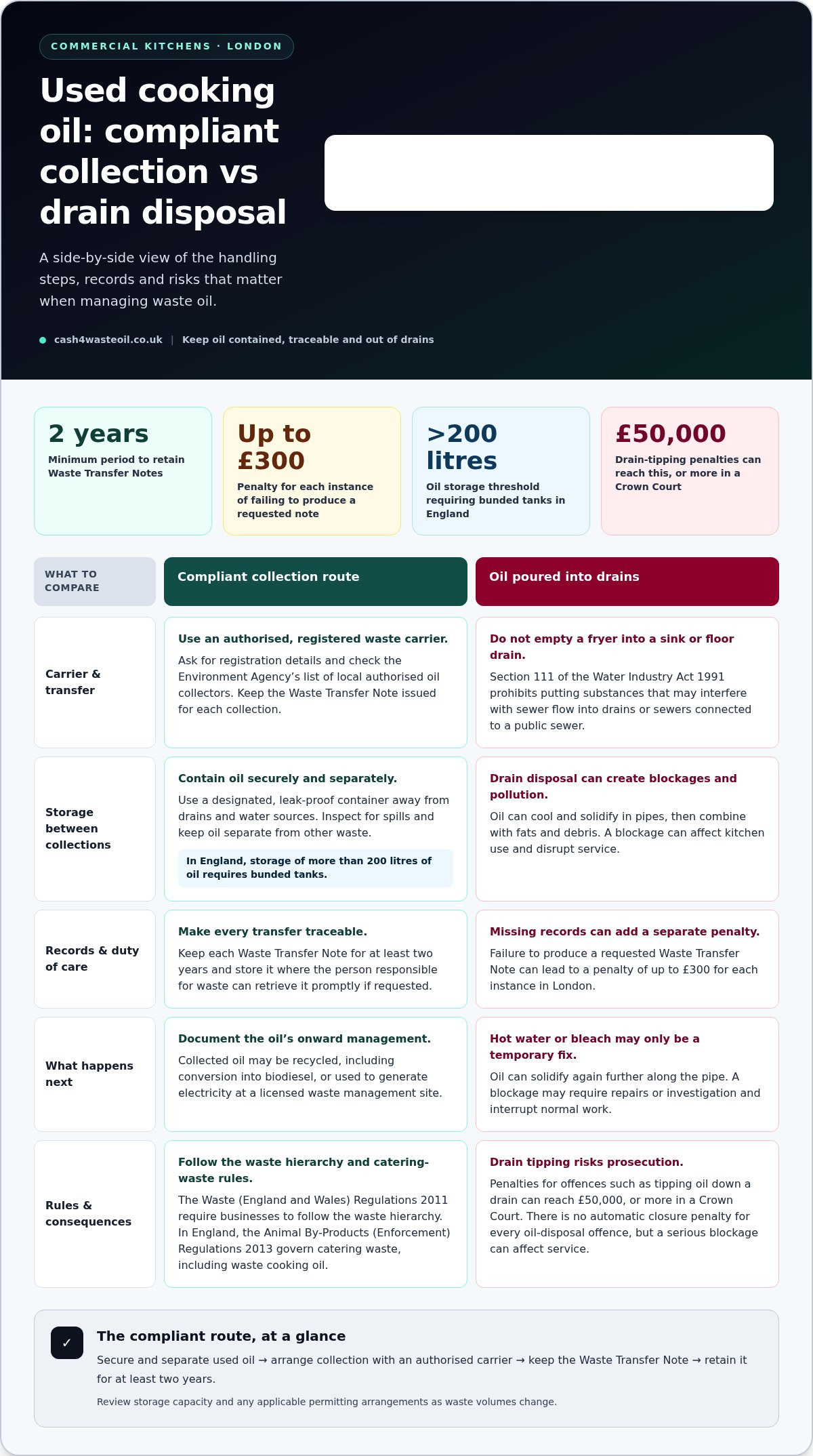
To avoid fines for improper oil disposal in London, businesses should have used cooking oil collected by an authorised waste carrier and obtain a Waste Transfer Note for each collection. Keep those notes for at least two years, according to the Environment Agency. Pouring oil into drains or sewers connected to a public sewer can also lead to prosecution under section 111 of the Water Industry Act 1991.
For restaurants, pubs, hotels and other commercial kitchens in London, used oil is a routine part of service, but it needs a clear disposal process. Keep it out of drains and arrange collection through a compliant waste route to reduce the risk of blockages, pollution and enforcement action.
This article explains how compliant collection and waste records support your business’s duty of care, what can happen when oil is poured down drains or mishandled, and how to store it safely before collection. You’ll also learn how to avoid fines for improper oil disposal in London by keeping waste oil in a managed recycling stream.
Key Takeaways
- Arrange appropriate collection for commercial cooking oil and keep records of its transfer.
- Keep used oil out of drains and sewers, where it can contribute to blockages and pollution.
- According to UK legislation, the Waste (England and Wales) Regulations 2011 require businesses to follow the waste hierarchy when managing waste oil.
- Store waste oil securely in leak-proof containers and keep it separate from other waste to support proper handling and recovery.
- Learn how authorised collection can help commercial kitchens manage used cooking oil and its transfer records.
Finding an Environment Agency-registered waste carrier
London restaurants should store waste cooking oil in secure, leak-proof containers, away from drains and water sources. Arrange collection with a licensed waste carrier and keep the Waste Transfer Note issued for each collection. It records the transfer from your premises and supports traceable waste handling. These steps help reduce the risk of fines for improper oil disposal in London.
Before arranging collection, ask for the carrier’s registration details and use the Environment Agency’s list of local authorised oil collectors. A registered carrier can transport commercial waste oil to a licensed waste management site for recovery or disposal. The right arrangement supports your duty of care and helps prevent oil entering drains, leaking during storage or being passed to an unauthorised operator.
Paperwork matters after collection, too. Keep each Waste Transfer Note so it can be produced if requested. The Environment Agency advises UK businesses to retain waste transfer notes for at least two years. Failure to produce a requested note can lead to a penalty of up to £300 for each instance in London, so store records where the person responsible for waste can retrieve them promptly.
Check that the collection process reflects the rules for catering waste. In England, the Animal By-Products (Enforcement) Regulations 2013 govern catering waste, including waste cooking oil. Keep the oil separate from other waste and make sure its transfer is documented. Proper records help show how the waste was handled from your kitchen to its next destination.
Storage also needs attention between collections. Use a designated, secure container that resists leaks and damage, and inspect it for spills. In England, businesses storing more than 200 litres of oil must use bunded tanks, including when storing waste oil in commercial settings. The Control of Pollution (Oil Storage) Regulations 2001 set out oil-storage requirements intended to prevent leaks and environmental contamination.
Environmental permitting can matter when waste is stored beyond permitted limits. This example shows why storage arrangements and any applicable permissions need to match the site’s waste operations.
Collected oil may be sent for recycling, including conversion into biodiesel, or used to generate electricity at a licensed waste management site. The carrier’s documentation helps link your business’s transfer to the waste’s onward management. Keep the note with your waste records, and make sure it identifies the collection clearly. A documented collection route helps businesses avoid fines for improper oil disposal in London.
- Keep the oil secured and contained between collections.
- Use an authorised carrier and retain the transfer note.
- Review your storage capacity and permitting arrangements as waste volumes change.
Risks of pouring cooking oil down drains or sewers
No. Section 111 of the Water Industry Act 1991 makes it illegal to put substances that may interfere with sewer flow into drains or sewers connected to a public sewer. Commercial kitchens should keep used oil in suitable containers and arrange authorised collection, not pour it away or mix it with general rubbish.
Drain and sewer disposal risks
Cooking oil can cool, solidify and restrict wastewater pipes. Once it enters a drain, it may combine with other fats and debris, making blockages harder to clear. For a restaurant, a blocked drain can affect kitchen use and disrupt service. Pouring boiling water or bleach into a blocked pipe may only provide a temporary fix, as oil can solidify again further along.
Thames Water enforces section 111 of the Water Industry Act 1991. A business that tips oil into a drain risks prosecution, as well as the practical consequences of a blockage. Keep oil separate at the point it becomes waste, and use sealed containers until collection. This avoids turning a routine kitchen by-product into a drainage problem affecting the premises or the public sewer.
Non-compliance penalties
Non-compliance means handling or disposing of waste in a way that breaks applicable rules. For oil poured into drains, prosecution is a possible consequence under section 111 of the Water Industry Act 1991. Penalties for offences such as tipping oil down a drain can reach £50,000, or more in a Crown Court. The legal and financial exposure makes correct disposal part of routine business management.
Keep used oil separate from ordinary kitchen waste. Don’t empty a fryer into a sink or pour oil into a floor drain during cleaning. If a drain is blocked, adding hot water or bleach may not remove oil further along the pipe. Instead, collect the oil in a suitable container and arrange proper collection.
Fines and business closure
A fine is not the only business risk. A serious blockage can make parts of a kitchen difficult to use, while drain repairs or an investigation can interrupt normal work. If oil disposal leads to prosecution, a court may impose a financial penalty. The available penalty for drain-tipping offences can reach £50,000, or more in a Crown Court.
There is no automatic closure penalty for every oil-disposal offence. However, a blockage at a restaurant can still affect service while the problem is dealt with. Keep containers secure and away from drains, and act promptly if a spill occurs. These practical controls reduce the risk of careless disposal becoming both an environmental issue and an operational disruption.
Consequences of delayed disposal
Delaying collection leaves used oil on the premises for longer, increasing the chance of a spill or of someone tipping it into a drain. A full or poorly sealed container can also make routine kitchen work harder. Store oil in a secure, leak-proof container, away from drains and water sources, and arrange collection to suit the volume your kitchen generates.
Don’t treat a blocked pipe as a reason to flush more oil away. Boiling water or bleach may appear to clear the blockage, but oil can solidify again further along the sewer. If you need a planned route for commercial oil, authorised used cooking oil collection keeps it out of drains and general waste.
Fines for environmental and recycling breaches
Environmental enforcement can follow unsafe storage, unlawful disposal or poor waste separation. In England and Wales, businesses handling waste oil must manage it responsibly, not treat it as ordinary rubbish. According to UK legislation, the Waste (England and Wales) Regulations 2011 require businesses to follow the waste hierarchy when managing waste oil. That means considering prevention, reuse and recycling before disposal where appropriate.
The Environmental Protection Act 1990 sets out responsibilities for businesses handling waste. The Hazardous Waste Regulations 2005 concern the classification, storage, transport and disposal of hazardous waste oil. The Environment Agency and local authorities enforce waste-oil rules in the UK. Serious or repeated non-compliance can lead to prosecution, unlimited fines and liability for clean-up costs. A business may also face investigation expenses after a significant breach.
Fly-tipping creates a separate, direct risk. In London, fly-tipping can bring fines from £400 up to £50,000 and/or 12 months’ imprisonment if prosecuted at a magistrates’ court. Waste vehicles used in offences may be seized, and courts can order businesses to pay clean-up or investigation costs. These outcomes underline why commercial oil must go through a lawful waste route rather than being abandoned or left for someone else to handle.
Storage practices can also lead to enforcement action. Keep waste oil in sealed, clearly labelled containers that resist leaks and damage. Store it away from drains and water sources, inspect for spills, and keep it separate from other waste. This example, where waste exceeded permitted limits by several hundred tonnes, shows why storage volumes and site permissions matter.
Recycling gives used cooking oil a managed onward route. A licensed waste management site may process collected oil into biodiesel or use it to generate electricity. These options differ from disposal, which does not recover the oil as a useful material or energy source. Keep the oil separate and document its transfer so the waste stream can be managed appropriately.
For a London kitchen, practical controls start before collection: prevent spills, keep containers secure and avoid mixing oil with general rubbish. Failing to separate waste can undermine recovery and make handling harder to trace. A Waste Transfer Note for each collection records the transfer from your premises. Careful storage, separation and documented handling reduce the risk of environmental harm and enforcement action.
What Are The Reasons To Recycle Used Cooking Oils Correctly?
After an oil spill, stop it reaching drains, contain it safely and report illegal dumping to the Environment Agency or the relevant local authority. These bodies enforce waste-oil rules in the UK.
Pollution from fats, oils and grease
Fats, oils and grease can cool, solidify and combine with debris inside drains, restricting wastewater flow. That can contribute to sewer blockages and pollution, so correct handling matters beyond the kitchen. Thames Water has described a London fatberg weighing 40 tonnes, illustrating how accumulated material can become a serious obstruction.
For food businesses, the risk can start with everyday cleaning. Oil poured into a sink can travel through connected pipes and cool further along the sewer. A blockage can affect drainage at the premises and require disruptive clearing work. Keeping used oil separate from wastewater helps prevent it becoming part of the problem.
Keeping oil out of drains
Keep waste oil out of sinks, floor drains and sewers. Section 111 of the Water Industry Act 1991 makes it illegal to put substances that may interfere with sewer flow into drains connected to a public sewer. Use a designated, leak-proof container instead, and keep it secure while awaiting collection.
Small actions in the kitchen also help. Scrape or wipe plates, pans and utensils before washing, and put solid food waste in a bin. Use sink strainers to catch food debris, then empty them into the rubbish. Wipe commercial frying equipment with disposable kitchen towel before washing it. These steps reduce the amount of fat and debris entering the drainage system.
Oil spills need prompt attention. Stop the source if safe, keep the spill from reaching drains, and contain it with suitable absorbent materials. Place recovered oil and contaminated materials in appropriate containers for proper handling. If oil has entered a drain or watercourse, promptly report the incident to the Environment Agency or the local authority responsible for the area. Provide the location and explain what happened.
A waste transfer note records the movement of waste oil from your premises. Keep it with business waste records so you can trace how the oil left your site. Correct separation also supports recycling: collected oil may be processed into biodiesel or used to generate electricity at a licensed waste management site. That recovery route is preferable to sending oil into drains, where it can contribute to blockages and pollution.
Authorised collection and recovery or disposal of cooking oil
Compliant collection gives commercial kitchens a documented route for used cooking oil, from storage at the premises to its next destination. The process matters because oil must not be poured into drains or abandoned with unrelated waste.
Authorised oil recovery and disposal
A collection transfers waste oil from your kitchen to a waste carrier, with a Waste Transfer Note recording that movement. Keep the oil separate from food waste and store it securely before collection. The note helps connect your business’s waste to its onward handling, whether it is sent for recovery or disposal.
After collection, a licensed waste management site may process suitable oil into biodiesel or use it to generate electricity. Recovery puts the material to use; disposal does not provide that same resource benefit. The actual route depends on how the waste is managed at its destination, so retain the transfer record rather than assuming every load follows an identical process.
Collection arrangements should suit the kitchen’s output and storage capacity. A restaurant producing oil mainly during busy service periods may need a different collection pattern from a hotel kitchen with steadier output. Consider how much oil you generate, the secure storage available and your operational needs together. If oil accumulates beyond the space available, handling becomes harder and spills become more likely.
Keep the process traceable. Record each collection, retain its Waste Transfer Note and store the document with other waste records. If a collection is missed or oil is spilled, secure the container and prevent oil reaching drains. Pouring oil into a sewer can lead to prosecution, so an authorised collection route is a practical part of managing kitchen waste.
Licensed collection costs
The cost of licensed used-oil collection in London depends on the case and is given after a quote request. Relevant factors include the amount collected, collection frequency, storage arrangements and access to the collection point. These details shape the practical collection plan, rather than a single figure applying to every commercial kitchen.
For example, a kitchen with limited storage may need collections planned around its oil output, while a site with more capacity can organise storage differently. Keep a simple record of how much oil accumulates and how quickly containers fill. This information helps establish a workable flexible weekly, fortnightly or monthly collection schedule and makes waste management easier to organise around service.
Separate used oil from food waste, keep it secure and have each transfer documented. Arrange authorised used cooking oil collection for your commercial kitchen’s waste stream.
Cash 4 Waste Oil: Used Cooking Oil Collection
Cash 4 Waste Oil collects used cooking oil from commercial kitchens that need a documented route for their waste. Its collection service covers restaurants, pubs, hotels and other commercial kitchens in London, Kent and Surrey.
Each collection includes a Waste Transfer Note, giving your business a record of the oil’s transfer. Cash 4 Waste Oil is fully licensed and Environment Agency registered. The service is free, with cash paid on the spot for collected waste oil.
Arrange collection when used oil is building up and your kitchen needs a proper disposal route. Keeping the transfer note with your waste records supports clear documentation, while collection keeps cooking oil out of drains and sewers.
Contact Cash 4 Waste Oil to discuss used cooking oil collection for your commercial kitchen, or visit cash4wasteoil.co.uk.
Make compliant oil handling part of your routine
A reliable way to avoid fines for improper oil disposal in London is to make used-oil handling a regular part of kitchen operations. Assign clear responsibility for checking storage, organising collections and keeping records together. A simple routine helps staff know what to do during busy service, when shortcuts can otherwise be tempting.
Review the process when kitchen practices change. A different menu, equipment layout or volume of frying can affect where oil is stored and how staff move it. Keep the route clear, make responsibilities easy to follow and address practical obstacles before they lead to spills or disposal errors. Consistent habits help protect your premises and support responsible waste management.
For a practical next step, contact Cash 4 Waste Oil about your commercial kitchen’s used-oil needs. Build a straightforward routine your team can follow with confidence.
Frequently Asked Questions
What About Businesses?
Restaurants, pubs, hotels and other commercial kitchens must manage used cooking oil as business waste. Assign a staff member to oversee storage and collection records, and make sure kitchen teams know not to tip oil into sinks or floor drains. For example, a closing checklist can include checking that oil is in its designated container and that the container is closed. Clear responsibilities help maintain consistent handling across shifts.
How quickly must I produce waste documents?
Keep waste documents accessible so you can produce them if requested during an inspection. Avoid relying on one staff member’s email or filing system. The Environment Agency advises businesses to retain Waste Transfer Notes for at least two years. A central digital or paper record helps managers locate the relevant note quickly, even if the person who arranged the collection is absent.
The Main Offences: What Counts as “Improper” Disposal?
Improper disposal includes pouring used cooking oil into a drain or sewer, abandoning it, or handing it to an unauthorised carrier. Mixing oil with general rubbish can also undermine proper separation and recovery. Putting a container of fryer oil beside a bin, for example, does not make it an appropriate disposal route. Keep oil contained and separate, then arrange its transfer through a compliant waste route.
Why Is Disposal Important?
Correct disposal helps prevent oil from entering drainage systems, where it can solidify and contribute to blockages. It also supports traceable handling and allows suitable used oil to be recovered rather than simply discarded. For a busy kitchen, a clear system means staff know where cooled oil goes after frying and who manages its collection. That routine reduces avoidable handling errors during cleaning and shift changes.
What are the UK laws on disposing of used cooking oil and engine oil?
Different rules can apply depending on the waste and its handling. In England, the Animal By-Products (Enforcement) Regulations 2013 govern catering waste, including used cooking oil. The Environmental Protection Act 1990 sets out waste responsibilities, while section 111 of the Water Industry Act 1991 concerns substances that may interfere with public sewer flow. Engine oil is not used cooking oil; keep it separate and follow the requirements relevant to that waste.
What fines can businesses face in London for improper oil disposal?
Penalties depend on the offence and how it is prosecuted. Drain-tipping offences can attract penalties reaching £50,000, or more in a Crown Court. Fly-tipping in London can lead to fines from £400 up to £50,000 and/or 12 months’ imprisonment following a magistrates’ court prosecution. Courts can also impose unlimited fines for persistent waste-disposal breaches. These are possible penalties, not a fixed charge for every incident.
What records and waste transfer notes must London businesses keep for oil disposal?
Keep the Waste Transfer Note for each collection with records that identify the waste transfer and carrier. The Environment Agency advises businesses to retain Waste Transfer Notes for at least two years. Store them so the person responsible for waste can retrieve them promptly, including during an inspection. Keeping oil records separate from everyday invoices can make the relevant collection paperwork easier to find and present.
How can a London business check that an oil-waste collector is licensed?
Use the Environment Agency’s register or its list of local authorised oil collectors to check a carrier before arranging a transfer. Compare the carrier’s registration details with the business collecting the oil, and keep the collection paperwork with your records. This is especially useful if collection arrangements change or a different vehicle arrives. A Waste Transfer Note should identify the transfer, helping your business document who took the waste.