Biodiesel from Restaurant Waste in London: How the Process Works
What happens after a restaurant’s used cooking oil is collected, and how can you find out whether it becomes fuel? That’s the practical question behind biodiesel from restaurant waste London. Restaurants supply the used oil, which enters a recovery chain where downstream processors may turn suitable feedstock into biodiesel. It’s reasonable to want clear information rather than a broad environmental promise.
This guide covers the main stages, from collection and preparation to fuel processing, and explains the difference between the general production route and evidence about a particular batch. You’ll also find questions to ask a commercial collector about the recovery route and the records they provide. Cash 4 Waste Oil collects food-grade used cooking oil from commercial kitchens, pays cash on collection and provides a Waste Transfer Note. The note records the transfer, but does not by itself prove the oil’s final destination. Understanding both points can help you manage used oil responsibly and ask informed questions about what happens next.
Key Takeaways
- Learn how biodiesel differs from raw used cooking oil, and why restaurants supply feedstock rather than make the fuel themselves.
- Follow the typical processing sequence, including preparation and transesterification, a common method for converting suitable oils into biodiesel.
- Understand why responsible recovery can be preferable to inappropriate disposal, and why environmental claims depend on evidence from the full supply chain.
- Use practical questions to check accepted oil types, collection arrangements and the recovery route. A Waste Transfer Note records the transfer, but does not by itself prove biodiesel production.
- See how biodiesel from restaurant waste London fits into the recovery chain, and how a commercial collector can help without manufacturing the fuel.
How London restaurant waste oil can become biodiesel
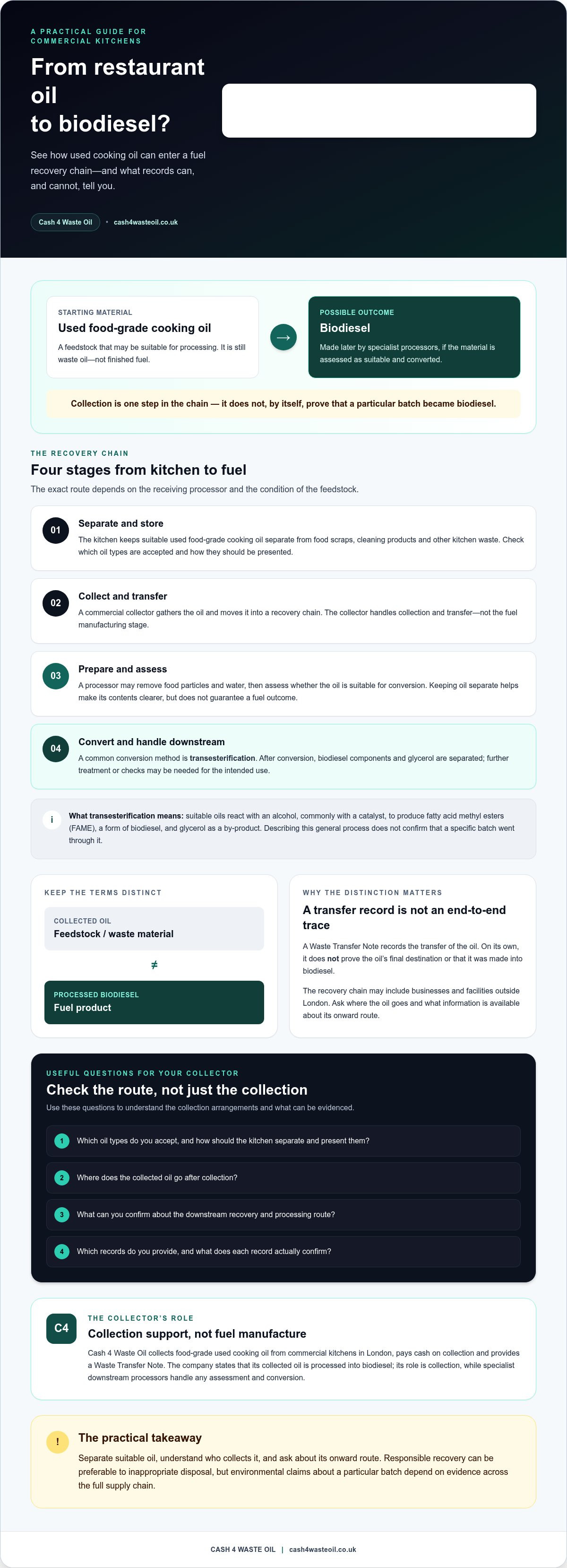
Used cooking oil does not become fuel simply because it has been collected. Biodiesel is made by processing suitable biological feedstocks. Raw waste oil is an ingredient, not finished biodiesel, and it is different from conventional diesel made from fossil fuels. Conversion happens later in the recovery chain, at a specialist processing stage.
For biodiesel from restaurant waste London, a restaurant’s role is to separate suitable oil and arrange a commercial collection. The collector moves it into a recovery chain, where specialist processors assess and may convert suitable material. The chain may involve businesses and facilities outside London, so ask where the oil goes if you want to understand its onward route.
What does “biodiesel from restaurant waste” mean?
The feedstock is suitable used food-grade cooking oil, not a mixture of food scraps, cleaning products or other kitchen waste. Used cooking oil is also known as Yellow grease. Suitability depends on the material and how it has been handled. Not every waste oil stream can automatically be converted into biodiesel.
Before conversion, the oil remains a waste material. Biodiesel is a processed fuel made using a method that transforms suitable oils into a fuel product. That distinction matters: collected oil is not ready-to-use fuel, and a collection record alone does not confirm that it has been made into biodiesel.
Where does a London restaurant fit in the chain?
A commercial kitchen can support responsible recovery by separating used food-grade cooking oil from other waste and storing it for collection. Keep the oil free of mixed kitchen waste, and check which oil types the collector accepts and how it should be presented.
The collector’s role is to collect and transfer the material into the recovery chain. Downstream processors handle any assessment and fuel conversion. Cash 4 Waste Oil collects used cooking oil from commercial kitchens in London and provides a Waste Transfer Note. The company states that its collected oil is processed into biodiesel, but its role is collection, not fuel manufacture. Ask the collector to explain the onward route and what information they can provide.
Knowing who does what makes it easier to ask clear questions. Your kitchen separates and hands over the oil, the collector manages the collection step, and specialist processors handle any conversion. This helps you check where the oil goes without assuming every collected batch follows an identical route.
From collection to biodiesel: the main processing stages
Collected cooking oil needs further processing before it can become usable biodiesel. The precise route depends on the receiving processor and the condition of the feedstock. General production stages should not be mistaken for confirmation of the destination or treatment of a particular London collection.
- Collection: Used cooking oil is gathered from commercial kitchens and transferred into a recovery chain.
- Preparation: The processor may remove food particles and water, then assess whether the oil is suitable for conversion.
- Conversion: A common method, transesterification, changes suitable oils into biodiesel components.
- Downstream handling: The resulting material is separated and may be treated or checked to meet the requirements for its intended use.
Preparing used cooking oil for processing
Oil from a restaurant kitchen can contain crumbs, food residue or water. A processor may remove these using methods suited to the feedstock it receives. Keeping oil separate from other waste helps make its contents clearer, but it does not guarantee a particular fuel yield or outcome. Ask the collector what they can confirm about the onward destination and processing route.
Transesterification and fuel handling
Transesterification is a chemical reaction in which suitable oils react with an alcohol, commonly in the presence of a catalyst, to produce fatty acid methyl esters (FAME), a form of biodiesel, and glycerol as a by-product. It is a widely used production method, but describing the process does not establish that a specific batch has gone through it.
After conversion, the biodiesel components and glycerol are separated. Further treatment and checks may be needed before the fuel is handled for its intended use. The quality protocol and applicable specifications matter: the official UK quality protocol for biodiesel provides guidance on eligible waste materials and biodiesel standards. A collector’s transfer paperwork records the handover, not processing or fuel quality.
For biodiesel from restaurant waste London, keep the roles distinct: a local collection service can move used oil into recovery, while downstream processors carry out any conversion and fuel handling. Restaurants arranging a commercial collection can review used cooking oil collection in London and ask what information is available about the recovery route.
What biodiesel recovery means for London restaurants and the environment
Separating used cooking oil for collection gives it a route into resource recovery rather than leaving its destination unclear. For a London restaurant, that is a practical waste-management step. It does not, on its own, prove that a particular batch became biodiesel or establish a specific environmental saving.
| Material | What it is | What can be claimed |
|---|---|---|
| Recovered cooking oil | Collected feedstock that may be assessed and sent for processing. | Collection supports recovery; it isn’t proof of conversion into fuel. |
| Untreated oil | Raw used oil, not finished biodiesel. | It shouldn’t be described as a usable biodiesel fuel. |
| Fossil diesel | Conventional diesel made from fossil resources. | It provides a comparison point, but any emissions comparison needs a consistent lifecycle assessment. |
What benefits can a restaurant reasonably claim?
You can say that your kitchen separates used cooking oil for collection and contributes suitable feedstock to a recovery route. Keep collection records, including the Waste Transfer Note, and describe them accurately: they record a transfer, not the oil’s full journey or final use. Avoid claims such as “carbon neutral” or “zero impact” unless you have evidence to support them.
For practical steps on handling oil responsibly, see this sustainable waste oil disposal guide.
What can affect the environmental picture?
The full supply chain matters. Feedstock condition, preparation and conversion, the energy used in processing, transport distances and the fuel the biodiesel replaces can all influence lifecycle impacts. A general claim about biodiesel is not the same as a verified assessment of one processor’s route or one collected batch.
For comparisons, use a current lifecycle assessment with a stated boundary and method, such as one aligned with the UK Government’s Renewable Transport Fuel Obligation carbon and sustainability guidance. Do not quote a percentage reduction unless the source, baseline and calculation apply to the specific fuel and pathway being discussed.
Ask the collector what happens after collection, whether they can identify the downstream recovery route and what evidence supports any environmental claims. Cash 4 Waste Oil provides collection and transfer paperwork for commercial kitchens in London. These are useful operational records, but they are not proof of fuel quality or quantified carbon savings.
How London kitchens can check their used oil enters a responsible route
A clear collection arrangement makes it easier to manage used cooking oil responsibly and ask what happens after it leaves your kitchen. Before booking, check that the service covers your commercial premises and accepts the food-grade cooking oil your business produces. Confirm what paperwork you will receive and how the collector describes the onward recovery route.
Questions to ask an oil collector
- Do you collect from my location? Confirm that the service covers your premises and is intended for commercial kitchens.
- Which oils do you accept? Check that your used food-grade vegetable or cooking oil is suitable. Do not assume mixed kitchen waste, engine oil or other materials are accepted.
- How does collection work? Agree how oil should be stored and presented, and clarify collection arrangements and payment terms before the handover.
- What records will I receive? Ask whether a Waste Transfer Note is provided and what details it records.
- What happens after collection? Ask how the collector describes the downstream recovery route and what information they can share. Do not assume the collector operates, or has direct access to, a biodiesel refinery.
You can also ask for the collector’s current authorisation or registration details and check them against the relevant official register. A clear answer should explain the collection role without presenting paperwork as proof that a particular batch became biodiesel.
Records that help demonstrate responsible handling
Keep Waste Transfer Notes with your business’s waste records, alongside relevant collection correspondence. A note documents the transfer between parties; it does not confirm the oil’s final destination, processing method or fuel quality. For requirements that apply to your business, consult current guidance rather than relying on a collector’s paperwork alone.
For more on handling and documentation, read the DEFRA cooking oil waste guidance and use this commercial kitchen oil disposal checklist to review your process.
These checks help restaurants assess claims about biodiesel from restaurant waste London without overstating what collection records prove. For a commercial used cooking oil collection in London, ask Cash 4 Waste Oil about collection and paperwork.
A practical London route from restaurant oil to biodiesel
For a restaurant, starting the route is straightforward, even though fuel production happens further downstream. Identify suitable used food-grade cooking oil, arrange a commercial collection, keep the transfer paperwork and ask what the collector can confirm about the recovery route. This lets your team contribute to biodiesel from restaurant waste London without confusing collection with fuel manufacture.
- Identify the oil. Separate used food-grade vegetable or cooking oil from other kitchen waste. Confirm with the collector that your oil type is accepted.
- Check the collection arrangements. Share your business location and confirm coverage, collection details and payment terms before arranging a handover.
- Keep the paperwork. File the Waste Transfer Note with your business records. It documents the transfer, but does not verify the oil’s final destination or prove it became biodiesel.
- Ask about recovery. Find out how the collector describes the downstream route and what evidence they can provide. Do not assume the collection company operates the processing facility.
What Cash 4 Waste Oil provides to London businesses
Cash 4 Waste Oil collects used food-grade cooking oil from restaurants and other commercial kitchens in London. The company describes its collection as free, pays cash on collection and provides a Waste Transfer Note. It also states that collected oil is processed into biodiesel. Its role is collection, not biodiesel manufacture, so do not assume a specific downstream facility or batch route without confirmation.
These services can help with the practical side of managing used oil. Payment and paperwork are useful business benefits, but neither proves fuel quality or a particular environmental saving. If the destination matters to your reporting, ask what information is available about the recovery chain.
How to take the next step
When making an enquiry, give the collector your business location, the type of cooking oil you produce and an approximate idea of your collection needs. Confirm that your premises are covered and agree the arrangements before scheduling a collection. Sharing these details helps establish whether the service fits your kitchen and what records you will receive.
Arrange a commercial oil collection enquiry with Cash 4 Waste Oil to discuss used cooking oil collection for your London business.
Put your restaurant’s used oil on a clearer route
Restaurants contribute to biodiesel from restaurant waste London by separating suitable used cooking oil and arranging responsible commercial collection. Specialist processors handle any fuel conversion. Collection paperwork alone does not prove a particular batch’s destination or environmental impact, so ask about the onward recovery route and keep clear records.
Cash 4 Waste Oil collects used cooking oil from commercial kitchens in London. The company describes collection as free, pays cash on collection, provides a Waste Transfer Note and states that it is Environment Agency registered. It also says collected cooking oil is processed into biodiesel. Cash 4 Waste Oil’s role is collection, not biodiesel manufacture, so confirm any further details about the downstream route directly.
Ready to discuss your kitchen’s oil type, location and collection needs? Arrange a commercial used cooking oil collection enquiry and check the arrangements for your business. A clear handover is a practical first step towards responsible oil recovery.
Frequently Asked Questions
How is biodiesel made from restaurant waste oil?
Biodiesel is made by processing suitable used cooking oil, not by using raw waste oil as fuel. A typical route involves collection, preparation to remove unwanted material such as food particles or water, and conversion using a method such as transesterification. Further separation and processing may follow. The precise stages depend on the processor, so ask about the recovery route rather than assuming every collected batch follows the same path.
Can all used restaurant cooking oil be turned into biodiesel?
No. The feedstock must be suitable for the processor’s process. Used food-grade vegetable or cooking oil may be accepted, but oil mixed with food waste, water or other materials may need assessment and might not be suitable. Do not assume that every waste oil stream can become biodiesel. Keep cooking oil separate from other kitchen waste and confirm accepted oil types with your commercial collector before arranging a collection.
Is used cooking oil from London restaurants collected for biodiesel?
Yes. Cash 4 Waste Oil collects used cooking oil from commercial kitchens in London and states that collected oil is processed into biodiesel. The company is the collector, not the biodiesel manufacturer, and a collection record alone does not confirm the destination of a particular batch. Its stated coverage also includes Greater London, Kent, Surrey, Birmingham, Coventry, Leicester, Wolverhampton, Leicestershire, Derbyshire, Staffordshire, Warwickshire, Northamptonshire, Oxfordshire and Worcestershire.
What is transesterification in biodiesel production?
Transesterification is a chemical reaction used to convert suitable oils into biodiesel components, commonly fatty acid methyl esters, and glycerol as a by-product. It changes the oil’s chemical structure so it can be processed as biodiesel rather than remaining untreated cooking oil. It is a common production method, but knowing the term does not prove a particular collection was processed this way. Ask what the collector can confirm about its downstream route.
Does a Waste Transfer Note prove that cooking oil became biodiesel?
No. A Waste Transfer Note records the transfer of waste between parties and supports a business’s collection records. It does not, by itself, show where the oil went after handover, what processing it underwent or whether it became biodiesel. Keep the note with your waste documentation, then ask the collector what details they can provide about the onward recovery route. Treat transfer paperwork and evidence of fuel production as separate records.
Can restaurants sell their used cooking oil in London?
Commercial kitchens may be able to receive payment for suitable used cooking oil, depending on the collector’s arrangements and the oil accepted. Cash 4 Waste Oil describes its London commercial collection as free, with cash paid on collection, and provides a Waste Transfer Note. Confirm coverage, accepted food-grade oil types, payment terms and collection arrangements directly. The service is for commercial kitchens, not households, and does not cover engine oil.
Is biodiesel from waste cooking oil better for the environment than fossil diesel?
It can offer a resource-recovery route for suitable used oil, but a broad environmental claim needs evidence. The overall impact depends on factors such as feedstock, processing energy, transport and the fuel being replaced. A general benefit associated with biodiesel does not establish the emissions impact of a particular supply chain. Look for a current lifecycle assessment with a clear comparison method before repeating carbon-saving figures, and avoid unsupported “zero impact” or “carbon neutral” claims.