Cash for Fat and Grease Collection: London Business Guide
Can your kitchen get paid for used oil without creating another compliance headache? The right cash for fat and grease collection London service can make disposal straightforward, but “fat and grease” doesn’t mean every waste stream is accepted. Used food-grade vegetable and cooking oils are suitable; grease-trap and drain waste are separate, and engine or industrial oils aren’t cooking oil.
If you run a commercial kitchen, you’ll want clear answers before arranging a collection: what can be collected, whether there’s a charge, how payment works and what paperwork you’ll receive. Cash 4 Waste Oil provides free commercial collections, pays cash on the spot for collected used cooking oil and supplies a Waste Transfer Note. Collections are fully licensed and Environment Agency registered.
This guide explains which kitchen oils are suitable, how free collection and cash payment work, and why transfer paperwork matters. You’ll also learn how to prepare for a London collection with minimal disruption, while collected oil is processed into biodiesel.
Key Takeaways
- Restaurants, pubs, hotels and other commercial food businesses can learn which used food-grade cooking oils are suitable for collection.
- See how cash for fat and grease collection London works, from arranging a collection to handing over oil and receiving payment.
- Understand the difference between a free collection service and the cash paid for collected used cooking oil.
- Find out how a Waste Transfer Note records a waste transfer and what to prepare for a smoother collection.
- Learn how to arrange collection with Cash 4 Waste Oil, with collected oil processed into biodiesel.
Cash for fat and grease collection in London: what can a business actually hand over?
This service collects used food-grade cooking oil from commercial kitchens. It’s for businesses that produce this oil during food preparation, not households or organisations disposing of unrelated waste. Restaurants, pubs, hotels and other commercial food businesses can arrange collection of used cooking oil from their kitchens.
In short: the service is for used food-grade vegetable and cooking oils from commercial kitchens, not grease-trap contents, drain waste or every type of fat and grease.
The distinction matters because “fat and grease collection” can sound broader than the service. Oil kept separate from other kitchen waste is different from greasy water, residue scraped from equipment or material removed from a grease trap. Don’t treat these waste streams as interchangeable when arranging disposal.
Used cooking oil is a recognised material for recovery and reuse. For background on the term and its uses, see What is Used Cooking Oil? Cash 4 Waste Oil processes collected oil into biodiesel, giving suitable used oil a further use rather than treating it as general kitchen rubbish.
Which London businesses use a cooking oil collection service?
Restaurants, pubs and hotels are common examples of commercial kitchens that generate used cooking oil. Other food businesses with a kitchen operation can also arrange collection, provided the material they set aside is used food-grade vegetable or cooking oil. The waste stream, rather than the type or size of venue, determines whether the service fits.
This is a commercial service, not a household collection. Oil from a home kitchen is outside its intended audience. If you run a business, keep used oil apart from other residues so the collection is focused on the right material.
Does “fat and grease collection” include grease-trap waste?
No. This article covers used cooking oil, not grease-trap contents or waste from sinks and drains. A commercial kitchen may produce both used oil and other fat or grease waste, but that doesn’t make them part of the same collection stream. Don’t pour oil into a sink or drain, or mix trap waste into oil set aside for collection.
For grease-trap contents, drain waste or another kitchen waste stream, follow your local authority’s current guidance for that material. Keeping the categories separate helps your team identify what’s suitable for used cooking oil collection and prevents the phrase cash for fat and grease collection London from being mistaken for a service that takes every kind of kitchen grease.
How London cooking oil collection works: payment, paperwork and recycling
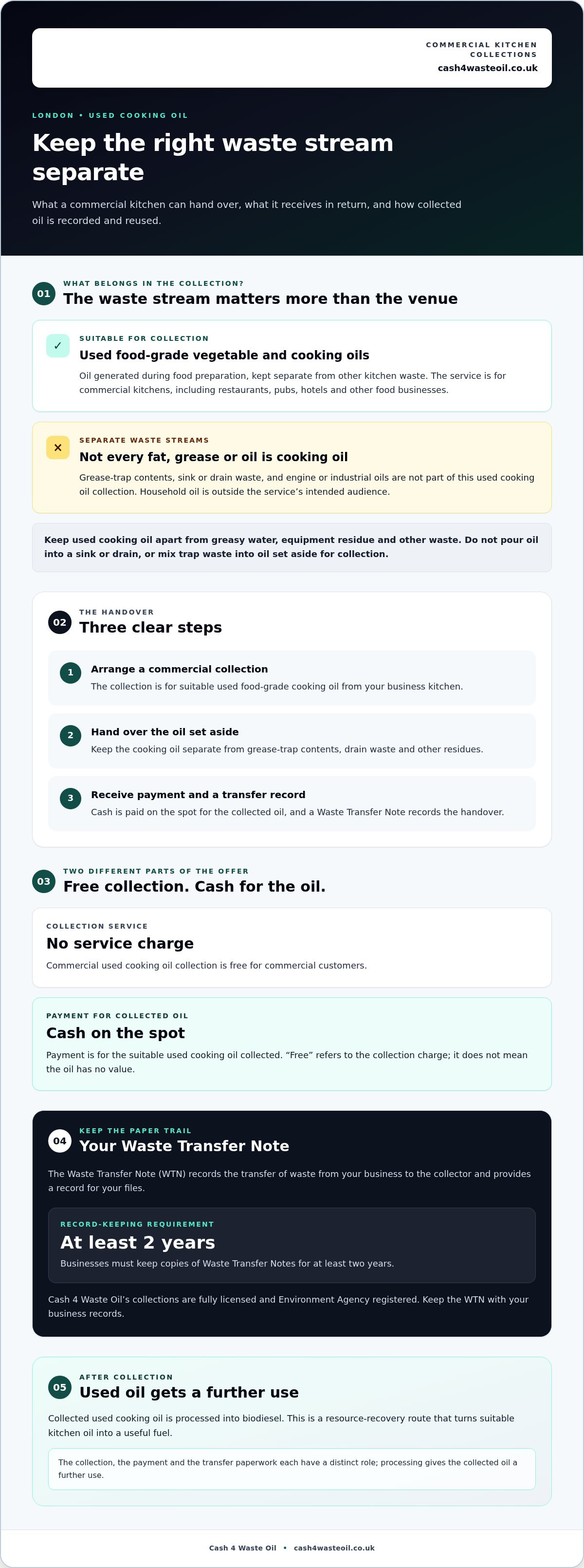
A clear collection process gives your kitchen a record of what has left the premises and how it was transferred. For commercial customers, Cash 4 Waste Oil’s service follows a straightforward sequence: arrange a collection, hand over the used cooking oil, then receive cash on the spot and a Waste Transfer Note.
- Arrange a collection for your commercial kitchen.
- Hand over the used food-grade cooking oil set aside for collection.
- Receive cash on the spot and a Waste Transfer Note for the transfer.
The collection service is free for commercial customers. That’s separate from the cash payment, which is made for the used cooking oil collected. The collection itself has no service charge, and payment is made on the spot for collected oil.
What does the business receive when its oil is collected?
You receive cash for the collected used cooking oil and a Waste Transfer Note (WTN). The WTN records the transfer of waste from your business to the collector and provides a paper trail for your records. Current guidance states that businesses must keep copies of Waste Transfer Notes for at least two years. City of London businesses can refer to the Corporation’s London Commercial Waste Regulations for local commercial waste information.
Cash 4 Waste Oil’s collections are fully licensed and Environment Agency registered. Keep the WTN with your business records to document the collection. A documented collection links the waste transfer to a clear record, supporting responsible commercial waste handling.
What happens to the collected cooking oil?
Collected used cooking oil is processed into biodiesel. This is a resource-recovery route: oil that has served its purpose in the kitchen is processed into a useful fuel. It’s a practical part of the circular economy, not a promise of a particular emissions saving for your business. Collection, payment and paperwork each have a distinct role, while recycling gives the oil a further use.
For more detail on responsible handling and recovery, explore this guide to sustainable waste oil disposal. If your kitchen produces used cooking oil, a commercial cooking oil collection brings the handover, on-the-spot payment and transfer record together. That’s the practical value behind cash for fat and grease collection London: a clear transaction, documented transfer and onward use for suitable oil.
Is cash for used cooking oil collection in London really free?
Yes. Cash 4 Waste Oil’s commercial used cooking oil collection is free, with cash paid on the spot for the oil collected. These are two separate parts of the offer: your business isn’t charged for the collection service, and it receives payment for suitable used cooking oil. “Free” refers to the collection charge, while the payment is for the oil collected.
That distinction helps make sense of the offer. A free service doesn’t mean the oil has no value, and receiving cash doesn’t mean every material described as kitchen fat or grease is eligible. The service is for used food-grade cooking oil from commercial kitchens. Grease-trap contents, drain waste and other residues are separate streams, so don’t assume they’re covered by the cash-payment arrangement.
Free collection and cash payment: how are they different?
Free collection means there’s no collection charge under the commercial offer. Cash payment is separate: it’s compensation for the used cooking oil collected, paid on the spot. Keeping these points distinct makes it easier to understand the arrangement without confusing a service fee with the value of the oil. Payment applies to collected used cooking oil, not every kitchen fat or waste stream.
For a kitchen manager, the practical questions are whether the material is used cooking oil and what payment is made for the oil collected. The first determines whether the waste stream fits the service; the second relates to the transaction. A free collection doesn’t, by itself, indicate how much cash your business will receive.
What affects the value of a business’s used cooking oil?
Cash is paid on the spot for used cooking oil collected. Avoid budgeting around an assumed figure. Treat payment as a benefit of the collection, rather than a guaranteed income amount for your kitchen.
It’s also useful to distinguish payment from the wider operational value of a collection. A commercial kitchen needs a practical route for its used cooking oil, and the collection provides a defined handover for that material. The amount paid is one part of the arrangement; the collection charge and the accepted waste stream are separate considerations. Keeping these points separate helps set clear expectations before you organise a collection.
For a closer look at the payment question, see the guide to getting paid for used cooking oil in London. It focuses on the cash side of the arrangement, while this section explains what “free collection” means. For commercial kitchens considering cash for fat and grease collection London, that distinction helps avoid assuming every type of grease is collected or that a fixed payment is guaranteed.
In short, the offer combines a free commercial collection with cash paid on the spot for collected used cooking oil. If your business produces this specific waste stream, a used cooking oil collection service brings collection and payment together without a collection charge.
Prepare your London kitchen for a straightforward oil collection
A simple routine makes used cooking oil easier to manage and helps collection fit around the kitchen’s normal work. Decide where staff should put oil once it’s no longer needed, who is responsible for keeping it contained and where collection records will be filed. Keep the process clear for every shift, including busy service periods when waste can otherwise end up in the wrong place.
Before arranging a collection, make sure the material set aside is used food-grade cooking oil, kept separate from other kitchen waste. Staff should know where to find the collection details and where to file the Waste Transfer Note after handover. That way, the person managing the collection and the person maintaining business records can follow the same routine.
- Choose a consistent place for the contained used oil.
- Tell relevant staff not to tip oil into sinks or drains.
- Decide who will keep the collection paperwork with business records.
Keep preparations proportionate. A clear location, a shared staff instruction and an agreed record-keeping process can make the handover more straightforward. For a broader view of commercial kitchen handling, use this commercial kitchen oil disposal checklist alongside your own site procedures.
Keep used cooking oil contained and separate
Use a covered, leak-proof container for used cooking oil, and keep it separate from grease-trap contents and other waste. Follow current advice from your local authority on handling and storage, as guidance can be location-specific. Keep oil out of sinks and drains, and take care to prevent spills reaching rainwater gullies.
Clear staff instructions matter. Make sure everyone knows where the oil belongs and that it mustn’t be poured away, even during a busy shift. A consistent approach reduces confusion between used cooking oil and other kitchen residues.
Plan collection around a busy London kitchen
Choose a routine that suits how your kitchen operates. Cash 4 Waste Oil offers scheduled or on-call collection, so businesses can arrange the service around their needs. Keep the oil in its designated place until collection, and make sure the person overseeing the handover knows where the relevant paperwork will be recorded.
Before collection, brief the staff who may be on duty. They should know which oil is set aside and who is responsible for the transfer record. This simple handover between shifts helps avoid delays or uncertainty without disrupting food preparation.
For cash for fat and grease collection London, preparation starts with separating the right oil, keeping it contained and giving staff a straightforward routine. Arrange used cooking oil collection around your commercial kitchen’s needs and keep the handover clear for your team.
Arrange cash for fat and grease collection in London with Cash 4 Waste Oil
If your London business produces used food-grade cooking oil, Cash 4 Waste Oil offers a straightforward commercial collection: collection is free, cash is paid on the spot for the oil collected, and a Waste Transfer Note is provided. The collection is fully licensed and Environment Agency registered. Your team gets a clear service process and documentation for its records.
Keep the next steps simple:
- Identify the material as used food-grade cooking oil from your commercial kitchen.
- Arrange a collection for your London business.
- Retain the Waste Transfer Note provided for your business records.
What to have ready when arranging a collection
Be ready to describe your business and the material you want collected. For example, say whether it’s a restaurant, pub, hotel or another commercial kitchen, and specify that the oil is used food-grade cooking oil. A clear description keeps the collection focused on the right waste stream, rather than relying on the broad phrase “fat and grease”.
Have your business details and London collection address to hand when arranging the service. The collection is for commercial kitchens and used cooking oil, not household waste, engine oil, industrial mineral oil or grease-trap contents. Keeping those distinctions clear makes the request easier to explain and helps your staff prepare the correct material for handover.
Why London businesses choose a documented collection
A collection combines three practical elements: no charge for the commercial collection service, cash paid on the spot for collected used cooking oil, and a Waste Transfer Note recording the handover. Cash 4 Waste Oil is fully licensed and Environment Agency registered. The paperwork gives your business a record of the transfer, while the service provides a defined route for suitable kitchen oil.
That can simplify day-to-day organisation. Staff know what oil to set aside, who is handling the collection and where to keep the transfer document afterwards. It also helps avoid confusion between cooking oil and separate waste streams such as grease-trap material. The collection documentation supports good record-keeping, but it doesn’t remove the business’s wider responsibility to manage its waste appropriately.
For cash for fat and grease collection London, the fit is clear: a commercial kitchen with used food-grade cooking oil, a free collection service, on-the-spot cash and a Waste Transfer Note. Arrange a free commercial oil collection with Cash 4 Waste Oil.
Arrange a free commercial oil collection.
Make used oil collection part of your kitchen routine
A dependable waste routine starts with one clear decision: keep used food-grade cooking oil separate and make its collection part of how your kitchen operates. Staff then have a practical next step when oil is ready to leave the premises, rather than leaving its handling to the last minute.
For businesses considering cash for fat and grease collection London, Cash 4 Waste Oil brings together free commercial collection, cash paid on the spot, a Waste Transfer Note and licensed, Environment Agency-registered collection. The oil is processed into biodiesel, so a well-managed handover also supports resource recovery.
Set your team up with a simple process, then arrange a collection that fits your commercial kitchen. Arrange a free commercial oil collection and make used oil easier to manage, leaving you and your staff free to focus on service.
Frequently Asked Questions
Can a London business arrange on-call used cooking oil collection?
Yes. Commercial kitchens can arrange on-call used cooking oil collection, as well as scheduled collections. Cash 4 Waste Oil serves London and Greater London, with coverage also including Kent, Surrey, Birmingham, Coventry, Leicester, Wolverhampton, Leicestershire, Derbyshire, Staffordshire, Warwickshire, Northamptonshire, Oxfordshire and Worcestershire. For cash for fat and grease collection London, describe the waste as used food-grade cooking oil and identify your business as a commercial kitchen.
What happens if used cooking oil is poured down a London drain?
Pouring used cooking oil down a drain is illegal in the UK and can contribute to blockages in pipes and sewers. Oil may cool and build up with other material, making drainage problems harder to resolve. Don’t try to flush it away with hot water or washing-up liquid. Keep it contained for appropriate disposal, and follow your local authority’s guidance if oil has already entered a drain.
Can householders use a commercial cash-for-oil collection service?
No. Cash 4 Waste Oil’s service is for commercial kitchens, not domestic households. A restaurant, pub or hotel with used cooking oil from food preparation is the right type of customer; oil from a home kitchen isn’t covered by this commercial service. For household disposal, check your council’s current waste guidance, as local arrangements can differ. Don’t assume a business collection service accepts domestic oil.
Does a cooking oil collection service take engine oil?
No. Used cooking oil and engine oil are different waste streams. Cash 4 Waste Oil collects food-grade vegetable and cooking oils from commercial kitchens, not automotive oil, lubricants or industrial mineral oil. Keep engine oil in a separate, clearly identified container and use the disposal route specified by your local council or an appropriate waste facility. Never mix it with cooking oil set aside for collection.
Can grease-trap waste be included with used cooking oil?
No. Grease-trap contents aren’t the same as used cooking oil and shouldn’t be mixed into a collection container for cooking oil. For example, oil poured off a fryer is a different waste stream from material removed during grease-trap cleaning. Keep them separate and consult your local authority’s current guidance for managing trap waste. This helps prevent confusion at handover and ensures the collection is limited to the correct material.
What should a business do if its used cooking oil container leaks?
Keep people away from the spill and prevent oil reaching sinks, drains or rainwater gullies. If it’s safe to do so, place a suitable secondary container beneath the leak and follow your workplace spill procedure. Don’t move a hot or unstable container. Once the area is safe, record the issue and arrange suitable handling of the affected oil and clean-up materials according to local waste guidance.
Can used cooking oil be put in a food waste bin?
Don’t put liquid used cooking oil into a food waste bin unless your local collection instructions explicitly allow it. Oil can leak from the bin or contaminate other food waste, and acceptance rules may vary between councils and commercial waste arrangements. Keep the oil separate and contained while you check the relevant local guidance or arrange a dedicated commercial cooking oil collection. Never tip it into a sink or drain instead.