Catering Company Waste Oil Disposal in Surrey
For catering company waste oil disposal in Surrey, keep used cooking oil in a secure container and arrange for a licensed waste carrier to collect it responsibly. Don’t pour it down the drain. The right disposal route helps your business manage its waste and meet its responsibilities.
For a busy catering operation, used oil is a practical waste issue: it needs safe storage, reliable collection and clear records. This guide explains how collected cooking oil can be recycled, which catering wastes may be suitable for collection, and what businesses need to know about disposal and compliance in Surrey. It also covers the role of waste transfer documentation and the factors to consider when arranging a commercial collection, so you can understand the process from storing oil on site to handing it over for responsible management.
Key Takeaways
- Keep used cooking oil separate from sinks and drains, and store it securely until collection.
- Learn how commercial cooking oil can be collected and recycled, and which catering wastes need a separate disposal route.
- Understand the Food Safety Act 1990 context for storing and collecting waste cooking oil.
- The Environmental Protection Act 1990 requires businesses to take all reasonable steps to look after their waste and prevent its illegal disposal by others, according to The National Archives (legislation.gov.uk).
- See what to consider when arranging a commercial collection, including responsible handling and Waste Transfer Notes.
What types of catering waste do you collect?
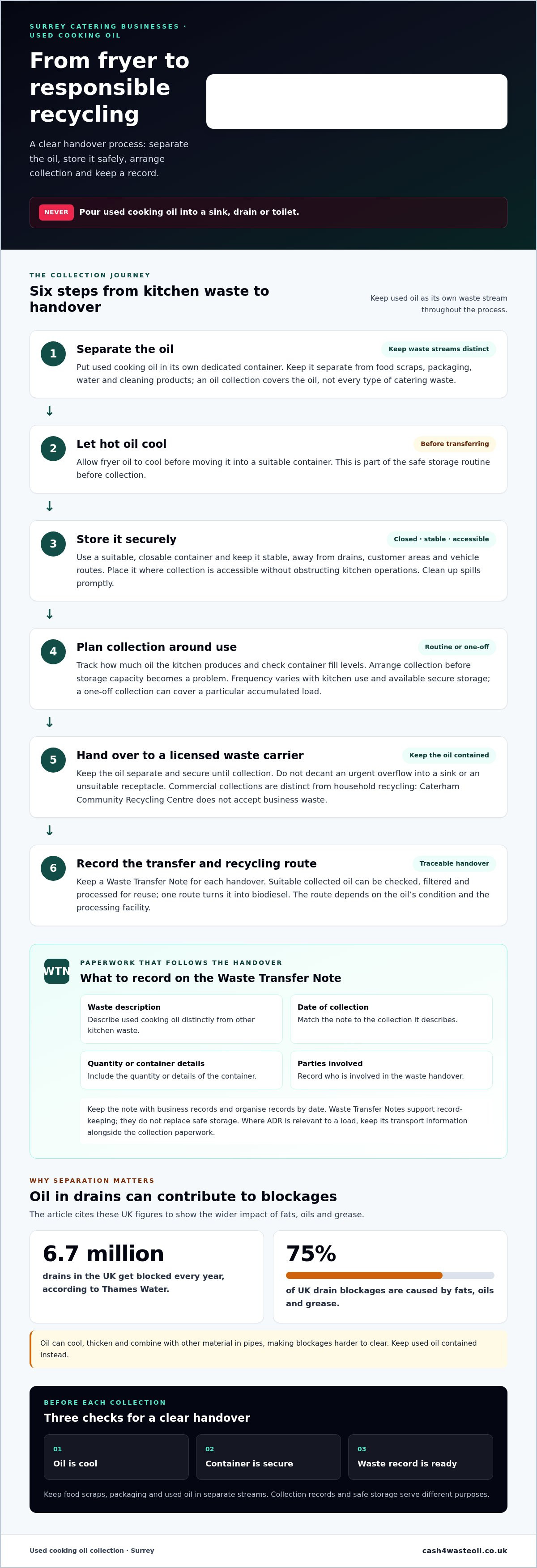
Keep waste cooking oil separate from food scraps, packaging and cleaning materials, as each waste stream needs different handling. A used-oil collection covers the oil, not every type of catering waste. For example, put cooled fryer oil in a dedicated container rather than mixing it with leftover food or cardboard.
How often can waste oil be collected from a restaurant or catering company in Surrey? Set a collection rhythm around how quickly your kitchen fills its secure oil container. Track the amount produced between collections, then arrange collection before storage capacity becomes a problem. A restaurant with frequent fryer use will need a different schedule from a smaller kitchen with occasional frying.
How should catering businesses safely store waste cooking oil before collection? Let hot oil cool before transferring it into a suitable, secure container with a closed lid. Keep the container stable, away from drains, customer areas and vehicle routes. Clean up spills promptly, and keep the storage point accessible for collection without obstructing kitchen operations.
Can Surrey catering companies arrange emergency or one-off waste oil collection? A one-off collection can be arranged for a particular accumulated load, rather than as part of a recurring schedule. For an urgent overflow, keep the oil contained and separate until collection can take place; don’t decant it into a sink or an unsuitable receptacle.
Use a Waste Transfer Note to keep a clear record when controlled waste changes hands. Record the waste description, the date, the quantity or container details, and the parties involved. Keep the note with your business records so staff can trace each collection. Consistent descriptions help distinguish used cooking oil from other kitchen waste and make records easier to understand later.
Waste Transfer Notes support your business’s waste records, but they do not replace safe storage. Match each note to the collection it describes and keep records organised by date. If different waste streams are collected separately, record them distinctly rather than labelling everything “kitchen waste”. This creates a clearer record of each handover.
ADR concerns transport classification, not a type of catering waste. Where ADR is relevant to a load, keep its transport information alongside the collection paperwork and avoid treating every oil collection as identical. Surrey businesses should also distinguish commercial collections from household recycling. Caterham Community Recycling Centre does not accept business waste, and Surrey County Council lists its Saturday and Sunday opening hours as 9am to 4pm.
Before each collection, check three things: oil is cool, the container is secure, and the waste record is ready. Keep food scraps, packaging and used oil in separate streams. That simple routine gives kitchen staff a clear handover process and helps maintain useful collection records.
Commercial and industrial cooking oil disposal
A practical approach to catering company waste oil disposal in Surrey starts with treating used cooking oil as a separate waste stream. Small to medium-sized UK businesses can use an estimated 20 litres of cooking oil per week. Track how much your kitchen produces and plan storage and collection around its actual use. Never pour used oil into a sink, drain or toilet.
The impact reaches beyond the kitchen. Thames Water estimates that 6.7 million drains in the UK get blocked every year. Fat, oil and grease cause 75% of UK drain blockages. Oil can cool, thicken and combine with other material in pipes, making blockages harder to clear. Keep used oil contained instead.
Recycling begins with separation. Collect used cooking oil in a dedicated, closable container, keeping food scraps, water and cleaning products out. Once collected, suitable oil can be checked, filtered and processed for reuse. One recycling route turns used cooking oil into biodiesel. The route depends on the oil’s condition and the processing facility.
- Keep used fryer oil separate from food waste and packaging.
- Let hot oil cool before transferring it into storage.
- Close the container after each use and keep it stable.
- Record each collection so the handover can be traced.
These steps apply to oil from routine fryer changes and larger commercial kitchens. For example, restaurant staff can let fryer oil cool before transferring it to the designated container. Separating used oil from other process waste helps prevent contamination and supports its recycling into bio-diesel.
Fit storage around the site’s workflow. Place the container where staff can reach it safely without blocking food preparation or access routes. Use a suitable container and keep its lid closed between transfers. Clean drips promptly and never wash oil residues into floor drains. These steps reduce spill risks and keep waste streams separate.
Collection frequency depends on how quickly the kitchen generates oil and how much secure storage it has. Review fill levels during routine kitchen checks. Arrange collection before the container becomes difficult to handle or disrupts the storage area. A steady routine also gives staff a clear process for fryer maintenance and oil disposal.
For catering company waste oil disposal in Surrey, keep collection records with the relevant business waste paperwork. Note the waste description and collection date, then retain the transfer record for that handover. This gives managers a practical way to review oil use, spot changes in kitchen operations and maintain an organised disposal process.
Food Standards Agency requirements
The Food Safety Act 1990 is identified as legislation associated with rules for storing and collecting waste cooking oil. For a catering kitchen, the practical focus is keeping waste oil separate from food, ingredients and clean equipment. Plan its storage as part of the kitchen’s routine, rather than treating a full fryer as a disposal plan.
Start by identifying a dedicated container for used oil. Keep it separate from fresh cooking oil, food waste and cleaning products. A clear label helps staff avoid confusion during a busy service. Label the container used for fryer oil, not a nearby vessel used for food preparation.
Build oil handling into the kitchen’s closing routine. After frying, allow the oil to cool before transferring it, then close the container securely. Keep the container stable and away from food preparation areas. If staff use a funnel, clean it after transferring oil and store it separately from cooking utensils.
Good storage also helps keep records consistent. Give the waste stream a clear description, such as “used cooking oil”, rather than a broad label like “kitchen waste”. Record the collection date and link the paperwork to the relevant handover. If a site operates several fryers, staff can note which storage point was emptied, making internal checks easier.
Use a simple staff procedure that covers each stage:
- Identify the designated used-oil container before transferring oil.
- Let hot oil cool, then pour carefully to prevent splashes.
- Secure the lid and return the container to its storage area.
- Record the handover details when the waste is collected.
Assign responsibility by role, not assumption. A kitchen manager can show new starters where the container is kept and how the transfer record is completed. A closing supervisor can check that the lid is shut and the storage area remains clear. These steps make the process repeatable across shifts, including when staff change.
For businesses in Surrey, consider how the storage point fits the site layout. A hotel kitchen, school canteen and restaurant may have different access routes, but each needs a clear separation between waste handling and food preparation. Keep the collection point practical without placing oil beside ingredients, clean equipment or customer areas.
Food hygiene routines and waste transfer records serve different purposes. Hygiene routines govern how the kitchen manages its work areas, while a Waste Transfer Note documents the waste handover. When staff know which container to use, where it belongs and how the handover is recorded, used oil is easier to manage without disrupting food preparation.
Licensed waste carriers and disposal responsibilities
Surrey catering businesses should use a licensed waste carrier and keep a clear record of each handover. These steps support responsible waste management from kitchen storage to collection.
Licensed waste oil collection companies
Commercial kitchens in Surrey need a carrier that handles business waste oil, rather than household waste. Focus on whether the company collects from catering premises, explains the handover process and provides a Waste Transfer Note. That paperwork should describe the waste and record the collection. A restaurant can use these details to match each collection to its own records.
Before arranging collection, describe the waste clearly as used cooking oil, not simply “waste”. Tell the collection company where the container is accessible and how staff will present it. Keeping oil separate from food scraps, packaging and other waste helps ensure the correct material is ready for collection.
Waste disposal responsibilities
According to The National Archives (legislation.gov.uk), the Environmental Protection Act 1990 requires businesses to take all reasonable steps to look after their waste and prevent its illegal disposal by others. In practice, keep oil secure until handover, use a licensed waste carrier and retain the transfer record. The business remains responsible for taking reasonable care over its waste.
A Waste Transfer Note creates a record of the waste handover between a business and its carrier. Keep the note with the business’s waste records, and make sure its description matches the material collected. For a restaurant, that means recording used cooking oil separately from mixed kitchen waste when the streams are handed over separately.
Use a straightforward handover routine:
- Keep the oil in secure storage until collection.
- Describe the material accurately in the transfer paperwork.
- Record the collection date and retain the completed note.
- Keep records organised so staff can trace the handover.
If collection details change, keep the relevant records up to date rather than relying on memory. For example, note when a collection covers a different storage point or waste stream. Consistent records help managers track handovers and spot gaps in the waste management process.
For Surrey kitchens, the practical test is simple: can staff identify the carrier, the waste collected and the record for that handover? Keep those details together. This gives the business a traceable account of its disposal arrangements and helps it demonstrate the reasonable steps required under the Environmental Protection Act 1990.
Which licensed waste oil collection companies serve catering businesses in Surrey?
Surrey catering businesses need a commercial collection arrangement for used cooking oil, not household recycling. Choose a carrier that handles oil from restaurants, pubs, hotels or other commercial kitchens. The key points are suitable collection, clear transfer records and a secure handover process.
Start by matching the service to your premises. A restaurant with a rear service yard may present its oil differently from a hotel kitchen inside a shared building. Tell the collection company where the oil is stored, how staff can access it, and whether the site has separate waste streams. These details help plan a practical collection.
Then make sure the waste is clearly identified as used cooking oil, rather than mixed kitchen waste. If your site also produces food scraps, packaging or other waste, keep those materials separate. A clear description helps staff prepare the right container and match the Waste Transfer Note to the handover.
Before a first collection, align three details with the carrier:
- The location and access route for the oil storage point.
- The description of the waste being collected.
- The transfer documentation provided for the handover.
Use the paperwork to keep an organised record. Match each Waste Transfer Note to its collection date and the waste description. For example, a catering manager can file the note alongside the site’s other waste records, rather than leaving it with an individual shift’s paperwork. This gives staff a consistent record if managers change.
Collection frequency should fit the kitchen’s oil use and storage arrangements. A busy restaurant may fill its container sooner than a smaller café. Track how quickly oil accumulates, then arrange a flexible weekly, fortnightly or monthly collection before storage becomes difficult to manage. Make sure staff know which container is for used oil.
Domestic recycling facilities are not a substitute for commercial collection. Caterham Community Recycling Centre does not accept business waste. A Surrey commercial kitchen should arrange a collection service for its used cooking oil rather than taking it to a household site.
Compare providers by the practical handover, not just the collection itself. Look for a clear waste description, secure collection arrangements and a completed transfer note. Ask how the carrier handles access at your premises and how records are supplied. These points help you assess whether the service fits your kitchen’s layout and waste management process.
Once you have mapped the storage point, access and paperwork, arrange a commercial used-oil collection that fits your Surrey kitchen’s routine.
Cash 4 Waste Oil: Used Cooking Oil Collection
Cash 4 Waste Oil collects used cooking oil from catering businesses in Surrey, including restaurants, pubs, hotels and other commercial kitchens. Turn to its collection service when you need a reliable route for separated waste oil, rather than trying to dispose of it with general kitchen waste.
Each collection comes with a Waste Transfer Note to support your disposal records. Cash 4 Waste Oil also makes cash payments for waste oil, providing a clear handover alongside the paperwork. Keep your oil stored securely and ready for collection, then retain the note with your business records.
Contact Cash 4 Waste Oil to discuss a collection for your Surrey catering business.
Make your next collection part of the kitchen routine
A clear plan for catering company waste oil disposal in Surrey starts with your kitchen’s workflow. Consider where staff handle oil, how the task fits into shift routines and where collection records belong. A process staff can follow consistently is easier to maintain during busy services and handovers.
Choose a next step that keeps the routine practical. Review your current arrangements, identify what would make the handover simpler, and discuss your collection needs with Cash 4 Waste Oil. That conversation can help you move from general guidance to a workable arrangement for your premises.
Contact Cash 4 Waste Oil to discuss collection, and take the next step towards a more organised kitchen routine.
Frequently Asked Questions
Managing high volumes of cooking oil?
Set a collection routine based on how quickly your kitchen fills its oil storage. If your restaurant uses several fryers, check container levels during closing routines and arrange collection before storage becomes difficult to manage. Make sure staff know which container holds used oil, and keep it separate from water, food scraps and cleaning products. This makes the process easier to monitor and helps prevent overflow.
What does UK law say about disposing of used cooking oil?
UK businesses must manage used cooking oil responsibly, store it securely and use licensed waste carriers. The Environmental Protection Act 1990 requires businesses to take all reasonable steps to look after their waste and prevent its illegal disposal by others, according to The National Archives (legislation.gov.uk). In practice, keep oil contained until handover and retain records showing how the waste left your premises.
What happens to the oil once collected?
Collected used cooking oil can be processed into biodiesel, giving the waste a use as a fuel feedstock. Cash 4 Waste Oil processes collected oil into biodiesel. For a catering business, the important practical step is handing over oil separately from general kitchen waste. That helps keep the material suitable for its recycling route and gives the collector a clear, identifiable load.
What types of used cooking oil do Surrey waste collectors accept?
Acceptance depends on the collector and the waste stream. Commercial collectors commonly handle used cooking oil from fryers and other food preparation, but a business should describe its oil accurately when arranging collection. Keep used oil separate from engine oil, cleaning products and mixed food waste. A clearly identified container helps avoid confusion at collection, especially where a site has several waste storage areas.
Do Surrey catering companies get paid for their used cooking oil?
Yes, Cash 4 Waste Oil makes cash payments for used waste oil collected from commercial kitchens. Payment is made on collection. The amount depends on the oil’s volume and condition, so there isn’t a fixed rate to rely on for every load. Keep the oil separate and ready for handover, then use the collection record to reconcile the transaction with your business’s waste paperwork.
What UK rules govern storing and disposing of commercial waste cooking oil?
Businesses should store used cooking oil securely and arrange responsible disposal through a licensed waste carrier. The Food Safety Act 1990 is identified in connection with storage and collection rules for waste cooking oil. In day-to-day kitchen practice, keep used oil away from food preparation, label its container clearly and make sure staff understand the transfer routine. These steps help maintain separation from food and other waste.
What waste transfer notes or records must Surrey businesses keep for used cooking oil?
Keeping a record of each handover can help organise your business waste paperwork. The note should help identify the waste, the date of transfer and the parties involved. Cash 4 Waste Oil provides a Waste Transfer Note after every collection. A useful routine is to match each note to the relevant collection entry, rather than leaving paperwork with individual staff or shifts.
What are the risks and penalties for pouring cooking oil down drains or disposing of it improperly?
Pouring oil down a drain can contribute to blockages and create problems in the sewer network. Fat, oil and grease cause 75% of UK drain blockages. Improper disposal can also expose a business to enforcement and fines. Keep used oil contained instead, and pass it to a licensed waste carrier. That gives the kitchen a documented disposal route rather than an uncontrolled discharge.