Commercial Cooking Oil Collection in London and How Pricing Works
Used cooking oil doesn’t have one fixed price. For commercial kitchen cooking oil collection in London, the value depends on how much oil you produce, its condition and the collection arrangements. Knowing these factors helps you understand how a collection quote is worked out, rather than relying on a headline figure that may not fit your kitchen.
It’s also important to know what happens between collections and what paperwork you receive. This guide explains how oil volume and quality can affect its value, how collection schedules and container replacement fit into day-to-day operations, and what a Waste Transfer Note records. You’ll have a clearer picture of the process, the practical details to expect and how documentation supports your waste records.
Key Takeaways
- Understand how the amount and condition of used oil can affect its value and the collection quote.
- Plan collections around your kitchen’s output and learn how container replacement can fit into the process.
- See how collection arrangements can be shaped around the needs of restaurants, pubs, hotels and other commercial kitchens.
- Learn what a Waste Transfer Note is for and how it supports your business’s waste records.
- Find out when a dedicated collection service can make managing used cooking oil more straightforward.
Commercial used cooking oil collection and recycling
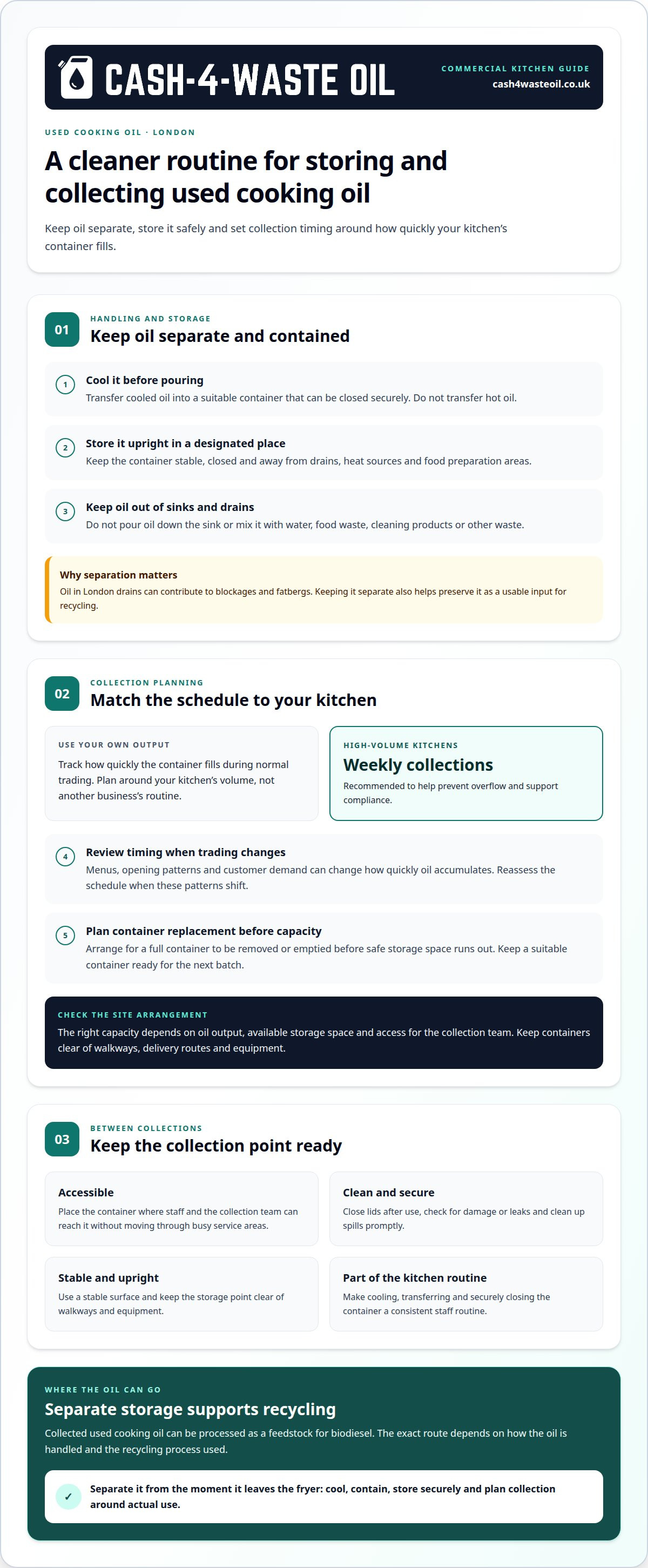
Commercial kitchens generate used oil as part of routine cooking. Keep it separate from food waste and other liquids. Once cooled, pour the oil into a suitable, closable container. Store it upright in a designated area, away from drains and food preparation. This makes the oil easier to collect and recycle.
Never pour used cooking oil down the sink. In London, oil in drains can contribute to blockages and fatbergs in sewers. Keep it out of drains, even when it looks liquid or clean, and don’t mix it with water, cleaning products or other waste. Separate storage helps ensure the oil is handled appropriately for recycling.
Food safety has a direct connection to oil handling. According to UK legislation.gov.uk, improper handling of waste cooking oil by businesses in London can lead to penalties, legal action or mandatory shutdowns under the Food Safety Act of 1990. Keep storage tidy, prevent spills and make the collection process part of the kitchen’s waste routine. These steps support a cleaner, more compliant working area.
Once collected, used cooking oil can be processed as a feedstock for biodiesel. Processing turns waste oil into a fuel, rather than treating it only as something to discard. The exact route depends on how the oil is handled and the recycling process used. Keeping oil separate from water and other waste helps preserve it as a usable input. Biodiesel production is one example of waste oil recycling.
Biofuel is a broader term for fuel made from biological material. Used cooking oil can enter a biofuel production route, including biodiesel, after collection and processing. These terms describe a possible destination, not a guarantee that every container follows the same route. A clear chain from kitchen storage to collection helps keep recycling practical and supports responsible environmental management.
Build a repeatable routine around your kitchen’s output. Staff can cool the oil, transfer it into the designated container, close it securely and keep the storage point clear. If useful, record how quickly the container fills. This can help you choose a collection schedule based on your business’s actual needs.
- Keep used oil separate from water, food waste and cleaning products.
- Use a closable container and store it upright away from drains.
- Keep the collection area accessible and clean up spills promptly.
- Track monthly volumes to understand the kitchen’s disposal pattern.
These steps make collection easier to organise and help keep oil available for suitable recycling. They also reduce the risk of accidental disposal through sinks or drains. Treat used oil as a separate waste stream from the moment it leaves the fryer, and keep the kitchen’s handling routine consistent.
Regular collection and container replacement
Choose a collection schedule that reflects your kitchen’s oil output, not another business’s routine. A high-volume kitchen may fill its container quickly during busy service periods, while a smaller operation may need fewer collections. Track how quickly the container fills during normal trading to help plan a suitable schedule.
Weekly collections are recommended for high-volume kitchens to help prevent overflow and support compliance. A restaurant with continuous frying may need a tighter schedule than a pub that uses less oil. Changes to menus, opening patterns or customer demand can also alter how quickly oil accumulates. Review the schedule when those operating patterns change.
Container replacement works best as part of the collection plan. A full container needs to be removed or emptied before the kitchen runs out of safe storage space. Keep a suitable container ready for the next batch of cooled oil, and avoid transferring hot oil. Staff should know which container is in use and where the replacement belongs.
Capacity is a practical planning consideration. The right arrangement depends on how much oil your kitchen produces, the available storage area and how easily the collection team can reach it. A compact kitchen with limited back-of-house space has different needs from a hotel with a dedicated waste area. Keep containers clear of walkways, delivery routes and equipment.
Secure storage supports a smooth kitchen routine. Keep containers upright on a stable surface, close lids after use and position them away from heat sources, drains and food preparation. Choose a location staff can reach without carrying oil through busy service areas. Check the storage point during routine cleaning and address any damage or leaks promptly.
Across the UK, businesses need to manage waste responsibly; a consistent collection routine helps keep used oil contained until removal. Good storage also reduces the chance of spills entering drains. Collected oil can be recycled into fuel, including alternatives to diesel, supporting a useful route for waste oil and helping reduce reliance on fossil fuels. Emissions depend on the fuel and production process, so avoid treating recycling as a fixed environmental result.
Use a simple review process to keep the arrangement workable:
- Record how quickly the container fills during ordinary trading.
- Reassess collection timing after a menu or service change.
- Keep the container closed, stable and accessible between visits.
- Plan replacement storage before the current container reaches capacity.
For kitchens seeking a regular arrangement, commercial used cooking oil collection can make container planning part of the wider collection discussion.
Collection services for different business types
Restaurants, pubs, hotels and contract catering kitchens can produce used oil at different rates. Fryer use, menu choices and service patterns all affect the volume collected. A fish-and-chip restaurant may fill its container faster than a pub that uses oil for occasional dishes. Plan collections around your kitchen’s actual output and site access.
For high-volume kitchens, weekly collections are recommended to help prevent overflow and support compliance. A smaller kitchen may need a different rhythm, based on how quickly its container fills. Changes in trading patterns matter too. A hotel serving more guests during an event period, for example, may produce oil faster than during its usual service. Review collection frequency when output changes.
Collection coverage also depends on where the business operates. London, Kent and Surrey form the stated service area for this collection. That regional footprint should not be read as a UK-wide service area. Within London, a site inside the M25 or within a ULEZ boundary still needs a practical collection plan. Vehicle access, loading arrangements, road restrictions and the location of the oil store can affect collection logistics.
Provide clear site details when arranging a collection: the full address, container location and any access instructions. A kitchen in a shared hotel service yard may need different directions from a street-level restaurant. Clear instructions help the collection team reach the storage point without disrupting deliveries, staff movement or food service.
Licensing, accreditation and insurance are separate matters. Businesses should ensure waste oil is handled appropriately. An accreditation claim does not, by itself, describe insurance cover, while insurance does not replace the need for compliant waste handling. Keep the distinctions clear when considering the collection arrangement and its supporting documentation.
For the environmental impact to be meaningful, collected oil must follow an appropriate route after removal. Used oil can be processed for recycling, including into fuel, but collection alone does not show how the material is handled later. Documentation helps connect the business’s waste transfer with the receiving party. It gives the kitchen a record to retain alongside its other waste paperwork.
Use these operational details to shape a suitable service:
- Business type: restaurant, pub, hotel or another commercial kitchen.
- Oil output: the usual volume and any predictable changes in trading.
- Site access: collection address, loading route and storage-point location.
- Service geography: London, Kent or Surrey, rather than assuming UK-wide coverage.
- Records: documentation that identifies the waste transfer and collection.
These details help match collection frequency and site arrangements to the business, whether it operates inside the M25 or elsewhere in the stated regional area.
Waste transfer documentation
To arrange commercial cooking oil collection in London, provide the collection address, business type, oil output and site access details. Agree a collection frequency that suits the kitchen’s use, then ensure the waste transfer is recorded. These details help connect the collection visit with the correct business and waste stream.
A Waste Transfer Note records a transfer of waste between parties. For a restaurant, it provides a record of the used cooking oil leaving the premises and being received for handling. Keep the note with the business’s waste records, rather than relying only on collection schedules or informal messages. If collections happen weekly, retain the note or copy for each relevant transfer.
According to UK Government, the transferor and the transferee must keep a transfer note, or a copy of it, for at least 2 years and produce it to an officer of the Environment Agency or of a waste collection authority on demand within 7 days. This applies to both parties, so the business should store its copy where staff can retrieve it promptly.
According to UK legislation.gov.uk, waste oil must be processed by licensed carriers under the Hazardous Waste Regulations 2005. A note supports the record of the transfer, while the collection and subsequent handling form part of the wider waste process. Keep those roles clear in the business’s records. A document does not replace the need for appropriate handling.
Use a consistent record-keeping routine for every collection:
- File the transfer note or copy with the business’s waste documentation.
- Record the collection date alongside the relevant note.
- Keep records organised by site if a business operates several kitchens.
- Make the stored copy accessible to staff responsible for waste records.
For example, a hotel with a restaurant and a separate staff kitchen should keep collection records clear about which location each transfer relates to. This helps staff find the relevant note, especially when collections take place at different locations or on different days. Consistent filing also makes records easier to retrieve for an inspection or internal review.
The process starts with oil stored for collection and ends with a documented transfer. Staff should know which container is ready, where it is kept and which collection it relates to. After collection, file the Waste Transfer Note with the corresponding date. This creates a clear link between the oil leaving the kitchen and the business’s records.
Good documentation supports responsible waste management and helps businesses track how oil is transferred. Keep Waste Transfer Notes alongside other relevant records, rather than mixing them into general invoices or unrelated files. A consistent filing approach makes it easier to find collection records when needed.
Commercial cooking oil collection in London
London restaurants need a collection arrangement that suits their oil output, storage space and site access. Commercial kitchen cooking oil collection in London should fit the kitchen’s working routine, rather than disrupt food preparation or deliveries.
Compare services by looking at practical differences: collection frequency, how used oil is removed, what records are provided and where the waste goes afterwards. These details help distinguish a workable arrangement from one that only appears competitive on price. For restaurants, reliable access to the oil store and clear collection records matter alongside any payment for suitable waste oil.
London has over 20,000 restaurants and commercial kitchens. Their needs vary: a restaurant with regular fryer use may build up oil differently from a hotel kitchen or pub. A suitable service should take account of the business type, the amount produced and the collection point. Those operational details shape a useful arrangement more than a generic schedule.
For restaurants, collection should work around the kitchen’s layout. A street-front restaurant may have limited storage and a narrow service route, while a hotel may keep oil in a shared back-of-house area. Clear site instructions help the collection team find the right container without interfering with deliveries or staff movement. This makes commercial kitchen cooking oil collection in London practical for sites with different access arrangements.
Used oil value depends on factors such as quantity and condition. The amount collected and the presence of water or other contaminants can affect its usefulness for processing. Compare how a service explains its valuation and collection process, rather than treating a headline payment as the only measure. Transparent terms make it easier to understand the commercial benefit.
Oil disposal also has an environmental dimension. Collected cooking oil can be processed for recycling, including into biodiesel. A responsible service should make the transfer and onward handling clear through appropriate documentation. That gives a restaurant a practical record of what happened to its waste, as well as a route away from drain disposal.
Use these points to assess whether a collection service fits your restaurant:
- Routine: does the schedule reflect the kitchen’s oil output?
- Access: can the collection team reach the storage point safely?
- Records: are transfer documents supplied and easy to retain?
- Value: are payment terms explained in relation to oil quantity and condition?
- After collection: is the recycling or disposal route described clearly?
A suitable service is about more than the apparent payment. Consider the collection schedule, cash payment, documentation and responsible handling. Together, these practical details help restaurants choose an arrangement that supports daily operations and keeps used oil out of drains.
For a London restaurant ready to organise its collection, arrange used cooking oil collection around its kitchen’s output and site access.
Cash 4 Waste Oil: Used Cooking Oil Collection
Cash 4 Waste Oil collects used cooking oil from restaurants, pubs, hotels and other commercial kitchens in London, Kent and Surrey. Turn to the service when your kitchen needs a regular route for used oil, a Waste Transfer Note for its records, or cash payment for collected waste oil.
Collections include a Waste Transfer Note, and payments for waste oil are made in cash on the spot. The company is licensed and Environment Agency registered, supporting responsible handling and documentation for commercial collections.
For a straightforward next step, contact Cash 4 Waste Oil to discuss used cooking oil collection for your commercial kitchen.
Make your next collection easier to manage
Give used oil a clear place in your kitchen’s routine. Decide who oversees the storage point, how staff track changes in oil output and where collection paperwork is filed. A simple handover between shifts helps prevent missed details and gives the person organising collections a practical view of the site’s needs.
For commercial kitchen cooking oil collection in London, treat the first conversation as a chance to explain your setup clearly. Share your business type, collection address, access arrangements and typical oil output. Those details create a useful starting point for discussing a collection arrangement that fits your operation.
If you’re ready to discuss your kitchen’s used oil, contact Cash 4 Waste Oil. A clear next step can make oil management easier to organise around the demands of service.
Frequently Asked Questions
How is the price of used cooking oil determined?
The payment depends mainly on the quantity collected and the oil’s condition. Oil kept separate from water, cleaning products and other waste is easier to assess than mixed or contaminated contents. For example, a kitchen that stores fryer oil separately can give a clearer picture of its collection. Cash 4 Waste Oil provides a quote based on volume and condition, rather than publishing a fixed rate per litre.
Why is responsible oil disposal essential for your business?
Responsible disposal helps prevent used oil entering sinks and drains, where it can contribute to blockages and environmental harm. It also creates a clear record of how your business transferred its waste. For example, a restaurant can keep collection paperwork with its other waste records, making the process easier to track. Keep oil separate from other waste and use a proper collection route.
How much does commercial waste cooking oil collection cost in London?
Cash 4 Waste Oil’s commercial cooking oil collection is free, and the business pays cash for collected waste oil. The payment amount depends on the oil’s volume and condition, so it isn’t a fixed price per litre. A restaurant can describe its typical output and oil condition when requesting a free quote. This helps distinguish the collection cost from the value paid for the waste oil.
Do London businesses get paid for used cooking oil?
Yes. Cash 4 Waste Oil pays commercial businesses cash on the spot for collected used cooking oil. The payment depends on the quantity and condition of the oil, so the amount can vary between collections. Keep the oil separate from water and other waste to make its condition easier to assess. The service is for commercial kitchens, including restaurants, pubs and hotels.
How often can a restaurant arrange cooking oil collection in London?
Restaurants can arrange flexible weekly, fortnightly or monthly collections. The most suitable interval depends on how quickly the kitchen generates used oil and how much storage space it has. A restaurant with frequent fryer use may need collections more often than one producing less oil. Match the schedule to the kitchen’s output, then review it if a menu or trading pattern changes.
Which types of used cooking oil can be collected and recycled?
Cash 4 Waste Oil collects used cooking oil, vegetable oil and animal fats from commercial food-service premises. These are food-related oils and fats, not motor oil, engine oil or industrial lubricants. Keep the different waste streams separate at the kitchen so the contents are clear at collection. Collected oil is recycled into biodiesel, giving suitable used cooking oil a further use as fuel.
What are the UK regulations for storing and disposing of commercial waste cooking oil?
Keep commercial used cooking oil contained and separate from sinks, drains and other waste. Businesses should use a licensed waste carrier for its handling and transfer. In practice, this means storing oil securely until collection and retaining the related paperwork. Avoid pouring oil down a drain, even if it is warm and appears liquid, as it can contribute to blockages in pipes and sewers.
Is a waste transfer note required for used cooking oil collection?
A Waste Transfer Note records the transfer of used oil between the business and the receiving party. Cash 4 Waste Oil provides a note after every collection. Keep the document with your business waste records, organised by collection date and site where relevant. The transferor and transferee both have record-keeping responsibilities, so retain your copy where staff can retrieve it if requested.