Commercial Cooking Oil Disposal Fines: UK 2026 Guide
What if the risk is not the oil itself, but how it is stored, transferred or recorded? Commercial cooking oil disposal fines are not one fixed tariff. The consequences depend on what happened, the evidence and the rules that apply, so broad claims about automatic penalties can be misleading.
If you run a commercial kitchen, it is reasonable to want clear answers. Using an unsuitable collector, failing to keep a Waste Transfer Note or allowing oil to reach a drain can create compliance problems. The practical response is to check your handling and collection arrangements, rather than rely on headline figures.
This 2026 UK guide explains which disposal practices may attract enforcement and how your business can reduce uncertainty through responsible handling and clear records. It also gives you practical checks for a collection partner, including what to ask about registration, documentation and traceability. The aim is to help you build a routine that supports compliance while checking the rules that apply to your business and location.
Key Takeaways
- Commercial cooking oil disposal fines are not one automatic penalty. The type of disposal failure and the evidence matter.
- Pouring oil down drains, storing it poorly or using an unsuitable collector can increase compliance and enforcement risks.
- Check a collector’s registration, collection records and Waste Transfer Note before arranging a transfer.
- Use a routine for handling and storing used oil, arranging collection and keeping records.
- Compare collection options, including Cash 4 Waste Oil’s free commercial collection, cash payment on collection and Waste Transfer Note.
Commercial cooking oil disposal fines: which mistakes create the greatest risk?
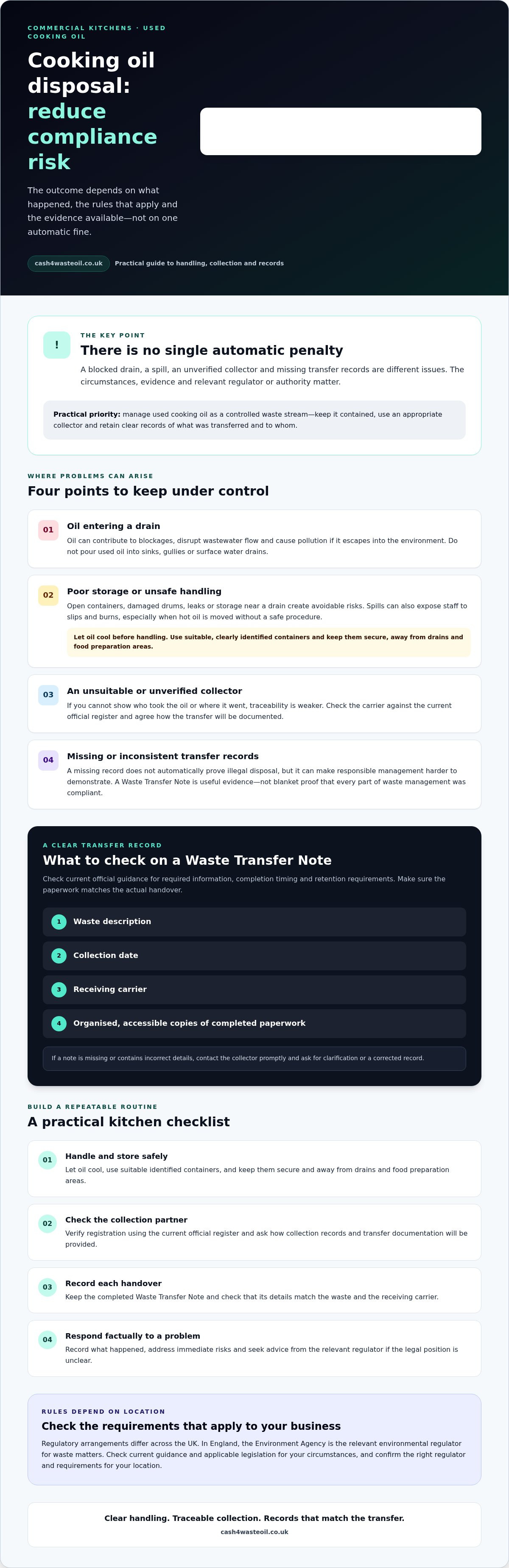
There is no single automatic fine for every cooking oil disposal mistake. Commercial cooking oil disposal fines and other enforcement outcomes depend on what happened, which law applies, what can be evidenced and which regulator or authority is involved. A blocked drain, a spill, an unverified collector and missing transfer records are different problems, and should not be treated as if they trigger the same response.
For kitchens, the practical priority is to manage used cooking oil (UCO) as a controlled waste stream. Keep it contained, use a suitable collector and retain records showing what was transferred and to whom. If a regulator raises a concern, clear evidence of your handling and collection arrangements can help establish the facts.
Can pouring commercial cooking oil down a drain lead to enforcement?
Yes, it can create serious drainage and environmental risks. Oil can contribute to blockages in pipes and sewers, disrupt wastewater flow and cause pollution if it escapes into the environment. A drainage issue alone does not establish that a specific offence has occurred or determine a penalty. The circumstances and evidence matter, including where the oil went and what damage resulted.
Do not pour used oil into sinks, gullies or surface water drains. If you are unsure about a proposed disposal route, check the current rules with the relevant environmental regulator or your water company. Regulatory arrangements differ across the UK, so confirm which body and requirements apply to your business location.
Which disposal and storage failures should kitchens watch for?
Oil in open containers, leaking from damaged drums or stored where it can reach a drain creates avoidable risks. Spills can also expose staff to slips and burns, particularly if hot oil is moved without a safe procedure. Let oil cool before handling it, use suitable, clearly identified containers and keep them secure, away from drains and food preparation areas.
Informal handovers create another problem: if you cannot show who took the oil or where it went, traceability is weaker. Before collection, check the carrier through the current official register, agree how the transfer will be documented and keep the completed waste paperwork. A missing record does not automatically prove illegal disposal, but it can make it harder to demonstrate responsible management.
Take a fact-led approach. If there is a spill or collection issue, record what happened, address any immediate risk and seek advice from the relevant regulator when the legal position is unclear. Check the specific rule and circumstances rather than relying on headline claims about fines.
How Environment Agency rules and waste records affect cooking oil disposal
Businesses have a duty to take reasonable steps to ensure their waste is handled and transferred responsibly. In practice, that means knowing what happens to your used cooking oil, choosing an appropriate collector and keeping a clear record of its transfer. The Waste duty of care code of practice on GOV.UK explains these responsibilities. Check current guidance and applicable legislation for your circumstances, rather than relying on a waste note alone.
A Waste Transfer Note (WTN) records a transfer of waste between parties. It can help show what waste was handed over, when the transfer took place and who received it. It is not blanket proof that every part of your waste management was compliant or that the collector handled the oil correctly after collection. Commercial cooking oil disposal fines and other enforcement action depend on the facts, relevant rules and available evidence.
What should a Waste Transfer Note help a business evidence?
Check current official guidance for the required information, how and when the note must be completed, and how long it must be kept. Make sure the record matches the actual transfer: the waste description, collection date and receiving carrier should be consistent. Keep copies somewhere organised and accessible. If a note is missing or contains incorrect details, contact the collector promptly and ask for clarification or a corrected record.
Cash 4 Waste Oil states that it provides a WTN for its commercial used cooking oil collections. The note is useful evidence, but it does not replace checking the collector’s credentials or managing the oil safely before collection.
Who regulates commercial cooking oil waste in England?
The Environment Agency is the relevant environmental regulator for waste matters in England. Its role and the rules that apply depend on the issue, so check current Environment Agency guidance before drawing conclusions about a particular incident or possible enforcement action. The UK’s nations have separate regulatory arrangements. Confirm the appropriate regulator and requirements for your business location instead of assuming English guidance applies elsewhere.
Use GOV.UK and Environment Agency publications to check your responsibilities, carrier registration and record-keeping requirements. These sources help you verify the rules, but they are not a substitute for legal advice when a specific incident or enforcement notice is involved. For a collection arrangement that includes a transfer record, you can review commercial oil collection from Cash 4 Waste Oil.
How to compare commercial cooking oil collectors before appointing one
A reliable collection arrangement should make compliance easier to demonstrate, not just offer a convenient pick-up or payment. Check the provider’s credentials through the current official register for the relevant UK nation. Then compare its approach to paperwork, collection records and communication. An attractive payment or easy arrangement does not replace these checks. Gaps in traceability can make it harder to show that your business managed its waste responsibly and may add to the risk behind commercial cooking oil disposal fines.
Which credentials and service details should a kitchen verify?
Ask for the carrier’s registration details and check them against current regulator information. Confirm that the registration covers the waste activity involved, rather than relying on a verbal assurance or an old document. Then check that the collector accepts the type of oil your kitchen produces and confirms service for your premises.
Use this comparison table when reviewing providers:
| What to compare | What to check |
|---|---|
| Registration | Can you verify the carrier’s details and relevant waste activity through the current official register? |
| Paperwork | Will each transfer be documented, and how will you receive and access the waste-transfer record? |
| Collection records | Can the provider confirm collection dates and help resolve a missing or incorrect record? |
| Service area and arrangements | Does the provider collect from your premises, accept your oil type and explain how collections are arranged? |
Set expectations before the first collection. Ask who to contact with a query, how to report a missed collection and what to do if the paperwork does not match your own records. For safe handling at the kitchen end, consult the HSE’s practical safety guidance alongside your workplace procedures.
How can a business assess collection records and traceability?
After each collection, check that you have a legible waste-transfer document and that its details match the handover. Reconcile the collection date against your kitchen’s waste log. If information is missing, unclear or inconsistent, raise it with the collector promptly and keep a note of the follow-up.
Ask what happens to the oil after collection and whether the provider can explain its onward recycling route. Look for clear, specific answers rather than broad environmental promises. A useful collection partner should be able to explain its process and provide records that support a traceable transfer.
Cash 4 Waste Oil collects used cooking oil from commercial kitchens and states that it provides a Waste Transfer Note. Businesses in its confirmed service areas can review its commercial collection details as one option when comparing providers.
A practical checklist to reduce commercial cooking oil disposal risk
A consistent routine helps staff handle used oil safely and gives managers a clearer record of each collection. Use the steps below alongside your premises’ safety procedures and current official guidance. They can reduce avoidable problems, but cannot guarantee that enforcement action will never follow. Commercial cooking oil disposal fines depend on the circumstances and applicable rules.
What should staff do between oil changes and collections?
- Step 1: Cool the oil. Let it cool before transferring it. Follow workplace procedures for handling hot oil to reduce burns and spills.
- Step 2: Use suitable containers. Transfer oil into closed, clearly managed containers intended for this use. Do not mix it with other waste streams.
- Step 3: Store it securely. Keep containers stable and away from drains and food preparation areas. Check them routinely for leaks, damage, contamination or signs they may overflow.
- Step 4: Brief the team. Make sure relevant staff know where oil is stored, how it should be handled and how to report a spill or damaged container. Follow your site’s spill and safety procedures.
For a ready-to-use resource, consult the commercial kitchen oil disposal compliance checklist alongside your own staff instructions. The correct response to a spill can depend on its scale and location. Secure the area, follow site procedures and seek advice from the relevant authority if oil may have entered a drain or the environment.
What records should managers review after collection?
- Step 5: Check the transfer record. Match the Waste Transfer Note to the collection, including the date and waste details. Confirm current retention requirements using official guidance for your location.
- Step 6: Reconcile the log. Compare the collection paperwork with your kitchen’s waste log. Note missed collections, discrepancies or missing documents, then record the action taken to resolve them.
- Step 7: Escalate unresolved concerns. Contact the collector about missing or inconsistent paperwork. If you suspect unlawful disposal, a pollution incident or a breach of requirements, document what you know and seek prompt advice from the relevant regulator. Do not assume a completed WTN settles every compliance question.
Keep records organised and accessible, and use current DEFRA and regulator guidance to check the rules that apply. The broader commercial cooking oil disposal guidance in this article can help you build the routine into everyday kitchen practice.
For a collection arrangement that includes a Waste Transfer Note, find out about commercial used cooking oil collection from Cash 4 Waste Oil.
Traceable Cooking Oil Collection: Your Next Steps
A dependable collection arrangement should be easy to check and document. Before choosing a provider, use this decision framework:
- Verify credentials: Check the collector’s current registration through the relevant official register and confirm the details match the waste activity involved.
- Agree the arrangement: Confirm accepted oil types, the collection process and whether your premises are within the provider’s service area.
- Check the paperwork: Ask how each transfer will be recorded and make sure you will receive a Waste Transfer Note to match your collection log.
These checks support traceability and help you identify gaps early. They cannot guarantee that your business will never face commercial cooking oil disposal fines, and appointing a new collector will not resolve historic problems by itself. Keep records of previous collections and follow up on missing paperwork or unresolved concerns.
When should a business review its collection arrangement?
Review your current provider if Waste Transfer Notes are missing, collection gaps cannot be explained or service concerns remain unresolved. Before the next transfer, check the replacement collector’s credentials and agree how the collection and documentation will work. If you find a historic record or disposal issue, keep the relevant evidence and seek advice from the appropriate regulator where needed.
What can a commercial kitchen ask before arranging collection?
Confirm that the collector accepts your food-grade vegetable or cooking oil, serves your premises and provides a Waste Transfer Note for each transfer. Ask how collections are arranged and who to contact about paperwork queries. Check availability directly, even if you are based in a stated coverage area.
Cash 4 Waste Oil collects used cooking oil from commercial kitchens in London, Kent and Surrey. The company states that its commercial collection is free, pays cash on collection and includes a Waste Transfer Note. Contact the team to confirm accepted oil types and availability for your premises.
Ask Cash 4 Waste Oil about commercial collection and confirm the collection and documentation details for your kitchen.
Make your next oil collection easier to trace
Commercial cooking oil disposal fines are not one automatic penalty for every mistake. The risk depends on what happened and which rules apply. Reduce avoidable uncertainty by storing used oil securely, checking your collector’s credentials and keeping a Waste Transfer Note for each collection.
Good paperwork supports traceability, but it does not replace safe handling or resolve past issues. Review your records regularly and follow up promptly if a collection note is missing or details do not match.
Cash 4 Waste Oil collects used cooking oil from commercial kitchens, with free collection, cash paid on the spot and a Waste Transfer Note provided for collected oil. The company states that its collections are fully licensed and Environment Agency registered. Check that the service is available for your premises and verify current credentials before arranging collection.
Arrange free commercial cooking oil collection and get your Waste Transfer Note. With a clear collection plan and accessible records, your team can manage used oil with greater confidence.
Frequently Asked Questions
Can a business be fined for pouring cooking oil down the drain?
Possibly, but the outcome depends on what happened, the applicable rules and the evidence. There is no single automatic fine for every incident. Oil can contribute to sewer blockages or pollution, so never use a drain as a disposal route. Check current guidance from the Environment Agency or your water company for your premises. If you receive an enforcement notice or action is threatened, seek qualified advice promptly.
How much is the fine for illegal commercial cooking oil disposal?
There is no single fixed fine for every case. Commercial cooking oil disposal fines depend on the conduct, relevant legislation, jurisdiction and enforcement outcome. Be cautious about online figures that do not explain which offence or circumstances they refer to. If you are dealing with a specific incident, allegation or notice, check current official guidance and get legal advice before deciding how to respond. Do not assume another business’s outcome predicts yours.
Who is responsible for commercial cooking oil waste, the kitchen or the collector?
The kitchen should not assume that appointing a collector automatically removes its responsibilities. Check the collector’s relevant registration, agree how the oil will be transferred and keep appropriate records, including the Waste Transfer Note. These steps help document the handover, but do not establish that every part of the process is compliant. Exact duties depend on the circumstances and current rules, so verify them through official guidance rather than relying only on a supplier’s assurances.
Does a Waste Transfer Note prevent a business from being fined?
No. A Waste Transfer Note records a waste transfer, but it is not a guarantee against enforcement or proof that every disposal practice was compliant. Check that the note is legible, accurate and matches the actual collection. Retain it according to current guidance. Also verify the collector’s credentials and store oil safely between collections. If information is missing or inconsistent, contact the collector and keep a record of your follow-up.
Do commercial kitchens in England have to use an Environment Agency-registered waste carrier?
Businesses should check current requirements and confirm that a carrier’s registration covers the relevant waste activity. The Environment Agency regulates relevant waste matters in England, but the other UK nations have separate regulatory arrangements. Do not assume the same regulator or requirements apply across the UK. Check current official guidance for your premises and verify the collector’s details through the appropriate register before arranging a transfer. Similarly, for businesses undergoing refits or site renovations that require licensed clearance, you can discover Greenline Environmental for flexible wait-and-load waste removal.
Contact the collector promptly and request the missing or corrected paperwork. Compare the collection date and details with your own waste log, then keep a record of your request and the response. If the issue remains unresolved, check current regulator guidance or speak to a qualified adviser about your responsibilities. Do not assume that a transfer is compliant simply because the oil was collected. Document what you know and the steps you take.
Can commercial cooking oil be collected for recycling instead of being disposed of as general waste?
Yes, suitable specialist services can collect commercial used cooking oil for recovery. Check the collector’s credentials, confirm which food-grade oils it accepts and ask how each transfer is documented. Cash 4 Waste Oil says its collected oil is processed into biodiesel and provides a Waste Transfer Note. It collects from commercial kitchens in London, Greater London, Kent, Surrey, Birmingham, Coventry, Leicester, Wolverhampton, Leicestershire, Derbyshire, Staffordshire, Warwickshire, Northamptonshire, Oxfordshire and Worcestershire. Confirm availability for your premises before arranging collection.