Commercial Kitchen Grease Disposal Regulations UK: A 2026 Guide
What if your used cooking oil is stored correctly, but fats and grease are still going down the drain? The commercial kitchen grease disposal regulations UK businesses need to follow cover two separate tasks: protecting drains from fats, oils and grease, and managing used cooking oil as waste. Getting one right does not automatically cover the other.
It can be unclear what belongs in a grease trap, what should go into a waste-oil container and which records to keep. A clear routine helps prevent blockages and pollution, while making waste handovers easier to document.
This 2026 guide explains how to separate drainage protection from used-oil disposal, keep waste-transfer records and train staff to handle grease consistently. It also highlights where requirements can differ across England, Scotland, Wales and Northern Ireland, and what to check with your local wastewater authority. Cash 4 Waste Oil collects used cooking oil from commercial kitchens across London, Greater London, Kent, Surrey, Birmingham, Coventry, Leicester, Wolverhampton, Leicestershire, Derbyshire, Staffordshire, Warwickshire, Northamptonshire, Oxfordshire and Worcestershire. Collections are free, payment is made on collection, and each handover includes a Waste Transfer Note. Use this guide to build a straightforward process for your kitchen and its collections.
Key Takeaways
- Commercial kitchen grease disposal regulations UK cover two distinct tasks: protecting drains and managing used cooking oil as waste.
- Keep fats, oils and grease out of sinks. Use drainage equipment as part of your prevention routine, not as a replacement for separate oil storage.
- Give staff clear instructions for separating oil, checking containers and recording each handover.
- Understand your waste duty of care and keep transfer documentation to track your used oil.
- A documented commercial collection makes oil handovers easier to manage. Cash 4 Waste Oil provides a Waste Transfer Note.
UK commercial kitchen grease disposal regulations
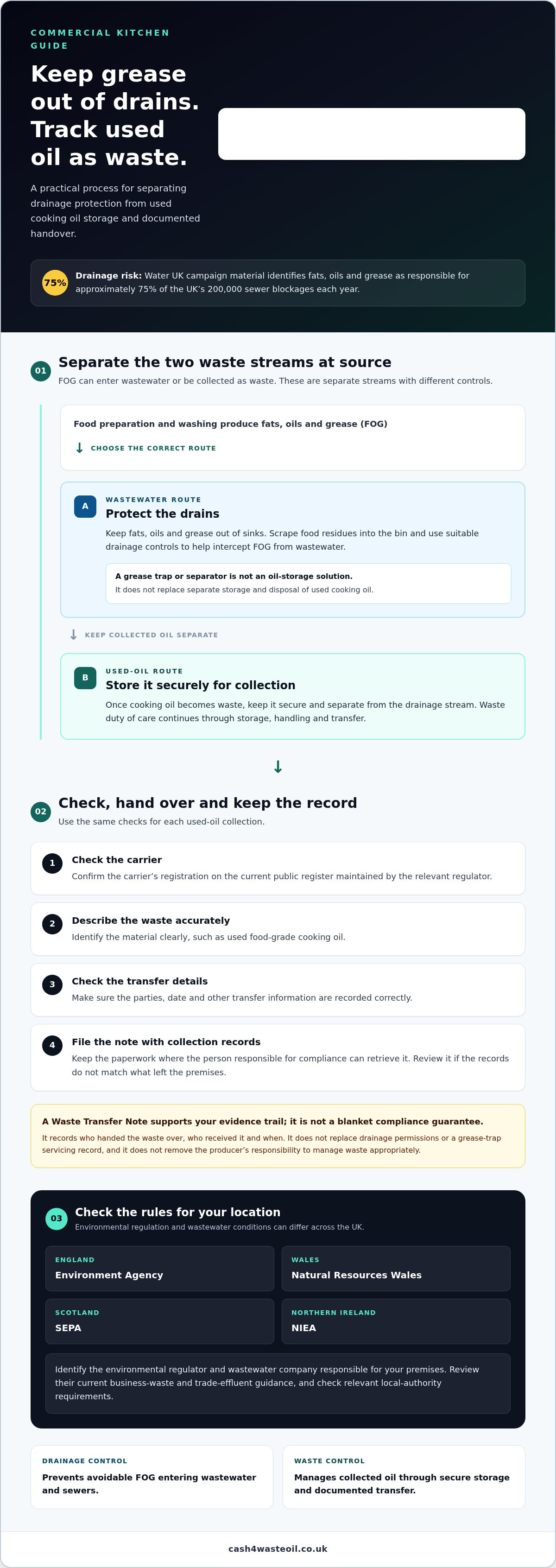
Fats, oils and grease (FOG) are residues from food preparation and washing. They can enter a kitchen’s drainage system in wastewater, or be collected as waste. These are separate streams with different controls. In practical terms, commercial grease-disposal compliance means keeping FOG out of drains and managing collected waste oil through suitable storage and documented transfer.
That distinction is central to the commercial kitchen grease disposal regulations UK businesses need to understand. Drain protection reduces the risk of sewer problems; lawful waste handling addresses what happens to oil once it has been collected. A grease trap or separator can help intercept FOG from wastewater, but it does not replace separate storage and disposal of used cooking oil. For a neutral introduction to how traps work, see Grease trap.
Why grease in drains creates a business and environmental risk
FOG can build up in sewer pipes and contribute to blockages, disruption and pollution. Water UK campaign material identifies fats, oils and grease as responsible for approximately 75% of the UK’s 200,000 sewer blockages each year. Reduce avoidable discharges by scraping food residues into the bin and keeping used oil out of sinks. Drainage risks are separate from the duty to store and transfer waste oil appropriately. Whether a discharge is unlawful depends on the circumstances and applicable rules, so do not assume every incident amounts to the same offence.
Which rules and authorities may apply across the UK?
Environmental regulation varies by nation. The Environment Agency covers England, Natural Resources Wales covers Wales, SEPA covers Scotland and NIEA covers Northern Ireland. Wastewater companies may also set local conditions for trade effluent, including requirements relevant to discharges into their sewers. These details are not identical across the UK, so use the guidance that applies to your premises.
Start by identifying the environmental regulator and wastewater company responsible for your location. Review their current business-waste and trade-effluent guidance, and consider relevant local-authority requirements. Rules can depend on the activity, waste stream and discharge arrangements, so do not assume a requirement that applies in one area applies across the UK.
Keeping the two streams separate makes daily decisions easier: wastewater goes through suitable drainage controls, while used cooking oil is stored separately for collection and documented transfer. The next step is to understand the different roles of drains, grease traps and dedicated oil storage.
UK waste duties for used cooking oil and grease
Once used cooking oil becomes waste, the kitchen’s responsibilities continue beyond putting it in a container. The Environmental Protection Act 1990 establishes a waste duty of care: businesses must take reasonable steps to ensure waste is stored, handled and transferred appropriately. In practice, keep oil secure, use an authorised carrier and ensure it goes to an appropriate receiving destination.
A Waste Transfer Note helps document a handover, but it is not a blanket compliance guarantee. It does not prove by itself that every duty has been met, and it does not cover drainage permissions. Section 111 of the Water Industry Act 1991 concerns discharges to public sewers, a separate issue from transferring stored waste oil.
What should a kitchen check before handing over waste oil?
Use the same checks at each collection. Confirm the carrier’s registration on the current public register maintained by the relevant regulator. Depending on your location, that may be the Environment Agency, Natural Resources Wales, SEPA or NIEA. Check that the waste description and transfer details are accurate, then file the note where the person responsible for compliance can retrieve it.
- Identify the waste clearly. Describe the material accurately, such as used food-grade cooking oil.
- Check the handover details. Make sure the parties, date and other transfer information are recorded correctly.
- Keep a consistent trail. File notes with collection records and review them if the paperwork does not match what left the premises.
Document particulars and retention periods can depend on current rules and the transfer arrangement. Check the official guidance for your location rather than relying on an assumed UK-wide timeframe.
What does a Waste Transfer Note do?
A Waste Transfer Note records a transfer between parties, including who handed the waste over, who received it and when. It helps create an evidence trail for your records. It is not the same as a grease-trap servicing record, which relates to drainage equipment, or a trade-effluent permission, which concerns discharges to the sewer.
For more detail on the document and its role, see the guide Waste Transfer Note Cooking Oil: Compliance Requirements. Keep each note with your wider waste records. It supports your compliance process, but does not remove the producer’s responsibility to manage waste appropriately.
Cash 4 Waste Oil provides a Waste Transfer Note with commercial used cooking oil collections. Learn more about documented used cooking oil collection.
Grease traps, drains and waste-oil collections: what is the difference?
These three parts of a kitchen’s grease controls do different jobs. Drains carry wastewater away from sinks and equipment. Grease traps or interceptors help remove fats, oils and grease from that wastewater. Dedicated containers hold used cooking oil separately for collection. Traps manage wastewater; collection arrangements manage segregated waste oil. A trap does not turn its contents into used cooking oil for collection, or replace a separate oil-storage routine.
| Item | What it manages | Kitchen control |
|---|---|---|
| Drains | Wastewater leaving sinks and other connected equipment. | Keep oil, food scraps and unsuitable liquids out. Scrape plates and pans into the appropriate bin before washing. |
| Grease trap or interceptor | Fats, oils and grease carried in wastewater, helping limit what enters the drainage system. | Use and maintain equipment suited to the premises, and follow applicable site or local requirements. |
| Used-oil container | Segregated food-grade cooking oil awaiting collection. | Let oil cool, transfer it carefully to a suitable secure container and keep it separate from other waste. |
What is a grease trap expected to manage?
A grease trap is drainage-protection equipment, not a storage container for fryer oil. It separates FOG from wastewater before that water moves through the drainage system. The right equipment and maintenance arrangements depend on the site. Do not assume a trap is legally required in every kitchen, or that installing one alone meets every obligation. Follow current wastewater-company conditions and local requirements for your premises.
How should kitchens separate and store used cooking oil?
Give staff a simple rule: never pour used fryer oil into a sink, floor drain or grease trap. Allow food-grade oil to cool before handling, then store it in a suitable, secure container designated for that waste stream. Keep the container closed and position it to reduce spills and contamination. Do not mix the oil with sink waste, cleaning chemicals, food scraps or non-food-grade oils.
Use sink strainers and scrape food solids into the appropriate bin before washing equipment. Train staff to recognise the separate routes: solids go to the correct waste bin, wastewater goes through the drainage system, and cooled cooking oil goes into its dedicated container. These practical controls support the commercial kitchen grease disposal regulations UK framework without confusing drain protection with waste-oil management. For more storage tips, see Used Fryer Oil Collection: Tips for Mess-Free Storage.
How can a commercial kitchen build a practical grease-compliance routine?
A reliable routine makes the right action clear during a busy shift and creates a record trail managers can review. Assign one person to oversee used-oil storage and handovers, with a trained deputy to cover absences. Keep the instructions visible near sinks and the oil container.
- Brief staff at the start of each shift. Keep cooking oil, food scraps and unsuitable liquids out of sinks and surface-water drains. Scrape food solids into the correct bin before washing. Show staff where the used-oil container is and how to report spills or a damaged container.
- Separate and store oil safely. Let used food-grade cooking oil cool before transferring it carefully into the designated, secure container. Do not mix it with sink waste, cleaning chemicals or non-food-grade oils. The responsible person should check the container’s condition and available capacity during routine kitchen checks.
- Review drainage controls separately. Assign a manager to track grease-trap or interceptor checks and maintenance. Confirm the arrangements suit the site, and review relevant wastewater-company conditions or local requirements. Equipment and maintenance expectations can depend on location, so do not assume the same approach applies to every premises.
- Check and record every collection. Review the waste description and handover details, and make sure the Waste Transfer Note is complete. File it consistently with collection records. Check current official guidance for the applicable retention period, and review records if a note is missing or details do not match the waste collected.
- Adjust the collection routine to actual output. Monitor how quickly the kitchen fills its container and compare this with the collection schedule. Revisit the arrangement if trading patterns or oil volumes change, so storage remains manageable and handovers are recorded promptly.
This step-by-step approach turns the commercial kitchen grease disposal regulations UK operators need to follow into clear staff actions and manager checks. For a broader operational reference, see Commercial Kitchen Oil Disposal: The 2026 Essential Compliance Checklist.
Cash 4 Waste Oil provides commercial used cooking oil collections with a Waste Transfer Note. Arrange documented used-oil collection.
Arrange documented commercial used-oil collection in your UK service area
Once your kitchen has separated and stored its used cooking oil, a commercial collection provides a straightforward handover route. Cash 4 Waste Oil offers free commercial collections, cash payment on collection and a Waste Transfer Note. Collections serve commercial kitchens across London, Greater London, Kent, Surrey, Birmingham, Coventry, Leicester, Wolverhampton, Leicestershire, Derbyshire, Staffordshire, Warwickshire, Northamptonshire, Oxfordshire and Worcestershire.
What happens when a business books a collection?
Choose a scheduled or on-call collection for your commercial kitchen. Keep the oil separate in its designated container and have it ready for handover. The service is for commercial food-grade vegetable and cooking oils, not household oil or engine oil.
At collection, the oil is handed over and a Waste Transfer Note is provided for your records. Cash payment is made for the collected oil. The recovered oil is processed into biodiesel, giving it further use as a feedstock. Keep the handover information with your other waste records so the collection is easy to trace during an internal review.
How can collection support a kitchen’s compliance process?
A Waste Transfer Note helps record the used-oil handover. File it alongside your collection details and other relevant waste documentation. It supports your records, but does not transfer every waste duty away from your business. Continue to store oil appropriately, check the handover details and follow the current requirements that apply to your premises.
Build collection into your routine. Note when the container is approaching capacity, make sure staff know where oil belongs and have the person responsible file the Waste Transfer Note after each handover. A consistent process connects daily kitchen practice with the documentation needed to account for waste leaving the site.
That is the practical link between the commercial kitchen grease disposal regulations UK operators need to manage: keep oil out of drains, separate it for collection and retain a clear record of its transfer. Cash 4 Waste Oil makes commercial used-oil handovers easier to document, with free collections, payment on collection and a Waste Transfer Note. Your business remains responsible for its own waste-management duties.
Arrange commercial used cooking oil collection for your kitchen.
Make grease compliance part of the daily routine
Effective commercial kitchen grease disposal regulations UK compliance rests on two clear habits: keep fats, oils and grease out of drains, and manage used cooking oil as a separate waste stream. Grease traps help protect drainage systems, while dedicated storage and documented handovers support responsible oil management. Follow local wastewater requirements and keep your records organised.
For commercial kitchens, Cash 4 Waste Oil offers free scheduled or on-call collections, cash payment and a Waste Transfer Note. Collections are fully licensed and Environment Agency registered. The note supports your waste records, but your business remains responsible for its own duty-of-care obligations.
Ready to put a clear collection routine in place? Arrange commercial used cooking oil collection and make the handover simpler to manage. With clear staff instructions and consistent records, your kitchen can handle used oil with confidence.
Frequently Asked Questions
Do commercial kitchens in the UK need a grease trap?
Not necessarily. Requirements can depend on the premises, drainage arrangements and local wastewater conditions, so do not assume every kitchen faces the same rule. A grease trap can help manage fats in wastewater, but it does not replace separate storage and lawful transfer of used cooking oil. Review your wastewater company’s current trade-effluent guidance, along with relevant regulator or local-authority advice, to establish what applies to your site.
Can a restaurant pour used cooking oil down the sink?
No. Keep used cooking oil out of sinks and drains because it can contribute to blockages and pollution. Let the oil cool, place it in a suitable container and arrange an appropriate commercial waste handover. Keep food scraps and grease out of drainage systems too. If trade-effluent conditions apply at your premises, follow your wastewater company’s current guidance for any site-specific requirements.
Is a Waste Transfer Note required for commercial cooking oil?
Commercial waste transfers generally need appropriate documentation, but exact requirements depend on the waste and current rules. A Waste Transfer Note records key information about a transfer and supports your business records. It does not remove your wider duty-of-care responsibilities. Check current official guidance for the required details, acceptable formats and retention period that apply to your waste and location before setting your record-keeping process.
How long must a restaurant keep Waste Transfer Notes?
Check the retention period in current official guidance for the relevant UK nation and type of waste transfer. Do not rely on an assumed timeframe or an old template. Set up a consistent filing routine so staff can retrieve notes for internal checks or a regulatory enquiry. Confirm the applicable time limit and any exceptions, then make sure the person responsible for waste records follows that process after each collection.
Does a commercial kitchen need a registered waste-oil collector?
Businesses must take reasonable steps to ensure waste is transferred to an authorised person and handled appropriately. Check the collector’s registration using the current official register for the relevant regulator, then keep accurate transfer documentation. Registration is one part of responsible waste management, not a substitute for correct waste descriptions, records or your own duties. The regulator to check depends on where your kitchen operates in the UK.
Are cooking oil disposal rules the same across England, Wales, Scotland and Northern Ireland?
No. Core waste-management principles apply across the UK, but regulators, guidance and wastewater arrangements differ by nation and location. The Environment Agency covers England, Natural Resources Wales covers Wales, SEPA covers Scotland and NIEA covers Northern Ireland. Cash 4 Waste Oil collects commercial used cooking oil in London, Greater London, Kent, Surrey, Birmingham, Coventry, Leicester, Wolverhampton, Leicestershire, Derbyshire, Staffordshire, Warwickshire, Northamptonshire, Oxfordshire and Worcestershire.
Can a grease trap replace used cooking oil collection?
No. A grease trap is drainage-protection equipment that manages fats in wastewater. It does not replace separating and transferring bulk used cooking oil. Let food-grade oil cool, store it in a suitable container and arrange an appropriate commercial waste handover. Maintain drainage equipment separately and follow applicable wastewater conditions for your premises. The commercial kitchen grease disposal regulations UK businesses follow involve both drain protection and proper waste-oil management.