Commercial Kitchen Oil Collection in London: How Pricing Works
Used cooking oil has no single fixed value: payment depends on the volume collected and the oil’s condition. For commercial kitchen cooking oil collection in London, your business’s monthly output also helps shape a suitable collection schedule. Keep clear records so you can track quantities and document every collection.
It’s reasonable to want to know what affects the return before arranging a collection. This guide explains how oil volume and condition influence payment, how monthly output informs collection frequency, what a Waste Transfer Note records and where service is available across London. You’ll also see how collection can fit the working routines of restaurants, cafés, pubs, hotels and other food businesses.
Key Takeaways
- Keep a regular note of how much used oil your kitchen produces; this helps make collection planning more practical.
- Keep collection records for six years and file the Waste Transfer Note provided for each collection.
- For a first used cooking oil collection in North London, the typical lead time is 5-7 working days.
- Collection coverage includes Camden, Islington, Soho, Notting Hill and Wandsworth.
- When arranging a service, look for a clear record of each collection and terms that explain how oil volume and condition affect payment.
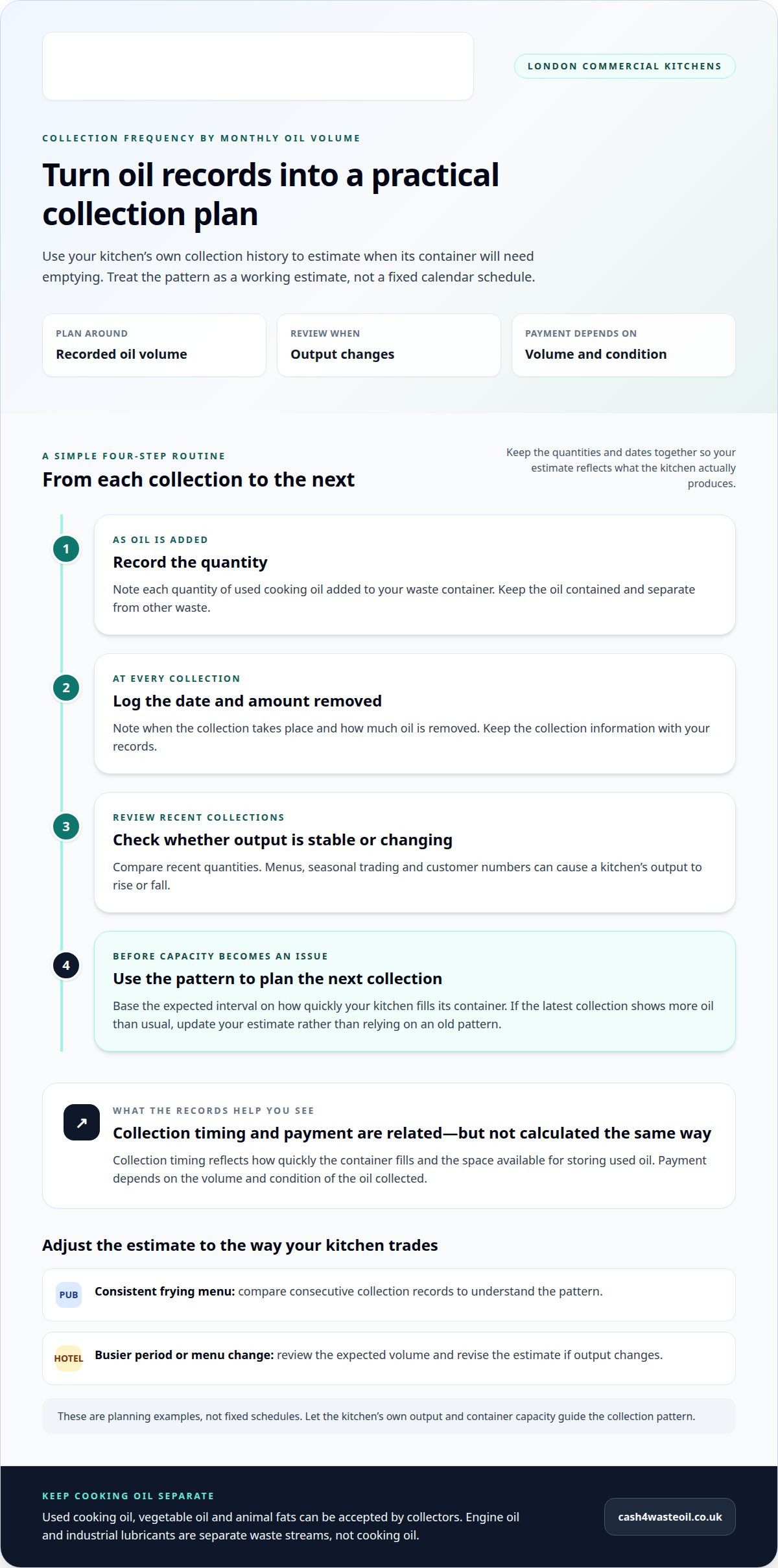
Collection frequency by monthly oil volume
Monthly oil volume is the practical starting point for planning collections. A kitchen producing a steady amount can use its own records to estimate when its container will need emptying. A restaurant with changing menus or seasonal trading should review those records regularly, because output can rise or fall with the menu and customer numbers. This gives London kitchens a working estimate, rather than relying on a fixed calendar interval.
What types of used cooking oil can London collectors accept? Collectors can accept used cooking oil, vegetable oil and animal fats. Engine oil and industrial lubricants are separate waste streams, not cooking oil.
What happens to collected cooking oil, and how is it recycled or converted into biodiesel? Collected cooking oil is recycled into biodiesel. Keeping it separate from engine oil and industrial lubricants helps identify the material for collection and recycling.
Use a simple routine to estimate your monthly output:
- Record each quantity of oil added to your waste container.
- Note collection dates and the amount removed each time.
- Compare recent collections to see whether output is stable or changing.
- Use that pattern to plan the next collection before capacity becomes an issue.
For example, a pub with a consistent frying menu can compare consecutive collection records. A hotel serving more fried food during a busy period may need to revise its expected volume. These are planning examples, not fixed schedules. The actual collection interval should reflect how quickly your kitchen fills its container. A commercial kitchen cooking oil collection London businesses can plan around should account for those operational changes.
Collection frequency and payment are related, but they are not calculated in the same way. Payment depends on the volume and condition of the oil collected. A larger quantity can affect the cash valuation, while the oil’s condition matters too. Keep clear records of both output and condition when reviewing changes in your kitchen’s waste oil.
Collection frequency affects cost planning because it determines how often a collection takes place. For a kitchen, the useful comparison is its recorded output against the space available for storing used oil. A steady volume makes the next collection easier to anticipate. Changing output calls for a fresh review of the collection pattern. That is particularly useful when planning commercial kitchen cooking oil collection London kitchens need through seasonal trading changes.
Keep the process straightforward: store used cooking oil separately from other waste and maintain a simple record of the volume collected. If your latest collection shows more oil than usual, update your estimate rather than relying on an old pattern. This gives you a clearer basis for planning collections and understanding how volume and condition affect payment.
Collection records and waste documentation
Keep a clear record each time used cooking oil leaves your premises. Businesses in London must keep records of waste oil collections for 6 years. A Waste Transfer Note should be provided for each collection, creating a record of the transfer between your kitchen and the collector.
What are the rules for storing and disposing of commercial waste cooking oil in England? Keep the oil contained and separate from other waste, then arrange collection and retain the paperwork. Businesses should keep clear records of waste oil collections.
A Waste Transfer Note, often shortened to WTN, records a waste transfer. Keep each note with your collection log rather than relying on a verbal confirmation or a diary entry alone. That gives whoever manages the kitchen a traceable record to refer to if a collection date, quantity or handover needs checking.
Make the paperwork useful with a simple record-keeping routine:
- Save the WTN after every collection and note its date.
- Record the quantity collected where it appears in your collection information.
- Match the note to the relevant site, such as a restaurant kitchen or hotel.
- Store the records together so staff can retrieve them during the 6-year retention period.
For example, a hotel with several kitchen areas can organise records by site and collection date. A restaurant can file each Waste Transfer Note alongside its oil-volume log. Consistent labels make it easier to compare records without confusing one collection with another.
Good records also support practical decisions. If a recent collection quantity differs from the usual pattern, compare the Waste Transfer Note with your internal log. This can help staff identify a change in oil use or a recording discrepancy. Keep the original collection information intact, and add any explanation separately.
Store used oil in a suitable container that keeps it contained and separate from other waste. Do not mix cooking oil with engine oil or industrial lubricants, which are different waste streams. Keep the collection area organised so staff can identify the right container and have it ready for collection.
When arranging a collection, make the documentation part of the handover rather than an afterthought. Confirm that a Waste Transfer Note is issued for the collection, then file it promptly. A documented used cooking oil collection makes it easier to maintain a complete record for each transfer.
Collection service for restaurants, cafés, hotels and other food businesses
Used cooking oil collection needs to work with your kitchen layout, trading patterns and storage arrangements. Plan how staff handle the oil and where it is kept, then choose a collection rhythm that fits your operation.
Businesses served
Restaurants, cafés, pubs and hotels all produce used oil through food preparation, particularly when menus include fried dishes. A restaurant may have one kitchen and collection point, while a hotel may need staff to coordinate oil from several food-service areas. Map how oil moves from cooking equipment to storage before arranging collections.
Choosing a licensed provider
Choose a collector with appropriate licensing and Environment Agency registration, and check that collection records are provided. These details help you assess how the waste is handled and what documentation your business receives. Also consider whether the collection process fits your kitchen’s access, storage arrangements and trading routine, rather than focusing only on the collection itself.
London collection companies
Commercial collectors serving London take used cooking oil from food businesses, including restaurants, pubs, hotels and other commercial kitchens. Compare the service details that affect your own site: accepted waste types, collection arrangements, payment terms and the paperwork supplied. A café with limited storage, for example, may prioritise a collection plan that reflects its available space.
What are the risks of improper cooking oil storage or disposal for London businesses? Leaking or poorly contained oil can cause spills, unpleasant odours and a messy work area. Use a suitable, secure container and arrange collection rather than putting used cooking oil down drains or into general rubbish.
Before setting up a collection, map the route staff use to handle oil. Identify where used oil is produced, where it will be stored and how the collection point can be accessed. In a compact café, a narrow service corridor may affect the safest container location. In a hotel, kitchen teams may need a shared procedure across food-service areas.
A practical set-up starts with a few site details:
- Identify the kitchen or kitchens producing used cooking oil.
- Choose a stable, accessible storage point away from food preparation.
- Make sure staff know which container is for used cooking oil.
- Keep collection arrangements and records accessible to the team.
For a restaurant, clear staff instructions reduce confusion during busy service. In a hotel, assigning responsibility to a specific role helps keep the collection point organised across shifts. These steps also make it easier to notice a full container, a spill or a change in oil output before it interrupts routine work.
Ask how the service handles your site’s collection needs, including access and the types of used oil accepted. A London café using vegetable oil and a hotel producing different cooking fats may need to explain those materials clearly. Share accurate site and waste details at the outset so the collection arrangement reflects the kitchen’s actual operation.
Service coverage inside the M25 and ULEZ
London coverage is easiest to assess by the business’s borough and exact collection address. Camden, Islington, Soho, Notting Hill and Wandsworth are named service locations, but borough labels alone don’t describe every site’s access or collection needs.
How do commercial cooking oil collection services differ across London boroughs? Coverage includes Camden, Islington, Soho, Notting Hill and Wandsworth. The practical arrangements can vary with the premises, collection access and the kitchen’s location.
The M25 is a useful geographic reference, not a substitute for checking the address against stated coverage. A restaurant in Camden and a hotel in Wandsworth may both be within London, yet have different entrances, loading arrangements and routes to their oil storage points. Identify the full collection address and the location of the container when planning service.
Use these details to describe your site clearly:
- Borough and street address, such as a site in Islington or Soho.
- Where staff store the used oil on the premises.
- The route from the collection access point to that storage area.
- Any site-specific access arrangements that affect the handover.
ULEZ is another way to describe a London location, but it does not identify a kitchen’s collection requirements. Give the borough and address as the starting point, then describe the site. For example, name the Soho premises and its collection access point rather than relying only on “inside the ULEZ”. This makes the location information specific and useful.
Central London premises can have limited storage space and vehicle access. A café in Soho may store oil away from its front entrance, while a restaurant in Notting Hill may use a separate service route. These examples show why the address and on-site layout matter alongside the borough name.
For a multi-site business, record each location separately rather than treating “London” as a single collection point. A hotel group with kitchens in Camden and Wandsworth can note each address, container location and access route individually. This makes each site’s requirements clear and keeps collection records distinct.
Before arranging a collection, take three practical steps. First, record the borough and full address. Second, identify the oil storage point and collection access route. Third, note any site details that may affect access to the container. A clear description distinguishes a central Soho restaurant from a Wandsworth kitchen, even when both are in London.
Use the same location details in your internal collection records. Pairing each collection note with its borough, such as Camden or Islington, helps staff identify the correct premises when a business operates across multiple London locations. A precise address is more useful than relying on the M25 or ULEZ as the sole indicator of coverage.
Which companies collect used cooking oil from commercial kitchens in London?
Commercial used cooking oil collectors serve food businesses across London, including restaurants, pubs, hotels and other commercial kitchens. To identify a suitable service, compare what it collects, the arrangements for your premises and the records supplied after collection.
Start with the waste your kitchen actually produces. A restaurant using vegetable oil and a hotel handling different cooking fats should describe those materials clearly. Collection services can accept used cooking oil, vegetable oil and animal fats. Engine oil and industrial lubricants are separate waste streams, not cooking oil.
Geography matters too. A collector serving London, Kent and Surrey may cover a wider area than a single borough, while site access still shapes the practical arrangement. Camden, Islington, Soho, Notting Hill and Wandsworth are examples of London locations where collection coverage is stated. Give the full premises address, not just “central London”.
Compare providers against details that affect your business:
- Whether the service covers your exact London address.
- Which cooking oils and fats it accepts.
- How payment for collected oil is determined.
- Whether it supplies a Waste Transfer Note for each collection.
- Whether its collection process suits your storage point and site access.
Licensing and documentation are practical checks, not minor details. A commercial kitchen needs a clear record of each waste transfer, and the paperwork should match the collection. For example, a hotel with separate kitchen areas can keep each collection record associated with the correct premises. This makes internal record-keeping easier to manage.
Payment terms also distinguish one service from another. The amount paid for collected oil depends on volume and condition, so compare how those factors are explained. A kitchen with a steady volume can use its collection records to understand the quantities involved. The oil’s condition remains relevant to the valuation.
For a first collection, prepare the details that describe your site accurately: the business address, type of kitchen, oil produced and storage location. A Soho restaurant with a rear service entrance, for example, should include that access detail. Clear information helps tailor the collection arrangement to your premises.
Choose a collector whose service fits your food business rather than judging by borough coverage alone. A London café, a Camden restaurant and a Wandsworth hotel may all need different site arrangements. Check the service scope, payment basis and collection documentation together. Those points give you a practical basis for deciding which commercial oil collection service suits your kitchen.
Recent estimates suggest that up to 20% of the UK’s used cooking oil is stolen. Keeping the collection arrangement and handover clear can help a business manage its used oil responsibly, alongside checking that its records match the collection and the premises.
Cash 4 Waste Oil: Used Cooking Oil Collection
Cash 4 Waste Oil is a practical next step for London restaurants, pubs, hotels and other commercial kitchens needing used cooking oil collected. Its service includes cash payments for waste oil and a Waste Transfer Note for each collection, giving businesses a record of the handover.
Payment depends on the volume and condition of the oil collected. Cash 4 Waste Oil’s collections are fully licensed and Environment Agency registered. The service covers London, Kent and Surrey, making it relevant for food businesses operating across these areas.
If your kitchen needs a collection, share your business location and the details of the oil you produce. Contact Cash 4 Waste Oil to discuss your collection needs.
Make your next collection part of the routine
Reliable commercial kitchen cooking oil collection in London starts with a routine your team can maintain through busy services and staff changes. Decide who will coordinate the collection process and make that responsibility clear across shifts. A simple handover helps keep collection details connected to daily operations.
Use your next collection to refine that routine. Decide what information the team needs, where collection details should be kept and who will update them. Clear responsibilities make collection a manageable part of kitchen operations without adding unnecessary steps during service.
When you’re ready to arrange a collection, take the next step with Cash 4 Waste Oil’s collection team. A clear plan helps your kitchen move forward with confidence.
Frequently Asked Questions
How is the price of used cooking oil determined?
Payment depends on the volume and condition of the used cooking oil. There’s no fixed rate to apply to every kitchen, so a quote is based on the oil being collected. For a useful estimate, describe your premises and typical oil output when requesting a quote. A restaurant with changing menus can share its recent collection records to show how its volume varies over time.
Is commercial cooking oil collection free in London, and what are the typical fees or rebates?
Commercial collection is free, and Cash 4 Waste Oil pays cash for collected oil. Payment depends on the oil’s volume and condition, rather than a published fixed rate. Its service covers London and Greater London, Kent, Surrey, Birmingham, Coventry, Leicester, Wolverhampton, Leicestershire, Derbyshire, Staffordshire, Warwickshire, Northamptonshire, Oxfordshire and Worcestershire. This helps food businesses across these areas understand the service and payment basis.
How often can restaurants arrange used cooking oil collection in London?
Restaurants can arrange flexible weekly, fortnightly or monthly collections, depending on how quickly their kitchen produces used oil. A restaurant with a steady frying menu can use its usual output to choose a suitable rhythm. A seasonal menu or change in trading pattern may affect how quickly the container fills, so review your collection routine when kitchen activity shifts.
Do London businesses need waste transfer notes or other records for used cooking oil collections?
Yes. Keep a Waste Transfer Note for each collection and retain waste oil collection records for six years. File the note with the date and premises details, especially if your business operates several kitchens. For example, a hotel can organise records by kitchen or site, helping staff find the relevant transfer paperwork without confusing separate collections.