Commercial Kitchen Oil Disposal Solutions: The 2026 UK Compliance Guide
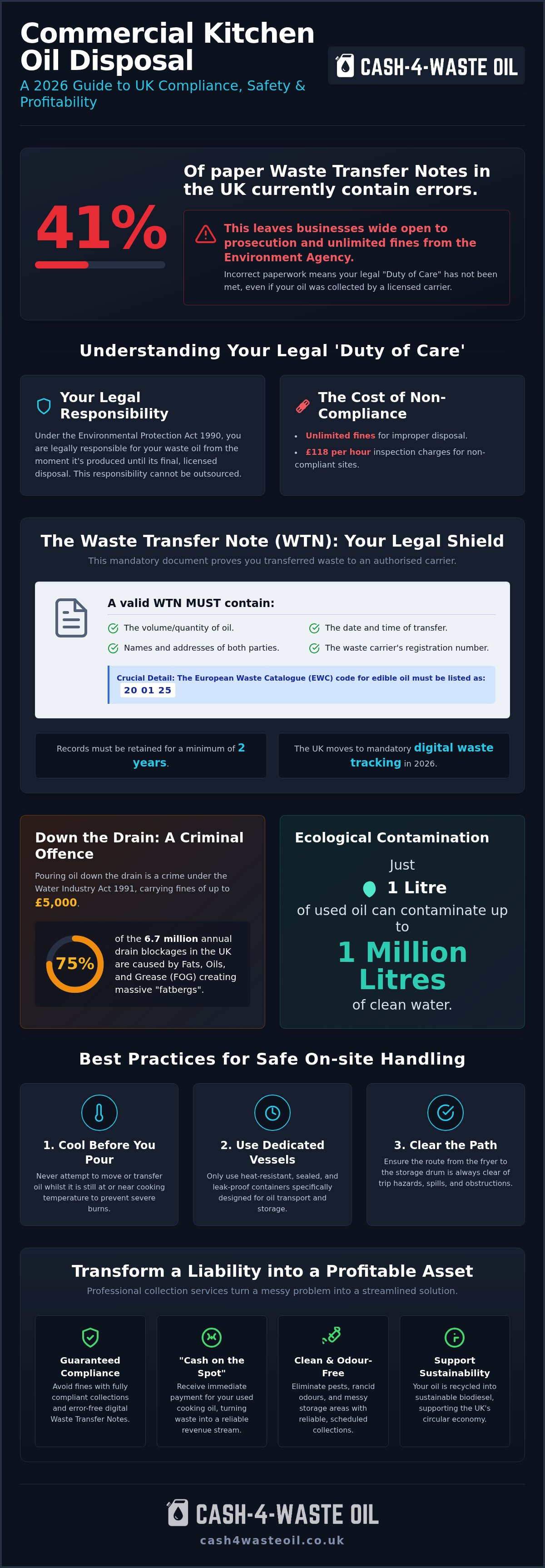
Did you know that 41% of paper Waste Transfer Notes in the UK currently contain errors, leaving businesses wide open to prosecution? In a regulatory environment where the Environment Agency can levy unlimited fines, finding reliable commercial kitchen oil disposal solutions is no longer just about tidiness; it's about survival. Managing used cooking oil is often the messiest, most frustrating part of running a busy service. You're likely tired of unreliable collectors, overflowing drums attracting pests, and the constant worry that your disposal methods won't stand up to a snap inspection.
Securing the right partner doesn't just clear your floor space; it protects your bottom line and turns a "controlled commercial waste" headache into a reliable revenue stream. This 2026 guide breaks down the latest UK regulations, including the October shift to mandatory digital waste tracking. You'll learn how to maintain a clean, odour-free kitchen and secure immediate cash rebates whilst ensuring your business remains fully compliant with zero paperwork stress. We'll show you how to transform a messy obligation into a streamlined, profitable part of your daily operations.
Key Takeaways
- Understand your "Duty of Care" responsibilities to avoid the severe financial penalties associated with improper oil management.
- Optimise your on-site storage to eliminate kitchen odours and prevent costly pest infestations.
- Identify the most efficient commercial kitchen oil disposal solutions to replace messy DIY methods with licensed, professional collections.
- Transform your waste oil from a liability into a "Cash on the Spot" revenue stream that supports your kitchen's bottom line.
- Secure your business against Environment Agency inspections by mastering the requirements for mandatory Waste Transfer Notes.
Navigating the Challenges of Commercial Kitchen Oil Disposal
Running a high-volume kitchen in city centres like London or Birmingham means fighting for every square inch of floor space. Managing waste oil often feels like a secondary task, but it's a critical operational pillar. Improperly stored oil creates immediate hazards. Pests are naturally drawn to stagnant grease, and rancid odours can quickly drift from the back-of-house into your dining area, ruining the customer experience. Implementing professional commercial kitchen oil disposal solutions ensures these operational risks are managed before they impact your hygiene ratings.
Disposing of oil down the drain is never a viable shortcut. It is a criminal offence under the Water Industry Act 1991, carrying potential fines of up to £5,000. Fats, oils, and grease (FOG) are responsible for 75% of the 6.7 million drain blockages that occur in the UK each year. These blockages create massive "fatbergs" that damage infrastructure and lead to costly emergency plumbing call-outs. Whether you're using sunflower, rapeseed, or complex vegetable oil blends, every drop must be captured and stored correctly to avoid utility penalties and environmental damage.
The Environmental Cost of Improper Disposal
Used cooking oil is classified as controlled commercial waste for a reason. A single litre of used cooking oil has the potential to contaminate up to one million litres of clean water if it enters the ecosystem through the wrong channels. This is why Yellow grease recycling has become such a vital part of the modern circular economy. By collecting and processing this waste, it can be transformed into sustainable biodiesel, reducing the reliance on fossil fuels whilst preventing groundwater pollution. Choosing a licensed collector ensures your kitchen supports this ecological cycle rather than damaging local waterways.
Operational Safety in the Kitchen
Safety starts at the fryer. Transferring used oil is one of the most dangerous tasks for kitchen porters and chefs due to the risk of severe burns. To maintain a safe workspace, you should follow these protocols:
- Implement a "cool before you pour" policy: Never attempt to move oil whilst it's still at cooking temperature.
- Use dedicated vessels: Only use heat-resistant, leak-proof containers specifically designed for oil transport.
- Clear the path: Ensure the route from the fryer to the storage area is free of trip hazards and spills.
Training staff on these specific handling techniques reduces workplace accidents and prevents messy spills that lead to slips. A clean, organised storage area makes the collection process faster and more reliable for your service provider.
Legal Framework: Understanding UK Cooking Oil Waste Regulations
Compliance in a commercial kitchen isn't a suggestion; it's a strict legal mandate. The Food Safety Act 1990 and the Environmental Protection Act 1990 form the backbone of waste management law in Britain. Central to this is the "Duty of Care" principle. This means you are legally responsible for your used oil from the moment it's produced until it reaches its final disposal point. If a rogue collector fly-tips your waste in a Kent field, the Environment Agency (EA) will trace it back to your doorstep. You cannot outsource your legal liability.
The EA acts as the primary regulator, ensuring all commercial kitchen oil disposal solutions meet national standards. They have the power to issue unlimited fines for improper disposal. Beyond the headline-grabbing penalties, they can also levy hourly inspection charges of £118 for non-compliant premises. In an industry where margins are already tight, these avoidable costs can be devastating. Following the UK Cooking Oil Waste Regulations is the only way to protect your business from these financial risks.
The Waste Transfer Note (WTN) Explained
A Waste Transfer Note is your primary legal shield. It is a mandatory document that must accompany every single collection of used oil. This note proves that you have transferred your waste to an authorised carrier. To be legally valid, a WTN must contain specific details, including the volume of oil, the date of transfer, and the correct European Waste Catalogue (EWC) code for edible oil: 20 01 25. You are legally required to retain these records for a minimum of two years. Digital records are becoming the norm, especially with the 2026 shift toward real-time waste tracking. For a deeper dive into these requirements, see The Restaurant Owner’s Guide to Waste Transfer Notes.
Environment Agency Registered Collectors
Never hand over your oil to an unlicensed collector. "Cowboy" operators often target busy kitchens in London and the Midlands, promising quick removals but failing to provide any paperwork. These collectors often lack Environment Agency registration. If they dispose of your oil illegally, you remain liable for the cleanup costs and fines. Always verify your collector's licence number before allowing them on-site. Using a fully licensed waste carrier ensures that every litre is accounted for and processed into sustainable resources like biofuel. This transparent approach eliminates the risk of "missing" oil and ensures your kitchen remains 100% compliant during snap inspections.
Comparing Disposal Methods: DIY vs Professional Collection Services
Deciding how to manage your used cooking oil often comes down to a choice between a DIY approach and professional collection. Whilst some smaller operators attempt to handle disposal themselves, the hidden costs quickly mount up. DIY disposal isn't just about the mess; it's about the drain on your staff's time. When a kitchen porter spends an hour transporting heavy, slippery drums to a recycling centre, you aren't just paying for fuel. You're paying for their wages and risking a workplace injury that could lead to a costly claim. It's an inefficient use of resources that distracts from the core task of serving customers.
Most local council recycling centres across London, Kent, and the Midlands will refuse commercial waste oil outright. These facilities are strictly for domestic use. Attempting to pass off commercial waste as household waste can lead to site bans and potential prosecution. Professional commercial kitchen oil disposal solutions remove this friction entirely. It's a "hands-off" service that allows your team to focus on service whilst experts handle the heavy lifting and logistics. You can choose between scheduled weekly pickups or on-call services to manage peak periods like Christmas or bank holidays, ensuring your storage never becomes a bottleneck.
The Efficiency of Scheduled Collections
Regular pickups are the most effective way to prevent oil overflow in high-volume environments. An overflowing drum isn't just a slip hazard; it's a magnet for pests and a primary source of kitchen odours. By tailoring your collection frequency to your specific kitchen output, you maintain a leaner, cleaner operation. Timely removal significantly reduces your "odour footprint" and ensures that your storage area remains manageable, even in cramped urban sites where space is at a premium. It's about maintaining a professional environment that meets both hygiene and safety standards.
Financial Comparison: Cost vs. Rebate
The most significant difference between these methods is the impact on your bank balance. DIY disposal costs your business money in labour, transport, and potential penalties. In contrast, professional collection turns that cost into a profit centre. A rebate system allows you to recoup value from your waste product, which can be used to offset other rising kitchen overheads. Many businesses find that switching to a licensed collector provides a predictable financial boost. If you want to maximise your returns, you can learn how to Get Paid for Used Cooking Oil in London and the surrounding counties. Choosing a service that pays cash on the spot ensures immediate liquidity, making it the most pragmatic choice for modern hospitality managers.
Best Practices for Safe On-site Oil Storage and Handling
Effective commercial kitchen oil disposal solutions depend on how you manage the product before it leaves your site. Managing storage correctly prevents kitchen accidents and ensures your waste remains valuable for recycling. Select a storage location that is cool, dry, and easily accessible for collection vehicles. In cramped urban environments like London or Birmingham, accessibility is a common bottleneck. Ensure your containers are not blocked by delivery pallets or general waste bins, as this can lead to missed collections and overflowing barrels.
Maintaining a "first-in, first-out" (FIFO) system is a professional standard that keeps your storage area organised. Use older oil first to prevent it from degrading excessively, which can cause stronger odours. Secure lids are essential for every container. They prevent rainwater ingress, which increases the weight and mess of the oil, and they act as a vital barrier against pests. Label every barrel clearly to avoid contamination. If staff accidentally mix food waste or general rubbish into your oil drums, the batch may be rejected by the collector, costing you your rebate.
Storage Container Solutions
Choosing the right vessel depends on your kitchen's footprint and weekly output. A 60-litre barrel is often the best fit for smaller independent cafes with limited floor space, whilst a 200-litre drum suits high-volume operations in the Midlands or Home Counties. Professional services typically provide standardised blue barrels that are leak-proof and designed for heavy-duty use. Always place these containers on level, solid ground. An uneven surface increases the risk of tipping, which creates a significant slip hazard for both your staff and the collection driver.
Spill Management and Response
Accidents happen in fast-paced environments. Having a dedicated spill kit on-site is a pragmatic requirement for any professional kitchen. Your kit should include absorbent granules, heavy-duty paper towels, and non-slip floor signage. If a leak occurs, you must act quickly to contain it. Stop the source of the leak if possible, surround the spill with absorbent materials to prevent it from reaching drains, and clear the area of all foot traffic. If you discover a compromised drum, use sand or absorbent socks to create a temporary bund around the base whilst waiting for professional help. For a hassle-free setup that includes the right equipment and reliable service, book your licensed oil collection today.
Maximising Value: How Professional Collection Benefits Your Bottom Line
Smart business owners view waste management as a profit centre rather than a recurring bill. Whilst many kitchen costs are rising, your used cooking oil is one of the few assets that actually pays you back. Transitioning to professional commercial kitchen oil disposal solutions shifts your oil from a messy liability to a consistent revenue stream. This "Cash for Waste Oil" model doesn't just clear your floor space; it provides immediate liquidity that supports your weekly cash flow. It's a pragmatic way to recoup value from a product you've already used.
Beyond the direct financial gain, there's a significant marketing advantage to consider. Modern diners in the UK are increasingly conscious of environmental impact. Telling your customers that your waste oil powers green biodiesel helps build your brand's reputation for sustainability. Just as serving premium products from Blackhand Coffee Co signals quality to your patrons, a commitment to responsible recycling reinforces your ethical standing. It's a powerful story that costs you nothing to tell. By aligning with a licensed collector, you ensure your kitchen is part of the solution, turning a potentially harmful pollutant into a high-grade renewable resource.
The Rebate Process: How You Get Paid
Understanding what influences your rebate helps you maximise your returns. The price per litre typically depends on two main factors: volume and quality. Clean, well-filtered oil that's free from food debris and water contamination commands the best rates. Choosing a service that offers "Cash on the Spot" is a major advantage for independent kitchens, as it eliminates the hassle of chasing delayed bank transfers or credits. You get paid exactly what your waste is worth the moment it's collected. You can also track these contributions to bolster your annual sustainability reporting, providing hard data on how much waste you've diverted from landfill.
Choosing a Local Partner for Reliable Service
Reliability is the most important factor when choosing a collection partner. Large national conglomerates often struggle with the logistical nuances of urban centres. A local partner understands the specific traffic patterns and access restrictions in London, Birmingham, or Kent. They know which Soho alleys require a smaller van and which Midlands industrial units have strict loading times. This local expertise ensures your collections happen on time, every time, preventing the overflow issues discussed in previous sections. If you're ready to turn your waste into cash, choose a partner that combines regional knowledge with a fully licensed, professional service. It's the most efficient way to protect your compliance and your bottom line simultaneously.
Secure Your Compliance and Boost Your Bottom Line
Proper oil management is a legal necessity, especially with the 2026 digital tracking shifts. By moving away from messy DIY disposal and focusing on professional storage and collection, you eliminate the risks of heavy fines, fatbergs, and kitchen accidents. Implementing the right commercial kitchen oil disposal solutions ensures your business remains a clean, profitable, and Environment Agency-compliant operation. Transitioning to a professional service turns a waste liability into a consistent revenue stream whilst protecting the environment through biodiesel recycling.
Cash 4 Waste Oil is an Environment Agency Registered Waste Carrier that takes the burden of logistics off your shoulders. We provide instant Waste Transfer Notes for full legal compliance and pay cash on the spot for every litre collected across London, Kent, and the Midlands. Don't let your waste oil sit as an odour-filled liability when it could be supporting your kitchen's cash flow today. It's time to streamline your operations with a partner you can trust. Book your free waste oil collection and get paid cash today. Your kitchen deserves a hassle-free solution that rewards your commitment to sustainability.
Frequently Asked Questions
Is it illegal to pour used cooking oil down the sink in the UK?
Yes, pouring oil down the sink is a criminal offence under the Water Industry Act 1991. It causes massive fatbergs that block public sewers and damage infrastructure. Businesses caught doing this face fines of up to £5,000 and are often liable for the costs of clearing the blockage. You must use professional commercial kitchen oil disposal solutions to ensure your waste is handled legally without risking utility penalties.
How much cash can I get for my used cooking oil?
The amount you receive depends on the volume and quality of the oil you provide. Cash 4 Waste Oil pays a competitive rate per litre, with payments made in cash immediately upon collection. Oil that's well-filtered and free from water or food debris typically commands the best value. This "cash on the spot" model ensures your waste becomes an immediate financial asset rather than a storage burden or a disposal cost.
Do I really need a Waste Transfer Note for every collection?
Yes, you're legally required to obtain a Waste Transfer Note (WTN) for every single collection. This document is your proof of compliance under the Environmental Protection Act 1990. It shows the Environment Agency that your waste was handled by a licensed carrier. You must retain these records for at least two years. Without a valid WTN, your business could face unlimited fines during a routine local council or EA inspection.
What happens to the used cooking oil after it is collected?
Your used cooking oil is processed into high-quality, sustainable biodiesel. This transformation is a key part of the circular economy, reducing the UK's reliance on fossil fuels. After collection, the oil is filtered and refined to remove impurities before being sent to production facilities. This process ensures that your kitchen waste contributes to a greener future rather than ending up in a landfill or polluting local water systems.
Can you collect oil from small takeaways as well as large hotels?
Yes, we provide collection services for all types of commercial food businesses, from small independent takeaways to large-scale hotels. Our service is tailored to fit your specific kitchen footprint and oil output. Whether you produce a few barrels a month or several hundred litres a week, we can organise a collection schedule that works for you. We strictly serve commercial establishments and don't offer residential oil collection.
Is there a minimum amount of oil required for a free collection?
We offer free collection services for commercial kitchens, though the specific volume requirements can vary based on your location. Most scheduled collections are designed to be cost-effective for both parties. It's best to contact us directly to discuss your average weekly output so we can arrange the most efficient pickup times. This ensures your storage area stays clear without the need for frequent, small-volume collections that disrupt your service.
How do I know if a waste oil collector is properly licensed?
You can verify a collector's credentials by asking for their Environment Agency registration number. Every legitimate collector must be a fully licensed waste carrier. You can check these details on the official Environment Agency public register online. Using an unlicensed "cowboy" collector puts your business at risk, as you remain legally liable if they fly-tip your oil. Always insist on seeing proof of licensing and receiving a Waste Transfer Note.
Which areas of the UK do you cover for oil collection?
Our primary service areas include London, Greater London, Kent, and Surrey. We also provide extensive coverage across the Midlands, including Birmingham, Coventry, Leicester, and Wolverhampton. Our teams regularly operate in surrounding counties like Warwickshire, Oxfordshire, and Northamptonshire. This local focus allows us to offer rapid response times and flexible collection schedules. We understand the specific access challenges of these busy urban centres and can navigate them effectively for your business.