Commercial Oil Recycling Croydon: The 2026 Kitchen Buying Guide
Every drum of spent fryer grease cluttering your kitchen yard isn't hazardous waste; it's a valuable biofuel asset. Running a fast-paced commercial kitchen leaves zero room for clutter, yet managing used cooking oil often means battling overflowing drums and worrying about council or Thames Water fines. Arranging reliable commercial oil recycling Croydon managers can depend on shouldn't add to that operational friction, nor should you have to tolerate missed collections and missing paperwork from unreliable operators.
This guide shows you how Croydon caterers, pubs, and restaurants choose fully licensed collection partners, secure instant cash rebates, and maintain strict environmental compliance. You'll discover how to ensure your kitchen receives valid Waste Transfer Notes on every visit, what legal shifts mean for your Duty of Care, and how easy it is to convert heavy waste oil into a clean, scheduled revenue stream.
Key Takeaways
- Setting up professional commercial oil recycling Croydon services turns bulky kitchen waste into instant cash payments instead of costly disposal fees.
- Obtaining valid Waste Transfer Notes on every single pickup guarantees full compliance with Environment Agency regulations and Croydon Council inspections.
- Discover why standard waste contractors charge for collection whilst specialist recovery firms collect for free and pay for your used cooking oil.
- Adopt simple back-of-house handling and storage routines that prevent slip hazards, drain blockages, and pest infestations.
- Partner with an authorised local collector to ensure dependable collection schedules that keep your South London kitchen clear and operational.
Evaluating Commercial Cooking Oil Recycling in Croydon: What Kitchens Must Look For
Croydon's hospitality sector is one of the busiest in South London. From street food stalls near Boxpark to high-capacity pubs along the High Street, food businesses produce considerable volumes of spent fryer oil daily. Disposing of this grease demands a tailored commercial solution. Council-run domestic amenity sites strictly prohibit trade waste, whilst pouring fats down the sewer invites severe legal penalties under the Water Industry Act 1991. To keep service running smoothly, businesses require dedicated commercial oil recycling Croydon operators who turn bulky waste into a tidy asset.
Choosing an oil recovery partner comes down to three operational requirements: verified licensing, rock-solid collection timing, and fair trade terms. Instead of treating your used oil like domestic rubbish, specialist collectors recognise spent vegetable fat as raw material for renewable fuel. Through the industrial recycling of waste cooking oil, collected fats are refined directly into sustainable UK biodiesel. This process protects municipal drains, reduces reliance on virgin fossil fuels, and protects your operating margins.
The Core Pillars of a Dependable Hospitality Oil Collector
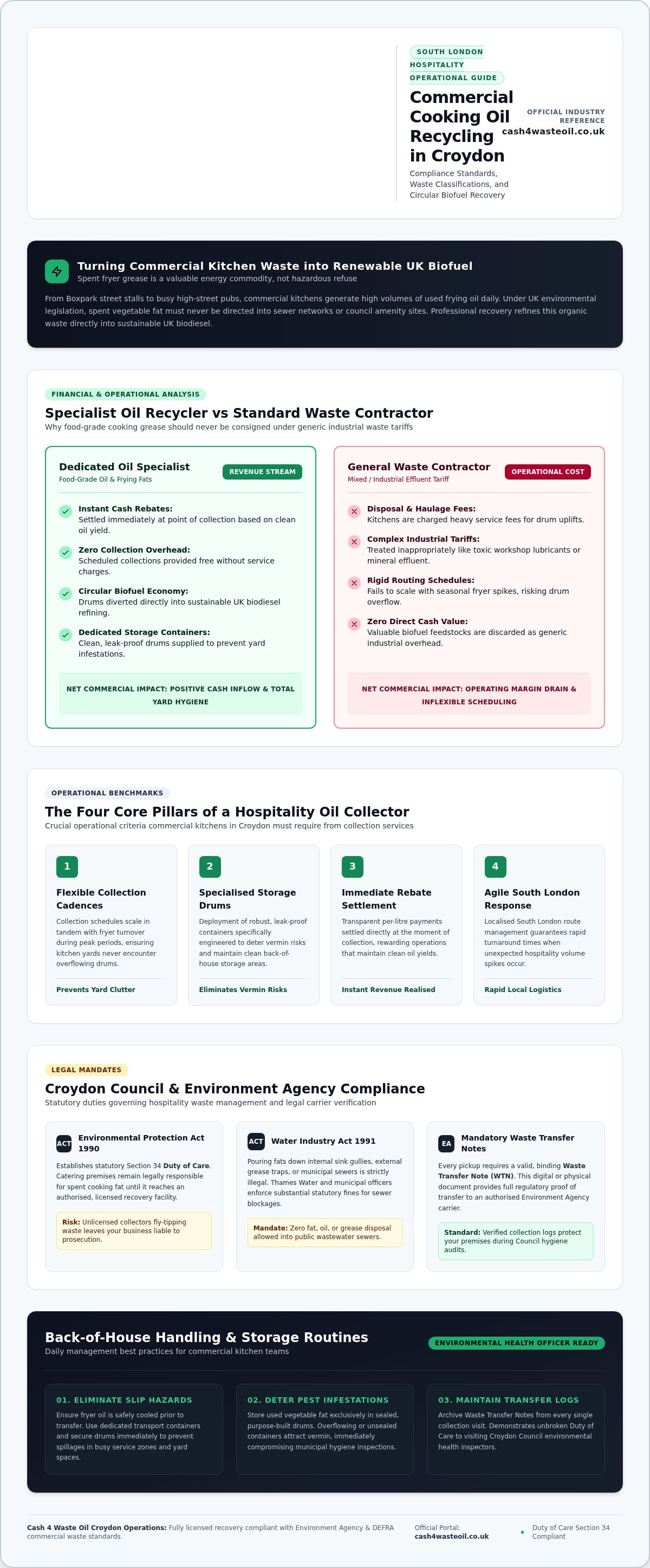
Kitchen storage space is always tight. A reliable collector adapts to your fryer turnover rather than forcing you into an inflexible schedule. Look for these baseline service standards:
- Flexible collection cadences: Collections should scale during busy trade periods so drums never overflow.
- Specialised storage drums: Secure, leak-proof containers prevent vermin risks and keep yard areas tidy.
- Immediate per-litre compensation: Transparent rebates should be settled at the point of collection, rewarding clean oil yields.
- Agile South London response: Local routing ensures quick turnarounds when unexpected volume spikes hit your kitchen.
Distinguishing Food-Grade Cooking Oil from Industrial Waste Services
Kitchen operators often get confused by waste classifications. Commercial catering grease consists strictly of used vegetable oils, animal fats, and frying blends. This is entirely separate from automotive lubricants or workshop mineral oils.
General hazardous waste contractors often treat organic cooking oil like toxic workshop effluent, charging heavy collection fees and consigning it under complex industrial tariffs. That approach drains your budget. Professional cooking oil recyclers view food-grade oil as an energy commodity, collecting it without service charges while supporting the circular bio-economy. Partnering directly with a dedicated hospitality specialist ensures your waste moves legally into green energy production without unnecessary overheads.
Croydon Council & Environment Agency Regulations: The Commercial Kitchen Compliance Checklist
Croydon Council environmental health officers don't just inspect food prep hygiene; they inspect waste trails. Under the Environmental Protection Act 1990, every catering premises has a strict Duty of Care for the commercial waste it produces. Pouring used frying fat down sink gullies or tossing it into general bins violates UK law and invites severe municipal penalties. Following the official Environment Agency Regulations and consulting current DEFRA cooking oil waste guidance ensures your business stays fully audit-ready when inspectors come knocking.
Understanding Section 34 Duty of Care Obligations in Croydon
Under Section 34, your business remains legally responsible for spent cooking oil until it reaches an authorised processing facility. Handing waste to an unlicensed driver in an unmarked van leaves you liable if that oil gets fly-tipped in an alleyway or field. Always verify that your collection partner holds an active Environment Agency Waste Carrier Licence. Keeping verified collection logs safeguards your business from prosecution and protects your operating licence.
Waste Transfer Notes: What Every South London Kitchen Manager Needs
Every commercial oil collection requires a legally binding Waste Transfer Note (WTN). Paper or digital, this document proves your used oil was handed to a licensed carrier. A compliant note must include:
- Correct Waste Classification: Food-grade cooking oil must be catalogued under European Waste Catalogue (EWC) code 20 01 25.
- Premises Details: Your registered commercial address and kitchen trading name.
- Carrier Credentials: The waste collector's registered trading name and Environment Agency licence number.
- Volume and Signature: The exact litres collected, signed and dated by both parties on-site.
UK law mandates retaining these notes on-site for a minimum of two years. If you want seamless, automated compliance, working with a reputable specialist like Cash 4 Waste Oil ensures you receive instant documentation right at collection.
Preventing Fatbergs: Thames Water and Trade Effluent Rules
Fats, oils, and grease (FOG) entering drainage networks cool and solidify into concrete-like fatbergs. Across the UK, FOG causes roughly 75% of the 200,000 annual sewer blockages. Under the Water Industry Act 1991, Thames Water actively investigates drain blockages and prosecutes kitchens discharging trade effluent without consent. Using a dedicated commercial kitchen oil disposal checklist keeps staff compliant and avoids emergency call-out bills or sewer remediation claims.
Reliable commercial oil recycling Croydon operators eliminate these liabilities entirely, taking grease away lawfully so your pipes and your legal records stay clear.
Croydon Oil Collection Comparison: Free Collection and Cash Rebates vs Paid Disposal
Paying someone to haul away your used cooking oil is an outdated expense. Standard commercial waste contractors categorise spent oil as general refuse or industrial waste, invoicing food businesses for collection slots, bin rentals, and processing surcharges. Specialist recovery operators take the opposite approach. They treat used vegetable fat as a tradeable energy commodity. When you arrange professional commercial oil recycling Croydon kitchens switch from paying heavy disposal bills to generating regular revenue from every collected drum.
Fee-Based Waste Contracts vs Cash-Back Oil Recovery Models
Standard trade contracts add unnecessary operational drag. Hauliers often bundle cooking grease into mixed waste tariffs, charging by the drum or collection run. In contrast, specialist recovery partners streamline the transaction:
- Zero collection fees: Free scheduled pickups tailored directly to your cooking volume.
- No container charges: Dedicated, food-grade storage containers supplied without rental costs.
- Direct revenue generation: Immediate cash per litre handed over right at collection.
Understanding how hospitality venues get paid for used cooking oil in London helps operators convert a messy yard chore into steady working capital.
The Circular Journey: How Used Cooking Oil Becomes Biodiesel
What happens once the collection van departs? Collected catering oil goes through industrial filtration, dewatering, and esterification. Across the UK, roughly 80% of collected cooking oil gets refined directly into sustainable biodiesel. Replacing virgin petroleum with this renewable fuel cuts lifecycle greenhouse gas emissions by up to 88%.
Adopting sustainable waste oil disposal helps venues advance South London's circular economy while sharing genuine green credentials with eco-conscious diners. Modern commercial oil recycling Croydon services prove that regulatory compliance and sustainable operations can support kitchen profit margins simultaneously.
Kitchen Best Practices: Storing, Handling, and Scheduling Oil Collections in Croydon
Every busy South London kitchen operates under tight spatial margins. Storing spent cooking oil haphazardly invites pest activity, foul odours, and slip hazards for kitchen staff. Establishing a disciplined back-of-house decanting procedure and scheduling regular pickups ensures your kitchen maintains safety standards while maximising rebate returns.
Safe Oil Handling and Decanting Protocols for Kitchen Teams
Decanting hot fryer oil requires discipline. Rushing this task creates severe burn risks and messy spills. Have your kitchen team follow these direct protocols:
- Cool down first: Always let fryers cool below 40°C before draining into intermediate containers.
- Filter food solids: Pour oil through a coarse funnel filter to strip out batter crumbs and food debris.
- Seal drums tightly: Fasten lids securely immediately after filling to lock out rainwater and deter pests.
- Wear protective gear: Equip team members with heat-resistant gloves, aprons, and slip-resistant footwear during transfers.
Selecting the Right Storage Containers for Your Premises
Tight kitchen footprints cannot accommodate bulky industrial tanks. Commercial venues rely instead on heavy-duty, food-grade blue drums or wheeled containers designed for compact back yards and bin stores. Place containers away from open drains and position secondary containment trays underneath to catch accidental drips. Under the Control of Pollution (Oil Storage) (England) Regulations 2001, commercial businesses storing over 201 litres must provide secondary containment capable of holding 110% of the container volume to prevent ground contamination.
Logistical Planning across Croydon Districts and Commercial Centres
South London traffic demands sensible collection timing. Pedestrianised zones around North End, narrow service lanes off George Street, and packed dining strips down South End require precise coordination. High-volume operators at Boxpark Croydon or along Purley Way retail parks face congested delivery bays during standard delivery windows.
Arranging collections during early-morning prep slots keeps collection vans away from peak dining service. Establishing structured commercial oil recycling Croydon schedules prevents grease buildup and keeps trade areas clean. To streamline your collection routine and clear out your storage yard, book your free cooking oil collection with Cash 4 Waste Oil today.
Booking Commercial Oil Recycling in Croydon with Cash 4 Waste Oil
Setting up waste management shouldn't involve complex bureaucracy or waiting days for council call-backs. Fast-paced hospitality demands agility. Cash 4 Waste Oil provides commercial catering establishments across South London with a direct, dependable route for spent oil removal. By pairing punctuality with immediate financial returns, we ensure your back-of-house stays tidy, compliant, and profitable.
The Four-Step Onboarding and Collection Process
Getting your spent frying oil collected takes minutes to arrange. Our collection process runs like clockwork:
- Book your slot: Get in touch with our team to arrange a recurring collection schedule or an on-call pickup tailored to your volume.
- Arrival and measurement: Our licensed drivers arrive promptly, assess oil condition, and accurately meter the total volume on-site.
- Immediate compensation: Receive instant cash handed over per litre or opt for a rapid electronic transfer before we leave your site.
- Instant legal compliance: Receive an on-site, compliant Environment Agency Waste Transfer Note, ensuring your kitchen remains audit-ready instantly.
Why Croydon Restaurants, Pubs, and Caterers Rely on Our Service
Waiting on hauliers who miss collection dates disrupts kitchen flow and crowds storage yards. Food businesses throughout Croydon choose our dedicated collection model for clear, operational reasons:
- Completely free service: We cover every Croydon postcode without bin rental fees, processing surcharges, or hidden haulage costs.
- Authorised waste carrier: Full Environment Agency registration guarantees your legal Duty of Care is satisfied, protecting your food hygiene standing during inspections.
- True circular energy: 100% of the food-grade vegetable oil we collect is refined into sustainable British biodiesel.
- Dedicated local routing: Local drivers navigate South London's tight high-street access points easily, keeping your schedule on track.
Turning a routine chore into positive working capital keeps your operations lean. If you are ready to streamline storage and monetise your kitchen waste, book your Croydon oil collection today for reliable, stress-free commercial oil recycling Croydon kitchens can count on.
Transform Your Kitchen Waste into Immediate Revenue
Managing fryer grease doesn't have to be a messy compliance headache or an unwanted line item on your waste bill. By treating spent cooking fat as an energy resource rather than refuse, South London caterers safeguard their kitchens against hefty drainage fines and local authority scrutiny. Establishing dependable commercial oil recycling Croydon kitchens trust ensures every collection is supported by an instant Environment Agency Waste Transfer Note, protecting your statutory Duty of Care and keeping records audit-ready.
Partnering with an authorised specialist also delivers direct financial returns to your business. Cash 4 Waste Oil turns your back-of-house storage challenge into reliable working capital, providing instant cash payments per litre right on collection. Better still, 100% of the food-grade oil collected is refined directly into clean UK biodiesel, reinforcing your venue's environmental commitment. Ready to clear your yard and strengthen your margins? Turn your used cooking oil into cash today with Cash 4 Waste Oil and enjoy a streamlined, professional service that works around your kitchen schedule.
Frequently Asked Questions
Is commercial cooking oil collection really free for Croydon businesses?
Yes, genuine commercial oil recycling Croydon services are 100% free for local catering businesses. Cash 4 Waste Oil never levies haulage charges, barrel rental fees, or disposal surcharges. Instead of invoicing you for waste management, our drivers collect your stored oil at no cost and pay you directly on-site for every litre of clean frying fat recovered.
How much cash can our commercial kitchen receive for used cooking oil?
Payouts depend directly on the total volume collected, the oil's purity, and prevailing market demand for biodiesel feedstock. Oil that is well-filtered and free of water or excess food particles commands the highest rebates. Rather than issuing credits or delayed invoices, our drivers calculate the payout based on metered litres and hand over cash or execute a rapid digital transfer before departing your kitchen.
Can I dispose of commercial kitchen oil at Croydon household recycling centres?
No. Croydon Council civic amenity sites, including Purley Oaks and Factory Lane, strictly prohibit commercial trade waste. Dumping restaurant oil at domestic sites breaches local authority regulations and waste licensing laws. Commercial kitchens must legally use an Environment Agency registered waste carrier that provides an official Waste Transfer Note proving the oil entered an authorised industrial processing facility.
What happens if a restaurant operates without valid Waste Transfer Notes?
Operating without valid documentation breaches your statutory Duty of Care under Section 34 of the Environmental Protection Act 1990. During routine food hygiene inspections, Croydon environmental health officers can demand up to two years of waste transfer records. Failing to produce these notes risks substantial fixed penalty notices, commercial prosecution, and severe downgrades to your establishment's food hygiene rating.
Which types of cooking oil does Cash 4 Waste Oil collect in Croydon?
We collect all standard food-grade vegetable and frying oils generated across commercial catering businesses. This includes rapeseed, sunflower, vegetable blends, corn oil, and solid animal fats such as lard or beef dripping. Every batch must come exclusively from commercial food preparation and remain free from chemical degreasers, engine fluids, or excessive water contamination so it can be refined into sustainable UK biodiesel.
How often should a busy Croydon restaurant schedule waste oil collections?
Collection frequency depends on fryer capacity and turnover. High-volume venues, such as fish and chip shops or busy burger bars, typically arrange weekly or fortnightly collections. Lower-volume bistros and pubs often schedule pickups every three to four weeks. Setting up consistent commercial oil recycling Croydon schedules prevents drums from overflowing and keeps your back-of-house yard tidy and fully compliant with secondary containment thresholds.
Do you collect motor oil, engine fluids, or domestic cooking oil in Croydon?
No. Cash 4 Waste Oil operates exclusively for commercial catering premises and does not collect domestic household cooking oil. We also do not accept mineral engine oils, automotive fluids, or workshop lubricants. Domestic residents should use local council household reuse centres, while garages and industrial facilities producing automotive fluids must hire a specialist hazardous waste contractor certified to handle mineral lubricants.