Cooking Oil Collection Frequency: Match Collection to Kitchen Output
A busy fish and chip shop might need used cooking oil collected weekly, while a small café might need a monthly collection. To decide how often cooking oil should be collected, match the pickup schedule to how quickly your kitchen fills its storage, and leave room for a buffer rather than waiting until the container is full.
Your oil output and storage capacity both matter. Rising output, limited tank space or repeated urgent pickups can all signal that the schedule needs adjusting. There isn’t one routine that suits every commercial kitchen.
This guide explains how kitchen output and safe storage shape collection frequency, what to consider when stored oil becomes a nuisance, and which responsibilities apply in the UK. The Environmental Protection Act 1990 requires businesses to take reasonable steps to look after their waste and prevent its illegal disposal by others. The Environment Agency says businesses should keep Waste Transfer Notes for used cooking oil collections on file for at least two years, so collection records are part of managing the process properly.
Key Takeaways
- Set collection timing around how quickly your kitchen produces used oil and how much usable storage it has.
- Track changes in output and urgent pickup requests to spot when your routine no longer fits.
- Store used oil carefully to limit odours, deterioration and pest nuisance.
- Keep clear collection records so each movement of waste oil is traceable.
- Choose a collection arrangement that fits your kitchen’s operating pattern and supports responsible disposal.
Commercial cooking oil storage and collection processes
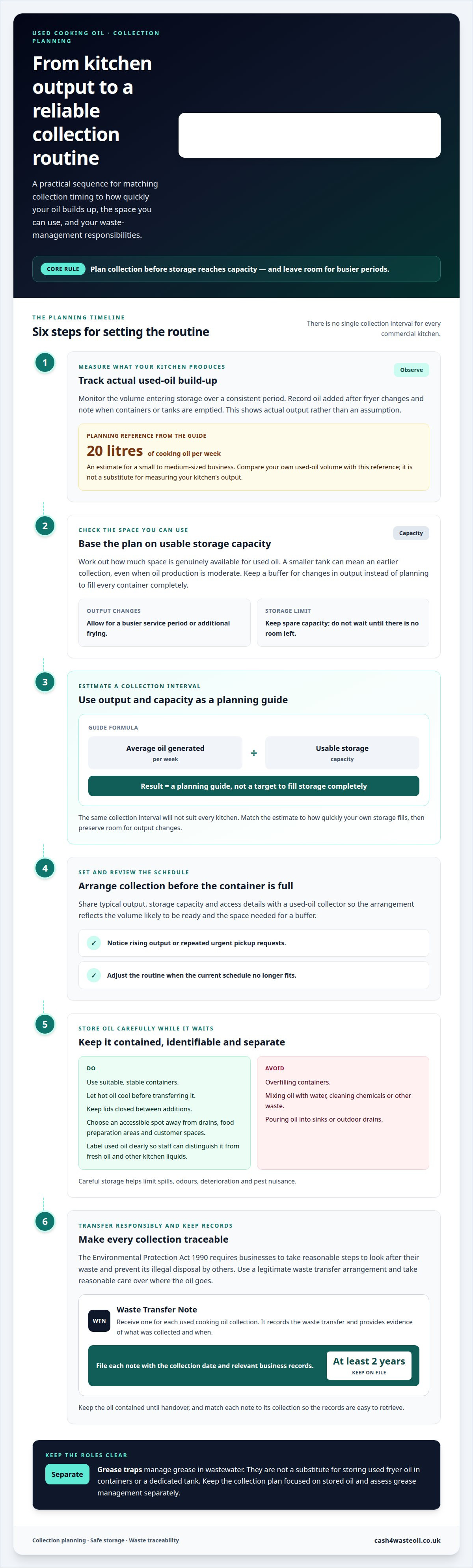
A workable collection routine matches oil generation to usable storage capacity, with room for busy service periods. Track both before setting a schedule; the same collection interval won’t suit every kitchen.
Monitoring oil generation
Monitor how much used oil enters storage over a consistent period. This shows whether your capacity matches the kitchen’s actual output, rather than what you expect to produce.
Track the volume added after fryer changes and note when containers or tanks are emptied. A small to medium-sized business can use an estimated 20 litres of cooking oil per week as a planning reference, then compare its own used-oil volume against that estimate. Water UK reports that 12% of food service establishments use equipment to manage oil and grease treatment. Separate storage records still help show how quickly collected oil accumulates.
Safe storage of used oil
Store used oil in suitable, stable containers until collection. Choose a designated spot that is easy to access and away from drains, food preparation areas and customer spaces.
Let hot oil cool before transferring it, and avoid overfilling containers. Keep lids closed between additions to limit spills, odours and pests. Don’t mix used cooking oil with water, cleaning chemicals or other waste. Label containers clearly so staff can distinguish used oil from fresh oil and other kitchen liquids. A clear routine also helps prevent oil being poured into sinks or outdoor drains.
Collection thresholds and arrangements
There’s no single volume of used cooking oil that every commercial kitchen must reach before collection. The practical threshold depends on how quickly you generate oil and the usable capacity of your storage.
To arrange collection in the UK, contact a used-oil collector and share your kitchen’s typical output, storage capacity and access details. This helps shape a schedule around the volume likely to be ready and the space needed for a buffer. A busy fryer operation may fill storage sooner than a smaller kitchen, even when both use similar containers. Arrange collection before storage reaches capacity, not when there’s no room left.
To estimate a suitable interval, divide average oil generated per week by usable storage capacity. Treat the result as a planning guide, not a target to fill every container completely. Leave spare capacity for changes in output, such as a busier service period or additional frying. A smaller tank can mean an earlier collection, even when oil production is moderate.
Grease traps and oil storage tanks serve different roles. A grease trap manages grease in wastewater; it isn’t a substitute for storing used fryer oil in containers or a dedicated tank. Keep the collection plan focused on stored oil, and assess grease management separately. This distinction supports cleaner handling and a more reliable environmental routine.
Waste cooking oil collection and legal responsibilities
Commercial kitchens need to manage used oil as controlled waste, from storage through collection and onward handling. Clear documentation and responsible transfer help show where the waste went and who took responsibility for it.
According to UK legislation, the Environmental Protection Act 1990 requires businesses to take reasonable steps to look after their waste and prevent its illegal disposal by others. This duty matters when used oil leaves the premises: handing it over does not remove the need to take reasonable care over its destination. A documented collection process helps establish a clear record of each transfer.
The Environment Agency states the registered-carrier condition as “(d) any person registered as a carrier of controlled waste under section 2 of M2 the Control of Pollution (Amendment) Act 1989”. This identifies a registered carrier in the stated legal provision. For a kitchen, the practical point is to use a legitimate waste transfer arrangement and retain records of the collection.
A Waste Transfer Note records a waste transfer and provides evidence of what was collected and when. Businesses should receive one each time their used cooking oil is collected. The Environment Agency says UK businesses should keep these notes on file for at least two years. Keep each note with the corresponding collection details, so records remain easy to retrieve if questions arise later.
- Retain the Waste Transfer Note for each collection.
- File it with the collection date and relevant business records.
- Keep the record available for at least two years.
For a sealed container of used cooking oil, a local recycling centre may be an option. Check the centre’s acceptance arrangements before transporting it, and keep the container closed during handling. For a commercial kitchen producing oil routinely, scheduled collection provides a consistent transfer route and matching documentation.
Used cooking oil can be heated, cleaned and filtered before recycling into renewable energy. It has been banned from use as an ingredient in animal feedstock since 2004. Keeping oil separate from other waste supports its appropriate recycling route and prevents confusion about its onward supply.
Waste Transfer Notes support traceability, but they don’t replace careful waste management. Match each note to the relevant collection, store records together, and keep oil contained until transfer. Businesses arranging routine used cooking oil collection can use the collection record to maintain a clear account of each handover.
How kitchen output affects collection frequency
Set used-oil collection frequency according to how quickly your commercial kitchen produces oil and how its storage fills. Change fryer oil according to its condition and kitchen procedures; collect the discarded oil according to output and available storage.
Factors affecting collection schedules
Collection schedules should reflect the kitchen’s oil production, storage capacity and operating pattern. These factors matter because two businesses with similar menus can fill their containers at different speeds.
A kitchen that fries throughout a busy service will usually produce used oil faster than one with limited frying. A smaller tank can also require more frequent collections, even when frying volumes are moderate. Account for seasonal peaks, menu changes and service patterns when reviewing the schedule. Repeated emergency pickup requests are a practical sign that the regular arrangement may no longer fit the kitchen’s needs.
Oil changing and collection timing
Changing oil is a kitchen operation; collection is the later removal of discarded oil. Keeping these timings separate helps prevent a fryer maintenance decision from dictating an unsuitable pickup routine.
Staff decide when to replace fryer oil based on its condition and the kitchen’s operating procedures. The discarded oil then accumulates for collection. For example, a kitchen might change oil after a particular service, but the amount stored depends on how much oil was replaced and what was already in the container. Set the collection schedule according to that accumulated volume, not simply the number of oil changes.
For a useful review, compare actual oil output across representative trading periods. Note which services generate the most used oil, when containers fill, and whether storage becomes tight before the next pickup. This gives managers a practical picture of changing demand, rather than relying on a timetable set for a different operating pattern.
Review the schedule after a change in menu, fryer use or trading hours. A commercial kitchen adding fried dishes may generate oil faster; reducing frying may slow the rate. Storage size also influences the interval, so output alone won’t determine the right collection plan. Keep a buffer rather than planning to use every part of the available capacity.
Collected oil can be recycled into bio-diesel. Keep used oil separate from other waste and transfer it through an appropriate collection process. Kitchen staff can support consistency by recording when oil is changed and noting the quantity added to storage. These observations help explain why collection volumes rise or fall.
Use emergency requests as a prompt to reassess the routine. If collections repeatedly happen only after storage becomes difficult to manage, the schedule is reacting too late. Align pickups with the kitchen’s observed output and storage limits, then adjust when operational changes alter the rate of accumulation.
Avoiding nuisance from stored cooking oil
Stored used oil can become a nuisance if it sits too long. It may degrade, smell and attract pests, so collection timing affects more than available tank space. Stronger odours or changes in the oil’s condition are signs to review your storage routine and collection schedule.
Keep used fryer oil in its designated container until collection. Close it after each addition and keep the surrounding area clean, so drips and residue don’t build up near food preparation or customer spaces. For example, staff can check the container area during routine kitchen cleaning and clear fresh spills promptly. This makes storage easier to manage and helps keep the oil separate from other waste.
Don’t pour fryer oil into a food caddy. Cooled contents from a frying pan can go in a food caddy, but oil from a deep-fat fryer should not. This distinction matters in a busy kitchen, where staff may handle pan scrapings and fryer oil during the same clearing task. Clear instructions near waste containers can help prevent the two streams being mixed.
Pay attention to the condition of stored oil and the area around it. A persistent smell, residue or pest activity can indicate that oil has remained too long or escaped its container. These signs don’t provide a precise collection interval, but they show why a schedule should reflect actual output and storage conditions. If a nuisance appears before the next planned pickup, review the schedule instead of allowing the problem to continue.
Good separation also supports an appropriate environmental route. Used cooking oil can be heated, cleaned and filtered before being recycled into renewable energy. Keeping fryer oil apart from food waste and other liquids helps preserve a clear stream for collection and recycling. It also makes the kitchen’s handling process easier to explain and manage.
Set a practical routine for staff: allow hot oil to cool before handling it, use the designated storage container, close it after use, and keep the surrounding floor clear. The routine should fit the kitchen’s layout and daily work. For instance, a container near the fryer may be convenient, but it still needs a location that avoids obstructing staff movement or creating a spill hazard.
Review the arrangement when the oil’s condition, smell or storage area changes. A collection schedule that leaves oil sitting too long can contribute to odours and pests; one that fits the kitchen’s output helps limit that nuisance. Pair consistent storage practices with timely collection to support a cleaner operation and responsible recycling into bio-diesel.
Collection consistency, documentation and traceability
A consistent collection record connects kitchen output with what leaves the premises. Use it to spot changes, explain missed pickups and keep a clear account of used oil as it moves towards recycling.
Record each collection against the date and storage point emptied. Add the quantity collected when available, then compare it with the kitchen’s own estimate. For example, if a container fills faster than expected, the difference may reflect a busier service or a change in frying activity. A short note about the change makes the next schedule review more useful.
Keep operational records together rather than relying on staff memory. A simple log can show planned and completed collections, unusual delays and urgent requests. These details help distinguish a one-off increase from a lasting shift in output. They also give managers a practical basis for discussing collection timing and capacity, rather than making decisions from an isolated busy day.
- Log the collection date and storage point.
- Record the collected quantity when available.
- Note missed pickups, urgent requests or unusual changes.
- Compare the record with the kitchen’s storage observations.
Documentation supports traceability by linking a waste transfer to a particular collection. Keep the relevant record with the kitchen’s own log, so staff can follow the oil’s handover without searching through unrelated paperwork. The Environment Agency says businesses should retain Waste Transfer Notes for at least two years. A consistent filing method makes those records easier to retrieve when needed.
Use the records to review patterns, not just to archive paperwork. For instance, repeated collections at shorter intervals can point to increased production or storage that no longer suits the kitchen. Conversely, long gaps between collections may show that the schedule could be adjusted. Compare several recorded collections before changing the routine, so one unusual service period doesn’t drive the decision.
Traceability also helps clarify what happened when staff or management change. A dated record can show when oil was removed, which storage point was involved and whether the planned pickup took place. This gives a new manager a practical starting point for understanding the established process. Keep entries factual and consistent, using the same units and descriptions each time.
Once collected, used cooking oil can be processed into renewable energy. Keeping a clear handover trail supports responsible handling and helps the kitchen account for how its waste was disposed of. For a documented used cooking oil collection, arrange collection and keep the associated transfer record with your site log.
Cash 4 Waste Oil: Used Cooking Oil Collection
Cash 4 Waste Oil provides used cooking oil collection for restaurants, pubs, hotels and other commercial kitchens in London, Kent and Surrey. Turn to the service when your storage pattern calls for a dependable collection arrangement and you need a record of the transfer.
Each collection comes with a Waste Transfer Note, giving your business documentation for its waste records. Cash 4 Waste Oil also makes cash payments for waste oil. Together, collection and documentation support a clear handover from your kitchen and help keep used oil within an appropriate recycling process.
If your kitchen needs used cooking oil collected, contact Cash 4 Waste Oil to discuss your collection requirements.
Make your next collection plan work harder
Deciding how often cooking oil should be collected means treating the schedule as part of kitchen operations, not an afterthought. Build its review into routine management so changes in service, menu or storage don’t catch the team off guard. Discussing your observed pattern with the collection team can help turn it into a practical arrangement.
Use your next review to consider whether the current process still fits the way the kitchen runs. If it doesn’t, adjust the plan before storage pressure disrupts daily work. A clear arrangement gives staff a predictable process and helps keep used oil moving responsibly.
Cash 4 Waste Oil can help commercial kitchens arrange collection around their requirements. Contact Cash 4 Waste Oil to discuss the next step for your kitchen, and move forward with a plan that fits its working rhythm.
Frequently Asked Questions
How Often Should Used Fryer Oil Be Collected?
Collect used fryer oil before its designated storage reaches its usable limit. The right interval depends on how quickly the kitchen generates oil and how much usable capacity it has. A fryer used throughout service will fill storage faster than one used for occasional dishes. Leave room for a rise in demand, and review the schedule if collections repeatedly happen when storage is nearly full.
How often should restaurants arrange used cooking oil collection in the UK?
Restaurants should arrange collections to fit their output and storage, rather than adopt one timetable for every site. For example, a kitchen with several fryers in constant use may need a different arrangement from one serving fried dishes occasionally. Include expected busy periods in the plan, not just quieter trading weeks. A menu or service-pattern change is a useful prompt to review collection timing.
What factors determine used cooking oil collection frequency?
The main factors are oil generated, usable storage capacity and the kitchen’s trading pattern. A small tank can fill quickly even where frying volumes are moderate. Changes in menu, service hours or demand can also alter how fast used oil accumulates. Consider these together: a high-output kitchen with ample storage may need a different schedule from a lower-output site with limited space.
How often should used cooking oil be collected from a household?
Households generally don’t need a scheduled collection for small amounts of used cooking oil. Let leftover oil cool, then use a food waste recycling service if one is available. If there’s no food waste service, place cooled oil in a sealed plastic container in the general waste bin. Keep household oil separate from commercial collection arrangements, which are intended for business-generated waste.
What are the UK rules for storing and disposing of waste cooking oil?
Businesses must manage waste responsibly and prevent its illegal disposal. According to UK legislation, the Environmental Protection Act 1990 requires businesses to take reasonable steps to look after their waste and prevent its illegal disposal by others. Keep used oil contained and use an appropriate transfer route. The Environment Agency says businesses should retain Waste Transfer Notes for used cooking oil collections for at least two years.
How should used cooking oil be stored safely between collections?
Allow oil to cool before handling it, then keep it in a dedicated, closed container on a stable surface. Use a clear label so staff can distinguish used oil from fresh cooking oil and other kitchen liquids. Keep the container away from drains and food preparation areas, and avoid filling it to the brim. These habits help staff handle oil consistently during busy shifts.
What are the risks of storing waste cooking oil for too long?
Oil left in storage too long can degrade, develop unpleasant odours and attract pests. A container filled beyond its usable capacity also leaves less room for newly discarded oil, making spills and disruption more likely. If the oil’s condition changes or an odour persists around the storage area, review the collection routine and handling practices rather than letting the issue continue.