Cooking Oil Collection in Greenwich With Cash Per Litre
Commercial kitchens can get paid for cooking oil in Greenwich by arranging free collection of their used cooking oil. The rate depends on the oil’s volume and condition, so request a free quote for a competitive, transparent offer. First, make sure your business and the oil you produce are eligible.
This is a practical option for businesses managing kitchen waste and looking for a clear answer about collection and payment. The service is for restaurants, pubs, hotels, cafés and other commercial kitchens that produce used cooking oil.
This guide explains which used oils qualify, how cash per litre is determined, and which Greenwich postcodes are covered. It also outlines what happens during collection and the paperwork involved, so you can see how the process fits your kitchen’s routine.
Key Takeaways
- Restaurants, pubs, hotels and other commercial kitchens can find out whether their used cooking oil is suitable for collection.
- Learn which used oils and fats may qualify, and how to keep different waste streams clear for collection.
- Cash per litre depends on the circumstances and is provided after a quote request, rather than being a fixed figure in this guide.
- Use the postcode coverage details to see how collection availability relates to your Greenwich business location.
- Understand how the amount of oil you produce can affect collection arrangements and payment.
Commercial businesses served
Restaurants, pubs, hotels and other commercial kitchens are the main businesses suited to used cooking oil collection in Greenwich. Each produces oil as part of regular food preparation, from a restaurant fryer to a hotel kitchen’s cooking equipment. Businesses in London can arrange collection around the way their kitchen stores and handles used oil.
Can households sell used cooking oil, or do buyers only collect from businesses? Commercial collections are intended for business kitchens, not household oil. In the Royal Borough of Greenwich, residents can put cooking oil in a plastic bottle and place it in the black-top general waste bin, or take it to the Re-use and Recycling Centre.
For a hospitality business, the useful distinction is where the oil comes from and how it is kept. A pub using a fryer, a hotel preparing meals for guests and a restaurant cooking throughout service all have a commercial kitchen context. Other commercial kitchens may also produce used cooking oil through their daily work. Keep it separate from general kitchen waste so it can be handled as a distinct material.
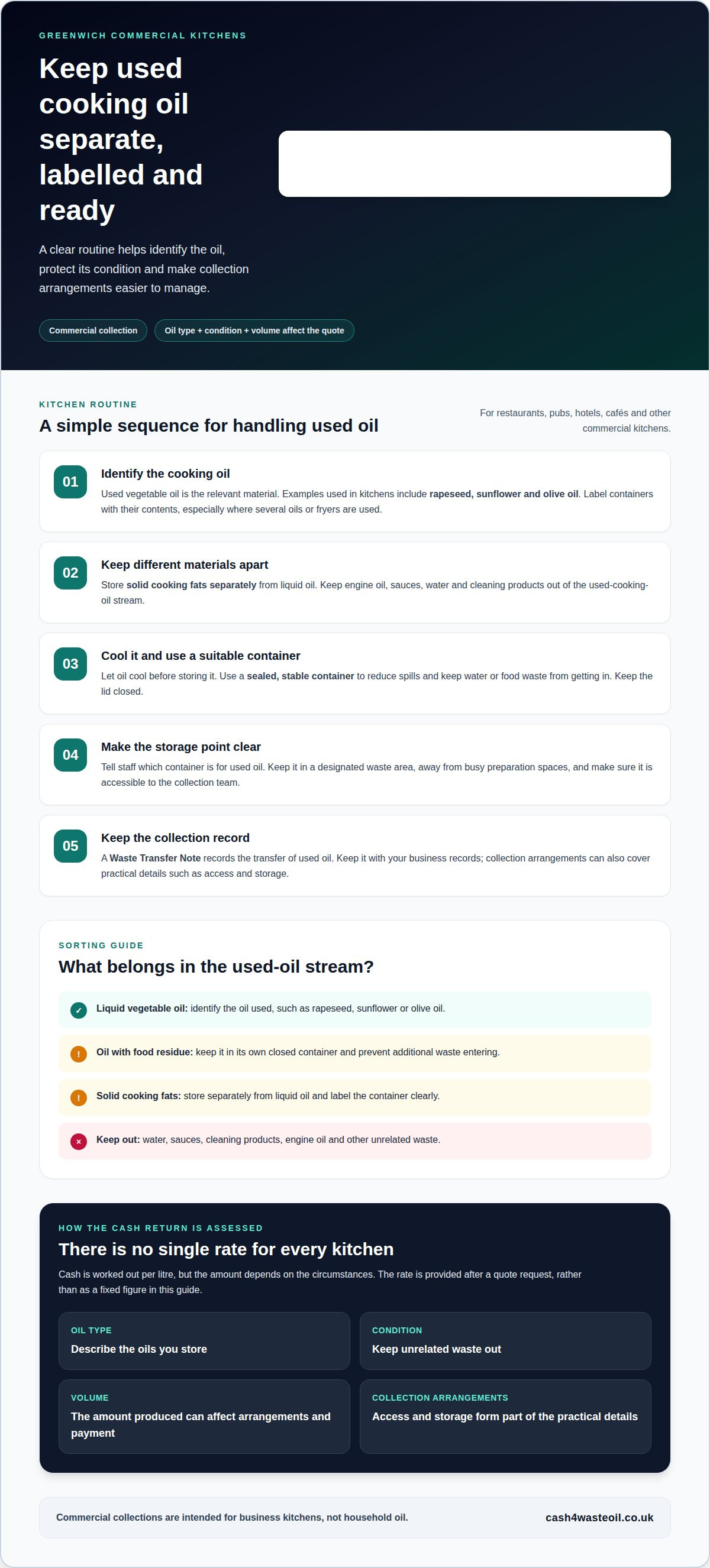
What documents or contracts are required to sell commercial cooking oil? A Waste Transfer Note records the transfer of the used oil, while collection arrangements set out practical details such as access and storage. Keep the note with your business records; it provides a clear account of the collection.
How should used cooking oil be stored before collection? Let it cool, then put it in a suitable, sealed container to reduce spills and keep out water or food waste. Keep the container stable and accessible to the collection team, away from busy preparation areas where it could be knocked over.
Make the storage point easy for staff and the collection team to identify. Tell kitchen staff which container is for used oil, and do not add other waste. For example, use a clearly labelled container in the designated waste area instead of leaving oil in an open pan near the fryer. This keeps the oil separate between collections.
Commercial kitchens vary in layout and working patterns. A hotel may store oil in a service area, while a pub may have limited kitchen space. In either case, a closed container and clear access route make collection more straightforward. Assign responsibility for adding oil and keeping the storage point tidy so the routine continues across shifts.
Cooking oil is not accepted at Greenwich recycling bring sites, textile banks, supermarkets or charity shops. These routes are distinct from commercial collection. Businesses that regularly handle used oil can organise its storage and paperwork as part of their kitchen waste routine, while households should use the borough’s stated disposal routes.
Accepted vegetable oils and fats
Used vegetable cooking oil is the relevant material for commercial collection. Kitchens in Greenwich may use rapeseed, sunflower or olive oil for frying and food preparation. These examples help staff identify the source, but the oil’s condition and any mixed ingredients also matter. Keep different waste streams separate instead of treating every kitchen residue as one product.
Start by identifying the oil used in each fryer or cooking process. One restaurant may use sunflower oil for chips, while another kitchen uses rapeseed oil for frying. Label the storage container, especially if the kitchen uses several fryers or changes ingredients. This helps distinguish used cooking oil from other waste.
Food particles can collect in oil during service. Allow the oil to cool, then avoid adding scraps, water or cleaning products to its container. For example, strain out loose food debris only if this is part of the kitchen’s safe handling routine. Keep the lid closed and the container clearly labelled as used cooking oil.
Fats need careful sorting. A solid cooking fat differs in appearance from liquid vegetable oil, and kitchens may handle both during preparation. Keep solid fats separate from liquid oil rather than melting or combining them in the same container. That gives a collector a clearer view of what the business has stored and prevents one material from disguising another.
- Liquid vegetable oil: identify the cooking oil used, such as rapeseed, sunflower or olive oil.
- Oil with food residue: keep it in its own closed container and prevent additional waste entering.
- Solid cooking fats: store separately from liquid oil and label the container clearly.
- Other liquids: keep water, sauces and cleaning products out of used-oil storage.
Do not confuse cooking oil with engine oil. They come from different activities and require separate handling. A café’s fryer oil belongs in its used cooking oil stream; vehicle lubricant from a workshop is not cooking oil. Likewise, avoid mixing cooking oil with sauces or wash water, which changes the material being stored.
If your kitchen uses several types of oil, label each container with its contents and tell staff where each belongs. If the menu or ingredients change, update the labels and keep the different materials separate. This makes the oil easier to identify and supports a clear handover.
For businesses seeking payment, the quality and consistency of stored oil matter alongside its source. Keep it free from unrelated waste, use a secure container and separate unlike materials. A kitchen that follows those steps can describe its used cooking oil accurately when arranging collection in Greenwich.
Cash paid per litre
The cash return for used cooking oil is worked out per litre, but no single rate applies to every Greenwich kitchen. The price depends on the case and is given after a quote request. Oil type, condition, volume and collection arrangements all affect the assessment.
Start by describing the oil accurately. Separated fryer oil differs from oil mixed with water, food scraps or other waste. If your kitchen uses several oils, explain which types you store and keep them apart. Clear details help ensure the quote reflects the material being collected.
Volume is another factor. A business producing oil steadily through regular service may have a different collection pattern from a kitchen with occasional surplus. The amount available at collection helps shape the arrangement and the resulting payment. Keep a simple record of what your kitchen stores between visits, rather than estimating from memory when requesting a quote.
Collection logistics also matter. A container stored in an accessible waste area is different from one that requires extra handling or difficult access. Describe the storage point, the route to it and any practical restrictions at the premises. These details help ensure the quote reflects the actual collection, rather than oil alone.
To understand the payment, separate the per-litre rate from the final amount. The rate applies to the quantity of eligible oil collected; the total therefore depends on both figures. For example, a restaurant should distinguish oil ready for collection from containers still being filled. A clear quantity and agreed rate make the calculation easier to follow.
Ask for the quote to make clear:
- Which type of used cooking oil the per-litre rate covers.
- How oil quality or mixed contents affect the assessment.
- How the collected quantity is measured for payment.
- When cash payment is made during the collection process.
A headline rate alone does not show what a kitchen will receive. The amount depends on the volume and condition of eligible oil collected. Label each container and be ready to describe its contents and quantity so the quote and payment are based on clear information.
In the course of arranging collection, use the quote to clarify the calculation before the handover. If your kitchen’s oil output changes, update the quantity and storage details for the next request. This keeps the per-litre figure relevant to the oil actually collected, while helping your business plan its waste routine and expected cash return.
Greenwich postcode coverage
Greenwich is within London, an area covered by commercial used cooking oil collection. The exact postcode list is not set out here, so use your full business address when arranging a collection. A postcode helps locate the premises, whilst the complete address identifies the kitchen and its collection point.
For a restaurant near Greenwich town centre, include the building name or number, street and postcode. Do the same for a hotel, pub or catering kitchen elsewhere in the borough. Clear details help identify the commercial premises and where the stored oil can be accessed.
Greenwich businesses operate from a range of premises, from street-level restaurants to kitchens inside larger hotels. Alongside the postcode, provide practical location details, such as the entrance used for deliveries or the position of the waste storage area. This gives the collection team useful context.
Are there rules for disposing of used cooking oil in Greenwich? Yes. In the Royal Borough of Greenwich, put household cooking oil in a plastic bottle for disposal. The bottle can go in the black-top general waste bin or be taken to the Re-use and Recycling Centre. Cooking oil is not accepted at recycling bring sites, textile banks, supermarkets or charity shops.
Household disposal routes differ from commercial collection. Restaurants and pubs with used oil from their kitchen operations can arrange collection using the business address. Record the postcode and the correct kitchen entrance, rather than a head-office address elsewhere in London.
Before arranging collection, prepare these location details:
- The full Greenwich business address, including its postcode.
- The business name shown at the premises, such as a restaurant or hotel.
- The entrance or access point for the collection area.
- The location of the container holding used cooking oil.
Check the address against current business records, especially if the kitchen operates within a shared building. A hotel may have a public entrance and a separate service entrance. Naming the correct access point reduces confusion and helps connect the postcode to the right collection location.
Pair the postcode with the premises type and access details. A Greenwich pub, restaurant or hotel can provide these together to show where its used oil is stored. Include separate details for each kitchen if the business operates more than one site across London.
Keep the address information consistent across collection arrangements and transfer paperwork. If the kitchen moves or its storage point changes, update the site details before the next collection. That practical step helps keep the postcode, premises and oil handover aligned.
What quantity of used cooking oil is needed for collection or payment?
The amount of oil a Greenwich kitchen produces will depend on its menu and cooking routine. A restaurant using fryers throughout service may build up oil differently from a pub kitchen with occasional frying. Describe the quantity you usually produce when requesting a quote.
Payment is based on the used oil collected, not the amount your kitchen expects to produce later. Cash is paid on the spot for collected waste oil. Keep a simple record of containers filled between collections, so you can explain the quantity available without relying on a rough memory.
Separate oil ready for collection from containers still in use. For example, a hotel kitchen may have one sealed container awaiting collection and another receiving cooled oil. Explain which is ready and which is still being filled so the handover quantity is clear.
Oil condition also matters to the assessment. Water, food scraps or other liquids can affect the material being considered. Keep the collected oil separate and identify any containers with mixed contents. A clear account of the oil and its storage makes the quantity easier to discuss alongside the payment arrangement.
Use these steps to prepare an accurate picture of your kitchen’s available oil:
- Identify which containers hold used cooking oil ready for collection.
- Keep containers still being filled separate from the ready stock.
- Describe the oil type and any visible contamination.
- Share how regularly your kitchen produces used oil.
A restaurant may produce oil in line with its menu and pace of service. A pub may generate it less consistently, depending on its food offering. Record filled containers to keep track of output, and update the record when menus, cooking routines or storage arrangements change.
Do not mix a small amount of oil with other waste. Keep it in its own container and track how quickly it accumulates. This information helps establish a suitable collection schedule, while the eligible oil ready at handover determines the payment.
Before arranging a collection, bring together your business address, the quantity ready, oil type and storage details. These facts help make the discussion specific to your kitchen instead of relying on a generic volume estimate. For Greenwich businesses ready to discuss their stored oil, arrange used cooking oil collection.
Cash 4 Waste Oil: Used Cooking Oil Collection
Cash 4 Waste Oil helps commercial kitchens manage used cooking oil through collection, cash payment and Waste Transfer Notes. Restaurants, pubs, hotels and other commercial kitchens can use the service for their used oil. The note records the waste transfer for business paperwork.
For Greenwich kitchens, the next step is to share the business address, oil type and quantity ready for collection. Those details help establish the collection arrangement and payment calculation. Keep the oil separate and accessible for handover.
Choose Cash 4 Waste Oil when your commercial kitchen wants collection alongside cash payment and transfer documentation. Contact Cash 4 Waste Oil to discuss your used cooking oil collection.
Make used oil part of your kitchen routine
Include used cooking oil in your kitchen’s regular close-down routine. A consistent process helps staff handle it carefully and keeps the collection point organised as menus or shifts change. Assign responsibility to a team member and make the storage routine easy for colleagues to follow.
If you want to get paid for cooking oil in Greenwich, turn your preparation into a practical next step. Have your business address, oil details and collection requirements ready to discuss. Clear information helps move the conversation from routine kitchen waste to a workable collection arrangement.
Cash 4 Waste Oil provides commercial kitchens with a straightforward route for used cooking oil, alongside the relevant transfer documentation and cash payment. Contact the team to discuss your kitchen’s requirements and arrange the next step. Contact Cash 4 Waste Oil to arrange collection, and put a clear oil-handling routine in place for your business.
Frequently Asked Questions
Do you collect cooking oil in Greenwich?
Yes, Cash 4 Waste Oil collects used cooking oil from commercial kitchens in Greenwich. Restaurants, pubs, hotels, cafés and other food-service businesses can get paid for cooking oil in Greenwich through the collection service. It is intended for business-generated oil, not household waste. Keep your used oil separate from other kitchen waste, then provide your premises address and details about the oil when arranging collection.
How does it work?
The process has four stages: contact Cash 4 Waste Oil with your location and approximate oil volume; arrange a collection slot; receive cash when the oil is collected, along with a Waste Transfer Note; then the oil is recycled into biodiesel. For example, a café can share its address and typical output first, then agree a suitable collection schedule for its kitchen.
How far in advance do I need to place my booking?
Arrange a booking with enough time to agree a collection slot that suits your kitchen. Cash 4 Waste Oil offers flexible weekly, fortnightly or monthly collections, based on how much used oil your business produces. A Greenwich restaurant with steady fryer output might choose a regular schedule, whilst a business with changing production can discuss an arrangement that matches its actual waste-oil routine.
How is the price of used cooking oil determined?
The payment rate depends on the volume and condition of the used cooking oil. For example, the amount ready for collection and whether it is kept separate from water or other waste help shape the assessment. Cash 4 Waste Oil provides a free quote on request, so describe your oil and expected quantity clearly. There is no fixed published rate per litre to apply to every kitchen.
Where can I get paid for used cooking oil in Greenwich, London?
Commercial kitchens in Greenwich can arrange collection through Cash 4 Waste Oil’s London service. Its stated coverage also includes Greater London, Kent, Surrey, Birmingham, Coventry, Leicester, Wolverhampton, Leicestershire, Derbyshire, Staffordshire, Warwickshire, Northamptonshire, Oxfordshire and Worcestershire. For a Greenwich business, provide the premises address and collection-point details. That helps distinguish the kitchen site from a head office or another business location.
Which used cooking oil collectors serve Greenwich SE10 and nearby postcodes?
Cash 4 Waste Oil serves commercial kitchens in London, including Greenwich SE10. Restaurants, pubs, hotels, cafés and other food-service businesses can arrange collection for used cooking oil. For a site near SE10, give the full postcode and premises address when discussing the collection. Include any useful access details, such as a service entrance or the position of the kitchen’s oil storage point.
How much do used cooking oil buyers pay per litre in Greenwich?
There is no single per-litre payment that applies to every Greenwich business. Cash 4 Waste Oil bases its rate on the oil’s volume and condition, then provides a free quote on request. To get a useful assessment, explain how much oil is ready, what type it is and whether it is stored separately from other waste. Payment is made in cash on collection.
How do I arrange a used cooking oil collection in Greenwich?
Contact Cash 4 Waste Oil with your Greenwich business address, the approximate quantity of oil you produce and details about the collection point. You can then arrange a flexible weekly, fortnightly or monthly schedule suited to your kitchen’s output. Keep used cooking oil separate and accessible for handover. After collection, you receive cash payment and a Waste Transfer Note for your records.