Hotel oil disposal in Kensington and Chelsea for safe collection
Hotel oil disposal in Kensington and Chelsea starts with keeping used cooking oil out of sinks. Collect it in a container, let it cool and set, then put it in the bin. For a hotel kitchen producing oil regularly, a collection service can provide a practical route for handling it.
Clearing the kitchen quickly can be tempting, but oil poured down a sink may cool, solidify in pipes and contribute to blockages. Keep used oil separate from wastewater and handle it through a dedicated disposal route.
This guide explains how commercial cooking oil collection works, what licensing and documentation to expect, and why responsible disposal matters. You’ll also learn what to consider when arranging a collection for a hotel in the borough, from safe storage through to transfer records. The aim is to make the process clear, so your kitchen can handle used oil efficiently and understand the steps involved in its disposal.
Key Takeaways
- Keep used cooking oil out of sinks and drains; plan a suitable way to collect and store it in your kitchen.
- Understand what to look for in a commercial collection service, including carrier licensing and transfer documentation.
- See how collection can fit the routines of hotels, restaurants and other commercial kitchens.
- Learn how oil and fat can contribute to blocked pipes and why careful disposal matters for your premises.
- Find out how Cash 4 Waste Oil’s collection, Waste Transfer Notes and cash payments can support your used-oil handling process.
Commercial cooking oil collection in Kensington and Chelsea
Hotels in Kensington and Chelsea need a clear route for used cooking oil, from kitchen storage through to its final disposal. The right approach separates oil from wastewater and fits the hotel’s kitchen routine.
Council disposal rules
For hotel oil disposal in Kensington and Chelsea, the council advises collecting cooking oil and fat in a container, letting it cool and set, then putting it in the bin. Keep oil, fat and grease out of sinks, and do not take them to Civic Amenity sites.
In hotel kitchens, scrape or wipe plates, pans and utensils before washing, then put solid food waste in the rubbish bin. Use sink strainers to catch food debris, and put solids swept from floors in rubbish bins rather than floor drains. The borough also advises businesses to consider fitting a grease trap and maintaining it regularly.
Hotel collection providers
Hotels can arrange commercial cooking oil collection for used oil from kitchens, restaurants and other food-service areas. Choose a collection routine that fits the hotel’s storage and kitchen operations, whether the kitchen serves South Kensington guests or operates near the Albert Hall.
Before arranging collection, plan where staff will store the oil and how they will transfer it safely. A commercial collection service gives the hotel a clear route for accumulated oil, rather than leaving staff to decide how to dispose of each container. Keep the process consistent across shifts and food outlets.
Pre-collection oil storage
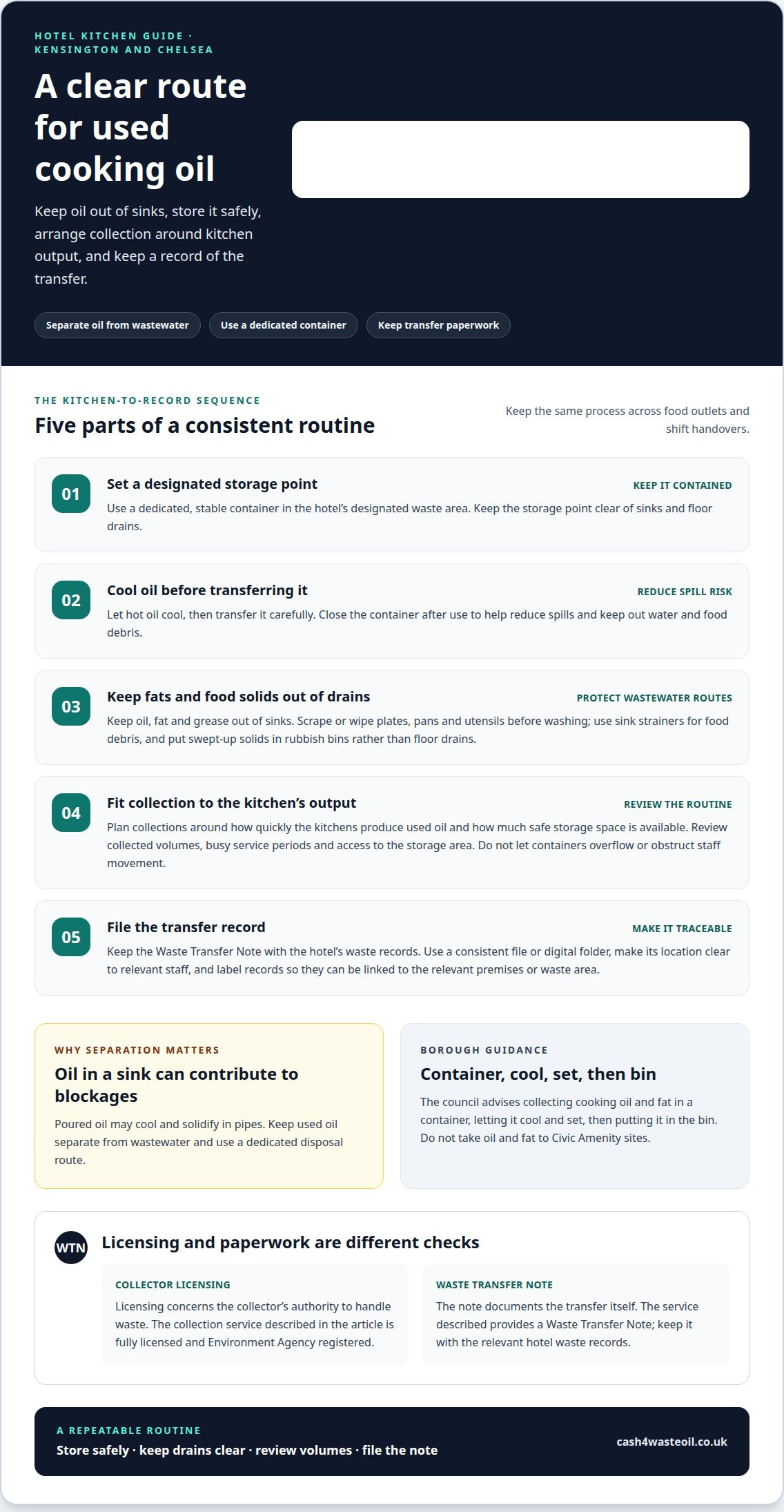
Use a dedicated container for used cooking oil and keep it stable in the hotel’s designated waste area. Let hot oil cool before transferring it, and close the container after use to reduce spills and keep out water and food debris. Keep the storage point clear of sinks and floor drains.
Set a simple routine: staff carefully transfer cooled oil, secure the container and tell the responsible team when it needs collecting. A named storage point helps teams in a busy London hotel follow the same steps, including during shift handovers.
Arranging collection frequency
Arrange collections around how quickly the hotel’s kitchens produce used oil and how much safe storage space is available. A large kitchen serving several dining areas may fill containers faster than a smaller operation. Review the collected volume to keep the routine suited to actual use.
Plan collection around the hotel’s kitchen routine, including busy service periods and access to the storage area. Do not let containers overflow or obstruct staff movement. Reliable scheduling gives kitchen teams a clear process, while monitoring the stored oil helps managers keep the arrangement suited to their operation.
Use these practical steps to keep the process organised:
- Set a designated oil-storage point away from sinks and floor drains.
- Show kitchen staff how to cool and transfer oil into the container.
- Keep plates, pans and utensils clear of food residue before washing.
- Review collected volumes to keep the arrangement aligned with kitchen output.
These steps apply across Kensington and Chelsea, from hotels near the Palace to kitchens in South Kensington. A consistent routine helps staff keep cooking oil out of wastewater and makes collection easier to manage.
Waste-carrier licensing and documentation
Keep a Waste Transfer Note with the hotel’s used-oil records. It documents the transfer and supports a clear handover between the kitchen and collector. File it so the relevant hotel manager can find it alongside other waste paperwork.
Licensing and paperwork address different parts of the collection process. Licensing concerns the collector’s authority to handle waste; a Waste Transfer Note documents the transfer itself. For the collection service described here, collections are fully licensed and Environment Agency registered, and a Waste Transfer Note is provided.
For a hotel, the practical check is whether the paperwork matches the collection that took place. Keep the note with the relevant kitchen or site records, rather than leaving it with a shift handover or in a general inbox. If the hotel has several food outlets, use a consistent filing method so staff can identify which collection the document relates to.
Make the paperwork usable
Use a simple record routine after every collection. Put the Waste Transfer Note in the hotel’s designated waste file and make sure the responsible manager knows where it is. If the hotel has a restaurant, bar and breakfast kitchen, label records clearly enough to connect the transfer with the relevant premises or waste area.
- Store the Waste Transfer Note with the hotel’s waste records.
- Use a consistent file or digital folder for collection documents.
- Make the record location clear to relevant kitchen and management staff.
- Keep booking details and transfer paperwork together where that helps staff trace the collection.
These steps make documentation easier to follow when managers change shifts or review kitchen procedures. For example, a duty manager covering breakfast service can find the same file as the team overseeing evening meals. A clear routine also helps prevent a note being misplaced among unrelated invoices or museum-event booking paperwork.
Use licensing information responsibly
Environment Agency registration and licensing are important indicators when arranging commercial waste collection. Keep the paperwork with the hotel’s records, and make sure the staff member handling a booking knows which documents relate to the used cooking oil transfer. This creates a traceable record without adding unnecessary steps to kitchen service.
For hotels arranging collections, recommend one named person to oversee the booking and document filing. That person can pass the process to colleagues and keep the same routine across kitchens. A documented used-oil collection connects the transfer paperwork with the practical collection process.
Businesses served, including hotels and restaurants
Commercial kitchens across Kensington and Chelsea produce used cooking oil in different quantities and as part of different service routines. Hotels, restaurants, pubs and other food businesses need a clear way to manage oil after cooking. The practical arrangement depends on where oil is used, how staff handle it and how the kitchen organises its waste area.
A hotel may have several oil-producing areas, including its main restaurant, breakfast kitchen and event catering operation. Each can follow the same internal process: let used oil cool, transfer it to the designated container, and tell the responsible team when it needs collecting. This keeps the routine consistent across shifts and service periods.
Restaurants and pubs have different patterns of use. A restaurant’s menu and cooking methods shape how its kitchen handles used oil, while a pub may produce it through a smaller food operation. In both cases, managers can identify the relevant cooking areas and give staff a simple, shared procedure that is easy to follow during service.
Other commercial kitchens operate in visitor venues, workplaces and event spaces. A kitchen preparing meals for visitors to the Natural History Museum, for example, has a different daily rhythm from a hotel serving breakfast and evening meals. Base the routine on actual kitchen activity, rather than assuming every venue produces oil at the same pace.
Location can also affect how a business organises internal handovers. A kitchen on a busy street may need a clearly defined route from the cooking area to storage, so containers do not obstruct staff or deliveries. A venue beside gardens may have separate food-service areas or outdoor events to include in its waste routine. Map the route before setting the process.
Make the arrangement easier to manage by assigning responsibility. Choose a staff role to oversee the oil container, show each relevant team where it belongs, and include the procedure in kitchen handovers. If the hotel has several outlets, identify each one in the routine so staff know where used oil is produced.
- List the hotel or venue’s kitchens and food-service areas.
- Set one clear internal procedure for transferring cooled oil.
- Show staff the designated storage point and route to it.
- Review the routine when menus, outlets or event operations change.
These steps help hotels, restaurants, pubs and commercial kitchens in Kensington and Chelsea build oil handling into everyday operations. Clear responsibilities make the process easier to follow, whether staff work in one restaurant kitchen or across several food-service areas.
Risks of improper cooking oil disposal
No. Hotels should not pour cooking oil or grease down drains in the Royal Borough of Kensington and Chelsea. The borough advises keeping oil, fat and grease out of sinks because they can solidify in pipes and cause blockages.
A blockage can begin when small amounts repeatedly enter a kitchen sink. Oil can cool and set inside pipework, restricting wastewater flow; further grease may add to the obstruction. A blocked kitchen drain can disrupt breakfast preparation, when staff need sinks to wash equipment and clear food residue.
Shared plumbing can extend the problem beyond one kitchen. In blocks of flats or converted houses in Kensington and Chelsea, fat and oil blockages can cause dirty water to back up into neighbours’ sinks or baths. Disposal is therefore a building-wide concern, not simply a housekeeping issue within the hotel’s food-service area.
Improper disposal can also create pollution risks and damage drains. For a hotel near Notting Hill or a venue serving visitors around Albert, oil entering the drainage system can travel beyond the kitchen pipework. The effects depend on where a blockage forms and how wastewater moves through connected pipes.
There are practical health and safety concerns too. A blocked drain can leave staff dealing with dirty water or a disrupted work area. During a busy holiday service, a drainage issue can complicate cleaning and food preparation. Keeping oil out of sinks reduces one preventable source of disruption.
Make the response clear if a drain slows or backs up. Stop putting oil, fat or grease into the sink and tell the person responsible for the premises. If pipes become blocked, residents in the borough are advised to report the blockage as a repair. Hotel teams should follow their established building-maintenance process for kitchen drainage problems.
Reduce the chance of repeat blockages by building simple checks into kitchen routines:
- Keep used oil out of sinks and floor drains.
- Scrape or wipe plates, pans and utensils before washing them.
- Use sink strainers, then put collected food debris in the rubbish bin.
- Put solids swept from floors in rubbish bins, not floor drains.
- Consider a grease trap and maintain it regularly.
These steps help protect hotel drainage and neighbouring properties from avoidable grease problems. A clear staff routine matters in kitchens across Kensington and Chelsea, whether the premises serve Notting Hill residents, hotel guests or visitors exploring the borough.
Which companies collect used cooking oil from hotels in Kensington and Chelsea?
Hotels in Kensington and Chelsea can use commercial waste-oil collectors for used cooking oil from hospitality kitchens. Choose an arrangement that fits the hotel’s premises, kitchen routine and storage process. This can include restaurants, breakfast kitchens, bars and event catering areas, where cooking activity varies across the week.
Start by identifying the site’s collection requirements. Note which kitchen areas produce used oil, where staff can store it safely and how the collection team can access that storage point. For a hotel with several food outlets, bring each area into one internal process. This gives managers a practical basis for arranging collection.
Collection frequency should reflect how quickly the hotel’s kitchens fill their storage containers and the space available. A hotel serving breakfast and evening meals may produce oil differently from one with a smaller restaurant or occasional events. Monitor the stored volume and use a flexible weekly, fortnightly or monthly schedule suited to the operation.
Documentation matters too. Every collection includes a Waste Transfer Note, which records the transfer for the hotel’s waste paperwork. Keep collection records accessible to the staff responsible for kitchen operations. If the hotel has several outlets, a clear filing routine helps connect paperwork with the relevant premises and collection.
When arranging commercial waste collection in England, consider whether the collector is authorised to handle waste. Licensing and registration are distinct from the transfer record: they concern the collector, while the Waste Transfer Note documents the transfer. Keep both points in view when setting up the hotel’s process, not just the collection date.
For hotel managers, the arrangement should be easy for kitchen staff to follow. Set a designated storage area, explain how to transfer the oil, and assign responsibility for monitoring containers and filing paperwork. A duty manager can include these steps in staff handovers so breakfast and evening teams follow the same process.
- List the hotel’s kitchens and other oil-producing food areas.
- Identify the storage location and practical access route.
- Match collection timing to the volume the hotel accumulates.
- Keep transfer records in an accessible, consistent location.
- Make collection tasks clear to the staff responsible for them.
These criteria help hotels in Kensington and Chelsea assess whether a commercial collection arrangement fits their operations. Arrange a used-oil collection as the next step for a hotel seeking a dedicated route for its kitchen oil.
Cash 4 Waste Oil: Used Cooking Oil Collection
Cash 4 Waste Oil provides used cooking oil collection for hotels and commercial kitchens in Kensington and Chelsea. Turn to the service when your kitchen needs a defined route for accumulated oil and clear transfer documentation.
Collections are fully licensed and Environment Agency registered. A Waste Transfer Note is provided for your records, documenting the oil transfer. Cash 4 Waste Oil also makes cash payments for waste oil, giving businesses a direct payment as part of collection.
Keep used oil separate from sinks, store it safely, and arrange collection around your kitchen’s output. This gives staff a practical process from storage through to handover, with paperwork for the hotel’s waste records.
To discuss used cooking oil collection for your hotel, contact Cash 4 Waste Oil or visit cash4wasteoil.co.uk.
Make oil handling part of your kitchen routine
Use the next kitchen review to make used-oil handling part of your hotel’s everyday operations. A clear routine should work for the people doing the job, not just sit in a folder. Consider how new starters learn the process, how responsibilities pass between shifts and whether menu or service changes affect the kitchen’s arrangements.
Hotel oil disposal in Kensington and Chelsea works best when it is part of everyday operations. Keep the process aligned with how your kitchens run, rather than treating disposal as an afterthought. Clear, consistent steps help staff manage used oil and keep the premises’ waste handling organised.
When you’re ready to discuss the next step for your hotel, contact Cash 4 Waste Oil. Put a straightforward process in place and help your kitchen move forward with confidence.
Frequently Asked Questions
Why is responsible oil disposal essential for your business?
Responsible disposal helps protect your hotel’s drainage, staff and neighbouring properties. In Kensington and Chelsea, cooking oil and fat can solidify in pipes and cause blockages. Shared plumbing can also allow dirty water to back up into neighbours’ sinks or baths. Keep oil out of sinks and give kitchen staff a clear disposal routine to help prevent avoidable disruption during busy services.
Do used cooking oil collectors pay hotels for waste oil, and what are typical rates?
Some commercial collectors pay hotels for used cooking oil. Cash 4 Waste Oil makes cash payments for waste oil, but there isn’t one typical rate to quote. The amount depends on the oil’s volume and condition, so a hotel can request a quote based on what its kitchen produces. This gives managers a relevant figure for their own collection rather than relying on a general rate.
How can hotels check that a cooking oil collector is licensed and compliant in England?
Check the collector’s licensing and Environment Agency registration, then keep the transfer paperwork with the hotel’s waste records. Cash 4 Waste Oil is fully licensed and Environment Agency registered, and provides a Waste Transfer Note for every collection. A hotel manager can make the document part of the collection handover, so staff can file it consistently and retrieve it alongside other relevant waste records.
What are the risks and penalties for improper commercial cooking oil disposal in Kensington and Chelsea?
Improper disposal can contribute to blocked pipes, drain damage and pollution risks. In Kensington and Chelsea, oil and fat can solidify in pipes, while shared plumbing may allow dirty water to back up into neighbours’ sinks or baths. Do not pour oil into sinks; use a dedicated disposal route. The consequences depend on where a blockage occurs and how the building’s drainage is connected.