How to arrange safe collection and storage when your waste oil bin is full
A full waste oil bin needs a safe, prompt solution: stop adding oil, keep the container secure and arrange collection by an authorised collector. If you’re asking what to do if your waste oil bin is full, don’t pour the oil down a sink or drain, or leave it where it could spill.
It’s a practical problem for a busy kitchen, especially when used oil keeps accumulating. The priority is to prevent leaks and keep the oil contained while collection is arranged. That protects your workplace and helps keep cooking oil out of drains.
This guide explains how to arrange collection, what to do with oil while you wait and how to store it safely. You’ll also learn what to expect from an authorised collection, so you can keep your waste handling organised and your kitchen running smoothly.
Key Takeaways
- Stop adding oil to a full bin and arrange collection by an authorised collector before storage becomes difficult to manage.
- Keep used oil contained in a secure, sealed container while collection is being arranged.
- If a bin leaks or overflows, act promptly to contain the spill and keep oil away from sinks and drains.
- Handle used cooking oil as commercial waste, and keep the relevant transfer documentation with your records.
- Find out how a dedicated collection service can help keep your kitchen’s oil storage and disposal organised.
Collection by authorised collectors
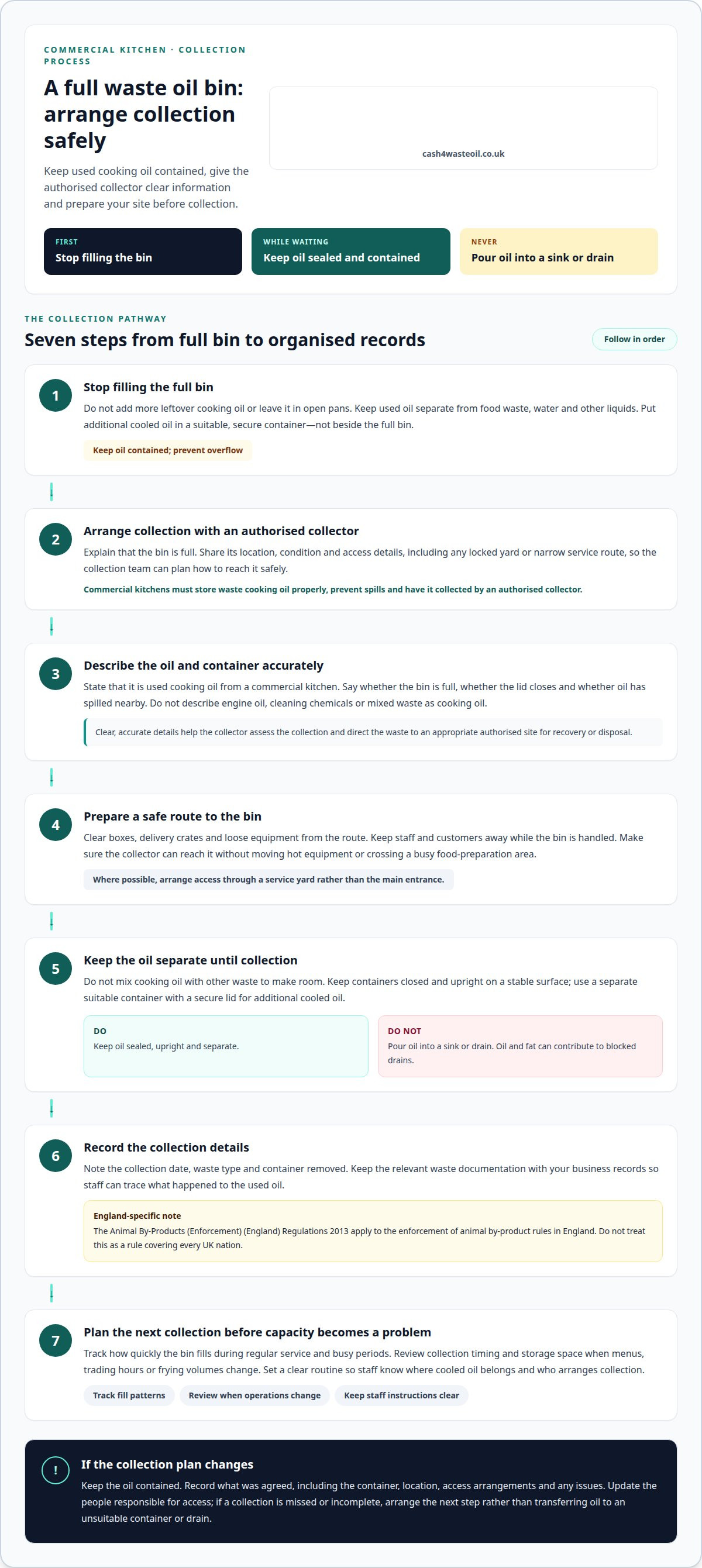
For a commercial kitchen, a full cooking oil bin calls for an organised collection, not an improvised disposal route. Follow these steps to arrange collection and keep the oil contained until it leaves your premises.
- Stop filling the full bin. Once the container is full, don’t add leftover cooking oil or leave it in open pans. Keep the oil separate from food waste, water and other liquids to prevent overflow and make clear what needs collecting. If the kitchen continues producing used oil, store it temporarily in a suitable, secure container, not beside the full bin.
- Arrange collection with an authorised collector. Catering businesses must store waste cooking oil properly, prevent spills and have it collected by an authorised collector. When arranging a visit, explain that the bin is full and describe its location, access and condition. Mention any access restrictions, such as a locked yard or a narrow service route. Clear details help the collection team plan how to reach the container and remove its contents safely.
- Describe the oil and container accurately. Tell the collector that the material is used cooking oil from a commercial kitchen. Explain whether the bin is full, whether its lid closes and whether oil has spilled nearby. Don’t describe engine oil, cleaning chemicals or mixed waste as cooking oil. Accurate information helps the collector assess the collection and direct the waste to an appropriate authorised site for recovery or disposal.
- Prepare a safe route to the bin. Before collection, clear boxes, delivery crates and loose equipment from the path to the oil storage point. For premises with accumulated clutter or discarded packaging across service routes, clearance services such as Copper State Junk Removal & Hauling can help remove bulky items and maintain unobstructed access. Keep staff and customers away while the bin is being handled. Make sure the container can be reached without moving hot equipment or crossing a busy food preparation area. For example, arrange access through a service yard rather than the main entrance.
- Keep the oil separate until collection. Don’t mix cooking oil with other waste to make room, and never pour it into a sink or drain. Oil and fat can contribute to blocked drains, while mixing materials can complicate handling and recovery. Keep containers closed and upright on a stable surface. If the bin is full, put additional cooled oil in a separate suitable container with a secure lid.
- Record the collection details. Note the collection date, the waste type and the container removed. Keep the relevant waste documentation with your business records, so staff can trace what happened to the used oil. In England, the Animal By-Products (Enforcement) (England) Regulations 2013 apply to the enforcement of animal by-product rules, according to The National Archives (legislation.gov.uk). This is an England-specific regulation, so don’t treat it as a rule covering every UK nation.
- Arrange the next collection before capacity becomes a problem. Track how quickly the kitchen fills its bin during regular service and busy periods. Use that pattern to plan ahead instead of waiting until the lid won’t close. If menus, trading hours or frying volumes change, review collection timing and storage space. A clear routine tells staff where cooled oil belongs and who arranges collection as the bin fills.
Record the collection details. Note what was agreed, including which container will be emptied, its location, access arrangements and any issues with the bin or surrounding area. Keep the note with the kitchen’s waste records so staff can follow the same instructions when preparing the site. If plans change, update the people responsible for access. If a collection is missed or incomplete, keep the oil contained and arrange the next step rather than transferring it to an unsuitable container or drain.
Businesses handling large amounts of waste oil should contact oil collection experts. Give them an accurate description of the oil, bin and storage setup, and explain any change in access, capacity or condition. Confirm what action is expected before the oil is moved, and make sure staff know the agreed arrangement. Keep the oil contained until an authorised collector removes it.
What should I do if the waste oil bin is leaking or overflowing?
Act promptly if used cooking oil escapes from its bin. A leak can spread across a kitchen floor, reach a drain or create a slip hazard. Don’t add more oil or try to move a heavy, damaged container. Take these steps to contain the immediate problem and arrange collection safely.
- Stop adding oil and keep people clear. Tell kitchen staff to stop pouring used oil into the affected bin. Keep colleagues, delivery workers and customers away from the spill. Mark the area with a clear warning or barrier, especially if oil has reached a walkway. Don’t let anyone walk through it or push a trolley across it. Keeping the area clear helps prevent the spill from spreading.
- Identify where the oil is escaping. From a safe position, check whether the bin is overflowing, the lid is loose or the container appears damaged. Don’t lift a full bin to inspect underneath or handle one with a compromised base. If oil is still escaping, avoid touching the bin. This visual check helps you describe the problem accurately when arranging collection.
- Protect nearby drains. Keep oil away from floor drains, sinks and external gullies. If the spill is close to a drain, place absorbent material between the oil and the opening without stepping into the spill. Never wash cooking oil away with water or cleaning liquid. Oil and fat can contribute to blocked drains, and rinsing could carry the spill into pipework.
- Contain a small spill carefully. Use suitable absorbent material to stop a limited amount of oil spreading across a firm floor. Work from the outer edge towards the centre, and avoid pushing oil into cracks or under equipment. Keep the material away from food, utensils and food preparation surfaces. Don’t spread the oil with a mop and bucket or put loose oil-soaked material into the used-oil bin.
- Separate affected materials. Keep absorbent material, packaging and other items contaminated by the spill apart from clean cooking oil. Don’t pour contaminated liquid back into the bin or combine it with fresh used oil. Put recovered oil only in a suitable, stable container that can be closed securely. If no safe container is available, keep the material contained and explain the situation when arranging collection.
- Contact an authorised collector and explain the condition. Give a clear account of whether the bin is overflowing, leaking or damaged, and describe the spill’s location. Mention nearby drains, restricted access and any contaminated material. Don’t describe the bin as ready for routine handling if oil is escaping. Accurate details help the collection team plan how to approach the container and remove the waste without spreading it.
- Keep a brief incident record. Note when staff noticed the leak, where the oil spread and what steps they took to contain it. Record whether a drain or food preparation area was nearby, and keep any photographs with the notes. This gives the kitchen a useful reference if the bin or storage area causes trouble again. Record collection details separately in the business’s waste records.
- Review the storage setup after collection. Once the affected bin has been removed, check the floor and surrounding area before using the storage point again. Keep the replacement container on a stable surface, close its lid and leave room for staff to access it safely. If overflow prompted the incident, adjust the kitchen’s collection routine before the next bin fills. Keep relevant waste transfer documentation with your business records.
Waste management
- Separate commercial cooking oil from other waste. Keep used oil from a restaurant, pub or hotel apart from food scraps, cleaning products and engine oil. Different waste streams need separate handling, so mixing them makes storage and collection harder to manage. Label the container “used cooking oil” and make the instruction clear to staff. Household food waste bins and recycling centres are not substitutes for a commercial kitchen’s oil collection.
- Let hot oil cool before transferring it. Oil straight from a fryer can cause burns and may damage an unsuitable container. Set a clear routine: allow the oil to cool, then transfer it carefully without exceeding the container’s safe capacity. Use a stable surface and avoid carrying an open vessel through a busy kitchen. For example, assign the task to a trained staff member away from food preparation and customer areas.
- Use a suitable, closed container. Store used cooking oil in a secure container with a properly closing lid. Keep it upright on a stable surface, away from deliveries, staff and equipment that could knock it over. A leaking, unstable or difficult-to-seal container needs attention before more oil is added. Don’t leave used oil in an open pan or pour it into a sink, drain or toilet.
- Keep oil out of drains. Don’t pour cooking oil or fat down the sink, as it can contribute to blocked drains. Don’t try to clear leftover oil with hot water or cleaning liquid. Instead, let the oil cool and place it in the designated waste-oil storage container. Make the rule practical for a busy kitchen: post a clear instruction near the fryer and show staff where cooled oil belongs.
- Understand the food-safety framework. The Food Standards Agency sets rules for storing and collecting waste cooking oil under the Food Safety Act 1990. Apply that principle through consistent kitchen routines: keep the waste container secure, separate it from food handling and arrange collection rather than allowing oil to accumulate in unsuitable vessels. A staff member responsible for closing duties can include the oil container in the kitchen’s regular checks.
- Take responsibility for waste after it leaves your premises. The Environmental Protection Act 1990 requires industries to take reasonable steps to look after their waste and prevent its illegal disposal by others, according to The National Archives (legislation.gov.uk). Keep a record of collections and retain the relevant waste transfer documentation. For example, note the collection date and waste type alongside the paperwork, so your business can trace the handover.
- Plan storage and collection around kitchen use. Review how quickly the container fills during normal service and busier periods. Keep enough secure storage space for cooled oil, and arrange collection before the existing container becomes difficult to manage. Don’t use a household recycling centre’s engine-oil bank for commercial cooking oil. If your kitchen needs a collection, arrange used cooking oil collection as part of a controlled waste routine.
A steady process matters even when the volume seems manageable. Small to medium-sized businesses can use an estimated 20 litres of cooking oil per week. That makes it useful to treat oil disposal as a regular part of kitchen operations, rather than waiting until a container is full or a problem appears. Around 0.15% of food service establishments comply with best practices for managing oil and grease. Clear instructions, a designated storage point and consistent checks can help a business make careful handling part of its routine. Used oil should be allowed to cool before being poured into a container, and used cooking oil containers should be sealed to prevent leaks. These steps support safer handling and help keep the waste stream contained.
Disposal down a sink can have consequences beyond the kitchen. More than 3,000 homes in the UK are flooded each year because of sewer blockages linked to oil disposal. These examples underline why staff need a straightforward alternative to pouring oil away: cool it, transfer it carefully into the designated container, close the lid and keep it ready for the arranged collection. Make sure the people responsible for closing duties know where the container is and can check that it remains sealed and secure. If the usual storage arrangement is unavailable or the container cannot be closed, pause the transfer and resolve the issue rather than putting oil into a sink or an unsuitable vessel. A consistent routine helps prevent avoidable disposal problems and keeps the business’s waste handling under control.
Cash 4 Waste Oil
Cash 4 Waste Oil helps commercial kitchens manage full used-oil bins through used cooking oil collection. It collects from restaurants, pubs, hotels and other commercial kitchens in London, Kent and Surrey. Arrange collection when your bin is full or your storage routine needs a dependable collection solution. The service includes a Waste Transfer Note to document the waste handover, plus cash payment for waste oil. These practical steps help keep used cooking oil contained and your waste records organised. Keep the bin secure while collection is arranged, and provide clear details about access and its condition. For commercial kitchen waste oil collection, contact Cash 4 Waste Oil to discuss your collection.
Make oil collection part of your kitchen routine
Knowing what to do if your waste oil bin is full is easier when the response is part of everyday kitchen operations. Give one team member responsibility for monitoring the storage point and arranging collection before the bin disrupts service. Include the task in opening or closing routines so it doesn’t depend on someone spotting a problem during a busy shift.
Use changes in your menu, frying volume or trading pattern as prompts to review the routine. A clear process helps new and existing staff handle used oil consistently, even when the kitchen is under pressure. It also makes collection easier to plan around normal business activity.
If your commercial kitchen needs support arranging collection, contact Cash 4 Waste Oil. Put a practical routine in place and keep your kitchen prepared for its next collection.
Frequently Asked Questions
What should I do if my waste oil bin is full?
If you’re asking what to do if your waste oil bin is full, stop adding oil and arrange collection by an authorised collector. Keep any additional used cooking oil separate in a suitable, secure container. Tell the collector if the bin is difficult to access or has a damaged lid. For a restaurant during a busy service, assign one staff member to manage the temporary storage and keep colleagues from adding oil to the full bin.
How should waste oil be stored safely while waiting for collection?
Let used oil cool before handling it, then store it in a suitable, secure container with a closed lid. Keep the container upright in a designated place away from food preparation and busy walkways. Label it clearly so staff don’t mistake it for fresh cooking oil or another liquid. For example, mark it “used cooking oil” and include its location in staff handover notes.
How do I arrange a waste oil collection in the UK?
Contact a collector with your business location and approximate oil volume, then arrange a suitable collection. Cash 4 Waste Oil serves London and Greater London, Kent, Surrey and listed Midlands areas, including Birmingham, Coventry, Leicester, Wolverhampton, Leicestershire, Derbyshire, Staffordshire, Warwickshire, Northamptonshire, Oxfordshire and Worcestershire. Its process is to contact the company, arrange collection, receive cash payment and a Waste Transfer Note at collection, then have the oil recycled into biodiesel.
What UK rules apply to storing and disposing of waste oil?
For food businesses, the Food Standards Agency sets rules for storing and collecting waste cooking oil under the Food Safety Act 1990. The Environmental Protection Act 1990 requires industries to take reasonable steps to look after their waste and prevent its illegal disposal by others, according to The National Archives (legislation.gov.uk). In England, the Animal By-Products (Enforcement) (England) Regulations 2013 apply to the enforcement of animal by-product rules, according to The National Archives (legislation.gov.uk).
Can I pour waste oil down a drain or put it in household rubbish?
No. Don’t pour commercial kitchen oil into a sink, drain or toilet, as cooking oil and fat can contribute to blockages. Don’t treat a catering business’s used oil as household rubbish or put it in an engine-oil bank at a household recycling centre. Arrange collection for commercial cooking oil instead. Household disposal arrangements are separate, so residents should follow their council’s instructions for small amounts of domestic cooking oil.