How to Dispose of Waste Oil from Deep Fat Fryers in Kent
Fryer oil belongs in a secure, leakproof container, not down the sink. Waste oil from deep fat fryers in Kent should be kept separate from other waste and collected by a licensed waste carrier. Under the Environmental Protection Act 1990, UK businesses have waste Duty of Care responsibilities, according to the UK Parliament.
It’s easy to focus on getting oil out of the fryer and ready for service, but safe handling and proper disposal matter too. This guide explains how to cool and store used oil, arrange collection, keep it out of drains and retain the paperwork recording its transfer.
These practical steps are for commercial kitchens, from draining oil safely to preparing it for collection. You’ll also learn what a Waste Transfer Note records and how a clear collection routine helps keep your kitchen organised and compliant.
Key Takeaways
- Keep used fryer oil separate from other kitchen waste and arrange collection by a licensed waste carrier.
- Let oil cool safely, then store it in a secure, lidded container that won’t leak.
- Never pour used oil into sinks, toilets or drains; it can solidify and cause blockages.
- Keep a Waste Transfer Note to record the oil’s transfer and support your Duty of Care paperwork.
- Check whether oil storage rules apply if you use a container with a capacity of 201 litres or more, according to the Environment Agency.
Commercial cooking oil disposal
Keep commercial fryer oil separate from other kitchen waste and arrange an appropriate collection. For household quantities, follow your local council’s disposal instructions instead.
-
Choose a route for commercial cooking oil
Arrange collection of commercial fryer oil through a licensed waste carrier. Keep it separate from food scraps, packaging and other kitchen waste, and never put it in a food caddy. For example, a pub changing fryer oil should collect the drained oil separately and store it securely until collection. Household recycling options are not a substitute for commercial waste collection.
-
Follow food business handling rules
Keep used cooking oil separate and manage it in line with food safety requirements. The Food Standards Agency sets out rules for waste oil storage and collection under the Food Safety Act 1990. Dispose of used oil through an appropriate waste collection service. These steps apply to food businesses handling oil from deep fryers, including restaurants, hotels and other commercial kitchens.
-
Keep the oil out of food waste and general drains
Let small amounts of household cooking oil cool before transferring them to a suitable sealed container. Follow your council’s instructions for disposal, as local rules determine whether small quantities can go in general waste or a food waste bin. Never pour oil into a sink or toilet. For example, scrape fatty pan residue into a container rather than rinsing it down the drain with boiling water.
-
Use a household waste recycling centre where appropriate
For household cooking fat in Medway, a household waste recycling centre is one option. Keep the cooled fat in a sealed container for transport and follow the centre’s instructions when you arrive. This route is for household quantities, not a commercial kitchen’s regular fryer-oil output. Keep business oil separate from domestic waste so each follows the right disposal route.
-
Check storage capacity before filling containers
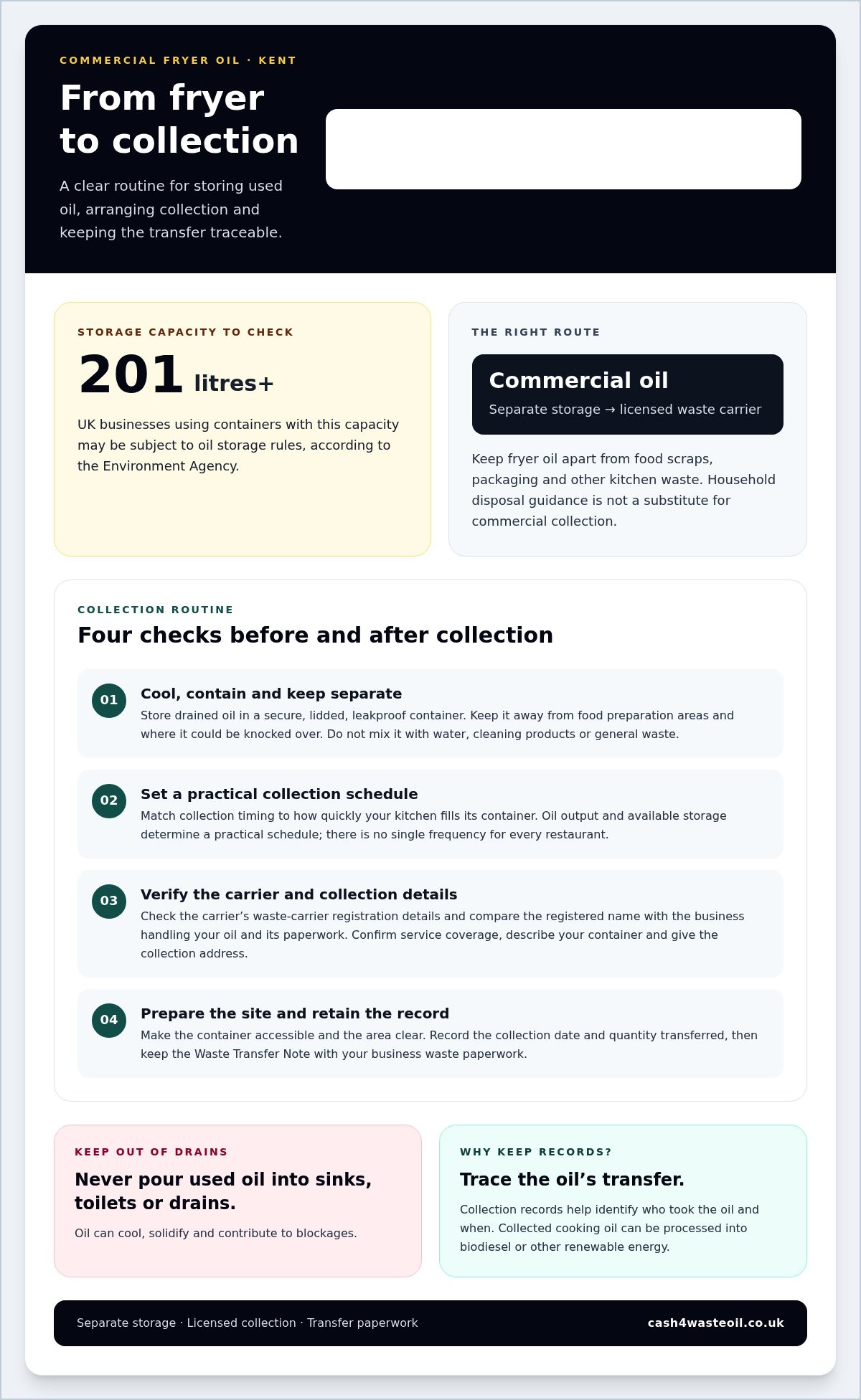
Choose a secure, leakproof container with a lid, and keep it in a place where it won’t be knocked over. Check its capacity before storing oil: according to the Environment Agency, UK businesses storing waste cooking oil in containers with a capacity of 201 litres or more may be subject to oil storage rules. Keep the quantity stored within the container’s safe capacity and arrange collection before it becomes difficult to handle.
-
Separate small household amounts from business waste
For a small amount left after home cooking, let it cool and put it in a sealed container. Check your council’s disposal instructions before placing the container in general waste or a food waste bin. Don’t apply household guidance to a restaurant’s used fryer oil. A commercial kitchen needs separate storage and a collection arrangement, even if the oil comes from the same kind of cooking.
Waste cooking oil collection by a licensed waste carrier
Use a licensed waste carrier for commercial fryer oil, then prepare storage and records before collection. A clear routine helps keep waste cooking oil separate from general waste and ready for recycling.
-
Store used oil for collection
Store drained cooking oil in a secure, lidded container that won’t leak. Place it where staff can reach it safely, away from food preparation areas and routes where it might be knocked over. Don’t mix the oil with general waste, water or cleaning products. Before collection, check that the container is closed and ready to be transferred without spills.
-
Arrange a cooking oil collection
Set a collection routine that matches how quickly your kitchen fills its container. A takeaway producing oil faster may need collections more often than a lower-output kitchen. There’s no single frequency for every restaurant: oil output and available storage determine a practical schedule. Keep collection dates in your waste records and leave enough room for safe storage between visits.
-
Check the collector's licence
Before arranging collection, check the carrier’s waste-carrier registration details. Compare the registered name with the business handling your oil and the details on its collection paperwork. Keep those records with your waste documents so you can identify who took the oil and when. A vehicle logo or verbal assurance is not a substitute for registration details.
-
Confirm service coverage and accepted containers
Ask which Kent towns and villages are included in the collection route, and give the collection address when arranging service. Collection volumes and container sizes depend on the arrangement and the oil your kitchen produces. Describe your container and typical stored volume accurately, so the collection plan fits your site. For commercial kitchens in Kent, commercial used cooking oil collection is a practical route to explore.
-
Keep collection and recycling records together
Record each collection alongside the quantity transferred and the date. Retain the Waste Transfer Note with your business waste paperwork, rather than filing it separately from other collection records. Collected cooking oil can be processed into biodiesel or other renewable energy. A consistent record also helps staff track when the container needs emptying and avoid leaving oil beside general waste.
-
Prepare the collection point
Before collection, make the container accessible and clear the surrounding area. Tell the relevant staff which container holds used oil, so it isn’t mistaken for fresh cooking oil or general waste. After the transfer, make sure the container is closed and the collection paperwork is complete. These simple checks help keep each collection orderly and traceable.
Avoiding oil disposal down sinks and toilets
- Keep cooking oil out of every sink, toilet and floor drain. Even hot oil can cool inside pipework, solidify and contribute to blockages. Adding boiling water or washing-up liquid doesn’t make disposal safe. In a restaurant, make the rule clear at each washing-up station: scrape, collect and store leftover oil instead of rinsing it away.
- Collect pan residue before washing cookware. Let leftover fat cool, then wipe it into a suitable container using disposable kitchen paper or a scraper. Keep solids out of the sink too, because water can carry grease further into the pipework. A simple instruction beside the sink helps staff follow the same routine during a busy service.
- Set up a separate collection point for used fryer oil. Use a stable, lidded container near the kitchen’s oil-handling area, not beside a drain. Staff should pour carefully and clean up splashes promptly rather than washing them away. For businesses managing waste oil from deep fat fryers in Kent, a clear procedure helps prevent accidental disposal.
- Train every kitchen worker to recognise unsafe disposal. Show new starters which container is for used oil and what to do with a small amount left in a pan. Explain that a sink or toilet is never a shortcut, even during a busy restaurant shift. Include the instruction in kitchen procedures and reinforce it during staff handovers.
- Don’t redirect used cooking oil into animal feed or pet food. UK businesses should keep it separate from other waste and prevent its use as farm animal feed or pet food. Follow food safety requirements, including the Food Safety Act 1990, when handling commercial cooking oil. A labelled waste-oil container makes the correct route easier to follow.
- Act promptly if oil is accidentally poured down a drain. Stop adding water or other substances and tell the person responsible for the premises. Record where the oil went and whether it was hot or cooled. For a restaurant, this information helps staff describe the incident accurately and review the kitchen procedure to help prevent a repeat.
- Make the alternative route easy to use. Keep the waste-oil container accessible, clearly labelled and separate from food preparation areas. Use the same collection point for cooking oil throughout each shift, and tell staff when it needs attention. Collected oil can be processed into renewable energy, giving used cooking oil a route beyond the drain and sewer.
Duty of Care paperwork
Keep paperwork with each used cooking oil collection. UK businesses must meet their waste Duty of Care responsibilities under the Environmental Protection Act 1990 when arranging used cooking oil collection, according to the UK Parliament.
- Create a file for fryer-oil collections. Store each Waste Transfer Note with the kitchen’s waste records, in either a clearly labelled paper folder or an organised digital file. Keep records together by collection date so the person responsible can retrieve the right document quickly. For example, a restaurant can file its oil note with other waste paperwork, separate from food safety records.
- Read the Waste Transfer Note before filing it. Check that the business and collector details match the collection and that the waste description refers to used cooking oil. Compare the note with the collection itself rather than relying on memory after a busy frying shift. Raise any discrepancy promptly, then keep the corrected record with the relevant collection documents.
- Record useful collection details alongside the note. Add the collection date, site, container collected and amount transferred where those details are available. These entries help staff match paperwork to an actual visit. For instance, a kitchen with separate containers for fryer oil and other food waste can identify which material left the premises.
- Assign one person to review collection paperwork. A kitchen manager or designated staff member can check that the note has been received and filed after each visit. If the usual manager is away, make the process clear to the person covering the role. A consistent handover prevents paperwork being mixed with delivery records or overlooked during a busy service.
- Keep collection records accessible to the relevant staff. Store them where the person managing waste can retrieve them without disrupting food preparation. Use a consistent file name or paper label, such as “used cooking oil”, followed by the collection date. Keep the note separate from cleaning schedules, while ensuring both are available to staff responsible for safe kitchen operations.
- Review your records when collection arrangements change. Update the file if the site, collection routine or container changes, and link each note to the correct premises. Don’t combine paperwork from separate kitchens, even if one business operates both sites. Clear records help trace the amounts collected and show how waste oil left each location.
Handling and storing drained oil
Treat fryer oil as a hot liquid first, then as waste ready for collection. Careful draining, cooling and cleaning help keep spills away from kitchen floors, drains and sewers.
- Switch off the fryer and let the oil cool before draining. Dover District Council advises that fryer oil can take 6-7 hours to cool after heating. Don’t assume it’s safe to handle because the surface looks cool. Keep staff away from the fryer during cooling, and follow the equipment’s instructions before emptying it.
- Use a controlled method to transfer the oil. Position a suitable container securely before pouring, and avoid lifting or carrying an open vessel across a busy kitchen. For manual filtering, Dover District Council advises allowing fryer oil to cool to 40°C first. Don’t rush the transfer or pour oil where a slip could disrupt food preparation.
- Choose a secure, leakproof container with a lid. Check it for damage before use, close it after every addition and keep it upright on a stable surface. Store waste oil separately from fresh cooking oil, food waste and cleaning products. A clear label helps staff identify the contents during a busy shift.
- Keep the container in a designated storage area until collection. Choose a secure spot away from food preparation, hot equipment and places where staff might knock it over. Keep the route to the container clear and clean spills promptly using an appropriate method. Don’t wash oil into sinks, floor drains or sewers during cleaning.
- Follow safe working procedures when emptying and cleaning the fryer. HSE Catering Information Sheet No 17 provides further guidance on safety during fryer emptying and cleaning. Make the procedure available to staff who handle the equipment, and ensure they understand the steps before starting. Avoid manual handling of hot oil; wait until it has cooled sufficiently.
- Prepare the oil for a licensed collection once the container is ready. Keep its lid secure and make the storage point accessible, so the carrier can collect the waste without disrupting kitchen work. Collected cooking oil can be processed into biodiesel. To arrange a collection for used fryer oil, book a used cooking oil collection.
Cash 4 Waste Oil: Used Cooking Oil Collection
Cash 4 Waste Oil provides used cooking oil collection for commercial kitchens in Kent. If your restaurant, pub or hotel needs a clear route for drained fryer oil, arrange collection and keep the waste separate until pickup. The service includes a Waste Transfer Note for your records and cash payments for waste oil. These give you practical support with collection, documentation and the value of your used oil, without mixing it with general kitchen waste.
Prepare the container and collection details before arranging a visit. Contact Cash 4 Waste Oil to discuss collecting your commercial fryer oil, or visit cash4wasteoil.co.uk.
Make fryer-oil handling part of your routine
A dependable waste-oil process can become a natural part of your kitchen’s day-to-day operations. Assign responsibility for arranging collection and keeping the paperwork together, so the task doesn’t get lost during a busy service. If your business needs to manage waste oil from deep fat fryers in Kent, Cash 4 Waste Oil offers a practical next step for commercial kitchens.
Its service includes Used Cooking Oil Collection, Waste Transfer Notes and Cash Payments for Waste Oil. That brings collection, transfer documentation and payment together in one arrangement for your used oil.
Take the next step at a time that suits your business. Contact Cash 4 Waste Oil to discuss your commercial fryer oil. With a clear routine in place, your team can focus on service while keeping used oil on the right disposal route.
Frequently Asked Questions
What should I do with cooking oil and fat?
For commercial kitchens, keep used fryer oil separate and arrange collection; never pour it into a sink or toilet. At home, let a small amount cool, then put it in a sealed container and follow your council’s disposal guidance. For example, Medway residents can take household cooking fat to a household waste recycling centre. Household disposal options do not apply to a restaurant’s commercial oil.
Who collects used cooking oil from commercial deep fat fryers in Kent?
Cash 4 Waste Oil collects used cooking oil from commercial kitchens in Kent, including restaurants, pubs and hotels. Its stated coverage also includes London, Greater London and Surrey, plus Birmingham, Coventry, Leicester, Wolverhampton, Leicestershire, Derbyshire, Staffordshire, Warwickshire, Northamptonshire, Oxfordshire and Worcestershire. The service is for commercial food businesses, not household oil. A Kent restaurant can arrange collection and receive a Waste Transfer Note for the collected oil.
How much do Kent companies pay for or charge to collect waste fryer oil?
Cash 4 Waste Oil provides free collection and pays businesses for collected waste cooking oil. The payment rate depends on the oil’s volume and condition, so there isn’t a single fixed amount per litre to quote. Request a free quote to establish the rate for your collection. When sharing details, give an accurate estimate of your stored oil and describe its condition, so the quote reflects what you’re arranging to collect.
How should waste cooking oil be stored safely before collection?
Let the oil cool before transferring it, then use a sturdy, lidded container that won’t leak. Keep the container upright in a designated spot, away from food preparation and busy walkways. Label it clearly as used cooking oil, and don’t mix in water, cleaning products or other waste. For example, staff finishing a fryer change can close the lid straight away and leave the container ready for collection.
What UK rules apply to storing and disposing of commercial waste cooking oil?
Keep commercial used cooking oil separate and arrange an appropriate waste collection. UK businesses must meet their waste Duty of Care responsibilities under the Environmental Protection Act 1990, according to the UK Parliament. Storage rules may also apply: according to the Environment Agency, businesses storing waste cooking oil in containers with a capacity of 201 litres or more may be subject to oil storage rules. Keep oil out of drains and sewers.
Do businesses need a Waste Transfer Note or other paperwork for used cooking oil?
Keep a Waste Transfer Note for each collection and file it with your business waste records. Cash 4 Waste Oil provides a Waste Transfer Note after every collection. Check that the document identifies the collection and describes the waste as used cooking oil, then store it where the person responsible for waste management can retrieve it. A consistent filing routine makes it easier to match paperwork to the right kitchen and collection.
Can used fryer oil be recycled into biodiesel, and what happens after collection?
Yes. Cash 4 Waste Oil processes collected used cooking oil into biodiesel through transesterification. After collection, the oil enters a recycling process rather than being discarded with general waste. For a commercial kitchen, keeping the oil separate and ready for collection helps maintain a clear route into that process. This gives used fryer oil a further use as a fuel feedstock, instead of sending it down a drain.
What are the risks and penalties for pouring cooking oil down drains or disposing of it illegally?
Oil poured down a sink can cool, solidify and contribute to blocked pipes and sewers. Improper disposal may also lead to fines or prosecution, but there is no single penalty amount for every situation. Avoid the risk by keeping commercial oil separate and arranging proper collection. If oil is accidentally poured into a drain, stop adding water and tell the person responsible for the premises.