Kent Commercial Kitchen Waste Oil Collection (2026 Guide)
Paying commercial waste fees to dispose of your used cooking oil is an unnecessary expense that no food business should tolerate. Running a busy kitchen is demanding enough without battling greasy clutter, foul odours from overflowing drums, and the lingering threat of Environment Agency penalties for incomplete paperwork. When you need to set up waste oil collection Kent kitchens can trust, you shouldn't have to chase down unreliable contractors or settle for restrictive supplier contracts.
Your used cooking oil is a valuable resource, not rubbish. You can easily swap costly disposal charges for dependable service, legally airtight Waste Transfer Notes, and cash paid directly on collection day. This 2026 guide breaks down the exact UK Duty of Care requirements, safe storage practices, and practical steps needed to turn your kitchen's waste oil into hassle-free revenue.
Key Takeaways
- Meet your UK Duty of Care obligations under the Environmental Protection Act 1990 by retaining verified Waste Transfer Notes for every collection.
- Discover how to calculate your kitchen's output, choose suitable food-grade containers, and set up waste oil collection Kent venues can run without operational disruption.
- Break away from tied fresh-oil supply contracts to eliminate disposal charges and secure immediate cash rebates on collection day.
- Implement practical kitchen storage protocols, including cooling fryer oil and using coarse filters, to safeguard staff and prevent costly water company fines.
- Support Kent's circular economy by partnering with a fully licensed Environment Agency carrier that turns your recovered oil into sustainable biodiesel.
Commercial Waste Oil Regulations in Kent: Legal Obligations and Compliance
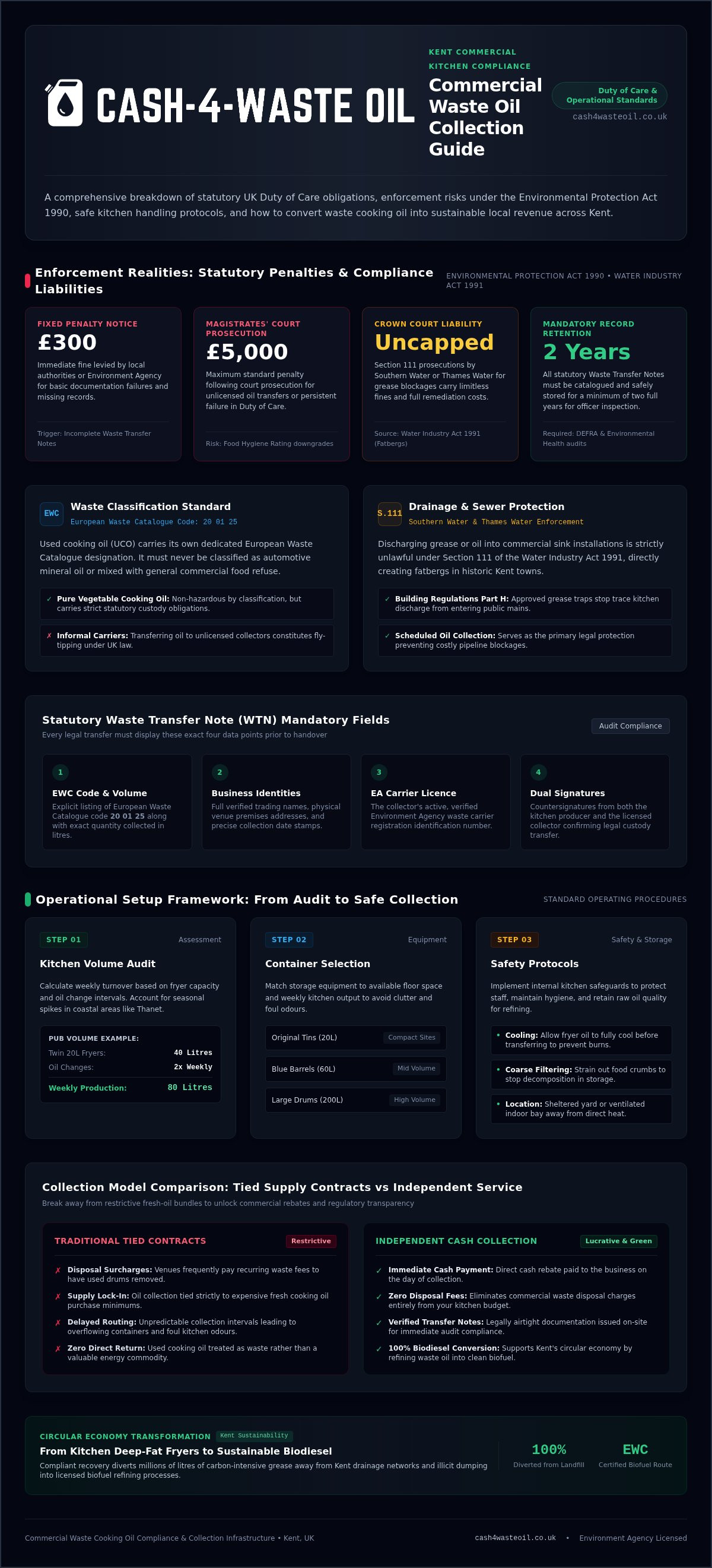
Managing spent cooking oil isn't just good housekeeping; it's a strict statutory requirement. Under Section 34 of the Environmental Protection Act 1990, every commercial kitchen in Kent holds an active Duty of Care. Some waste firms confuse restaurant grease with industrial mineral oils, but used cooking oil (UCO) carries its own specific classification under European Waste Catalogue code 20 01 25. While pure vegetable cooking oil isn't classified as hazardous like automotive engine fluids, handing it to unlicensed carriers or mixing it with other waste triggers severe legal liability. When you set up waste oil collection Kent environmental officers expect a transparent, auditable paper trail.
Duty of Care and the Environment Agency
The Environment Agency actively monitors commercial catering waste streams across the South East. Handing drums to informal collectors operating without a registered carrier licence leaves your venue legally responsible for fly-tipping. Fixed penalty notices for basic documentation failures start at £300, while court prosecutions bring fines reaching £5,000 in Magistrates' Court. Beyond avoiding penalties, compliant recycling fuels the conversion of waste cooking oil into biofuel, diverting millions of litres of carbon-intensive waste from illegal disposal routes.
The Role of Waste Transfer Notes (WTNs)
A compliant Waste Transfer Note proves legal transfer from your kitchen to an authorised carrier. Inspecting environmental health officers demand these forms during routine inspections. Missing records quickly compromise your Food Hygiene Rating. Each statutory transfer document must include:
- The correct European Waste Catalogue code (EWC 20 01 25) and quantity in litres
- Full business names, addresses, and collection dates
- The carrier's active Environment Agency registration number
- Dual signatures confirming lawful custody transfer
Consult the official DEFRA cooking oil waste guidance to ensure your operational records remain inspection-ready. Maintaining robust commercial kitchen oil disposal protocols means storing these transfer records safely for a minimum of two full years.
Southern Water Regulations and Sewer Protection
Pouring used cooking oil into commercial sinks is illegal under Section 111 of the Water Industry Act 1991. Southern Water and Thames Water run dedicated enforcement teams throughout Kent. Liquid fat solidifies into fatbergs inside drainage networks, causing catastrophic backups in historic towns like Canterbury and coastal resorts like Thanet. Water companies aggressively prosecute offending venues, pursuing full remediation costs alongside uncapped Crown Court fines. Installing approved grease traps under Building Regulations Part H stops everyday grease from reaching the main line, but scheduled oil collection remains the primary safeguard protecting your pipes and cash flow.
Step-by-Step Guide: How to Set Up Waste Oil Collection in Kent
Establishing an efficient collection process shouldn't disrupt your daily service. When commercial kitchens set up waste oil collection Kent managers often worry about overflowing barrels, missing paperwork, or complicated logistics. Getting it right from day one requires a simple, methodical framework that fits your available floor space and kitchen volume.
Step 1: Audit Your Kitchen Oil Volume and Space
Start by calculating your weekly oil turnover. Check your deep-fat fryer capacities and tally how many litres you drop during standard oil changes. A busy pub running twin 20-litre fryers that change oil twice weekly generates 80 litres every seven days. Next, assess your back-of-house storage. Identify a well-ventilated, secure indoor area or a sheltered yard space that keeps containers away from direct heat and heavy foot traffic. Remember to account for seasonal spikes, particularly if your venue experiences high summer footfall across coastal Kent towns.
Step 2: Choose Storage Containers and Collection Frequency
Select storage vessels that match your physical footprint. Stacking original 20-litre vegetable oil tins works for compact sites, while high-volume kitchens benefit from dedicated 60-litre blue barrels or 200-litre drums. Align your collection frequency with your output:
- Weekly pickups: Ideal for high-turnover fish and chip shops or busy town-centre restaurants producing over 100 litres weekly.
- Fortnightly collections: Perfect for standard pub kitchens and casual dining bistros.
- Monthly rounds: Suitable for smaller cafés or venues with lower frying volume.
Unplanned kitchen events happen. If a fryer breaks down or oil spoils unexpectedly, relying on emergency waste oil collection in Kent prevents hazardous storage bottlenecks before scheduled routes arrive.
Step 3: Verify Collector Licensing and Handover Protocols
Before handing over a single drop, verify that your collection partner holds active registration on the Environment Agency public register. Under official Duty of Care obligations for business waste, you remain liable if an unlicensed operator dumps your oil. Discuss physical access beforehand. Narrow medieval alleyways in Canterbury or steep cellar drops in Rochester require portable vacuum systems rather than heavy barrel rolling. Agree on clean handover procedures, such as wiping container rims and using drip trays, to eliminate slip hazards. If you want a straightforward, reliable route partner that handles compliance seamlessly, booking with Cash 4 Waste Oil ensures prompt pickups and instant payments on collection day.
Comparing Waste Oil Collection Models: Tied Contracts vs Independent Services
Many catering businesses assume the simplest route is letting their fresh oil supplier collect used drums. That convenience often comes at a steep commercial price. When you set up waste oil collection Kent hospitality margins depend heavily on choosing the right service model. Hospitality operators typically face two distinct options: tied supply-and-collect agreements or dedicated independent collection specialists.
The Hidden Costs of Tied Fresh-and-Waste Oil Agreements
Bundled agreements appear straightforward because one distributor drops off virgin oil and removes the waste drums. However, distributors frequently subsidise waste handling by inflating the baseline purchase price of fresh cooking oil. These tied models bind kitchens into multi-year exclusive contracts, stripping away your freedom to source cooking oil from competitive wholesale markets. Worse still, some tied agreements impose penalty fees if your kitchen's oil turnover drops below rigid monthly minimums.
Free Collection with Cash Rebates: How the Economics Work
Used vegetable oil is a valuable industrial feedstock, not refuse. Independent collectors operate on a transparent commercial framework: collection is entirely free, and you receive an immediate cash rebate for every litre collected. Unbundling waste management from food supply lets you purchase raw ingredients wherever trade rates are sharpest. Following official government guidance on commercial oil storage keeps your oil uncontaminated, ensuring you preserve the cash value of every barrel while transforming an operational headache into kitchen revenue.
Service Flexibility and Route Reliability
Independent collection services focus entirely on punctual, predictable waste logistics. Whether your kitchen operates in high-volume commercial districts like Maidstone and Dartford or tourist centres like Canterbury, independent providers adapt collection intervals as trading patterns shift:
- Tied contracts: Restrictive terms, credit notes instead of cash, tied fresh oil pricing, and fixed delivery slots that risk overflowing bins.
- Independent services: Zero contracts, instant cash rebates on collection day, full freedom of ingredient suppliers, and scheduled or on-call pickups tailored to your kitchen volume.
Deciding to set up waste oil collection Kent independent specialists run gives your venue total autonomy, zero-cost collections, and immediate cash returns on collection day.
Safe Storage and Operational Best Practices for Kent Kitchens
Practical back-of-house procedures protect your kitchen staff, maintain hygiene standards, and preserve the cash value of your waste oil. Storing used cooking oil incorrectly leads to horrific burns, foul grease odours, and slip hazards that attract council scrutiny. When you set up waste oil collection Kent kitchen operations run smoother once strict storage protocols become second nature.
Safe Handling and Transfer Procedures
Never pour boiling cooking oil directly into plastic barrels or storage vessels. Always let deep fryers cool below 40°C before draining them. Piping hot oil melts plastic containers, generates toxic steam, and creates severe scalding hazards for kitchen staff.
Train your team to pass discarded oil through a coarse sieve or fine mesh strainer during the transfer. Removing burnt batter bits and food sediment keeps the oil clean. Always keep container bungs tightly closed to stop rainwater ingress. Water contamination degrades feedstock quality, creating severe foam-overs during commercial processing and eroding your collection rebate.
Pest Control and Odour Prevention in High-Density Areas
Open, unsealed barrels in outdoor bin stores quickly draw rats, foxes, and flies. This is a common hazard in compact town-centre yards across Canterbury, Rochester, and Tunbridge Wells. Wipe down drum exteriors with a heavy-duty degreaser after every pour. Removing dried residue eliminates lingering rancid odours, prevents dangerous slip hazards, and ensures your storage area passes unannounced local authority health inspections with ease.
Spill Prevention and Rapid Emergency Response
Accidental spills cause immediate environmental and safety hazards. Store all barrels inside secondary containment bunds capable of holding at least 110% of your largest container's capacity. Position storage areas at least 10 metres away from outdoor drainage grates to stop runoff reaching local storm sewers. Keep commercial spill kits stocked with hydrophobic absorbent pads and dry granular minerals near the storage zone, and ensure staff know how to deploy them instantly.
Finally, keep collection pathways completely clear. When you set up waste oil collection Kent drivers need unobstructed access to your storage drums without blocking emergency fire exits or kitchen thoroughfares. Easy route access speeds up driver turnaround times, allowing your team to focus entirely on food service. To claim free containers and establish safe routine pickups, book your kitchen collection today.
Why Kent Businesses Choose Cash 4 Waste Oil: Local, Lucrative, and Green
Managing kitchen waste should never drain your time or profits. Cash 4 Waste Oil operates a straightforward, dependable service designed specifically for busy catering professionals. When you choose to set up waste oil collection Kent kitchens benefit from scheduled, reliable pickups, complete regulatory protection, and immediate cash paid directly into your hands on collection day.
Dedicated Regional Coverage Across Kent
Kitchens across the county face vastly different physical challenges. Our collection routes run routinely through major commercial centres including Maidstone, Canterbury, Tunbridge Wells, Ashford, and Dover. We understand the local geography. Whether you run a busy seafront fish-and-chip shop in Thanet, a historic pub with cellar-only access in Rochester, or a high-turnover casual dining venue in Dartford, our drivers arrive with the right equipment to collect your used oil cleanly without disrupting front-of-house trading.
The Circular Economy: Powering the Future with Biodiesel
Every litre of used cooking oil we collect enters a closed-loop recycling process. Instead of degrading into sewer blockages or languishing in storage, your waste vegetable oil undergoes commercial transesterification to produce certified, low-emission biodiesel. Repurposing spent oil into transport fuel slashes carbon emissions compared to traditional petroleum diesel, actively supporting UK clean air targets. Read our comprehensive guide on sustainable waste oil disposal to learn how this circular approach provides clear green credentials you can share with eco-conscious diners.
Get Started with Seamless Kent Collection Today
Switching collectors or onboarding a brand-new kitchen takes just minutes. We do not believe in locking clients into rigid multi-year agreements or hitting you with surprise administration fees. With Cash 4 Waste Oil, the model is transparent: collection is 100% free, we supply compliant food-grade drums at no cost, and our drivers provide fully compliant Waste Transfer Notes alongside instant cash payments right on your doorstep.
Take control of your kitchen's waste management and reclaim valuable back-of-house space. Set up your free Kent waste oil collection and get paid cash today.
Turn Your Used Cooking Oil into Guaranteed Kitchen Revenue
Managing used cooking oil shouldn't mean wrestling with messy barrels, drain worries, or compliance stress. Taking control of your waste streams protects your business against strict statutory penalties and completely removes disposal overheads. When you set up waste oil collection Kent hospitality venues gain immediate peace of mind, clean storage spaces, and an effortless boost to operational margins.
Cash 4 Waste Oil makes compliance simple and rewarding. Fully licensed by the Environment Agency, our team provides reliable, zero-fee collection across Kent. We issue complete Duty of Care Waste Transfer Notes on the spot, hand over immediate cash on collection day, and ensure 100% of your recovered vegetable oil is recycled into sustainable biodiesel.
Reclaim your kitchen space and turn an everyday chore into pure profit. Book your free Kent waste oil collection and claim your cash rebate today.
Frequently Asked Questions
How much used cooking oil do I need to store before booking a collection in Kent?
We generally collect from commercial kitchens once you have gathered a few standard 20-litre drums or filled a dedicated 60-litre barrel. Storing a reasonable volume makes logistics efficient and ensures your cash rebate is worthwhile. When you set up waste oil collection Kent venues can discuss tailored thresholds during onboarding to match kitchen space and frying turnover without creating back-of-house clutter.
Do I have to pay any collection fees or bin rental charges for my restaurant?
No, our commercial collection service is completely free, and we never charge container rental or administrative fees. Instead of paying waste disposal bills, you receive instant cash on collection day for your used vegetable oil. We supply dedicated, food-grade storage drums without hidden overheads or subscription costs, making our service entirely cost-neutral and immediately profitable for your catering business.
What legal paperwork do I need to keep when you collect my commercial waste oil?
You must retain a valid Waste Transfer Note for every collection, keeping records safely filed for at least two years. Our drivers issue compliant digital or physical documentation on the spot, detailing the European Waste Catalogue code 20 01 25, oil volume, and our Environment Agency registration details. This paperwork satisfies UK Duty of Care audits and protects your kitchen during environmental health inspections.
Can I put contaminated cooking oil or animal fats into the vegetable oil storage drum?
We accept pure vegetable oils and clean commercial animal fats, but containers must never contain engine oil, chemical solvents, or heavy water contamination. Industrial mineral oils make the batch hazardous and legally uncollectable under catering rules. Straining out loose food debris before pouring preserves oil quality and ensures you receive the maximum cash rebate during pickup.
How often will you collect used cooking oil from my commercial kitchen in Kent?
We establish flexible collection intervals based entirely on your kitchen turnover, offering weekly, fortnightly, monthly, or on-call pickups. High-volume restaurants often require weekly barrel swaps, whereas seasonal cafés may prefer monthly rounds. When you set up waste oil collection Kent collection schedules can be adjusted whenever trading levels change, preventing container overflow and keeping your back-of-house clean.
Which areas and towns across Kent does Cash 4 Waste Oil cover?
We operate regular collection routes across all major Kent districts and commercial corridors. Our coverage includes Maidstone, Canterbury, the Medway conurbation, Dartford, Ashford, Tunbridge Wells, Thanet, and Dover, alongside surrounding rural villages. Our drivers handle diverse venue layouts, navigating everything from tight medieval pedestrian streets to rural country pub yards with dedicated equipment suited to restricted kitchen access.
What happens to our commercial kitchen oil once your collection driver takes it away?
Every drop of collected commercial cooking oil is filtered and refined into clean, sustainable biodiesel. Through industrial transesterification, your kitchen waste becomes low-emission transport fuel rather than clogging drainage systems or ending up in landfill. This closed-loop process displaces fossil diesel, slashing lifecycle greenhouse gas emissions and giving your business verified sustainability credentials that support the UK circular economy.