Large Volume UCO Collection for Surrey Hospitality and Retail
Used cooking oil can be collected and processed for reuse instead of being poured back into a fryer. Large volume UCO collection in Surrey is for commercial kitchens, including restaurants, pubs, hotels, cafés and other food-service businesses that generate used cooking oil.
When oil builds up in a busy kitchen, you need a reliable way to manage it. This guide explains how used oil is collected and recycled, which commercial businesses can use the service, and how collection works across Surrey and nearby areas.
You’ll also find out what to expect from commercial collection and how Waste Transfer Notes support waste records. The aim is to give you clear, useful information so you can understand whether the service fits your business.
Key Takeaways
- Find out how collected cooking oil may be processed for reuse and why it should be kept separate from other waste.
- See which commercial kitchens the service covers and how to establish whether your Surrey location is in its collection area.
- Learn what can affect collection suitability when your business produces different amounts of used oil.
- Understand what to consider about oil storage, containers and collection schedules in a busy kitchen.
- Know how Waste Transfer Notes support records for commercial oil collections and what happens during collection.
Areas served by the collection service
Commercial used cooking oil collections cover Surrey, London and Kent. For a hospitality or retail business, the key starting point is the collection address, not the local household bin schedule. Surrey includes distinct borough and district council areas, while London and Kent have their own local boundaries. Give the site’s full address and postcode when arranging a collection. That helps establish where the premises sit within the stated service area.
Surrey is the focus for businesses looking for a local collection. Restaurants, pubs, hotels and other commercial kitchens are among the businesses served. A restaurant in a town centre and a hotel with a commercial kitchen both produce oil through food preparation. Retail premises may also have food-service kitchens that generate used oil. The practical example is a supermarket with a staffed hot-food counter, rather than a shop with no cooking operation. The type of premises and its address both help describe the collection requirement.
Use these steps to identify the relevant location details:
- Write down the complete collection address, including the postcode.
- Identify whether the site is in Surrey, London or Kent.
- Describe the business, such as a pub kitchen, restaurant or hotel.
- For a retail site, explain whether it operates a commercial kitchen or food counter.
If your business has several sites, list each kitchen as a separate collection location. A restaurant group might have one Surrey branch and another in London, with different oil volumes and collection needs at each. Provide the postcode and business type for every site. This keeps the collection details tied to the premises where the used oil is produced, rather than to a head office.
Local council collections serve a different purpose. In Surrey, a resident’s district or borough council is responsible for household waste collection. Those household arrangements do not establish whether a commercial kitchen’s used oil is covered. Keep cooking oil separate from mixed recycling and ordinary refuse at the business site. For example, a pub should identify its oil as a distinct commercial waste stream, rather than placing it with household-style bins.
Surrey has five local boroughs offering commercial waste collection services, but that does not mean every borough’s general waste service handles used cooking oil. The relevant question is whether the business address lies in Surrey, London or Kent, and whether the premises generate commercial kitchen oil. Find out the site’s postcode and kitchen type first. Those details make the service-area discussion specific to the business, whether it runs one restaurant or several food-service locations.
What minimum quantities of UCO do Surrey collectors accept?
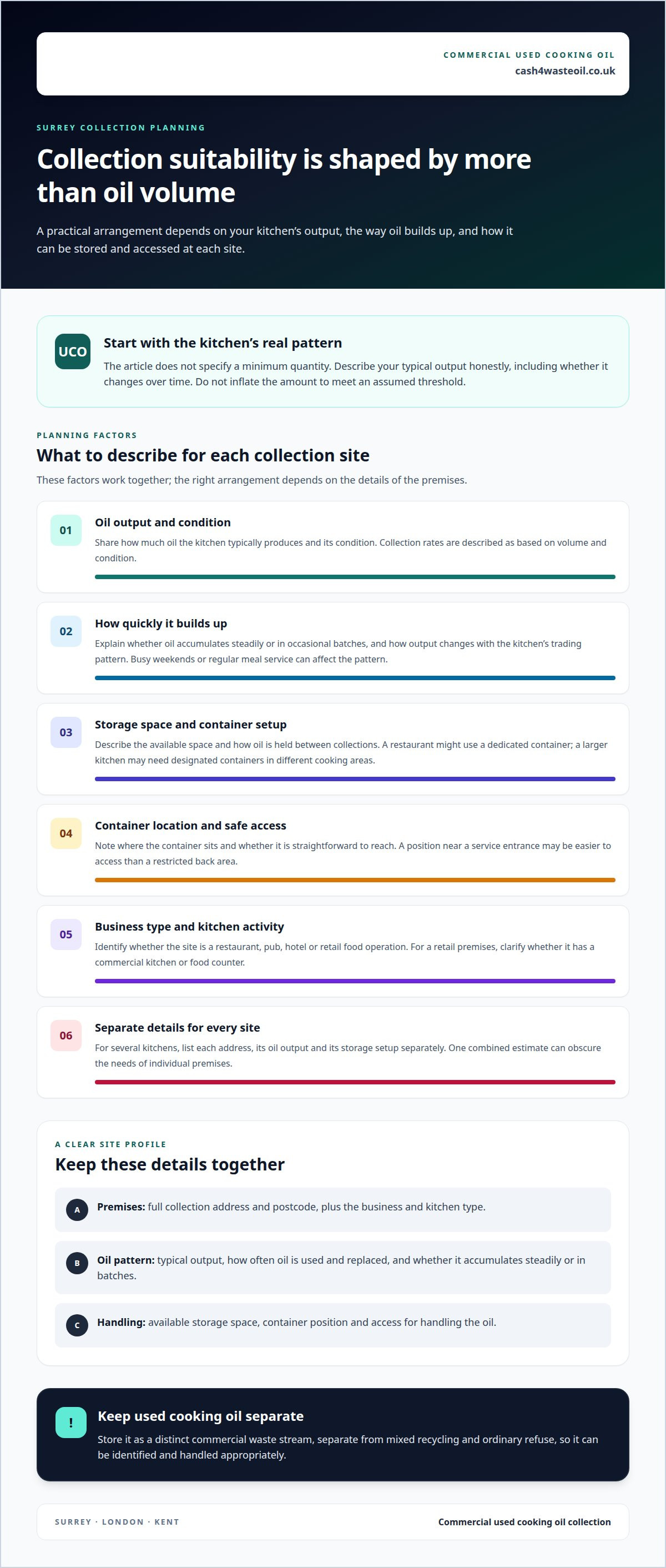
The right collection arrangement depends on how much oil your kitchen generates, its condition and how quickly it builds up. A restaurant frying throughout service may produce oil differently from a small café that serves occasional fried food. Describe your typical output and storage setup when requesting a free quote. Rates are competitive and transparent, based on volume and condition.
Start with your kitchen’s actual pattern. A pub may generate more oil after busy weekends, while a hotel kitchen serving meals throughout the week may produce it steadily. Retail food counters can also vary according to their menu and trading levels. Share your typical oil output and how it changes, rather than relying on a guess. This helps establish a practical collection schedule.
Useful details include:
- Whether the site is a restaurant, pub, hotel or retail food operation.
- How often cooking oil is used and replaced.
- Whether oil accumulates steadily or in occasional batches.
- How much suitable storage space is available at the premises.
- Whether one kitchen or several Surrey sites need collection.
For example, a restaurant may store used oil in a dedicated container until collection. A hotel group should describe each kitchen separately, since oil is produced and stored at each site. Combining several locations into one estimate can obscure the needs of individual premises. List each address, its cooking pattern and storage setup so collection can be planned around the actual operation.
Volume is only one part of collection planning. The container’s location, safe access and the space available for handling oil also matter. A container near a service entrance may be easier to reach than one in a restricted back area. Share these details when arranging collection, and keep used cooking oil separate from other waste so it can be identified and handled appropriately.
If your kitchen produces oil in smaller or irregular batches, describe that pattern accurately. Don’t inflate the quantity to meet an assumed threshold. Regular output, storage capacity and access all help shape a workable arrangement. Businesses with several branches should give each Surrey address and its separate production pattern. To discuss the practical details, set out your collection requirements with the relevant site information.
Do Surrey UCO collectors provide free collection containers and scheduled pickups?
Free collection, container provision and scheduled pickups are separate parts of a used-oil arrangement. A business should distinguish the collection service itself from any equipment supplied or visit pattern agreed. For example, a Surrey restaurant may need a suitable place to hold oil between collections, while a hotel kitchen may need a plan that suits steadier output. These practical details shape how oil is stored and removed.
Choose a storage spot that suits the premises and its working routine. A pub with limited back-of-house space needs a clear, practical place for its oil container. In a larger hotel kitchen, staff may need designated containers in different cooking areas. Keep containers away from food preparation, deliveries and busy walkways, and separate from mixed recycling and general refuse.
Before setting up storage, map the oil’s route through the business:
- Choose the point where staff collect cooled, used oil.
- Identify a stable storage position away from busy kitchen routes.
- Make sure staff can distinguish the oil container from other waste containers.
- Record who is responsible for moving oil into storage.
- Note any access restrictions that could affect removal from the premises.
Plan collection around how quickly each kitchen fills its storage space. A restaurant serving fried food throughout the day may build up oil differently from a café that uses a fryer for only part of its menu. A supermarket hot-food counter may have a separate pattern from the rest of the store. Track oil output during normal trading and use it to agree a flexible weekly, fortnightly or monthly collection schedule.
For businesses with several Surrey locations, assess each kitchen separately. One branch may generate oil steadily, while another produces it in occasional batches. A schedule that ignores these differences could leave one site short of storage space while another has a partly filled container. Keep a site record showing each address, kitchen type, container position and typical output to help coordinate collection.
Cash 4 Waste Oil’s collection service is free, but that does not mean container supply or a fixed pickup timetable should be assumed. Treat those as distinct operational details. A clear arrangement identifies where oil is held, how staff manage it and what collection rhythm suits the site. For example, a restaurant can use its trading and fill patterns to explain whether it needs regular visits or collection as storage approaches capacity. This keeps the plan grounded in the kitchen’s actual output.
What are the UK rules for storing and disposing of commercial used cooking oil?
Keep used cooking oil separate from mixed recycling and general refuse. A restaurant can use a clearly identified, lidded container solely for cooled cooking oil. Storing it in one dedicated place helps staff handle it consistently and makes it easier to identify when collection takes place.
Keep the container upright on a stable surface, away from food preparation and busy walkways. A pub kitchen, for example, can designate a safe back-of-house storage spot. Use a lid to contain the oil and reduce the risk of spills. If oil escapes, deal with the spill promptly using the site’s normal cleaning procedures.
Good storage practice starts with a few straightforward steps:
- Let hot oil cool before transferring it into storage.
- Use a sound container intended for holding liquid waste.
- Keep the container closed and clearly separate from other waste.
- Choose a stable storage position that does not obstruct kitchen access.
- Tell relevant staff where used oil belongs and who handles it.
Never use a sink, drain or outdoor surface to dispose of used cooking oil. A café should collect cooled fryer oil in its dedicated container instead of washing it away during cleaning. Keep food scraps, packaging and cleaning chemicals out of the oil so it remains a distinct waste stream.
Disposal responsibilities depend partly on who transports the waste. Businesses transporting their own waste must be registered with a waste carrier licence. This applies to a restaurant that takes its own used oil away, rather than relying on a collection arrangement. The business should distinguish its own transport from a collector’s removal and plan accordingly.
For Surrey hospitality and retail premises, a practical routine is to collect cooled oil, keep it in dedicated storage, then arrange its removal through an appropriate commercial route. A hotel kitchen can assign responsibility for transferring oil and keeping the storage area orderly. Do not combine cooking oil with household bins or assume a council household collection handles commercial kitchen waste. Surrey’s household waste arrangements concern residents, not a business’s used-oil stream.
Before collection, identify the used cooking oil and keep the collection point accessible. Avoid moving a full container through food-preparation areas. For example, restaurant staff can transfer cooled oil to a closed container and leave it at the designated collection point. This supports safe, consistent handling and keeps used oil separate from other kitchen waste.
Storing large volumes makes it especially important to keep containers stable, accessible and separate from food-preparation areas. A clear storage and collection point helps reduce the risk of spills and avoids unnecessary movement of full containers through the kitchen.
What records or waste transfer notes must Surrey businesses keep for UCO collections
A Waste Transfer Note records the handover of commercial waste, including used cooking oil. For a Surrey restaurant, it creates a written record connecting the premises, the oil collected and the collection date. Keep each note with the site’s waste records so staff can retrieve it later. A hotel group should organise notes by kitchen or address, rather than keeping one unlabelled stack.
Keep collection paperwork easy to match to the relevant visit. An internal record can include the business address, collection date, waste description and the person responsible for the handover. These details help a manager trace a collection without relying on memory. For example, a pub can file each Waste Transfer Note with its routine kitchen records, labelled by site and date.
At collection, use a simple record-keeping sequence:
- Identify the Surrey premises where the oil was produced.
- Record the collection date and describe the waste as used cooking oil.
- Keep the Waste Transfer Note with that site’s records.
- File any related collection paperwork under the same address and date.
- Make the record accessible to staff who manage waste documentation.
Multiple premises need a clear filing method. A restaurant group with branches in Guildford and Dorking, for example, should keep each site’s collection paperwork distinct. The same applies to a retail business with separate food counters. Use a consistent folder structure or digital filing system, with each record labelled by premises, to make the collection history easier to follow.
Keep the note legible and complete when it is received. If a date or address appears incorrect, resolve the discrepancy promptly with the people involved in that handover. Avoid editing a signed record without agreement. A duplicate or corrected record should remain connected to the original entry, so the file shows what happened and why. This is practical record control, not a substitute for any specific legal retention period.
Cash 4 Waste Oil provides Waste Transfer Notes with its collections. Keep the note alongside your internal record, rather than treating it as a replacement for the site’s own filing routine. A kitchen manager can use the address and collection date to match paperwork against the relevant oil handover. This gives the business a straightforward trail for its commercial used-oil collections.
For an organised handover, keep the collection point and paperwork process clear for staff. Make sure the person overseeing the Surrey kitchen knows where the relevant records are filed. Arrange a used cooking oil collection with Waste Transfer Notes for your business records.
Train staff to follow the same process. Surrey County Council has three waste transfer stations that offer paid disposal for local businesses. Surrey County Council household waste recycling centres cannot legally be used to dispose of business waste.
Cash 4 Waste Oil: Used Cooking Oil Collection
Cash 4 Waste Oil provides used cooking oil collection for Surrey restaurants, pubs, hotels and other commercial kitchens. It’s a practical next step when your business needs a route for collected fryer oil and clear paperwork for the handover.
Collections include a Waste Transfer Note, giving your business a record of the waste transfer. Cash 4 Waste Oil also pays cash on the spot for waste oil. This can suit a busy kitchen that wants oil removed and the handover documented without adding unnecessary steps to daily operations.
Share your premises address and describe the kitchen’s collection needs to start the conversation. Contact Cash 4 Waste Oil to discuss a collection for your business.
Make used-oil handling part of your kitchen routine
A dependable collection arrangement works best when it fits the way your team already runs the kitchen. Give one staff member responsibility for keeping the oil handover organised, and include the task in shift handovers. That helps prevent used oil from becoming an afterthought during busy service. For large-volume UCO collection in Surrey, a clear routine can make the next step easier for your team and collection partner.
Start a conversation with the details that matter to your operation, then agree how the collection process should fit around your working kitchen. A consistent approach supports smoother day-to-day waste handling as your business operates.
Contact Cash 4 Waste Oil today to discuss your business’s collection needs and take the next step with confidence.
Frequently Asked Questions
Which companies collect large volumes of used cooking oil (UCO) in Surrey?
Cash 4 Waste Oil collects used cooking oil from Surrey restaurants, pubs, hotels and other commercial kitchens. Its service is for commercial food businesses, rather than household cooking oil. A café or food-service business that generates used cooking oil can provide its premises details and typical output when arranging a collection. This helps describe the site’s needs and distinguish cooking oil from motor oil or other waste.
What are current UCO collection prices or rebates in Surrey?
Cash 4 Waste Oil’s collection service is free, and businesses receive cash payment for collected waste oil. The payment rate depends on the oil’s volume and condition, so there isn’t one fixed rate to apply to every Surrey kitchen. For example, a restaurant can describe its usual oil output and condition when requesting a free quote. That gives the business a relevant rate without relying on a general estimate.
Which areas and postcodes in Surrey do UCO collection services cover?
Cash 4 Waste Oil serves businesses across Surrey, including commercial kitchens in Guildford, Woking, Epsom, Reigate and Farnham. These town names help identify the service area, but they don’t provide a full postcode directory. Include the collection address and postcode when making an enquiry, especially for a business with multiple branches. For example, list each restaurant’s location separately so its premises can be clearly identified.
How can a business arrange a large-volume UCO collection in Surrey?
Contact Cash 4 Waste Oil with your business location and approximate monthly oil volume. The collection can then be arranged on a flexible weekly, fortnightly or monthly schedule, based on the oil your kitchen generates. For example, a hotel group can outline the requirements for each kitchen rather than combining several sites into one estimate. On collection, the business receives cash payment and a Waste Transfer Note; the oil is recycled into biodiesel.