Licensed oil recycling for Folkestone businesses
What happens to used cooking oil after it leaves your kitchen matters. A professional business collection gives it a managed route from collection and transport through to recycling. For businesses looking for licensed oil recycling near Folkestone, understanding that process helps make waste handling clearer and reduces the risk of spills and environmental contamination.
Disposing of commercial oil involves more than emptying a container. The right route depends on the oil type and your business’s needs. Restaurants, pubs, hotels and other commercial kitchens need a practical collection arrangement and clear records of each waste transfer.
This guide explains how commercial waste oil is collected, transported and recycled, what to expect from the service, and how proper disposal can help limit environmental harm. You’ll also find out where used cooking oil collection, Waste Transfer Notes and cash payments for waste oil fit into the process, so you can decide on a workable next step for your business.
Key Takeaways
- Identify the type of waste oil first, as the appropriate disposal route depends on what the oil is.
- Learn what happens as commercial oil moves from collection and transport towards recycling.
- See how organised collection can help businesses handle used cooking oil and its associated paperwork.
- Understand why preventing spills matters: waste oil can contaminate the surrounding environment.
- Explore the difference between household drop-off options and professional collection for commercial kitchens.
Oil collection and transport process
Commercial collection combines an agreed pickup with documented transfer and appropriate recycling. If you’re looking for licensed oil recycling near Folkestone, first identify the oil as used cooking oil, vegetable oil or animal fats, then arrange a collection plan that suits your premises.
Collection scheduling and paperwork
Your collection schedule should reflect how quickly your kitchen produces used oil, the storage space available and access to the premises. A restaurant with steady fryer use may need a different plan from a hotel kitchen with changing demand. Sharing these details helps set up a practical collection that fits your operations.
A Waste Transfer Note records the waste movement and describes the material. Keep it with your business records and ensure the description identifies the oil clearly. For example, “used cooking oil from a commercial kitchen” is more informative than a general label such as “waste”.
Collection coverage and availability
Coverage depends on the collector’s operating area and route planning. Hythe is 4 miles west of Folkestone, Hawkinge is 4 miles north, and Dover is 8 miles east. These distances give local context, but they do not establish a collection schedule or guarantee service at a particular address.
Nationwide coverage describes a broad operating footprint, not identical availability everywhere. For licensed oil recycling near Folkestone, a business should consider its location, oil type, storage arrangements and access. Collection frequency depends on how the business generates and stores its waste, rather than the word “nationwide” alone.
Checking recycler registration and permits
The relevant permissions depend on what the operator does, such as carrying, storing or treating waste oil. There is no single generic licence that describes every activity. Ask for the operator’s registration and relevant environmental permit details, then compare the business name and registration information with the Environment Agency’s public register before booking.
Check that the details relate to the operator handling your waste, not simply a similar trading name. This step helps establish whether the registration shown belongs to the collector you are dealing with and whether the stated activities match the service being arranged.
Local drop-off options
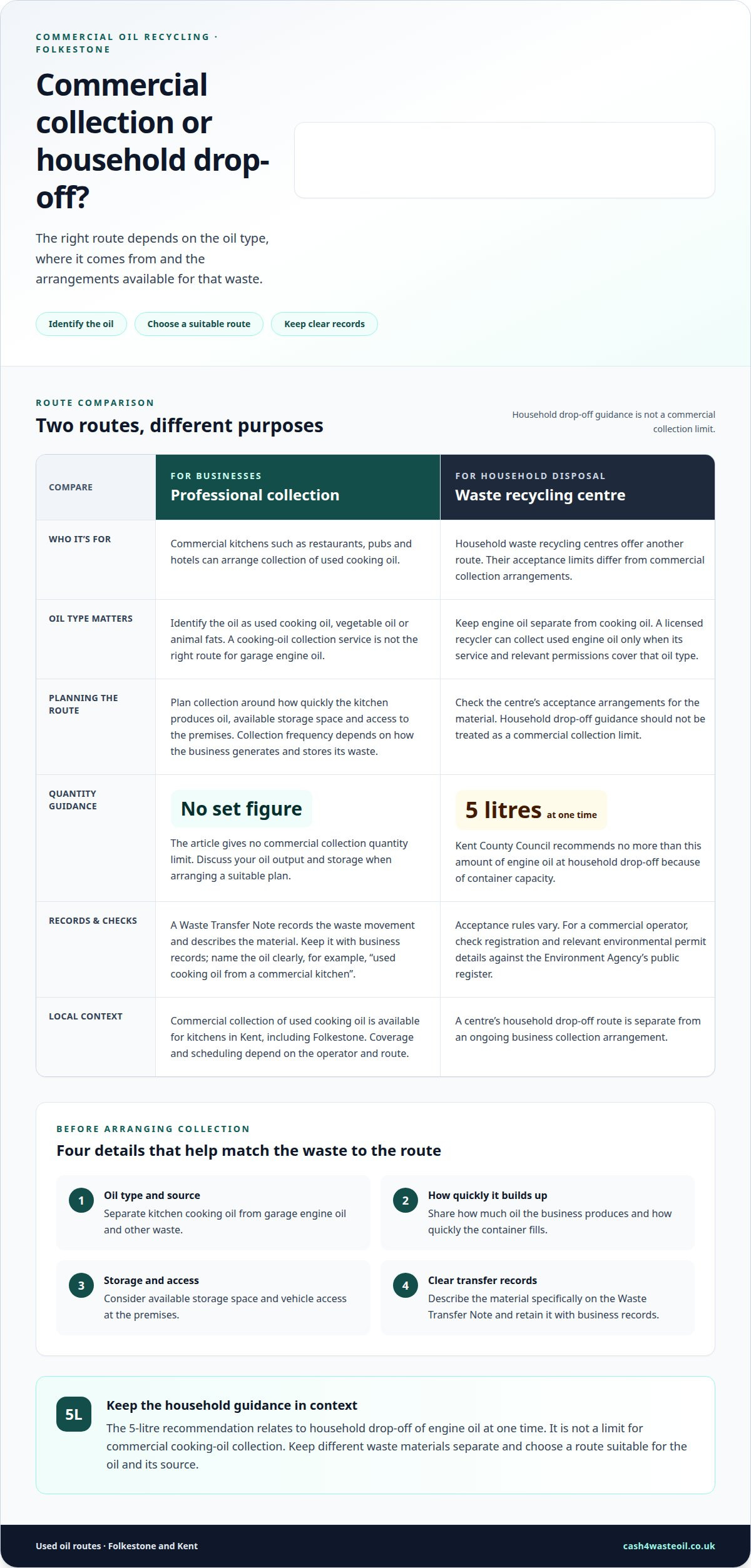
A licensed recycler can collect used engine oil only where its service and relevant permissions cover that oil type. Household waste recycling centres provide another route, but their acceptance limits differ from commercial collection arrangements.
Kent County Council recommends that no more than 5 litres of engine oil is accepted at one time because of container capacity. That advice concerns household drop-off, not a commercial collection limit. Businesses should keep engine oil separate from cooking oil and choose a route suitable for the material and its source.
Business recycling services
Commercial oil recycling differs from household drop-off because a business needs a suitable route for its ongoing waste. In Folkestone, restaurants, pubs and hotels can arrange collection of used cooking oil. A garage’s engine oil is a separate waste stream and is not accepted by a cooking-oil collection service. Identify the oil and its source before arranging collection.
Do local oil recyclers offer collection for garages and businesses in Folkestone? Commercial collection is available for used cooking oil from kitchens in Kent, including Folkestone. Engine oil from a garage is separate, so a cooking-oil collection service is not the right route for it.
A useful commercial collection should fit your operation. A takeaway with frequent frying may produce oil steadily, while a hotel kitchen’s output can vary. When arranging collection, consider the oil type, how much your business produces, storage space and vehicle access. These details help establish a workable schedule.
Keep different waste materials separate. Do not mix used cooking oil with engine oil, cleaning chemicals or general kitchen waste. For example, keep oil from a restaurant fryer separate from lubricants used in a garage. Clear separation helps identify the material and prevents unsuitable waste from entering the wrong route.
- Identify the source: distinguish kitchen cooking oil from garage engine oil.
- Describe the waste: explain whether it is used frying oil or another oil type.
- Plan collection: consider storage space, access and how quickly the container fills.
- Keep records: retain the relevant transfer paperwork for the business’s waste movements.
Paperwork connects the waste your business produces with its collection and transfer. A Waste Transfer Note records the transfer and identifies the material. A clear description, such as “used cooking oil from a commercial kitchen”, is more useful than a broad label like “waste”. Keep the note with your other waste management records.
Collection is only one part of the service. A recycling route also needs to handle the oil appropriately after pickup, rather than leaving the business uncertain about its destination. Businesses can reduce the risk of spills by keeping waste contained and separating it from other materials. For a kitchen producing used cooking oil, a regular commercial collection offers a practical alternative to treating each load as a household disposal task.
When assessing a service, focus on oil type, collection arrangements and documentation. Those three points help a Folkestone business match its waste stream with an appropriate commercial route.
Professional cooking oil disposal for businesses
Commercial kitchens produce used cooking oil through routine work, including changing fryer oil. Identify the waste before arranging collection, and keep cooking oil separate from engine oil and other materials to avoid confusion during handling.
What risks and penalties apply to improper waste-oil disposal in England? Spills can contaminate the surrounding environment, and improper disposal may bring regulatory consequences for a business. Slicker Recycling says waste oil should be managed properly because spills may contaminate the surrounding environment.
A professional disposal route starts with the waste itself. The collector needs to know that the material is used cooking oil, rather than engine oil or a mixed waste. For example, a restaurant changing fryer oil should keep it distinct from cleaning products and general rubbish. This clear separation helps the waste enter a suitable handling and recycling route.
For commercial kitchens, collection provides an alternative to transporting waste oil to a household facility. A Household Waste Recycling Centre accepts cooking oil in designated containers at no charge. That option does not automatically establish that a site is suitable for a business’s commercial waste, so professional collection is a practical route for restaurants, pubs, hotels and other kitchens producing waste as part of their operations.
During a professional collection, the business’s waste is gathered for onward transport and handling. The process should preserve the distinction between oil types, from kitchen collection through transfer. Waste Transfer Notes record waste movements and identify the material transferred. A description such as “used cooking oil from a commercial kitchen” is more informative than a generic label.
- Identify the oil: distinguish used cooking oil from engine oil and other materials.
- Keep waste separate: avoid combining oil with kitchen rubbish or cleaning products.
- Use an appropriate route: choose a commercial collection for recurring kitchen waste.
- Retain transfer records: keep the relevant Waste Transfer Note with business documentation.
Good waste management also helps reduce the chance of leaks during storage and collection. A spill near a kitchen’s drains or outdoor area can affect the surrounding environment. A planned collection and clear transfer record give staff a defined process for managing used oil, rather than leaving containers to accumulate without a disposal route.
Disposal arrangements should match the business’s actual waste stream. A Folkestone restaurant producing fryer oil needs a cooking-oil route; a garage handling engine oil has a different material to manage. Accurate identification, separation and transfer documentation help keep each waste type on its appropriate path.
What types of used oil can be recycled near Folkestone?
The source of the oil is the first clue to its correct route. A Folkestone restaurant’s fryer oil is different from oil drained during garage servicing. Disposal depends on the type of oil, so businesses should identify each stream separately before arranging collection.
Used cooking oil comes from commercial kitchens, including restaurants, pubs and hotels. For example, a kitchen may produce oil when changing a deep fryer or clearing cooking equipment. This material belongs to the cooking-oil stream. Its origin helps a collector distinguish it from oils used in vehicles or machinery.
Engine oil comes from vehicle maintenance, such as an oil change at a garage. It is not the same waste stream as fryer oil, even if both are liquid oils. A garage should describe it accurately and use a route intended for that type. A commercial kitchen should not add engine oil to its cooking-oil container.
Some businesses handle more than one type of oil. A hotel, for instance, may produce used cooking oil in its kitchen and handle lubricants in a maintenance area. Keep these streams separate so the collector can identify the cooking oil correctly. Describe the waste according to its actual source.
- Kitchen oil: identify oil from fryers or other commercial cooking processes.
- Vehicle oil: identify engine oil from garage or vehicle maintenance work.
- Mixed or unclear oil: describe how it was generated, rather than labelling it simply as “used oil”.
The condition of a load can also affect how it is handled. Used fryer oil mixed with food waste is not the same as a separated cooking-oil stream. Similarly, containers holding different workshop fluids need accurate identification. Keep materials separate and describe the waste clearly so it can follow an appropriate route.
Businesses near Folkestone should start with two details: where the oil came from and whether it has been mixed with other materials. A restaurant can identify fryer oil by its kitchen source; a garage can identify engine oil by its maintenance work. This helps distinguish the waste before arranging collection.
For commercial kitchens, used cooking oil is the relevant stream to discuss for cooking-oil recycling. Engine oil requires a separate route and should remain distinct. Correct sorting supports suitable waste management and helps avoid spills or unsuitable disposal that could affect the surrounding environment.
What professional oil recycling collection options are available near Folkestone?
For Folkestone businesses, the practical choice is between arranging commercial collection and using a household recycling centre where the waste type is accepted. The right route depends on whether the oil comes from a kitchen or vehicle maintenance. Cooking oil and engine oil have different handling routes, so identify the material before planning transport.
Household Waste Recycling Centres provide a drop-off option for cooking oil. The oil goes into the designated cooking oil containers, and the drop-off is free. This route is intended for household disposal, so businesses should consider whether transporting their commercial waste themselves suits their operation. Regular kitchen waste may call for a collection arrangement instead.
For engine oil, Kent County Council recommends that no more than 5 litres is accepted at one time because of container capacity. That guidance concerns the amount accepted at a household centre, not a commercial collection limit. A garage managing engine oil should keep that distinction clear when choosing a disposal route.
Folkestone is close to several surrounding towns: Hythe is 4 miles west, Hawkinge is 4 miles north, and Dover is 8 miles east. These locations help orient businesses considering travel around the area. Distance alone does not establish which centre accepts a particular waste type, so the oil type remains the key factor in choosing a suitable destination.
- Used cooking oil: household centres provide designated cooking oil containers for free drop-off.
- Engine oil: Kent County Council recommends a maximum of 5 litres at a time at household centres, due to container capacity.
- Business waste: consider whether repeated journeys to a household facility are practical for your kitchen or garage.
A household drop-off may suit occasional domestic cooking oil, while a commercial kitchen may need a consistent route for ongoing waste. A restaurant producing fryer oil during normal service must consider storage, transport and staff time. A garage’s engine oil is a different waste stream and must not go into a cooking-oil container.
Professional collection can help businesses avoid making separate trips with accumulated kitchen oil. The collection route should be matched to the oil type and the business’s operating needs. For a Folkestone kitchen, describing the waste as used cooking oil makes the intended material clear. For a garage, identifying engine oil prevents confusion with food-service waste.
Choose a route by asking three practical questions: what type of oil is it, is the waste household or commercial, and does the route suit how much your business produces and how often? These details help distinguish a household drop-off from a commercial collection.
Cash 4 Waste Oil
Cash 4 Waste Oil helps commercial kitchens manage used cooking oil with collection and Waste Transfer Notes. For restaurants, pubs, hotels and other commercial kitchens in Kent, these services provide a practical route for handling cooking-oil waste and recording its transfer. Cash payments for waste oil are also available.
This is a relevant next step when your business needs a collection arrangement for used cooking oil, rather than a household drop-off option. The oil type matters: this service relates to cooking oil, not engine oil. Clear records help document the waste transfer as part of your business’s waste management.
To discuss used cooking oil collection for your business, contact Cash 4 Waste Oil.
Make oil handling part of your kitchen routine
Make oil disposal part of your kitchen’s routine. Decide who oversees the waste, where staff keep the transfer records and how collection fits around service. A clear process helps prevent used oil from becoming an afterthought during busy shifts.
For businesses weighing up licensed oil recycling near Folkestone, the next step is to connect the collection arrangement with the way the kitchen works. Consider where containers are kept, who needs to know when they’re ready, and how the handover fits alongside other closing tasks. These practical details help staff follow one consistent process.
Keep the arrangement straightforward and make responsibilities clear to the people handling kitchen waste. With a workable routine in place, your team can manage used cooking oil more consistently as part of normal business operations. Contact Cash 4 Waste Oil to discuss the next step for your business.
Frequently Asked Questions
How can waste oil affect the environment if not properly dealt with?
Waste oil can contaminate the surrounding environment if it spills or is discarded carelessly. In a commercial kitchen, a leak near an outdoor drain or storage area can allow oil to spread beyond its container. Keep oil contained and arrange a suitable collection route to reduce the risk of spills.
How is the oil collected?
For commercial cooking oil, collection is arranged with the business and takes place at its premises. The collector gathers the identified oil for transport, while the business provides practical details such as its location and how much oil it typically produces. A restaurant can use this information to plan a collection arrangement that fits its kitchen routine and keeps waste handling organised.
What happens to waste oil?
The next step depends on the oil type and its intended processing route. Cash 4 Waste Oil collects used cooking oil from commercial kitchens and processes collected oil into biodiesel. This gives used fryer oil a further use as feedstock, rather than leaving it without a managed destination. Engine oil and industrial lubricants are different materials and are not collected by this service.
Why is it important to recycle waste oil?
Recycling used cooking oil gives a commercial kitchen’s waste a managed onward use and helps reduce the risk of improper disposal. For example, a restaurant changing fryer oil can keep that material separate and direct it into a recycling route. The collected cooking oil is processed into biodiesel, supporting reuse of the material and helping businesses manage kitchen waste more responsibly.
What licences and permits must an oil recycler hold in England?
There is no single generic licence for every oil-recycling activity. The operator’s registration and relevant environmental permits depend on whether it carries, stores or treats waste oil; check the details against the Environment Agency’s public register.