Professional Waste Oil Collection in Wolverhampton
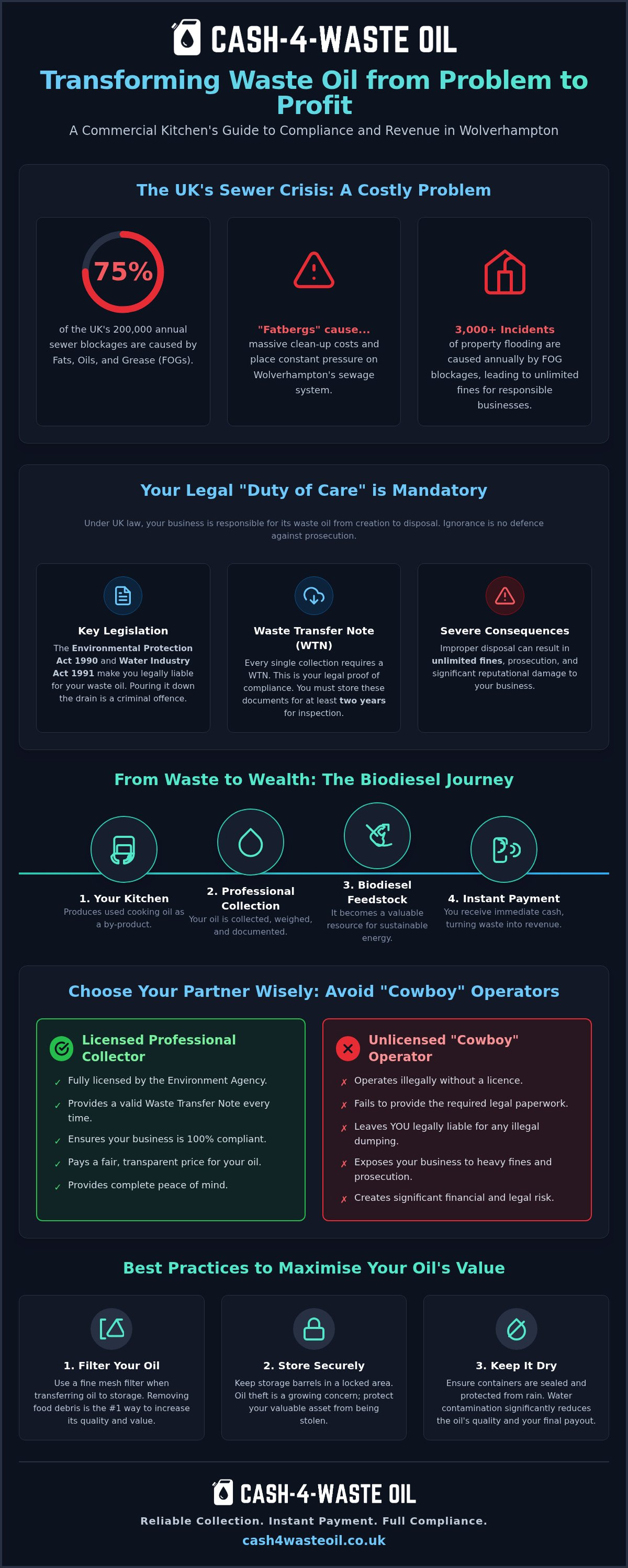
Did you know that fats, oils, and grease are responsible for approximately 75% of the 200,000 sewer blockages across the UK every year? For any commercial kitchen in the West Midlands, those aren't just statistics. They represent the very real risk of property flooding, heavy fines, and the daily stress of managing messy storage areas. You probably already know the frustration of waiting for a collector who never arrives, or the anxiety of ensuring your paperwork is ready for an Environment Agency inspection.
We believe that professional waste oil collection Wolverhampton should be the easiest part of your week, not a source of worry. In this article, you'll learn how to transform your used cooking oil from a disposal problem into a reliable profit-centre whilst staying 100% compliant with all current regulations. We will walk you through how a scheduled, reliable service works, how you can receive instant cash payments per litre on the spot, and why our process removes the burden of legal paperwork entirely. It's time to stop worrying about your drains and start seeing the value in your waste.
Key Takeaways
- Understand your legal "Duty of Care" and why proper disposal is mandatory to avoid heavy fines under the Water Industry Act.
- Discover how used cooking oil acts as a valuable biodiesel feedstock and what factors influence the cash price you receive per litre.
- Learn how to verify Environment Agency licences to avoid "cowboy" operators and ensure your business stays fully compliant.
- Optimise your kitchen's storage and scheduling to ensure your waste oil collection Wolverhampton remains clean, safe, and odour-free.
- Streamline your operations with a service that provides instant cash payments and mandatory Waste Transfer Notes at every visit.
Legal Obligations for Waste Cooking Oil in Wolverhampton
Every commercial kitchen in the city operates under a strict "Duty of Care" defined by Section 34 of the Environmental Protection Act 1990. This isn't a suggestion; it's a statutory requirement. It means you are legally responsible for your waste from the moment it's produced until it's safely recycled or disposed of by a licensed professional. If you hand your oil over to an unlicensed "white van man," the legal liability still rests on your shoulders. Professional waste oil collection Wolverhampton is a legal necessity to protect your business from these risks.
Pouring used oil down the sink is more than a mess; it's a criminal offence under the Water Industry Act 1991. The Environment Agency and local water authorities actively monitor commercial waste to prevent damage to the sewage network. In the industry, collected used cooking oil is often called Yellow grease, and its journey from your vat to the recycling centre must be documented with precision. During a local authority inspection, you'll need to produce your Waste Carrier's Licence details and a complete history of your disposal records.
The Role of the Waste Transfer Note (WTN)
You can't simply hand over your oil and hope for the best. Every single collection must be accompanied by a valid Waste Transfer Note (WTN). This document acts as your legal proof of compliance. It must contain specific details including the volume of oil, the EWC (European Waste Catalogue) code, the date, and the signatures of both the kitchen manager and the collector. You don't just need these for the day; you're legally required to store these records in your Wolverhampton office for at least two years. Without them, you have no defence during an audit.
Avoiding Fines and Prosecution
The consequences of improper disposal are severe. Fats, oils, and grease (FOGs) cause approximately 75% of the 200,000 sewer blockages in the UK every year. These blockages lead to around 3,000 property flooding incidents annually, often resulting in massive clean-up costs and unlimited fines for the businesses responsible. Wolverhampton's sewage system is under constant pressure from "fatbergs," and authorities don't hesitate to prosecute kitchens that contribute to the problem. Using a reliable waste oil collection Wolverhampton service ensures you stay on the right side of the law. For a full breakdown of your requirements, see this Commercial kitchen oil disposal compliance checklist.
How Much is Your Used Cooking Oil Worth in the West Midlands?
Used cooking oil is no longer just a messy byproduct; it's a valuable commodity. In the West Midlands, the surge in demand for sustainable energy has turned fryer fat into a sought-after feedstock for biodiesel production. Instead of paying for disposal, savvy business owners now treat their used oil as a legitimate revenue stream. The value of your stock relies heavily on the quality and volume you produce. When you choose a professional waste oil collection Wolverhampton service, you aren't just cleaning your kitchen; you're selling a product that has a defined market value.
Market rates fluctuate based on global demand, but the condition of your oil is the one factor you can control. High-quality oil with low moisture content and minimal food residue attracts the highest rebates. For many local restaurants, our "cash on the spot" model provides a distinct advantage. It offers an immediate boost to daily cash flow, bypassing the long waits associated with traditional invoicing or rebate cheques. We ensure complete transparency by using calibrated weighing equipment during every visit. You see exactly what you've produced and receive your payment immediately, with zero guesswork involved.
Maximising Your Waste Oil Rebate
To get the best return for your oil, cleanliness is vital. Food debris and water contamination are the primary reasons for reduced rebates. We recommend using a fine mesh filter when transferring oil from the fryer to your storage container. Storing your oil in a dry, secure area is equally important. In Wolverhampton, "oil theft" from outdoor storage areas is a growing concern. Keeping your containers locked away prevents theft and stops rainwater from entering the barrels, which can ruin the oil's value. Choosing a professional partner is far more lucrative than using generic waste disposal companies that often charge for the same service. You can check your current oil value to see how much your kitchen could be earning today.
The Economics of Biodiesel Production
Every litre of oil collected from Wolverhampton kitchens plays a role in the UK's green transport sector. Once collected, the oil undergoes a process of filtration and chemical reaction to become biodiesel. This renewable fuel can reduce carbon emissions by up to 88% compared to standard diesel. It's a perfect example of the circular economy in action. Your waste powers local transport, reduces reliance on fossil fuels, and puts money back into your pocket. For a deeper look at the regional market, read our guide on how to get paid for used cooking oil in London and the Midlands. It's a simple, efficient way to make your business more sustainable whilst improving your bottom line.
Choosing a Licensed Collector in Wolverhampton: Avoiding "Cowboy" Operators
When you're managing a busy service in a Wolverhampton kitchen, a knock at the back door from someone offering to "take that old oil off your hands" might seem like a convenient solution. However, these unlicensed operators, often called "cowboys," pose a significant threat to your business. They operate outside the law, often without the necessary equipment or insurance. If you hand your waste over to someone without a valid permit, you aren't just being helpful; you're taking a massive legal gamble. Reliable waste oil collection Wolverhampton starts with verifying who you're dealing with before they ever touch your barrels.
Verifying a collector is simpler than most people think. You should always ask to see their Waste Carrier Licence and then verify it on the Environment Agency's public register. It's a quick digital check that can save you thousands in potential legal costs. Remember, your "Duty of Care" doesn't end when the oil leaves your premises. If an unlicensed collector fly-tips your oil in a West Midlands alleyway or pours it into a local waterway, the authorities will trace it back to your kitchen. You remain legally liable for that waste, regardless of who actually dumped it.
Vetting Your Waste Oil Partner
A professional partnership is built on transparency. Start by asking direct questions. Are they registered with the Environment Agency? Do they provide a Waste Transfer Note immediately? Don't be afraid to check their reputation amongst other Wolverhampton restaurateurs. A truly professional service won't just offer "free" collection; they'll provide a clear rebate and all the mandatory paperwork. If a collector is vague about where the oil goes or avoids giving you a receipt, it's time to find a new partner. Reliability is key. You need a collector who turns up on a schedule that matches your kitchen's output, preventing messy overflows and fire hazards.
The Risks of Unlicensed Disposal
The legal repercussions for using an unlicensed service can include heavy fines and even criminal prosecution. Beyond the legalities, there's the environmental cost. Improperly dumped oil causes devastating damage to local ecosystems and contaminates groundwater. It's estimated that oil accounts for around 16% of all pollution incidents in the UK. By choosing a licensed professional, you ensure your waste is recycled into sustainable biodiesel, contributing to a circular economy. For more details on how to manage this process correctly, read our guide on sustainable waste oil disposal for UK kitchens. It's the only way to protect your business and the Wolverhampton environment simultaneously.
Optimising Your Kitchen’s Waste Oil Storage and Schedule
Efficiency in a commercial kitchen extends far beyond the pass. How you handle your used cooking oil impacts your hygiene ratings, staff safety, and the speed of your waste oil collection Wolverhampton service. Managing this byproduct requires a methodical approach to prevent the common pitfalls of spills, pests, and workplace accidents. By treating your storage area with the same discipline as your food prep stations, you protect your staff and your bottom line.
Safety starts at the fryer. If you are looking to upgrade to high-quality equipment, click here to find out more about Hopkins and their range of commercial frying ranges. Never attempt to transfer boiling oil; it is a leading cause of severe burns in the West Midlands hospitality sector. Allow the oil to cool to a safe temperature before decanting it into storage containers. Always use a secure funnel to prevent splashes. Even a small spill creates a significant slip hazard that can lead to costly insurance claims. Beyond safety, your storage location matters. Heat and light accelerate oil degradation and create foul odours that attract rodents. Store your containers in a cool, shaded, and well-ventilated area to maintain a clean environment and preserve the oil's value for recycling.
Safe Storage Solutions
Choosing the right container is the first step toward a hassle-free kitchen. Whilst some smaller venues use original barrels, dedicated waste oil tanks are often safer and easier to manage for high-volume sites. Regardless of the vessel, ensure every container is airtight, properly sealed, and clearly labelled. This prevents accidental contamination and ensures your waste oil collection Wolverhampton team can identify the stock quickly. Access is equally vital. If your kitchen is located in the town centre or near the Mander Centre, ensure there is a clear, unobstructed path for the collection vehicle. If we can't reach your barrels easily, it slows down your service and yours.
Scheduling for Peak Times
Your collection frequency should mirror your kitchen's output. A busy chippy or a large pub will reach capacity far faster than a boutique cafe. We recommend a "set and forget" scheduled service to remove the mental load of monitoring levels. However, you must plan for seasonal spikes. Holiday periods like December or bank holiday weekends often double your oil production. Don't wait for an overflow to take action. If your storage reaches capacity sooner than expected, you can request an emergency collection to keep your kitchen running smoothly. You can book your next collection online today to ensure your storage never becomes a bottleneck.
Common mistakes like overfilling barrels make them nearly impossible to move safely. Keep your containers at 90% capacity to allow for expansion and safe handling. By following these simple storage protocols, you turn a potential mess into a streamlined part of your business operations.
Reliable Used Cooking Oil Collection with Cash 4 Waste Oil
Wolverhampton’s hospitality sector moves fast. You don't have time to chase unreliable collectors or worry about whether your paperwork will pass an inspection. Cash 4 Waste Oil was built to solve these specific frustrations. We provide a professional waste oil collection Wolverhampton service that prioritises your schedule, your compliance, and your cash flow. We aren't just a disposal company; we're a local partner that turns a logistical headache into a profitable routine for your business.
Our reputation across the West Midlands is built on a simple, transparent 3-step process that respects your time. First, you book a slot that fits your kitchen's quiet periods. Second, our licensed team arrives on time to collect your oil, weighing it accurately with calibrated equipment and providing your mandatory Waste Transfer Note immediately. Third, you get paid cash on the spot. This "Book, Collect, Get Paid" model removes the wait for cheques or bank transfers, putting money straight back into your till. It's a pragmatic solution designed for the reality of the service industry.
Our Wolverhampton Service Area
We understand the local geography and the challenges of city-centre logistics. Whether you're running a high-volume takeaway in Bilston, a busy pub in Wednesfield, or a hotel near the University of Wolverhampton, our fleet is ready to serve you. We offer flexible collection times that respect your opening hours; we won't turn up in the middle of a frantic Friday lunch rush. Our specialized service is designed to handle the high output of commercial fryers, ensuring you never have to deal with overfilled barrels or the associated fire risks. We cover the entire metropolitan area, providing a consistent waste oil collection Wolverhampton service that you can rely on week after week.
Start Earning from Your Waste Today
Setting up your first collection takes less than two minutes. We don't believe in trapping businesses with restrictive long-term contracts or hiding fees in the small print. You get a professional, on-demand service that pays you for your waste without any paperwork stress. By partnering with us, you're also supporting the West Midlands circular economy. Every litre we collect is recycled into sustainable biodiesel, helping to power a greener future for our region whilst improving your bottom line. It's a smart, efficient business decision that benefits both your kitchen and the planet. Contact our local team today to clear your storage and see the value of your waste oil immediately.
Streamline Your Kitchen’s Compliance and Cash Flow
Managing a commercial kitchen is demanding enough without the added stress of oil disposal. By choosing a professional service, you transform a messy obligation into a streamlined revenue stream. You've seen how easy it is to stay compliant with Environment Agency regulations whilst securing the best market rates for your used cooking oil. It's about more than just a clean storage area; it's about protecting your business from fines and contributing to a greener West Midlands.
Reliable waste oil collection Wolverhampton ensures you never have to worry about blocked drains or missing paperwork again. As an Environment Agency Registered Collector, we provide full compliance documentation and instant cash payments at every visit. There's no need for complex contracts or hidden fees. You can book your free Wolverhampton waste oil collection and get paid today to see how simple professional disposal can be. We look forward to helping your kitchen run more efficiently and profitably.
Frequently Asked Questions
Do you collect waste oil from residential houses in Wolverhampton?
No, we don't collect used cooking oil from residential houses or domestic properties. Our service is exclusively designed for commercial establishments such as restaurants, pubs, hotels, and cafes. Domestic waste disposal is usually handled by your local council’s household waste recycling centres. By focusing strictly on the commercial sector, we ensure a more efficient and reliable logistics network for professional kitchens that require high-volume disposals.
How much do you pay for used cooking oil in 2026?
We pay competitive market rates for used cooking oil based on the volume and quality of the stock collected. Prices fluctuate according to global demand for biodiesel feedstock, so we track these changes to ensure you get a fair deal. Our team uses calibrated weighing equipment to provide an accurate measurement during every visit. You receive your payment in cash on the spot, helping your business maintain a consistent cash flow.
Is a Waste Transfer Note really necessary for my small cafe?
Yes, a Waste Transfer Note is a legal requirement for every commercial kitchen, regardless of its size or output. Under the Environmental Protection Act 1990, you have a statutory "Duty of Care" to document exactly where your waste goes. If a local authority inspector visits your cafe, you must produce these notes as proof of compliant disposal. We provide a valid note at every visit to ensure your business remains fully compliant.
What types of oil do you collect from commercial kitchens?
We collect all types of food-grade vegetable and cooking oils used in the catering industry. This includes rapeseed oil, sunflower oil, corn oil, and palm oil used in deep fat fryers or for roasting. It's important that the oil is kept free from water and chemical contaminants to preserve its value for recycling. Our waste oil collection Wolverhampton service ensures these oils are safely diverted from the sewage system and processed for industrial reuse.
Do you collect used engine oil or mineral oils?
No, we do not collect used engine oil, hydraulic fluids, or any other type of mineral oil. Our specialised equipment and recycling processes are strictly designed for vegetable-based cooking oils from the hospitality sector. Automotive or industrial oils are classified as hazardous waste and require entirely different handling procedures. For mineral oil disposal, you should contact a specialist hazardous waste carrier who is licensed to handle automotive lubricants and industrial fluids.
How quickly can you arrange a collection in Wolverhampton?
We offer flexible collection times tailored to suit your kitchen's specific opening hours and service periods. Once you book, our local team works to fit you into our Wolverhampton route as efficiently as possible. We understand the fast-paced nature of the hospitality sector and aim to provide a prompt service that prevents your storage from reaching capacity. You can easily schedule a regular weekly or monthly collection to automate the entire process.
What happens to the oil once it has been collected?
After collection, your used cooking oil is transported to a dedicated processing facility where it is filtered and refined. It is then recycled into sustainable biodiesel, a renewable fuel source that significantly reduces carbon emissions in the transport sector. This process supports the circular economy in the West Midlands, turning your kitchen waste into a valuable energy resource. It's a pragmatic way to improve your business's sustainability whilst earning a financial rebate.
Is there a minimum amount of oil required for a free collection?
Our waste oil collection Wolverhampton service is free for commercial establishments, with no hidden fees or collection charges. Whilst we don't have a strict minimum for a free pickup, the cash payment you receive is calculated per litre based on the total volume collected. For smaller venues, we recommend waiting until you have a few full barrels to maximise your rebate and ensure the collection is as efficient as possible for our local drivers.