Restaurant Cooking Oil Collection in Tunbridge Wells
A one-off collection can clear a build-up of used oil, while regular collections suit kitchens that produce it steadily. For restaurant cooking oil collection in Tunbridge Wells, choose a routine based on your kitchen’s output and how much safe storage space you have.
A straightforward collection service keeps used oil contained and gives you a record of each handover. With a clear routine, you can manage waste without disrupting a busy kitchen.
This guide explains how commercial cooking oil collection works, how to cool and store used oil safely, and what to consider when choosing a local provider. You’ll also learn about Waste Transfer Notes and the practical details that can shape a collection routine, so you can decide what fits your restaurant.
Key Takeaways
- Businesses must take reasonable steps to manage waste responsibly and prevent its illegal disposal.
- Set collection frequency around how quickly your kitchen produces used oil, rather than relying on a one-size-fits-all schedule.
- Let oil cool before handling it, then store it in a secure, leak-proof container with a tight-fitting lid.
- Waste Transfer Notes provide a record of collections; keep them organised as part of your waste paperwork.
- When choosing a collection service, look for clear collection arrangements, appropriate waste documentation and responsible handling.
Legal responsibilities for commercial waste oil disposal
Restaurants in Tunbridge Wells must manage used cooking oil as commercial waste, not household rubbish. Safe storage and responsible handover matter, and a Waste Transfer Note records each collection.
Business Waste Oil Responsibilities
According to UK legislation, the Environmental Protection Act 1990 requires businesses to take all reasonable steps to look after their waste and prevent its illegal disposal by others. For a restaurant, that means controlling waste oil from the moment it leaves the fryer until an appropriate collector takes it away. Keep it contained, prevent spills and never pour it into sinks or drains. Improper disposal can lead to prosecution.
Build used cooking oil into the kitchen’s routine. Make sure staff know where to put cooled oil and how to avoid spills. A designated storage point separates waste from food preparation and makes collections easier to manage.
Commercial Waste Records and Traceability
A Waste Transfer Note records the transfer of commercial waste, including used cooking oil. It helps show what was collected and who took responsibility for it. UK food businesses should keep these notes for at least two years, according to UK legislation. Store each note with your business waste records so it can be found when needed.
Keep each Waste Transfer Note with the collection record it describes. Record the collection date and file the paperwork consistently with your other waste documents. This gives you a clear record of the handover without relying on staff to reconstruct details later.
Arranging a Tunbridge Wells Collection
To arrange a collection, contact a commercial waste oil collector and explain that the waste comes from a restaurant in Tunbridge Wells. Share practical details such as your premises location, the oil you need collected and how it is stored. Agree how collections will be arranged and ensure the handover includes the appropriate waste documentation.
Choose a collection routine that suits your kitchen’s output and storage space. Keep the Waste Transfer Note after each handover as part of your waste records. North Farm household waste recycling centre does not accept business or commercial waste, so it is not an option for restaurant oil disposal.
Commercial waste oil collection gives restaurants a responsible way to hand over used oil and document the transfer. A clear process also helps staff know where the oil belongs and how to handle it safely. Include collection and storage in daily kitchen operations, rather than treating them as occasional clean-up tasks.
Why Use an Oil Collection Service?
A planned collection routine helps restaurants manage used oil without letting storage become an afterthought. The right frequency depends on how quickly each kitchen fills its containers, the space available and the rhythm of service.
Collection schedules for different kitchens
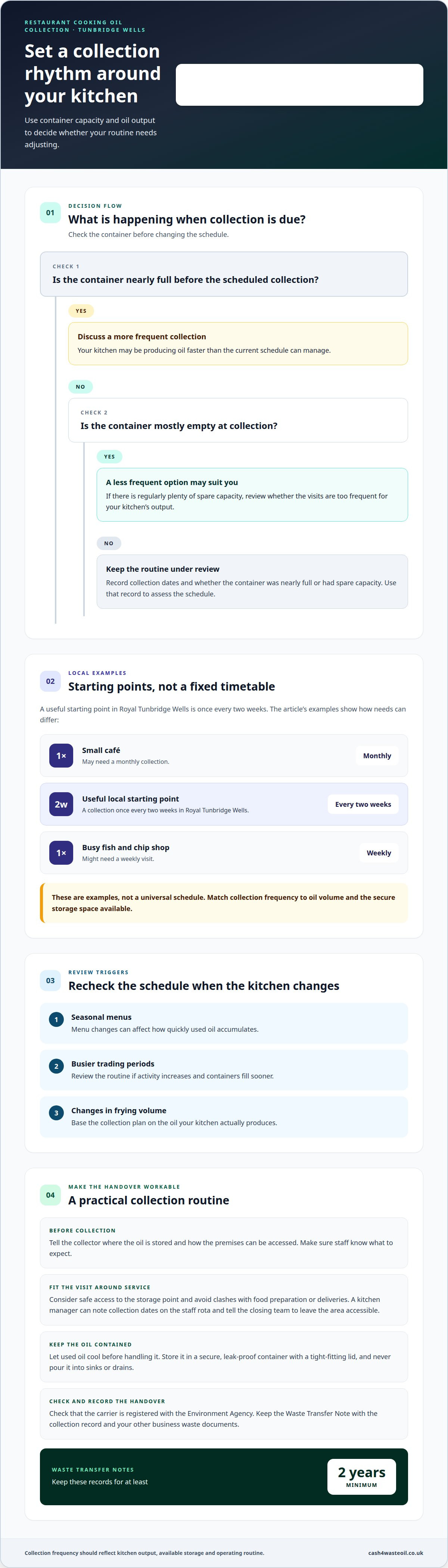
A useful starting point in Royal Tunbridge Wells is a collection once every two weeks. A busy fish and chip shop might need a weekly visit, while a small café might need monthly collection. These are examples, not a universal timetable. Match the schedule to the volume your kitchen produces and how much secure storage space it has.
Review the routine when kitchen activity changes. Seasonal menus, busier trading periods or shifts in frying volume can affect how quickly oil accumulates. If containers are nearly full before collection, discuss adjusting the schedule. If they remain mostly empty, a less frequent option may suit your kitchen.
Scheduling around kitchen operations
Choose a collection arrangement that works with your restaurant’s daily routine. Consider when staff can access the storage point safely, how the collection team will reach it and whether the visit could overlap with food preparation or deliveries. A clear handover plan helps keep access straightforward.
Tell the collector where the used oil is stored and how the premises can be accessed. Agree a routine that fits your operating pattern, then make sure the relevant team members know what to expect. For example, a kitchen manager can include the collection date in the staff rota and tell the closing team to leave the designated area accessible.
Keeping the schedule practical
Keep a simple record of collection dates and whether the container was nearly full or had spare capacity. This gives you a practical basis for reviewing the schedule. A clear record also helps staff follow the routine when shifts change or the usual manager is away.
Make the collection schedule part of wider waste planning, rather than an isolated task. Coordinate it with deliveries and other scheduled activity at the premises. Check that the carrier is registered with the Environment Agency, then retain the collection documentation alongside your business waste records.
A regular arrangement can help prevent used oil from accumulating beyond your available storage space. If you need a planned route for used cooking oil collection, base the schedule on your kitchen’s actual output and operating routine. Review it whenever those conditions change.
What Is Used Cooking Oil Collection?
Restaurants store used oil safely before a collector removes it for appropriate processing or disposal. Collectors accept waste cooking oil from commercial kitchens; if recycling collection isn’t possible, arrange disposal through a licensed waste carrier.
Accepted Restaurant Cooking Oils
Commercial collections are for used cooking oil generated by restaurant cooking, including oil from fryers. Keep it separate from unrelated wastes so its contents and intended handling remain clear. If a kitchen produces different waste streams, such as engine oil, don’t combine them with cooking oil. Separate storage helps the collector identify the material being handed over.
Food particles or water may be present in used oil. Let it cool before handling, and do not add cleaning products or other liquids. Keeping the oil separate makes collection easier to manage and supports its processing into bio-diesel.
Commercial Oil Collection and Disposal
A collection involves transferring stored oil from the restaurant to a waste carrier for treatment or disposal. The collector removes it from the designated storage point, and the business keeps a record of the handover. This creates a practical chain from the fryer to the next stage, rather than leaving oil unmanaged on site.
Used cooking oil can be cleaned through filtration, heating and separation, which removes food particles and water. Processed oil may then be used to produce fuels such as biodiesel, renewable diesel or sustainable aviation fuel. The route depends on how the collected material is handled after collection.
Before collection, let the oil cool. Transfer it carefully into a secure, leak-proof container with a tight-fitting lid. Keep the container upright and away from food preparation areas. These steps reduce spill risks while the oil awaits collection.
Never tip waste cooking oil into a sink, drain or loo. If recycling collection cannot take the oil, keep it contained and arrange disposal through a licensed waste carrier. This gives the kitchen a controlled handover route and avoids an improvised disposal method.
A consistent collection routine separates waste management from everyday kitchen cleaning. Staff can cool the oil, place it in the designated container, keep the storage area accessible and hand it over for collection. This helps prevent spills and keeps waste oil away from food preparation areas.
For a restaurant in Tunbridge Wells, the practical details are the oil’s condition, safe storage and a clear handover. Keep cooking oil separate from other waste, and ensure staff know how to handle it. That makes collection and responsible disposal easier to manage.
Safe storage and collection processes
Before collection, let used oil cool, then place it in a sealed, leak-proof container with a tight-fitting lid. Keep the container secure, clearly labelled and away from food preparation areas.
A dedicated container gives staff a consistent place for fryer oil after use. Choose a stable container that closes securely and sits on a level surface. Keep it away from ingredients, clean utensils and other waste streams. A clear label helps staff identify the contents, including during busy shift changes.
Use this practical routine for each fryer clean-down:
- Allow the oil to cool before staff handle or transfer it.
- Pour carefully to avoid splashing, and keep the container opening close to the fryer vessel.
- Close the lid firmly after adding oil, then return the container to its designated storage point.
- Keep the route to that point clear, so staff can move containers without obstruction.
These steps help prevent spills and keep waste oil away from food preparation. Do not leave an open vessel beside a fryer or use a container with a loose lid. If oil spills, stop the transfer and follow the kitchen’s usual spill procedure promptly. A slippery floor near cooking equipment can put staff carrying hot food or utensils at risk.
Plan storage around the collection point. Keep the container accessible to the collection team while protecting it from accidental movement or interference. A designated area near a suitable access route makes handover easier. Do not block fire exits, kitchen walkways or delivery routes with stored oil. Make sure staff know where the container belongs and who handles the transfer.
Before a scheduled collection, close the container and keep the access route clear. Tell the relevant team where the used oil is stored, especially if shifts have changed since the last visit. A brief handover note can identify the container and explain access arrangements. This preparation helps the collection team remove the oil without interrupting food preparation.
Check the storage area as part of routine kitchen closing tasks. Look for a secure lid, visible leaks, a clear label and an unobstructed route. If the container is damaged or oil has escaped, keep staff clear and follow the site’s established clean-up procedure before storing more oil. Regular checks help Tunbridge Wells kitchens keep used oil contained until collection.
Choosing a local collection provider
Reliable restaurant cooking oil collection in Tunbridge Wells starts with an arrangement that fits the kitchen’s routine. Consider site access, collection timing, documentation and what happens after the oil is removed. These details show whether collections can work alongside daily restaurant operations.
Local knowledge is useful when it helps coordinate visits around the premises. A provider familiar with commercial kitchens in Kent can plan around access arrangements and the oil storage point. The collection schedule should reflect how quickly your restaurant produces waste oil, rather than assume every kitchen needs the same frequency.
Use these points to assess whether an arrangement covers the essentials:
- Collection planning: the schedule should suit your oil output and available storage capacity.
- Responsible handling: collection should remove used cooking oil without disrupting food preparation.
- Registration: the carrier should be registered with the Environment Agency.
- Records: each transfer should be documented with a Waste Transfer Note.
Documentation supports traceability from the restaurant to the carrier. Keep each Waste Transfer Note with its collection date and other commercial waste records. For example, filing the note alongside the relevant kitchen log makes the record easier to retrieve when staff responsibilities change.
Ask how the collected oil is handled after removal. Used cooking oil can be processed into biodiesel, renewable diesel or sustainable aviation fuel. A sustainable approach depends on appropriate handling and onward processing, not simply removing a container from the kitchen. Clear records help document the handover.
Practical arrangements should be easy for staff to follow. Make the collection point, access route and handover process clear across shifts. A kitchen manager can brief the closing team before a scheduled visit so everyone knows which storage point is ready and how access works.
For restaurant cooking oil collection in Tunbridge Wells, focus on a workable schedule, a registered carrier and clear transfer records. Arrange a used oil collection around your kitchen’s needs and routine.
Waste cooking oil collection companies across Tunbridge Wells and Kent provide necessary Duty of Care Waste Transfer Notes and often suitable waste-oil containers. Local businesses should ensure their chosen provider complies fully with all regional commercial waste regulations.
Cash 4 Waste Oil: Used Cooking Oil Collection
Cash 4 Waste Oil collects used cooking oil from restaurants and commercial kitchens in Kent. The service includes a Waste Transfer Note for the handover, helping your business keep a record of collected oil. Cash 4 Waste Oil is fully licensed and Environment Agency registered.
For a restaurant in Tunbridge Wells, this is a practical option when you need a commercial collection and documented transfer. Cash 4 Waste Oil also pays cash on the spot for waste oil. Store used oil securely until collection, and keep the Waste Transfer Note with your business records.
Contact Cash 4 Waste Oil to discuss used cooking oil collection for your restaurant.
Make your next collection part of the kitchen routine
Choose a team member to coordinate collections, brief staff and update arrangements when kitchen operations change. For restaurant cooking oil collection in Tunbridge Wells, one point of contact helps keep communication clear across shifts and makes it easier to plan around changes to opening hours or the storage location.
Before arranging restaurant cooking oil collection in Tunbridge Wells, decide who will share practical details about your premises and collection needs. A clear handover between that person and the kitchen team keeps the process organised, even when rotas change.
Cash 4 Waste Oil can discuss collection arrangements for your commercial kitchen. Contact Cash 4 Waste Oil to talk through the next step for your restaurant.
Frequently Asked Questions
Can I Book a One-Off Collection?
Yes. Cash 4 Waste Oil offers on-call collections, which can suit a restaurant needing a one-off visit. For example, a kitchen might need oil removed after a temporary increase in frying or before refurbishment. Keep the oil stored securely until collection, and provide the premises location and an estimate of your oil volume when arranging it. A Waste Transfer Note is provided for the collection.
Do You Service TN1 1 Postcode Area?
Yes. TN1 1 is within Tunbridge Wells, Kent, an area served by Cash 4 Waste Oil for commercial used cooking oil collection. This is suitable for restaurants and other food-service businesses generating waste cooking oil. When arranging a collection, give the full premises address so the collection can be planned for the correct site, rather than relying on the postcode alone.
How is cooking oil recycled?
Collected cooking oil is processed into biodiesel through transesterification. This process converts used oil into a fuel, giving the waste a productive use after it leaves the restaurant. Keep the oil separate from non-food oils and other waste, so the material remains suitable for its intended processing route. Cash 4 Waste Oil recycles collected cooking oil into biodiesel.
Is There a Minimum Quantity for Collection?
No. Cash 4 Waste Oil has no set minimum quantity and works with businesses of different sizes. A small café with limited fryer use can still arrange collection, as can a restaurant producing more oil. When organising a visit, share an estimate of your volume and how often your kitchen generates oil. That information helps shape a collection routine around your business.
What Happens to the Oil After Collection?
Cash 4 Waste Oil recycles all collected oil into biodiesel. The oil is taken for processing rather than being left for the restaurant to manage after handover. This gives used cooking oil a renewable fuel use and supports recovery of a commercial waste stream. Keep the collection paperwork with your records, so your team can connect the handover with the oil removed from your premises.
Which companies collect used cooking oil from restaurants in Tunbridge Wells?
Cash 4 Waste Oil collects used cooking oil from restaurants and other commercial kitchens in Tunbridge Wells. Its collection service is for food-service businesses generating used cooking oil, rather than household cooking waste. For a restaurant, the practical next step is to provide the site location and an estimate of oil volume when arranging a collection. The service provides a Waste Transfer Note for each collection.
How often can restaurants in Tunbridge Wells arrange cooking oil collection?
Restaurants can arrange flexible weekly, fortnightly or monthly collections. The suitable frequency depends on how much oil the kitchen produces and how quickly its storage container fills. A busy fryer operation may need a tighter routine than a café with lower output. Cash 4 Waste Oil can organise the schedule around the business’s oil generation rate, helping avoid unnecessary collections or overflowing storage.
Do cooking oil collectors pay restaurants, and what are the current prices?
Cash 4 Waste Oil pays businesses cash for collected waste cooking oil. The payment rate depends on the oil’s volume and condition, so there isn’t one fixed rate to quote for every restaurant. A free quote is available on request. Collection is free, and the payment details can be considered alongside the amount and quality of oil your kitchen generates.