Restaurant Oil Collection in Leatherhead: 2026 Guide
Could a reliable oil collection routine free up valuable kitchen storage without interrupting service? If you’re looking for restaurant oil collection Leatherhead, start by checking local availability, agreeing practical collection arrangements and clarifying what paperwork and payment terms to expect.
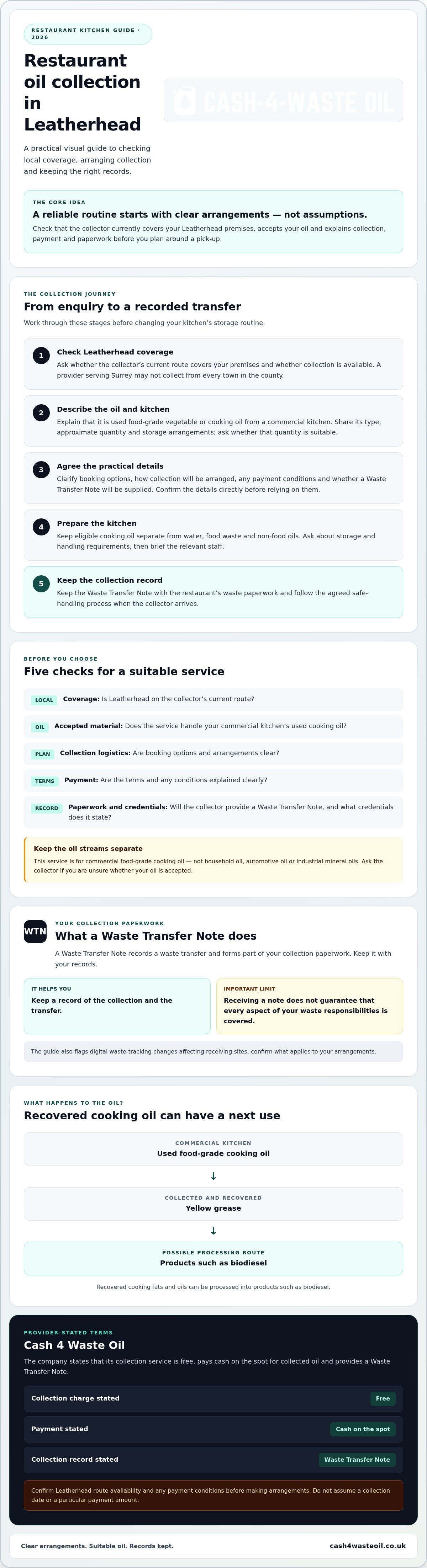
Used cooking oil can become a storage and compliance concern when collection arrangements are unclear. A commercial collector should explain which food-grade oils it accepts and provide a Waste Transfer Note for the collection. Cash 4 Waste Oil states that its collection service is free and that it pays cash on the spot for collected oil. Confirm Leatherhead route availability and any payment conditions before making arrangements.
This 2026 guide explains how to assess a collection service, what a Waste Transfer Note records and why to keep it. It also covers the digital waste-tracking changes affecting receiving sites and how collected cooking oil can be processed into biodiesel. Use these checks to find an arrangement that fits your restaurant and keeps your records in order.
Key Takeaways
- Check that a collector covers Leatherhead and confirm current arrangements before planning around a collection.
- Use this restaurant oil collection Leatherhead guide to compare accepted cooking oils, collection logistics and payment terms.
- Find out what a Waste Transfer Note records and how to keep it with your collection paperwork.
- Choose a service for commercial kitchen oil, not household or engine oil, and check the provider’s stated credentials.
- Cash 4 Waste Oil states that it offers free collection, cash payment on the spot and a Waste Transfer Note.
Restaurant oil collection in Leatherhead: what local kitchens need
Restaurant oil collection is the removal of used cooking oil from a commercial kitchen, either on an agreed schedule or when the business requests a collection. For a busy restaurant, clear arrangements can help prevent oil from taking up storage space, make collections easier to plan around service and provide a record of each transfer.
Before relying on a service as local, confirm that the collector’s current route covers your Leatherhead premises. A provider serving Surrey may not collect from every town in the county, so check availability directly.
Which types of restaurant oil collection are suitable?
This service is for restaurants and other commercial kitchens with used food-grade vegetable or cooking oil. It isn’t household oil collection, and cooking oil is different from automotive or industrial mineral oils, which require a different handling route. The term Yellow grease refers to recovered cooking fats and oils, which can be processed into products such as biodiesel.
Describe your oil before discussing a booking or payment. Ask the collector to confirm that it accepts your oil type and that its service is suitable for your business. This avoids arranging a collection for material the provider doesn’t handle.
What should Leatherhead restaurants expect from a collector?
Clarify three practical points before making plans: how collections are arranged, what payment terms apply and whether the provider supplies a Waste Transfer Note. The note records a waste transfer and forms part of your collection paperwork. Receiving one doesn’t guarantee that every aspect of your waste responsibilities is covered.
Suitability depends on both your oil and the provider’s current route. Confirm Leatherhead coverage and availability, explain what type of oil your kitchen produces and ask how collection will be arranged. Get payment terms in clear language before relying on any expected return.
Before choosing a collector, confirm Leatherhead coverage, accepted oil types, collection arrangements, payment terms and the provision of a Waste Transfer Note.
These checks help you assess whether restaurant oil collection Leatherhead can fit your kitchen’s routine. They also set clear expectations before the oil is ready to leave your premises.
How restaurant oil collection works, from enquiry to collection
A clear enquiry helps a collector assess whether it can handle your used oil and whether collection fits its current route. For restaurant oil collection Leatherhead, confirm local coverage and availability before changing your storage routine or planning around a collection date. Don’t assume a provider serves every part of Surrey.
What information should a restaurant provide when enquiring?
Give the restaurant’s location and confirm that the oil comes from a commercial kitchen. Describe the type of used cooking oil, provide an approximate quantity and explain how it’s stored. Rather than assuming there’s a minimum volume, ask the collector whether your quantity is suitable.
Next, check the provider’s current route coverage, booking options and collection arrangements. Ask how payment works, including any conditions, and whether a Waste Transfer Note will be provided. Cash 4 Waste Oil describes its service as free and says it pays cash on the spot for collected oil. Confirm current arrangements and payment terms directly. Don’t assume a particular amount or collection date.
How can a kitchen prepare for collection?
Keep used food-grade cooking oil separate from water, food waste and non-food oils. Mixed or unsuitable material may affect whether the oil can be accepted, so raise any uncertainty with the collector before making arrangements. Ask the provider about its storage and handling requirements, then brief staff accordingly.
Once arrangements are agreed, make sure the relevant team knows where the oil is stored and what to do when the collector arrives. Follow the agreed safe-handling process and keep the collection record with the restaurant’s waste paperwork. NetRegs offers guidance for businesses on your duty of care, including managing waste oil responsibly.
- Confirm the route: Check Leatherhead coverage and current availability.
- Describe the oil: Explain its type, approximate quantity and storage arrangements.
- Agree the details: Clarify booking options, collection arrangements, payment terms and paperwork.
- Prepare the kitchen: Keep eligible cooking oil separate and follow the collector’s handling instructions.
These steps reduce uncertainty and help fit collection around kitchen operations. To review Cash 4 Waste Oil’s stated service, see its commercial cooking oil collection information. Confirm Leatherhead coverage and current arrangements before making plans.
How to compare restaurant oil collectors in Leatherhead
Start with what your kitchen needs, rather than a headline offer. For restaurant oil collection Leatherhead, check that each provider covers your premises, accepts your specific used food-grade oil and explains how collections are arranged. Confirm availability directly before relying on a proposed schedule.
What to check | Questions to ask
Service area | Does the current route include your Leatherhead address, and are collections currently available?
Accepted oil | Does the collector accept the type of used vegetable or cooking oil produced by your kitchen?
Collection arrangements | How do you request or schedule a collection, and can the arrangements suit your business?
Records | Will you receive a Waste Transfer Note for the collection, and what details will it record?
Payment terms | Is collection free in your circumstances, how is any payment calculated, and when and how is it made?
Which service details should restaurants check first?
Be specific about your oil and premises. Ask the provider to confirm that it accepts your oil rather than assuming all used oil is eligible. Discuss how to request collections and whether a suitable schedule can be agreed. Don’t rely on an unconfirmed frequency or collection date. If the service is described as free, check whether that applies to your business and circumstances.
Check the collector’s registration using current information from the Environment Agency’s public register. Don’t rely on an outdated document or a verbal assurance alone. If you’re unsure what applies to your kitchen, consult UK government rules on food and cooking oil waste.
What paperwork and payment terms should be clear?
Ask whether the collector supplies a Waste Transfer Note and check that it relates to the collection taking place. Keep the note with your business records. It documents a transfer, but isn’t by itself proof that every waste responsibility has been met. Before agreeing, ask how any payment is calculated and made. Don’t rely on an estimated rate unless the provider confirms the terms for your oil and circumstances.
Cash 4 Waste Oil states that its collection service is free and that it pays cash on the spot for collected oil. Confirm current Leatherhead availability, accepted oil and any conditions directly with the company.
A straightforward collection still needs confirmed coverage, clear records and payment terms agreed before the oil is handed over.
Waste Transfer Notes and responsible oil handling for Leatherhead restaurants
A Waste Transfer Note (WTN) records the transfer of waste from your restaurant to another party. It provides a useful record of a used cooking oil collection, but having a note doesn’t, by itself, guarantee that every legal responsibility has been met. For restaurant oil collection Leatherhead, make paperwork part of a wider process: check who is collecting the oil, keep the records and follow current guidance.
What should a restaurant check on its Waste Transfer Note?
Check that the note describes the waste clearly and identifies the parties involved. Review the transfer details, including the date, and query missing or inaccurate information with the collector. Keep the WTN with your restaurant’s relevant waste records so it can be found when needed.
As of October 2026, restaurants in England must retain WTNs for at least two years. Paper notes remain in use alongside digital waste tracking at this stage. The digital recording requirement introduced on 1 October 2026 applies to permitted and licensed waste-receiving sites, not restaurant waste producers. Check current government guidance on food and cooking oil waste and Environment Agency information for up-to-date duties and requirements.
How should used cooking oil be handled before collection?
Give staff a straightforward procedure: keep used cooking oil separate from other waste and never pour it down a drain. Confirm storage and collection instructions with your provider rather than making assumptions about containers or handling. Clear instructions help staff manage oil consistently and keep it ready for the agreed collection.
Use your commercial kitchen oil disposal compliance checklist to review the steps your team follows, from storing oil to filing the WTN. The checklist should support, not replace, current Environment Agency and government guidance. Don’t assume local collection or council rules apply unless you’ve confirmed them with an authoritative source.
Cash 4 Waste Oil states that it supplies a Waste Transfer Note for collected oil. Check the collection details and retain the document with your records. To discuss commercial used cooking oil collection and paperwork, ask Cash 4 Waste Oil about a collection, and confirm current Leatherhead availability directly.
Arrange restaurant oil collection in Leatherhead with Cash 4 Waste Oil
Cash 4 Waste Oil collects used food-grade cooking oil from commercial kitchens and describes its collection service as free. The company also states that it pays cash on the spot for collected oil and provides a Waste Transfer Note. Its stated licensed and Environment Agency-registered status is another detail to check when assessing a provider.
Collected oil is processed into biodiesel, giving used kitchen oil a further use. First, confirm that the service suits your premises and that Leatherhead is included on the company’s current collection route. Check local availability and arrangements directly rather than assuming they apply.
Is Cash 4 Waste Oil a fit for your restaurant?
The stated service is for commercial kitchens handling food-grade vegetable and cooking oils. It isn’t intended for domestic households, and engine oil isn’t part of the offer. If your kitchen produces a different type of oil or a mixture, describe it before arranging a collection so the company can confirm whether it’s accepted.
Suitability also depends on your location and current collection arrangements. Confirm the restaurant’s address, the oil type and any relevant collection requirements. Ask about the terms that apply to the stated free service and cash payment.
What to do next to arrange a collection
Prepare a short enquiry with the essentials:
- Business location: Give the restaurant’s address and ask whether Leatherhead is currently covered.
- Oil type: Identify the food-grade cooking oil your kitchen has used.
- Collection requirements: Explain your approximate quantity and current storage arrangements, then ask what collection options are available.
- Terms and records: Confirm applicable payment terms and that a Waste Transfer Note will be provided.
For broader context on the company’s regional service information, read its London used cooking oil collection guide. Use it as background, then confirm the current route and arrangements for your Leatherhead premises directly.
For restaurant oil collection Leatherhead, a clear enquiry establishes whether the service fits before you make plans. Enquire about commercial used cooking oil collection and confirm Leatherhead coverage, accepted oil and current collection arrangements.
Make your next oil collection easier to plan
A dependable arrangement starts with three checks: confirm Leatherhead route coverage, make sure your used food-grade cooking oil is accepted, and agree collection arrangements and paperwork in advance. Keep the Waste Transfer Note with your records and check current guidance for your responsibilities.
Cash 4 Waste Oil states that its service is free for commercial customers, pays cash on the spot and provides a Waste Transfer Note. The company also states that it is fully licensed and Environment Agency registered. Confirm current availability and applicable arrangements directly before making plans for restaurant oil collection Leatherhead.
Ready to discuss your kitchen’s requirements? Enquire about commercial used cooking oil collection. Share your location and oil type to take the next step.
Frequently Asked Questions
Does Cash 4 Waste Oil collect restaurant oil in Leatherhead?
Cash 4 Waste Oil collects used cooking oil from commercial kitchens in Surrey, but confirm whether its current route covers your Leatherhead premises. Its stated service areas also include London, Greater London, Kent, Birmingham, Coventry, Leicester, Wolverhampton, Leicestershire, Derbyshire, Staffordshire, Warwickshire, Northamptonshire, Oxfordshire and Worcestershire. For restaurant oil collection Leatherhead, check local coverage and current arrangements directly before planning a collection.
Is restaurant oil collection free in Leatherhead?
Cash 4 Waste Oil describes its collection service as free for commercial customers. Confirm that Leatherhead is currently covered and ask whether conditions apply to your business, oil type or collection circumstances. The company also states that it pays cash for collected oil, so ask how payment terms work alongside the collection offer. Don’t assume local availability or specific terms until the provider confirms them.
What types of used cooking oil can a restaurant have collected?
Cash 4 Waste Oil collects used food-grade vegetable and cooking oils from commercial kitchens such as restaurants, pubs and hotels. It doesn’t collect household oil, automotive engine oil or industrial mineral oil. If your kitchen produces a mixture, or you’re unsure whether a particular oil is acceptable, describe it to the provider before arranging a collection. Confirm acceptance directly rather than assuming every waste oil is suitable.
Do restaurants receive a Waste Transfer Note after oil collection?
Cash 4 Waste Oil states that it provides a Waste Transfer Note for collected oil. Check that the note accurately describes the waste, identifies the parties involved and records the transfer details. Keep it with your restaurant’s relevant waste records. A WTN is an important collection document, but receiving one alone doesn’t confirm that every waste-handling responsibility has been met, so consult current official guidance as needed.
How does cash payment for used restaurant oil work?
Cash 4 Waste Oil states that payment is made in cash on the spot for collected oil. The company describes payment in relation to the amount collected, but doesn’t provide a fixed rate here. Before collection, ask how payment will be calculated, what information is used and whether any conditions apply to your oil. Confirm the terms directly so your business knows what to expect without relying on an assumed amount.
How often can a restaurant arrange used cooking oil collection?
Cash 4 Waste Oil describes its commercial service as offering scheduled or on-call collections. The arrangement available for your restaurant will depend on current route coverage and what the provider can agree with you. Ask about options that suit your kitchen’s oil output and confirm the booking process directly. Don’t assume a set frequency, response time or collection date until the provider has agreed it.
What happens to used cooking oil after collection?
Cash 4 Waste Oil states that collected used cooking oil is processed into biodiesel. This gives suitable food-grade oil a further use as a feedstock. Keep the oil separate from water, food waste and non-food oils, and follow the collector’s confirmed handling instructions. Ask the provider if you need more information about the route taken by your collected oil.
To discuss collection for your commercial kitchen, contact Cash 4 Waste Oil and confirm current Leatherhead coverage, accepted oil and collection arrangements.