Restaurant Oil Collection Westminster: 2026 Commercial Kitchen Buying Guide
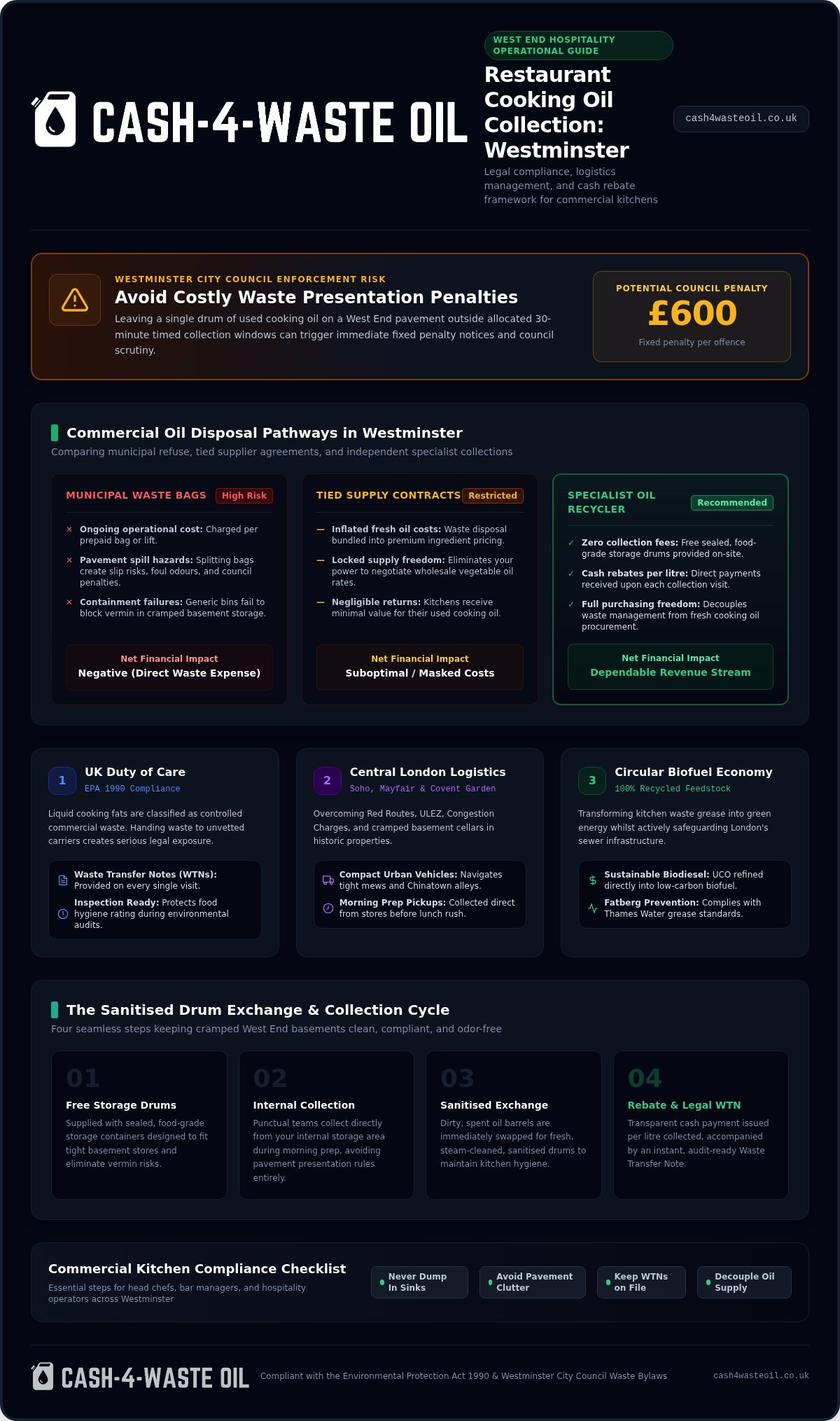
Leaving a single drum of cooking oil on a West End pavement outside designated waste presentation hours can trigger a £600 fine from Westminster City Council. Between strict timed collection windows, cramped Soho basements, and Thames Water scrutinising grease management, running a commercial kitchen here presents genuine logistical headaches. When it comes to restaurant oil collection Westminster operators cannot afford generic solutions or unreliable couriers who fail to turn up.
You already know that keeping grease out of your drainage system and maintaining a pest-free kitchen are essential to protecting your food hygiene rating. However, managing waste cooking oil shouldn't drain your team's time or kitchen space. Discover how Westminster restaurants can streamline used cooking oil collection, remain fully compliant with UK Duty of Care requirements, and earn straightforward cash rebates for every litre collected.
This 2026 commercial kitchen buying guide walks you through selecting a reliable, licensed collector, meeting the latest legal tracking standards, and transforming a greasy operational burden into dependable revenue.
Key Takeaways
- Learn how to navigate Westminster City Council timed collection windows and protect your kitchen from costly pavement presentation penalties.
- Discover why dedicated restaurant oil collection Westminster specialists provide far greater operational reliability than generic council waste bags.
- Turn your used cooking oil into sustainable biodiesel feedstock whilst earning transparent cash rebates upon collection.
- Fulfill your UK Duty of Care obligations under the Environmental Protection Act 1990 with legally compliant Waste Transfer Notes on every visit.
- Find out how clean drum exchanges and punctual West End scheduling keep cramped Soho and Mayfair kitchens hygienic and audit-ready.
Evaluating Commercial Cooking Oil Disposal Options in Westminster
Commercial kitchens in central London face immense pressure to keep operations clean, compliant, and cost-effective. Waste vegetable oil cannot simply be thrown out with standard refuse or poured down sinks. Under UK law, liquid cooking fats are classified as controlled commercial waste. Handing this material over to unvetted operators creates massive legal exposure, as improper disposal directly fuels the fatbergs plaguing London's sewer infrastructure. For dependable used cooking oil (UCO) management, West End kitchens must carefully weigh their disposal pathways.
Municipal Waste Services vs Specialist Oil Collectors
Westminster City Council commercial waste services rely on prepaid bags and cardboard stickers designed for general dry rubbish. Forcing liquid oil into standard municipal collections presents serious hazards:
- Messy pavement spills: Splitting bags create slip risks and foul odours on busy streets, attracting immediate council scrutiny.
- Direct collection costs: Council services treat waste removal as an ongoing operational expense, charging per bag or lift.
- Containment failures: Generic bins fail to prevent vermin access or contain rancid smells in cramped basement storage.
Specialist services providing dedicated restaurant oil collection Westminster cater directly to kitchen reality. Professional recyclers supply sealed, food-grade storage drums free of charge, collect your waste directly from the premises, and exchange dirty barrels for sanitised containers. Best of all, specialist collectors treat your waste oil as valuable biofuel feedstock, eliminating collection fees entirely and providing transparent cash payments on-site.
The Problem with Tied Fresh Oil Supply Contracts
Many catering suppliers pitch bundled agreements, offering to collect spent oil only if you purchase your fresh cooking oil exclusively through them. On the surface, this sounds convenient. In practice, it often restricts your kitchen's commercial flexibility.
Bundled arrangements frequently mask inflated fresh oil prices behind supposedly discounted disposal. When wholesale vegetable oil prices shift, tied contracts lock you into premium product rates while offering negligible returns for your waste grease. Independent oil collectors break this restrictive cycle. By decoupling waste removal from fresh oil procurement, head chefs and bar managers retain full purchasing freedom. You negotiate the best market price for fresh ingredients while ensuring your spent oil earns top cash rebates on collection, supported by instant Waste Transfer Notes on every single collection visit.
Westminster Kitchen Logistics: Overcoming West End Collection Challenges
Operating a hospitality venue in the West End requires military precision. Between strict Red Route restrictions, Congestion Charge coordination, and Ultra Low Emission Zone standards, receiving deliveries and handling waste involves constant juggling. Historic properties throughout Mayfair, Soho, and Covent Garden rarely come equipped with modern loading bays or spacious loading docks. As a result, dependable restaurant oil collection Westminster kitchens rely on must account for acute physical and regulatory hurdles rather than treating pickups like ordinary suburban runs.
Mastering Timed Collection Windows and Mews Access
Westminster City Council operates rigid waste presentation windows. Setting waste barrels onto the pavement outside your allocated half-hour slot risks immediate enforcement action, where inspectors regularly issue fixed penalty notices. Leaving heavy containers curbside also invites vandalism, pedestrian accidents, and severe pavement staining.
Effective collection routines bypass street clutter entirely. Punctual collection teams schedule visits during morning prep periods, well before lunch covers commence and streets become gridlocked. By deploying compact, urban-spec vehicles, experienced carriers can enter tight mews entrances and historic alleys across Chinatown and St James's. This ensures rapid loading directly from internal store areas without disturbing diners or breaching street presentation bylaws.
Hygiene and Storage Solutions for Compact Cellars
Basement storage in historic West End buildings is notoriously tight. Cramming oily, unsealed containers alongside dry goods creates immediate fire risks and attracts vermin. To preserve hygiene standards, kitchens require dedicated storage infrastructure designed for tight footprints:
- Leak-proof seal designs: High-density polyethylene drums prevent seepage, trap foul cooking odours, and stop pests gaining access.
- Direct barrel exchange: Drivers roll away full barrels and immediately position clean, sanitised drums in your prep area.
- Seamless compliance paperwork: Every collection concludes with an official Waste Transfer Note to verify responsible handling before health inspectors visit.
Maintaining strict commercial kitchen oil disposal routines safeguards your Food Hygiene Rating and keeps production areas spotless. If your cellar storage is currently pushed to the absolute limit, partnering with a dependable team like Cash 4 Waste Oil delivers prompt barrel swaps that keep your operations clean, compliant, and hazard-free.
How Cash Rebates Work for Restaurant Cooking Oil in Westminster
Used vegetable oil is not an operational burden; it is an energetic commodity. While Westminster's official council-operated service invoices hospitality venues to haul away mixed waste sacks, commercial cooking oil holds significant industrial demand. The entire volume collected from your fryers feeds directly into domestic renewable energy manufacturing. Because processors require steady streams of recovered fats, dependable collectors issue direct rebates on collection rather than invoicing your business.
From Fryer Oil to Biofuel Revenue
The journey from deep fat fryer to heavy transport fuel relies on consistent circular supply chains. UK biofuel refineries convert yellow grease into sustainable road biodiesel, reducing carbon emissions compared with standard fossil diesel. Review our complete breakdown of sustainable waste oil disposal to follow this physical refinement pathway.
For high-volume kitchens across Piccadilly, Victoria, and Covent Garden, this dynamic transforms a disposal chore into a recurring revenue stream. The transaction remains simple: the collector measures your oil volume directly in your cellar, checks quality, issues immediate cash payment with zero deductions, and hands over your legal paperwork on the spot.
Protecting Your Rebate Value Through Best Practices
Rebate rates depend heavily on feedstock purity. Water ingress and heavy sediment spoil batches, requiring refineries to perform extensive pre-treatment. Kitchen brigades can protect their cash yield by adopting simple back-of-house habits:
- Exclude wash-down water: Never let mop buckets or sink sprayers drain into storage drums. Even small water percentages degrade oil density and lower commercial value.
- Strain fryer debris: Sieve out batter scraps, breadcrumbs, and charred sediment before transferring hot fat into holding barrels.
- Cover hot fryers: Let fryers cool safely before pouring, and keep storage containers tightly sealed to block ambient moisture and pests.
Mastering these basic steps lets your team get paid for used cooking oil in London at maximum value. Regular booking cycles also matter. Leaving drums idle for months leads to oxidation and foul odours. Securing timely restaurant oil collection Westminster visits ensures drums are cleared rapidly, yields remain pristine, and kitchen cash returns stay consistent month after month.
Legal Compliance: Environment Agency Rules and Waste Transfer Notes
Disposing of catering grease involves strict statutory oversight across central London. The Environmental Protection Act 1990 establishes that food businesses carry a legal "Duty of Care" for all waste they generate. This liability is cradle-to-grave; it doesn't vanish once a container leaves your kitchen doorstep. If an unregistered operator collects your used oil and fly-tips it in an alley or dumps it down a roadside gully, your restaurant remains legally accountable. Booking reputable restaurant oil collection Westminster teams ensures your establishment stays fully insulated from devastating enforcement actions.
Understanding Your Legal Duty of Care
Handing commercial waste to unlicensed carriers is a serious environmental offence. Local magistrates can issue uncapped fines and criminal convictions to company directors who fail to verify their waste contractors. Review comprehensive DEFRA cooking oil waste guidance to understand your exact obligations. Always check that any prospective collector holds an active upper-tier waste carrier registration with the Environment Agency before handing over spent cooking fat.
Waste Transfer Notes and Audit Preparedness
UK waste legislation mandates that every single uplift of commercial cooking oil must generate an official Waste Transfer Note. Environmental Health Officers (EHO) and council inspectors can request these documents during routine hygiene visits without prior notice. Each valid note must contain explicit regulatory data:
- European Waste Catalogue (EWC) code: Accurately categorising the cooking oil as controlled non-hazardous commercial waste.
- Carrier details: The collection company's formal trading name, address, and Environment Agency licence registration number.
- Premises specifics: Your full trading name, premise postcode, exact volume collected, and physical handover timestamp.
Failing to produce these documents triggers an immediate £300 fixed penalty notice or formal prosecution. The law requires venues to retain all waste transfer records for a minimum of two years. Instant digital copies sent straight to your management inbox make audit presentation immediate and effortless.
Preventing Fatbergs and Water Industry Act Infringements
Discharging waste fats into commercial sinks is illegal under Section 111 of the Water Industry Act 1991. Thames Water actively inspects high-density restaurant areas, deploying CCTV drain surveys to trace sewer blockages back to non-compliant kitchens. Operators caught contributing to fatbergs face massive civil recovery claims for emergency drain clearances alongside council hygiene downgrades.
Routine oil collections keep your internal grease separators operating cleanly, preventing catastrophic kitchen backups during peak dinner services. To protect your venue with fully licensed collections, instant compliance receipts, and upfront cash payments, book your collection with Cash 4 Waste Oil today.
Selecting the Best Restaurant Oil Collection Partner in Westminster
West End hospitality runs on intense schedules. Seasonal tourist surges and pre-theatre dining rushes leave kitchen teams with zero margin for operational error. A missed pickup or an inflexible collection schedule quickly turns back-of-house storage into a fire risk and a hygiene concern. Securing a dependable partner for restaurant oil collection Westminster venues can trust requires vetting key operational credentials before handing over a single container.
The Commercial Kitchen Vetting Checklist
Not all waste carriers understand the unique demands of central London transport. Before booking a service, verify your prospective provider against three strict criteria:
- Active Environment Agency licensing: Check the public register to confirm your carrier holds a valid upper-tier licence. Never rely on verbal assurances.
- Transparent commercial terms: Professional recyclers provide free container delivery, charge zero collection fees, and pay you cash directly for your oil volume.
- West End logistical fluency: Your collector must understand local loading bay hours, Red Route restrictions, and parking derogations so pickups happen smoothly without disrupting dinner covers.
How Cash 4 Waste Oil Delivers Across Westminster
Cash 4 Waste Oil delivers licensed, punctual commercial cooking oil collections built specifically around the challenges of central London kitchens. Servicing restaurants, bars, and catering venues across Soho, Mayfair, Victoria, Marylebone, and Covent Garden, the service removes the friction from routine kitchen waste management.
Clean, sealed storage drums are supplied free of charge to fit compact cellar footprints, preventing leaks and pest problems. On collection day, trained drivers measure your volume on-site, hand over transparent cash payments with zero hidden fees, and generate instant digital Waste Transfer Notes directly to your inbox for complete regulatory compliance. You stay fully protected against local council penalties and water board scrutiny while establishing an effortless recycling routine.
Book your free Westminster restaurant oil collection and get paid cash today.
Upgrade Your Kitchen Waste Strategy in Westminster Today
Managing commercial fryer waste across Soho, Mayfair, or Covent Garden shouldn't drain your team's time or compromise your hygiene rating. With the right collection partner, navigating tight council presentation windows and meeting strict environmental standards becomes seamless. Dedicated restaurant oil collection Westminster services eliminate cellar clutter with sealed drum exchanges whilst keeping your venue fully aligned with UK Duty of Care mandates.
Turning spent cooking grease into clean biodiesel also creates a reliable revenue stream for your business. Operating as a fully registered Environment Agency waste carrier, Cash 4 Waste Oil delivers clean containers, issues instant digital Waste Transfer Notes for audits, and pays cash on the spot with zero hidden deductions. Take control of your back-of-house logistics today. Book your free Westminster restaurant oil collection and turn your kitchen waste into immediate cash.
Frequently Asked Questions
How much cash does my Westminster restaurant receive for used cooking oil?
Rebates are calculated transparently based on total volume and oil purity upon collection. Rates fluctuate alongside global biofuels markets, so reputable collectors assess quality on-site rather than quoting fixed public figures. Clean, water-free vegetable oil secures maximum returns. Your payment is issued instantly in cash during the visit, completely free from hidden collection charges or administration deductions.
Can I pour small amounts of used cooking oil down commercial kitchen sinks?
No, pouring any quantity of cooking oil down commercial drainage is strictly illegal under the Water Industry Act 1991. Even minor amounts solidify inside pipes, causing severe blockages and contributing directly to fatbergs across central London. Thames Water actively inspects trade premises and prosecutes offenders. Every drop of spent oil must go directly into sealed collection barrels.
What happens if a restaurant operates without valid Waste Transfer Notes?
Operating without legal waste documentation breaches Section 34 of the Environmental Protection Act 1990. Local authority inspectors or Environment Agency officers can issue an immediate £300 fixed penalty notice if you cannot present these records. Repeated failures lead to court prosecution, uncapped fines, and serious reputational damage through downgraded food hygiene ratings.
How frequently should a busy West End restaurant book an oil collection?
Most active venues schedule collections weekly or fortnightly to balance high fryer turnover against compact cellar storage. Fast-paced dining rooms across Soho and Covent Garden cannot let drums linger without creating hygiene risks. Choosing a dedicated partner for restaurant oil collection Westminster ensures pickups align precisely with your production volume, keeping storage areas clear and odour-free.
Do Westminster restaurants have to pay for waste oil storage drums?
No, professional oil collectors provide heavy-duty, leak-proof storage containers free of charge. You shouldn't ever pay container rental or delivery fees. Whenever drivers arrive for scheduled collections, they roll away your full containers and replace them immediately with clean, sanitised barrels, keeping back-of-house areas spotless.
Can commercial kitchens mix different types of cooking oils in one collection drum?
Yes, kitchens can safely mix standard plant-based catering fats, including rapeseed, sunflower, vegetable, and corn oil, into the same collection drum. Solid vegetable shortenings can also be added once safely cooled. However, animal fats, excessive wash-down water, engine lubricants, and chemical degreasers must never enter the drum, as contaminants spoil the recycling batch.
Is commercial cooking oil collected in Westminster actually recycled into biofuel?
Yes, all collected vegetable oil undergoes physical filtration and chemical processing to produce sustainable road biodiesel. Because the hospitality sector operates within a circular economy framework, booking professional restaurant oil collection Westminster directly displaces fossil fuels. Refineries turn your kitchen's spent cooking grease into clean fuel that significantly cuts carbon emissions across the transport sector.