Sustainable Cooking Oil Collection in London: A Restaurant How-to for 2026
What if the oil left after service could support your restaurant’s sustainability work without adding a complicated task to the kitchen close-down? A sustainable cooking oil collection London restaurants can build into their daily routine makes responsible handling easier to repeat and document.
Sustainability needs to work in practice, not just on paper. Deciding where used cooking oil goes, who handles it and how to keep collection records can feel like another job for a busy team. A clear routine makes each step straightforward, from storing food-grade cooking oil safely to arranging collection and filing the Waste Transfer Note.
This guide explains how to set up a repeatable process, fit collections around your kitchen routine and organise records for internal sustainability reporting. Cash 4 Waste Oil collects used cooking oil from commercial kitchens, provides a Waste Transfer Note and pays cash on the spot. Collected oil is processed into biodiesel, giving your restaurant a practical way to support recovery as part of everyday operations.
Key Takeaways
- Build sustainable cooking oil collection London into your kitchen’s close-down routine so used oil is handled consistently.
- Assign responsibility for oil storage, collection arrangements and filing records, then make the steps clear to staff.
- Keep collection evidence organised and distinguish documented actions from measured environmental outcomes.
- Use a simple review checklist to spot gaps in responsibilities, storage, collections or documentation.
- Cash 4 Waste Oil collects used cooking oil from commercial kitchens, provides a Waste Transfer Note and pays cash on the spot. Collected oil is processed into biodiesel.
Why sustainable cooking oil collection matters for London restaurants
For a restaurant, sustainability is often built through practical decisions repeated across every shift. Used cooking oil is one of them. Sustainable cooking oil collection in London means storing food-grade used oil safely, arranging a documented commercial collection and sending it for appropriate recovery. A consistent process gives the kitchen team clear steps and managers a record of what happened.
Collection records can support internal sustainability reporting by showing that oil was handed over for recovery. They do not, on their own, prove a particular emissions reduction, sustainability rating or certification. Keep the distinction clear: responsible disposal is a useful, verifiable action, while claims about wider environmental outcomes need separate evidence.
What makes used cooking oil collection sustainable?
The process starts with safe storage in the kitchen. A collection transfers the oil to a suitable waste collector, with the handover documented. Recovered oil can then be processed into biodiesel. This supports resource reuse by giving used cooking oil a further purpose rather than treating it simply as waste. It does not automatically quantify the environmental benefit, so report the action accurately and avoid claiming savings you have not measured.
Cash 4 Waste Oil collects used cooking oil from commercial kitchens and provides a Waste Transfer Note for each collection. The company is fully licensed and Environment Agency registered, and collected oil is processed into sustainable biodiesel. This connects an everyday kitchen task with a documented recovery route.
Which London kitchens can benefit from a collection routine?
Restaurants, pubs, hotels and other commercial kitchens that use food-grade vegetable or cooking oils can build collection into their routine. In a busy kitchen, make it part of an existing close-down or waste-handling process rather than relying on staff to remember an occasional extra task. A consistent approach helps managers see whether oil is being stored and collected as intended.
This process is for commercial food-grade cooking oil. It is not a household collection routine, a supply of fresh cooking oil or a route for automotive and industrial oils. Keeping these categories separate helps staff identify what belongs in the collection and avoid mixing unsuitable materials with used cooking oil.
Good evidence starts with simple, repeatable actions: store the right oil appropriately, record each collection and file the accompanying documentation. That gives your team a reliable account of its practice without overstating what the records demonstrate.
How to organise sustainable cooking oil collection in a London kitchen
A reliable routine should fit the way your kitchen already operates. Set clear responsibilities, make the collection area easy to manage and file paperwork in one place. This turns sustainable cooking oil collection in London from an occasional task into a repeatable part of kitchen operations.
Set up a straightforward collection workflow
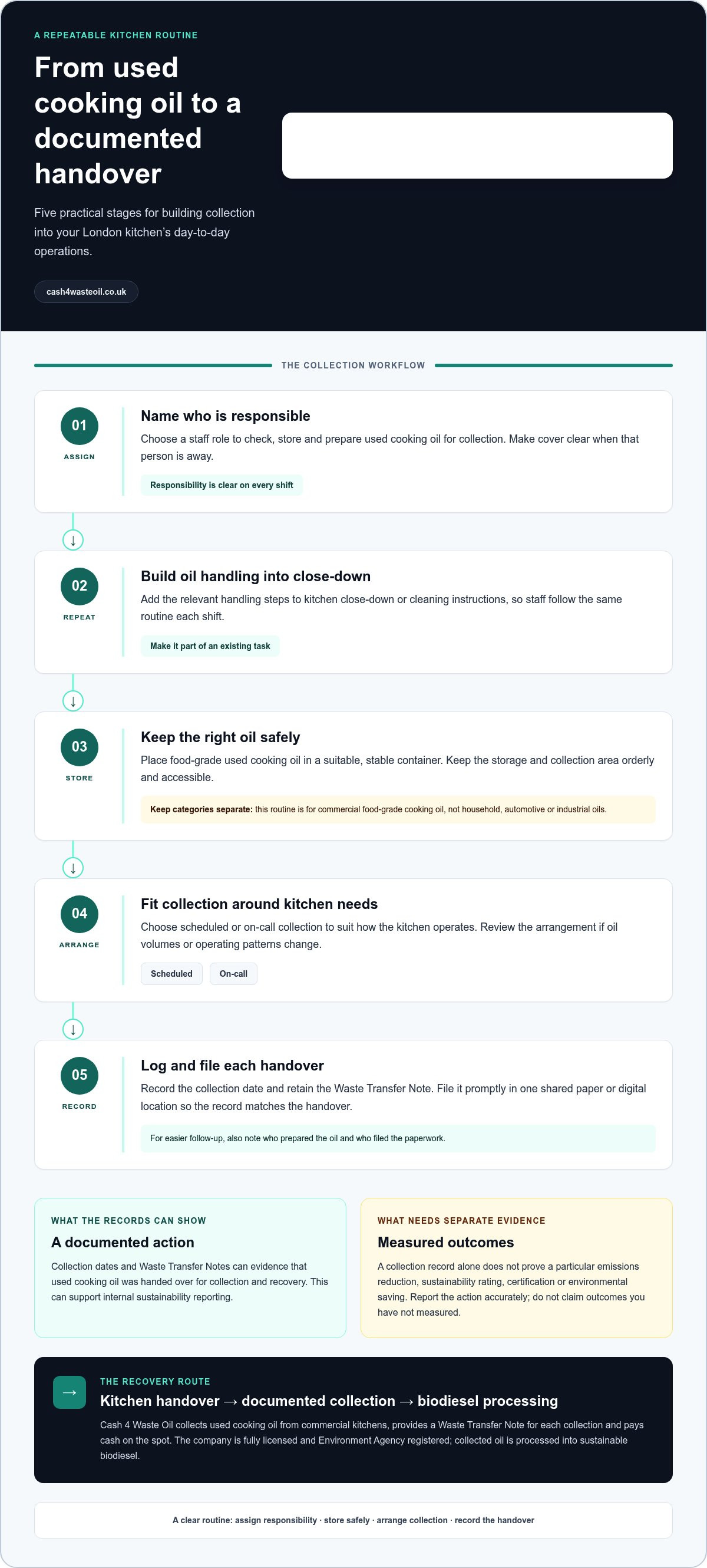
- Assign responsibility. Name a staff role to check, store and prepare used cooking oil for collection. Make sure cover is clear when that person is away.
- Add it to close-down. Include oil handling in the relevant kitchen close-down or cleaning instructions, so staff follow the same steps each shift.
- Keep the area organised. Store oil safely in a suitable, stable container and keep the collection area orderly and accessible. For more detailed container and handling tips, see the used fryer oil collection guide.
- Plan the collection. Choose scheduled or on-call collection to suit how your kitchen operates. Review the arrangement if your oil volumes or operating pattern change, rather than assuming the same collection frequency will always work.
- Log the handover. Record the collection date and retain the Waste Transfer Note provided. File it promptly so the record matches the collection.
Food businesses have responsibilities for handling waste. The official UK government guidance explains how food and former foodstuffs must be disposed of, including relevant duty-of-care guidance. Use it alongside your workplace procedures when setting staff instructions.
Keep collection records useful and consistent
Choose one shared location for Waste Transfer Notes and collection dates, whether that is a central paper file or an established digital records system. If you also record who prepared the oil and who filed the paperwork, managers can follow up any gaps more easily. Consistent filing makes it simpler to review collection history and spot missing documents. For related operational and compliance guidance, read the commercial kitchen oil disposal checklist.
A practical collection routine assigns responsibility, builds oil handling into close-down, arranges collection around kitchen needs and records each handover. Cash 4 Waste Oil provides commercial used cooking oil collection in London, with a Waste Transfer Note for each collection. Find out about commercial used cooking oil collection.
How to show the value of sustainable oil collection without overstating it
Credible sustainability reporting separates what the team did from what the action achieved. Collection dates and Waste Transfer Notes can evidence that used cooking oil was handed over for collection. They do not, by themselves, measure emissions reductions or prove a particular sustainability rating or certification.
For sustainable cooking oil collection in London, a simple reporting table helps managers describe the activity accurately and identify the evidence behind each statement.
| Action | Evidence to retain | Cautious reporting language |
|---|---|---|
| Arrange a used-oil collection | Collection date and the Waste Transfer Note supplied for the service | “Used cooking oil was collected, and the collection record was retained.” |
| Follow the kitchen’s oil-handling procedure | Current staff instructions or relevant close-down procedure | “The kitchen has a documented procedure for handling used cooking oil.” |
| Send oil for a stated recovery route | Service information confirming the downstream processing | “Collected oil is processed into biodiesel.” |
What can a restaurant record about oil collection?
Keep the record practical. Log each collection date and file its Waste Transfer Note alongside your existing waste records. Use the restaurant’s current procedures to show who is responsible for oil handling and what staff are expected to do. This makes the process easier to review without creating a separate sustainability system.
Cash 4 Waste Oil processes collected cooking oil into biodiesel. You can report this as the stated recovery pathway for the service. Do not convert that information into a carbon-saving figure unless you have reliable evidence to support the calculation.
How can sustainability reporting stay credible?
Describe actions, documents and recovery routes directly. Avoid claiming that collection alone improved a rating, secured certification or delivered a quantified environmental benefit. Those are different outcomes and require evidence beyond a collection record.
Use a simple test: could a manager show the document or procedure behind each statement? If not, narrow the wording to what the restaurant can demonstrate. For broader recovery context, read the sustainable waste oil disposal guide.
Documented waste handling is more defensible than an unsupported green claim because it shows what the restaurant actually did. Keep the wording proportionate to the evidence, and review it whenever the procedure or collection arrangements change.
How to improve a restaurant’s sustainability routine with London oil collection
A collection process only helps if it works for the people using it. Review it with the kitchen team, check that the steps are clear during a busy shift and update instructions where staff are unsure. A short, regular review can uncover small issues, such as unclear responsibilities or inconsistent filing, before they become routine problems.
Review the routine with the kitchen team
Use a practical checklist to see whether the process is working as intended:
- Responsibilities: Can staff identify who checks and prepares used cooking oil for collection?
- Storage: Do team members know where the oil belongs and how to keep the area organised?
- Collection: Does the arrangement fit the kitchen’s operating pattern, oil volumes and collection access at the premises?
- Records: Are collection dates and Waste Transfer Notes stored consistently in a place managers can find?
Ask staff where they experience confusion or delays. Their feedback can show whether instructions need clarifying, the handover point is practical or collection arrangements need reviewing as the kitchen’s needs change. Keep updated instructions accessible to the people responsible, and make sure new team members know the same process.
Connect the routine to wider sustainability work
Include used-oil handling alongside other documented kitchen waste practices. This helps managers review the restaurant’s actions together and keep sustainability reporting grounded in evidence. Similar principles apply to broader commercial waste streams, where specialists such as OC Recycling demonstrate how comprehensive recycling solutions can be integrated into everyday business operations. Describe what the team does and what records it holds. Do not present oil collection alone as proof of an overall rating, certification or quantified environmental result.
Revisit the procedure when operating patterns, oil volumes or collection needs change. A restaurant’s service schedule, kitchen set-up and location can affect how a collection fits into day-to-day work, so keep the arrangement practical rather than relying on assumptions. If staff have to work around an unclear process, review the instructions and responsibilities with them.
For restaurants in London, Greater London, Kent, Surrey, Birmingham, Coventry, Leicester, Wolverhampton, Leicestershire, Derbyshire, Staffordshire, Warwickshire, Northamptonshire, Oxfordshire and Worcestershire, sustainable cooking oil collection London works best as part of a wider routine staff can follow and managers can review. Cash 4 Waste Oil provides commercial used cooking oil collection with a Waste Transfer Note for each collection. Read how commercial oil collection works.
Choose a practical sustainable cooking oil collection service in London
A useful service should fit your commercial kitchen’s day-to-day routine and make the handover clear. Consider whether collection is for used food-grade cooking oil, whether you receive a Waste Transfer Note and whether the oil has a defined recovery route. These practical details help you connect sustainable cooking oil collection in London with the way your team handles waste and records each collection.
What the collection service provides
Cash 4 Waste Oil collects used cooking oil from commercial kitchens through scheduled or on-call collection. The service is free, and cash is paid on the spot for collected oil. You also receive a Waste Transfer Note, giving your team a record to file and refer to when reviewing collection history.
Cash 4 Waste Oil is fully licensed and Environment Agency registered. Collected oil is processed into sustainable biodiesel, providing a stated recovery pathway for used cooking oil. These service details support your operational process, while your records show when collections took place.
Cash 4 Waste Oil collects used cooking oil from commercial kitchens in London, Greater London, Kent, Surrey, Birmingham, Coventry, Leicester, Wolverhampton, Leicestershire, Derbyshire, Staffordshire, Warwickshire, Northamptonshire, Oxfordshire and Worcestershire. To make the handover fit your kitchen’s workflow, decide who prepares the oil, where it is stored and how the collection record will reach the person responsible for filing it. Restaurants, pubs and hotels can build the handover into existing close-down or waste procedures instead of treating it as a separate task that is easy to forget.
Take the next step for your London kitchen
A straightforward routine has a few clear stages: assign responsibility, store used cooking oil safely, arrange collection to suit your operation, then retain the Waste Transfer Note. Managers can review the records and staff instructions to make sure the process remains practical as kitchen needs change.
For a commercial kitchen looking for a documented collection and recovery route, Cash 4 Waste Oil provides collection, pays cash on the spot and supplies a Waste Transfer Note. That gives your team a clear handover and a record to keep with its waste documentation.
Arrange used cooking oil collection.
Make used-oil recovery part of your kitchen routine
A practical collection routine starts with clear staff responsibilities, safe storage and collection timed to suit your kitchen’s operations. Keep each Waste Transfer Note with your records so managers can review what happened and report actions accurately without claiming unmeasured environmental benefits.
With sustainable cooking oil collection London restaurants can build a repeatable process for handling commercial food-grade used oil. Cash 4 Waste Oil provides free scheduled or on-call commercial collection, pays cash on the spot and supplies a Waste Transfer Note. The company is fully licensed and Environment Agency registered, and collected oil is processed into sustainable biodiesel.
Ready to put a clear collection routine in place? Arrange used cooking oil collection for your commercial kitchen. A straightforward process makes responsible recovery easier to manage, document and maintain as part of everyday service.
Frequently Asked Questions
Can sustainable cooking oil collection improve a restaurant’s sustainability rating?
It can support a restaurant’s sustainability work by making used-oil handling a documented, repeatable process. Whether that affects a particular rating depends on the scheme and its criteria. Record collection activity accurately and retain the Waste Transfer Note. Collection is one operational practice, not a guarantee of an overall rating. Do not claim a score improvement unless the relevant rating scheme confirms it.
How does used cooking oil collection work for London restaurants?
A commercial kitchen stores used food-grade cooking oil safely, then arranges a scheduled or on-call collection. Cash 4 Waste Oil collects from commercial kitchens, pays cash on the spot and provides a Waste Transfer Note. The collected oil is processed into sustainable biodiesel. Consistent staff instructions and records help make sustainable cooking oil collection London a practical part of kitchen operations.
Is used cooking oil turned into biodiesel?
Yes, used cooking oil can be processed into biodiesel. Cash 4 Waste Oil processes the oil it collects for this purpose, giving the material a recovery pathway as a feedstock. A restaurant can describe this stated process in its sustainability communications. Avoid attaching a specific emissions saving or carbon reduction figure unless you have reliable evidence to support that claim.
What records should a restaurant keep for used cooking oil collection?
Keep the Waste Transfer Note supplied for each collection and record the collection date in the system your restaurant uses for waste records. A consistent log helps managers review collection history and find relevant information. Legal requirements can depend on the circumstances, so consult current official guidance for regulatory duties rather than treating a general sustainability article as legal advice.
Can a London household use a commercial waste cooking oil collection service?
No. Cash 4 Waste Oil’s collection service is for commercial kitchens, including restaurants, pubs, hotels and other hospitality businesses, not domestic households. It collects used food-grade vegetable and cooking oils, not engine oil or industrial mineral oil. Commercial operators can arrange collection and retain the Waste Transfer Note provided for their records.
Does used cooking oil collection cost a restaurant anything?
Cash 4 Waste Oil provides free collection for commercial used cooking oil and pays cash on the spot for collected oil. No payment rate is stated here, so do not assume a specific amount. For a useful sustainability routine, focus on arranging collection that fits your kitchen, retaining the Waste Transfer Note and describing the recovery process accurately.
How can a restaurant make used oil collection easier for staff?
Assign a staff role to prepare used oil for collection and add the task to an existing kitchen procedure, such as close-down. Make sure the team knows where the oil should be stored and where collection records belong. Review the steps with staff and update the instructions if the kitchen’s operating pattern or collection needs change. Clear responsibilities help keep the routine consistent during busy service.