Takeaway Fat Collection Near Dover: A Business Guide
Could used cooking oil collection be one less thing to disrupt a busy takeaway shift? With takeaway fat collection near Dover, you can arrange removal for your commercial kitchen and turn stored waste oil into a straightforward handover, with cash payment and a Waste Transfer Note included.
Used oil can quickly take up valuable space, and unclear collection arrangements make kitchen routines harder to manage. A practical service should fit your operation and give you a clear record of what has been collected. Cash 4 Waste Oil provides free scheduled or on-call collections for commercial kitchens across Kent, with payment made on the spot.
This guide explains how to organise a convenient collection, what to expect at handover and why keeping your Waste Transfer Note matters. You’ll also learn how collected oil is processed into biodiesel. The aim is simple: make oil removal easier to plan, document and manage as part of your kitchen routine.
Key Takeaways
- See how takeaway fat collection near Dover can help keep used cooking oil removal organised around commercial kitchen routines.
- Follow the collection process from arranging a service to handing over used cooking oil.
- Compare scheduled and on-call collection arrangements to understand how each can fit your takeaway’s workflow.
- Use a simple close-down checklist to keep used cooking oil separate from unrelated waste before collection.
- Learn what to expect from the handover, including cash payment and a Waste Transfer Note for your records.
Takeaway fat collection near Dover: what local businesses need
Takeaway fat collection near Dover is a commercial service for removing used cooking oil from takeaway kitchens and other food businesses. A dedicated collection gives staff a clear way to manage this waste stream, rather than letting filled oil containers become an awkward part of the close-down routine. It can help keep storage areas orderly and make oil removal easier to plan around daily operations.
The service is for used vegetable and cooking oils generated through commercial food preparation. It does not cover household oil disposal, engine oil or industrial mineral oils. Keeping these materials separate makes the handover clear: the collection is for used food-grade cooking oil, not unrelated waste.
Which Dover-area businesses is the service for?
Takeaways in Dover that produce used cooking oil can use a commercial collection, as can other food businesses with commercial kitchens. Cash 4 Waste Oil collects from commercial establishments across Kent, including takeaway businesses. Its wider local coverage includes London and Greater London, Surrey, Birmingham, Coventry, Leicester, Wolverhampton, Leicestershire, Derbyshire, Staffordshire, Warwickshire, Northamptonshire, Oxfordshire and Worcestershire. The service is designed for business waste from food preparation, rather than small quantities of oil from domestic cooking.
What does takeaway fat collection include?
The collection covers used vegetable and cooking oils from commercial establishments. Businesses can arrange scheduled or on-call collection, choosing between a planned routine and requesting a collection when operational needs call for it. The service is for oil from food preparation, not every material described as fat or oil.
- Included: used vegetable and cooking oil from a commercial kitchen.
- Not included: household oil disposal, engine oil and industrial mineral oil.
- Arrangement: scheduled or on-call collection for commercial establishments.
Clear separation makes the service easier to manage. For example, a takeaway can keep used cooking oil apart from general rubbish and other waste produced during food preparation. Staff then have a consistent process to follow, rather than having to decide where each container belongs during a busy shift.
A dedicated collection also makes storage and handover part of normal kitchen organisation. The team knows which oil is intended for collection, while the business can plan around the amount it produces and its working routine. For Dover-area operators, the practical starting point is to identify the commercial cooking oil stream, keep it distinct from unrelated waste and select a collection arrangement suited to the kitchen.
How used cooking oil collection works for Dover takeaways
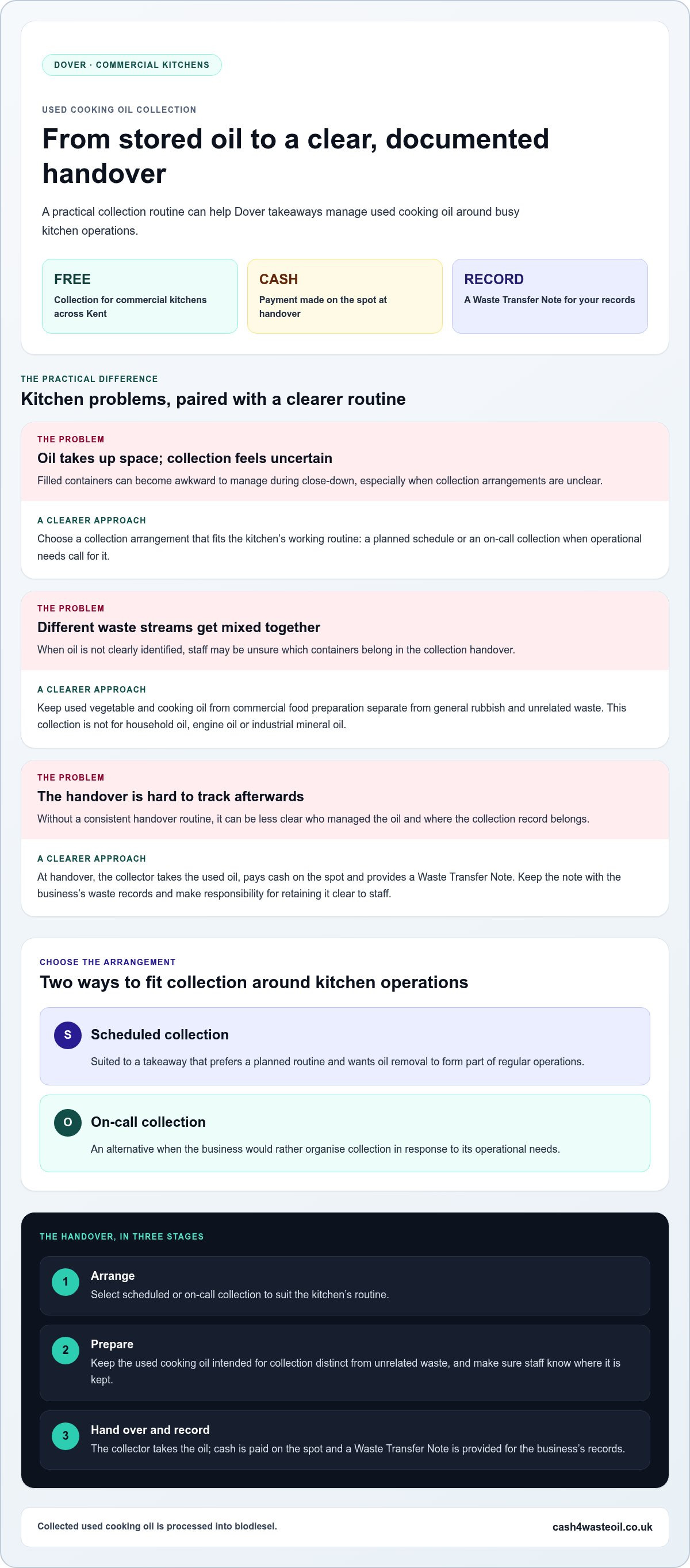
Arranging used cooking oil collection should be straightforward, even around the demands of a busy takeaway. Cash 4 Waste Oil provides free collection for commercial kitchens across Kent, with scheduled or on-call arrangements. At handover, the business receives cash payment on the spot and a Waste Transfer Note, so the kitchen can manage removal and keep a record of the collection.
The process has three practical stages:
- Arrange a collection. Choose a scheduled arrangement for a planned routine, or an on-call collection when that better suits the business.
- Prepare the used cooking oil. Keep the oil intended for collection separate from unrelated waste so the handover is clear.
- Hand over the oil. The collector takes the used oil, pays cash on the spot and provides a Waste Transfer Note.
From arranging collection to handing over the oil
Start by choosing the collection arrangement that fits your kitchen’s routine. A planned schedule can make oil removal part of regular operations; an on-call arrangement offers another way to organise collection. Before handover, make sure staff can identify the used cooking oil and know where it is kept. This keeps the transfer distinct from other close-down tasks and makes it easier to fit into the working day.
Payment and the Waste Transfer Note
Cash payment is made on the spot for the oil collected. The business also receives a Waste Transfer Note as a record of the handover. Keep the note with your business’s waste records so it can be found when needed. The collection service is free, and payment is made for the used oil collected.
The transaction is simple: the takeaway arranges collection, hands over used cooking oil, receives cash payment and is given a Waste Transfer Note. The note records the handover, while on-the-spot payment makes the financial part of the collection clear at the time it takes place.
For staff, a consistent handover routine helps avoid confusion between used cooking oil and other waste. Decide who is responsible for identifying the oil and retaining the transfer note. These small steps make it easier to fit collection into normal kitchen operations without adding unnecessary complexity.
For a commercial kitchen ready to organise its oil handover, used cooking oil collection brings collection, on-the-spot cash payment and transfer documentation together in one service.
How to assess a collection service for your Dover takeaway
A useful comparison goes beyond whether used oil is removed. Consider how the arrangement fits your kitchen, what happens at handover, which records you receive and how the oil is processed afterwards. For takeaway fat collection near Dover, these points show whether the service supports a clear, manageable waste routine.
Convenience: Scheduled collection can suit a kitchen that prefers a planned routine. On-call collection is an alternative when needs vary. Cash 4 Waste Oil provides both arrangements for commercial establishments.
Payment: The collection service is free, and cash payment is made on the spot for collected oil. This lets the business account for payment as part of the handover, without a collection fee.
Documentation: A Waste Transfer Note is provided as a record of the waste handover. Keep it with your business records.
Responsible processing: Collections are fully licensed and Environment Agency registered. Collected oil is processed into biodiesel, giving it a productive use after collection.
Scheduled or on-call collection: what suits your kitchen?
Think about how predictable your used-oil output is and how much room you have to store it. If the kitchen’s routine is relatively consistent, a scheduled arrangement can help make collection part of normal operations. If trading patterns or kitchen needs change, on-call collection offers an alternative. Choose the format your team can manage reliably, rather than building the routine around assumptions about a fixed frequency or response time.
Storage capacity matters too. A takeaway with limited space may prefer an arrangement that helps prevent used oil from becoming an ongoing storage concern. A kitchen with more room may find it easier to plan around its usual work pattern. Consider how much oil your business produces and what your team can manage between collections.
Payment, paperwork and responsible processing
Assess payment, records and processing as separate parts of the service. Free collection removes a collection charge, while cash paid on the spot makes payment straightforward at handover. The Waste Transfer Note gives the business a record to retain. Licensed, Environment Agency-registered collection and biodiesel processing explain how the oil is handled after it leaves the kitchen.
A Waste Transfer Note gives your takeaway a clear record of the used cooking oil handover. Keep the note with your business records so staff can locate it when needed. Together, payment and documentation make the transfer easier to account for, while responsible processing completes the collection process.
For a broader look at how payment for used cooking oil works in another local market, the London guide can provide useful context. Cash 4 Waste Oil collects from commercial kitchens across Kent, including Dover takeaways.
Prepare your takeaway for used cooking oil collection
A clear routine helps staff prepare used cooking oil for collection without adding extra steps to a busy close-down. Agree where the oil is kept, keep it separate from unrelated waste and make sure the team knows who coordinates the handover. A short checklist makes these expectations easier to follow across shifts.
Keep used cooking oil ready for collection
Choose a consistent place for the kitchen’s used cooking oil and make sure relevant staff know where it is. Keep food-grade cooking oil separate from engine oil, industrial mineral oils and other waste streams. Clear separation helps prevent confusion about what is intended for collection. Use the kitchen’s established procedures for handling and storing its oil.
Use this quick pre-collection checklist during close-down:
- Put used cooking oil in the agreed, clearly identified place.
- Keep it separate from general waste and unrelated oils.
- Make sure staff know which oil is intended for collection.
- Keep the collection area and access arrangements clear for the handover.
- Tell the person coordinating the collection if the usual arrangements have changed.
Make the handover clear for your team
Assign someone to coordinate the handover and receive the Waste Transfer Note. That person should know how the collection is arranged, where the oil is kept and which colleagues need to be informed. If the usual contact is away, ensure another relevant member of staff understands the routine. A clear point of responsibility helps keep the process consistent without relying on one person’s memory.
Make the instructions practical for a fast-paced takeaway. Staff should be able to identify the correct oil and collection area quickly, without having to interpret complicated guidance during a shift. Keep the checklist somewhere the team can refer to during close-down, and update it if the agreed collection or access arrangements change.
For wider handling advice beyond the collection handover, a commercial kitchen disposal checklist can help staff review how different waste streams are managed. Keep the oil-specific instructions distinct so the team does not confuse used cooking oil with other materials.
Before collection, the responsible team member can check that the oil is in its agreed place, unrelated waste is kept separate, access is clear and the person receiving the paperwork is ready. These simple checks support a tidy handover and help the kitchen maintain a consistent routine.
Ready to organise collection for your commercial kitchen? Arrange used cooking oil collection with Cash 4 Waste Oil.
Arrange takeaway fat collection near Dover with Cash 4 Waste Oil
For takeaways producing used cooking oil, a dependable collection arrangement can make waste management easier to organise. Cash 4 Waste Oil serves commercial kitchens across Kent, including takeaway businesses, with a service that brings oil collection, payment and handover documentation together. The service is for business cooking oil, not domestic household disposal.
The practical benefits are clear: collection is free, cash payment is made on the spot for collected oil, and the business receives a Waste Transfer Note. Collections are fully licensed and Environment Agency registered. After collection, the oil is processed into biodiesel.
What businesses receive from the service
Here’s what’s included in the commercial collection service:
- Used cooking oil collection: Collection for commercial kitchens, including takeaways, across Kent.
- Free service: There’s no charge for the collection service.
- On-the-spot cash payment: The business receives cash for the oil collected at handover.
- Waste Transfer Note: The business receives a record of the waste handover.
- Responsible processing: Collected oil is processed into biodiesel.
These parts work together to keep the process straightforward for the operator. The kitchen arranges a collection, hands over its used cooking oil and receives payment and documentation as part of the transaction. The business has a clear account of the handover, without a collection fee.
A Waste Transfer Note also helps keep the handover traceable within the business’s records. Assigning someone to receive and retain it makes the paperwork easier to locate later. Licensed, Environment Agency-registered collection and biodiesel processing also clarify how the oil is handled after collection.
Take the next step for your Dover kitchen
If your takeaway produces used vegetable or cooking oil, arrange a commercial collection that fits your kitchen’s routine. Cash 4 Waste Oil offers scheduled or on-call collection for commercial establishments, so you can choose an arrangement suited to how your business operates. Keep the oil separate from unrelated waste and make sure the team knows who will coordinate the handover and receive the Waste Transfer Note.
With takeaway fat collection near Dover, your business can organise used oil removal through one service that includes free collection, cash payment on the spot and transfer documentation. The collected oil is handled through a licensed, Environment Agency-registered service and processed into biodiesel.
Arrange used cooking oil collection for your Dover commercial kitchen with Cash 4 Waste Oil.
Make used oil collection part of your kitchen routine
A collection arrangement works best when it’s easy for the whole team to follow, not just the person who first organised it. Before your next busy service, decide who will oversee the arrangement and make sure colleagues know where to find the instructions and records. That small bit of forward planning helps keep the handover clear when staff or shifts change.
For a Dover takeaway, takeaway fat collection near Dover can be more than a one-off task. Treat it as part of the way your kitchen manages used cooking oil, and the process becomes easier to follow as the business gets on with serving customers. Start by putting the collection arrangement in place and giving your team a clear point of reference.
Cash 4 Waste Oil provides free collection for commercial kitchens, pays cash on the spot for collected oil and supplies a Waste Transfer Note. Collections are fully licensed and Environment Agency registered. Arrange used cooking oil collection for your takeaway and put a clear kitchen routine in place.
Frequently Asked Questions
Can takeaways near Dover arrange used cooking oil collection?
Yes. Cash 4 Waste Oil collects used cooking oil from commercial kitchens across Kent, including takeaways in Dover. You can choose scheduled or on-call collection to suit the way your business operates. The service is for commercial waste, not oil from household kitchens. Keep cooking oil separate from engine or industrial mineral oils so staff can identify the correct material at handover.
Is used cooking oil collection free for Dover takeaways?
Yes, collection is free for commercial establishments, and the business receives cash for the used oil collected. The payment is made at handover. A Waste Transfer Note is also provided to document the oil transfer, and your team can record the payment through its usual business process.
What happens to used cooking oil after collection?
Collected cooking oil is processed into biodiesel. This gives the oil a productive use after it leaves your kitchen. For your takeaway, keep used cooking oil distinct from other waste and arrange its handover through the collection service. Do not pour it down a drain or mix it with unrelated waste streams, such as workshop oils.
Do takeaways receive a Waste Transfer Note after collection?
Yes. Cash 4 Waste Oil provides a Waste Transfer Note for collected commercial cooking oil. Give it to the person responsible for your business’s waste records and store it where relevant staff can retrieve it. For example, a manager could file the note alongside other waste paperwork rather than leaving it with shift documents. Follow current official guidance for wider recordkeeping requirements.
Can a household near Dover use this takeaway oil collection service?
No. The service is for commercial kitchens, including takeaways, restaurants, pubs and hotels, not domestic households. A home kitchen should not treat this commercial collection arrangement as a household disposal option. If you’re disposing of cooking oil at home, follow the relevant local council’s household waste guidance. This keeps the distinction clear between business waste collection and domestic disposal routes.
Does the service collect engine oil as well as takeaway cooking oil?
No. Cash 4 Waste Oil collects food-grade vegetable and cooking oils from commercial establishments, not automotive engine oil or industrial mineral oils. Keep these materials in separate waste streams. For instance, oil from a takeaway fryer belongs with the commercial cooking oil for collection, whilst oil from vehicle maintenance needs a different disposal route. Do not combine unrelated liquids in the same container.
How can a Dover takeaway prepare for an oil collection?
Choose a consistent place for used cooking oil and make sure staff know where it is and how the handover is arranged. Keep access to the collection area clear, and separate cooking oil from engine or industrial oils. Assign a team member to coordinate the handover and receive the Waste Transfer Note. This simple routine can help takeaway fat collection near Dover fit neatly into shift close-down.