Used Cooking Oil Collection in London: A Business Guide
A collection booking is just one part of a reliable waste-oil process. For restaurants, pubs, hotels and other commercial kitchens, used cooking oil recovery London businesses can depend on means checking more than pickup arrangements. You need to know that the collector is registered, understand what record you will receive and agree a collection plan that works around kitchen operations. Clear arrangements help prevent avoidable questions and disruption on collection day.
This guide explains how commercial collections work, what to check about a collector and its records, and how to prepare your kitchen for handover. It also covers what happens to the oil after collection. Cash 4 Waste Oil collects used cooking oil from commercial kitchens, pays cash on the spot and provides a Waste Transfer Note. Collected oil is processed into biodiesel. Use the checks below to decide what to ask and whether the service suits your kitchen.
Key Takeaways
- Understand what used cooking oil recovery London means for commercial kitchens and which food-grade oils may be suitable.
- Follow the collection process from confirming oil suitability to handover and documentation, and discuss scheduled or on-call arrangements.
- Compare providers by checking accepted oil types, collection arrangements and registration details against current records.
- Make collections easier to coordinate by choosing a practical collection point and sharing access instructions in advance.
- Check how the provider documents the transfer and processes the oil, then decide whether Cash 4 Waste Oil’s commercial service fits your kitchen.
What used cooking oil recovery in London means for commercial kitchens
For a commercial kitchen, recovery means collecting used food-grade cooking oil and sending it for onward processing. It links a routine kitchen task to a documented transfer and a productive next use. That is the practical meaning of used cooking oil recovery London businesses arrange: suitable oil leaves the premises through a collection process instead of being treated like ordinary household waste.
Restaurants, pubs, hotels and other commercial kitchens can enquire about collections. The important checks are whether the oil comes from commercial food preparation and whether the collector accepts that type. Food-grade vegetable and cooking oils are different from engine oil and industrial mineral oil, which need different handling. Domestic household collections are not part of this commercial service.
Plan the handover so staff know what oil is being collected, where it will be accessed and which record to retain. That gives the business a clearer transfer trail than an informal arrangement and makes it easier to coordinate collections around kitchen operations. Before booking, agree the collection point and access instructions with the provider, then make sure the relevant staff know the plan.
Which businesses can arrange commercial oil recovery?
Restaurants, pubs, hotels and other commercial kitchens can ask about collection of their used cooking oil. Eligibility depends on the commercial source and oil type, so confirm what the collector accepts before arranging a collection. A household collection is a different service. Domestic premises should not assume they are covered by a commercial arrangement.
What happens to oil after collection?
Recovery has several connected stages: the collector confirms the oil is suitable, collects it, records the transfer and sends it for processing. Ask what record you will receive and how the oil is handled after pickup. A Waste Transfer Note can document the handover. Check that you receive the note and understand how it relates to your collection.
Collected cooking oil can be used as feedstock for biodiesel production. Used cooking oil may also be referred to as yellow grease. For background on the term and its reuse, see this explanation of the rendering of yellow grease. For your kitchen, the practical point is that collection is not the end of the process: documentation records the transfer, while the provider can explain the oil’s onward processing. Ask about both when comparing services.
How used cooking oil moves from a London kitchen to recovery
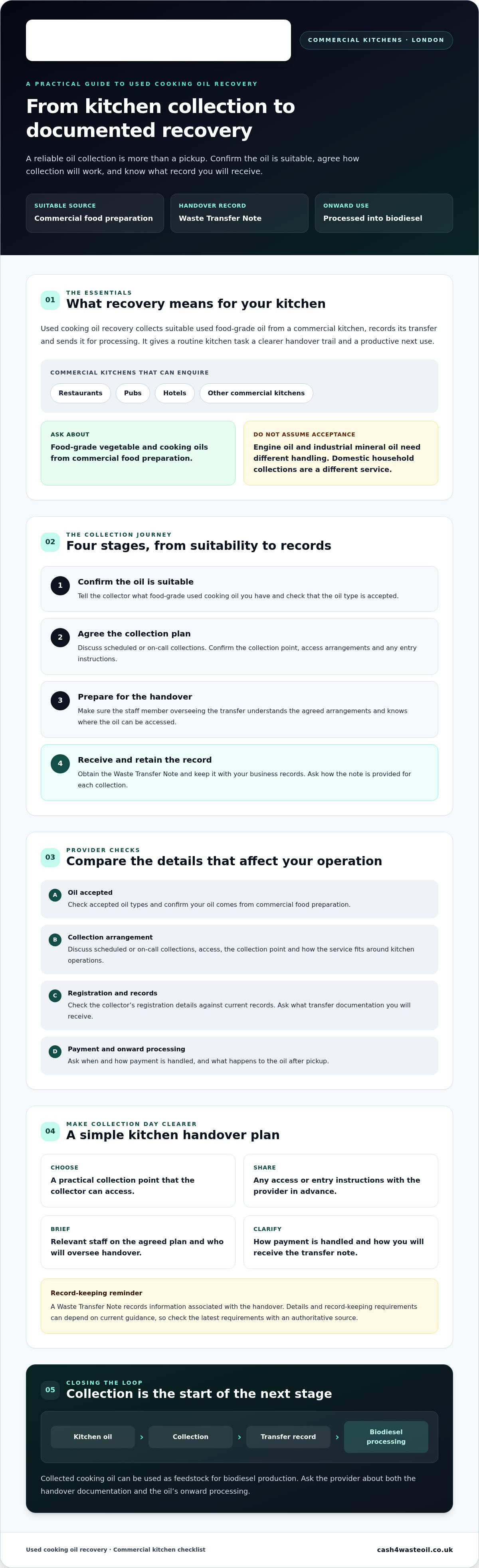
Used cooking oil recovery involves collecting suitable oil from a commercial kitchen, recording the transfer and sending the oil for processing. A clear process tells staff what to expect and gives the business a record of the handover.
For a London kitchen, the process usually involves four stages:
- Confirm suitability: Tell the collector what food-grade used cooking oil you have and check that it is accepted.
- Arrange collection: Discuss whether a scheduled or on-call arrangement suits your operation, then confirm access and the collection point.
- Transfer the oil: Make sure the staff member overseeing the handover understands the agreed arrangements.
- Receive documentation: Obtain the Waste Transfer Note and keep it with your business records.
Before booking, settle the practical details with the collector. Explain where the oil can be accessed, provide any necessary entry instructions and ask how payment is handled. When comparing used cooking oil recovery London providers, ask how collections are coordinated and what documentation they provide rather than assuming every service works in the same way.
What should a kitchen confirm before booking?
First, confirm that the collector accepts your kitchen’s food-grade used cooking oil. Then agree the collection point, access arrangements and whether collections will be scheduled or requested on-call. Ask when and how payment is made, and how you will receive the transfer document. These checks give staff a clear process to follow and help avoid confusion on collection day.
What does the Waste Transfer Note record?
A Waste Transfer Note records information associated with the handover of waste from your business to a collector. Details and record-keeping requirements can depend on current guidance, so check the latest requirements with an authoritative source rather than relying on assumptions about what the note must contain or how long to keep it. Ask your collector how the note is provided for each collection. UK government guidance explains the handling of food and cooking oil waste for catering premises.
Cash 4 Waste Oil states that it provides a Waste Transfer Note and pays cash on the spot for collected oil. To review the service and confirm the arrangements that apply to your kitchen, see its commercial used cooking oil collection information.
How to compare used cooking oil recovery providers in London
A useful comparison looks beyond whether a provider offers collection. Check which oils it accepts, whether it serves your kind of commercial kitchen, how collections are arranged and what documentation you will receive. For used cooking oil recovery London businesses can rely on, verify registration claims against current records instead of treating a claim alone as proof.
Ask each provider the same questions and record the answers so you can compare like with like. Use this table as a starting point:
| What to compare | What to ask |
|---|---|
| Oil eligibility | Do you collect our food-grade used cooking oil? Which oil types are excluded? |
| Service fit | Do you collect from our type of commercial premises and location? |
| Collection arrangements | Can we arrange scheduled or on-call collections? How are access and the collection point agreed? |
| Registration and records | What registration details can you provide, and how will we receive a Waste Transfer Note? |
| Payment | Is collection free, and if you pay for oil, how is the amount assessed and paid? |
Which service and compliance details matter most?
Confirm that the provider handles food-grade cooking oil, not engine oil or industrial mineral oil. Ask for its waste-carrier registration details and check the current record with the Environment Agency. Establish what transfer documentation you will receive and how it will be supplied. The City of London Corporation’s information on commercial waste regulations is a useful local reference. Look for clear answers to your questions, not vague assurances.
How can a London kitchen assess collection fit?
Explain your site’s practical constraints before confirming a collection. Tell the provider where the oil can be accessed, whether staff need to coordinate entry and which operating periods could make a collection disruptive. Ask how scheduled or on-call collections are organised, then agree the specific arrangement directly rather than assuming a particular frequency or response time.
Hotels may have several kitchen areas or teams involved in waste handovers. Make sure the person arranging the collection can confirm the relevant access details and pass the process on to staff. A hotel-specific collection guide can help you frame questions, but confirm that the provider’s arrangements suit your premises.
Ask about collection costs and payment directly, rather than relying on general market claims. Confirm whether collection is free and, if the provider pays for oil, how payment is calculated and made. Do not compare advertised rates unless the provider explains the basis clearly, and do not assume a particular payment amount or minimum volume applies to your kitchen.
Prepare your kitchen for a smoother oil recovery collection
Good coordination helps a collection fit around service. Choose a practical collection point, agree how the collector will reach it and tell the relevant staff what to do. The aim is not to create a separate oil-storage procedure here, but to give the collector the information needed for a clear handover.
Before confirming arrangements, tell the provider where the oil will be ready and flag any access restrictions. A delivery entrance, shared service yard or controlled-access building may affect coordination. Do not assume the collector knows your site. Share clear instructions in advance and update them if access arrangements change.
What information should staff have ready?
Keep the agreed collection details somewhere relevant staff can find them. Assign a named contact to coordinate the handover, confirm who will receive the Waste Transfer Note and ensure the record reaches the person responsible for retaining it.
- The provider’s contact details and agreed access instructions.
- The type of food-grade used cooking oil being collected.
- The agreed collection point and any site-specific directions.
- Who will oversee the handover and receive the documentation.
Confirm the oil type and collection arrangements with the provider in advance. This helps avoid confusion if the usual kitchen contact is away or another team member is on duty. For broader preparation, use a commercial kitchen disposal checklist to review other waste-handling arrangements alongside oil collection.
How can collection fit around London service operations?
Consider your site’s daily routine before agreeing arrangements. Deliveries, customer service and staff movement can make some access points difficult to use at particular times. Explain busy periods and site restrictions, then ask how scheduled or on-call collections can be organised for your business. Confirm the arrangement directly, without assuming a particular collection frequency or response time.
Coverage varies by provider and location, so check that your premises are currently serviced rather than assuming every London borough is included. If your business also operates in Kent and needs information about urgent waste-oil arrangements, consult an emergency collection guide for Kent, then confirm availability and timing directly with a provider.
For used cooking oil recovery London kitchens can coordinate smoothly, clear instructions and a named staff contact make the handover easier to manage. You can contact Cash 4 Waste Oil about a collection to discuss your commercial kitchen’s arrangements.
Choose a London recovery partner that closes the loop
A dependable arrangement covers more than collection. Before choosing a provider, check that it accepts your food-grade cooking oil, serves your commercial premises and can explain how collections are organised. Ask what transfer documentation you will receive and where the oil goes after pickup. Together, these details show whether the process is clear from kitchen handover through to onward processing.
What Cash 4 Waste Oil provides to commercial kitchens
Cash 4 Waste Oil collects food-grade used cooking oil from restaurants, pubs, hotels and other commercial kitchens. The company states that its collections are fully licensed and Environment Agency registered. As part of your provider checks, compare its current registration details with authoritative records.
The service includes a Waste Transfer Note and cash payment on the spot for collected oil. Cash 4 Waste Oil states that collection is free and that collected cooking oil is processed into biodiesel. This gives kitchens a documented handover and a stated onward use for the oil.
What to do before requesting a collection
Have these practical details ready before you get in touch:
- Your business location and the type of commercial kitchen.
- The food-grade cooking oil you need collected.
- Your preferred collection arrangement and relevant site access instructions.
- Any questions about payment and how the Waste Transfer Note will be provided.
Confirm current local coverage and collection details directly with the provider. Do not assume every London location is covered or that a particular schedule or response time applies. Agree an arrangement that suits your premises, then brief the staff member coordinating the handover.
If payment is important to your decision, read the existing guide to getting paid for used cooking oil in London. Compare its information with the provider’s current terms, including how payment is made. Confirm the details before collection so your kitchen knows what to expect.
For commercial kitchens looking for used cooking oil recovery London businesses can organise around their operations, Cash 4 Waste Oil brings collection, payment and transfer documentation together, with biodiesel processing as the stated onward use. Arrange a commercial used cooking oil collection.
Make your next oil collection straightforward
A dependable recovery arrangement makes three things clear: the collector accepts your kitchen’s food-grade cooking oil, the collection fits your site and operating routine, and you receive a record of the transfer. Check registration details and ask what happens to the oil after collection. These steps make used cooking oil recovery London a planned, traceable part of commercial kitchen operations.
Cash 4 Waste Oil provides commercial collection with no collection charge, cash payment on the spot for collected oil and a Waste Transfer Note. The company states that its collections are fully licensed and Environment Agency registered, and that collected oil is processed into biodiesel. Confirm current coverage and arrangements for your premises directly with the provider.
Ready to discuss a collection for your commercial kitchen? Arrange a commercial used cooking oil collection. Agree the access and handover details with Cash 4 Waste Oil so your staff know what to expect.
Frequently Asked Questions
What is used cooking oil recovery?
Used cooking oil recovery means collecting suitable food-grade cooking oil from a commercial kitchen and transferring it for onward processing. It is separate from household disposal and from collection of engine or industrial oil. Depending on the oil and processing route, recovered cooking oil can return to productive use, including as biodiesel feedstock. Cash 4 Waste Oil collects used cooking oil from commercial kitchens; not every oil stream necessarily follows the same processing route.
Who collects used cooking oil from restaurants in London?
Commercial waste-oil collectors serve businesses such as restaurants, pubs and hotels. Confirm that your premises and oil type are accepted before arranging a collection. Cash 4 Waste Oil states that it collects from commercial kitchens in London and other service locations, including Greater London, Kent, Surrey, Birmingham, Coventry, Leicester and Wolverhampton, as well as Leicestershire, Derbyshire, Staffordshire, Warwickshire, Northamptonshire, Oxfordshire and Worcestershire. Check current local coverage directly. The service does not include household collections.
Is used cooking oil collection free for London businesses?
Cash 4 Waste Oil describes its commercial used cooking oil collection service as free. Other collectors may have different terms, so compare providers rather than assuming the same arrangements apply across London. Before booking, confirm that your kitchen and oil are eligible, check the current collection arrangements and ask whether any conditions apply. Get details relevant to your business directly from the provider instead of relying on general claims about pricing or minimum volumes.
Do I get a Waste Transfer Note when used cooking oil is collected?
Cash 4 Waste Oil states that it provides a Waste Transfer Note for its collections. The note is a record associated with the transfer of waste from your business to the collector. Check that you receive the documentation and understand how it will be supplied. Requirements and record-retention guidance can change, so consult current authoritative UK guidance about what applies to your business and how long to keep its records.
Can a commercial kitchen get paid for used cooking oil in London?
Cash 4 Waste Oil states that it pays cash on the spot for collected used cooking oil. This guide does not promise a payment amount or rate. Before arranging collection, ask the provider how payment is assessed, how it will be made and what terms apply to your oil. Confirm those details directly so your kitchen knows what to expect. Payment arrangements may vary, and you should not assume another collector offers the same terms.
What happens to used cooking oil after collection?
After collection, used cooking oil is transferred for processing. Cash 4 Waste Oil states that collected oil is processed into biodiesel. This is an onward-use pathway, not a guarantee that every oil stream becomes fuel in the same way. The exact route can depend on the material and processing facility. If the destination matters to your business, ask the provider to explain how it handles the oil after collection.
Does used cooking oil recovery cover household oil or engine oil?
No. Cash 4 Waste Oil’s service is for commercial kitchens and food-grade vegetable or cooking oils. It does not cover domestic household collections, engine oil or industrial mineral oil. Keep different waste streams separate and do not offer unrelated oils as cooking oil. If you need to manage household oil or another material, contact a provider authorised to handle that specific waste stream and confirm its collection terms directly.