Used Vegetable Oil in South London: What Sets the Price
The price for recycling used vegetable oil in South London depends mainly on how much oil is collected and its condition, including whether it’s clean or mixed with food waste or water. Collection arrangements can also affect the value. There isn’t one fixed rate that applies to every commercial kitchen.
It’s reasonable to want a clear figure before arranging collection, especially when used oil builds up during a busy service. This article explains what affects the quote, how free collection works, how to store oil safely and how used cooking oil is recycled into biodiesel.
You’ll also learn how commercial kitchens can manage used oil and why it must stay out of sinks and drains. The aim is to understand what affects the return, handle the oil responsibly and know what to expect from collection.
Key Takeaways
- Oil volume and cleanliness are key factors that influence its value. Keep it separate from water and food waste to protect its quality.
- Learn how free collection works for commercial kitchens and what to expect from the collection process.
- Store used oil in a suitable sealed container, and never pour it down a sink or drain.
- Find out how used cooking oil can be processed into biodiesel after collection.
- Households can use food waste collections for small amounts, while some recycling centres accept larger quantities.
Free used vegetable oil collection in London
Yes. Commercial kitchens in South London can use local used-oil collection services. For kitchens with regular volumes, collections may be free, with payment for suitable waste oil. The right arrangement depends on the amount produced, its condition and collection logistics.
London coverage matters because collection routes and service areas differ. A commercial kitchen in South London should look for a service covering its location, rather than assuming a London-wide route reaches every premises. Restaurants, pubs, hotels and other commercial kitchens can arrange collections around how they store and produce oil. Keep the collection point accessible, and tell the collector where the sealed containers are kept. Clear access helps avoid delays during pickup.
Volume helps determine collection frequency. High-volume kitchens should arrange weekly collections to reduce the risk of containers overflowing and to support compliant handling. A kitchen producing less oil can plan collections around how quickly its containers fill. Track the amount stored between visits. If containers fill sooner than expected, adjust the schedule; if they remain partly full, a less frequent arrangement may suit the operating pattern. For example, a busy restaurant can monitor its containers after service and plan the next collection before capacity becomes a problem.
Use a licensed carrier for commercial waste oil. The Hazardous Waste Regulations 2005 require waste oil to be processed by licensed carriers. UK Parliament states that, on summary conviction, the penalty is imprisonment for a term not exceeding six months or a fine not exceeding £40,000 or both. Keep the collection paperwork with your business waste records. A Waste Transfer Note records the waste transfer and supports a clear audit trail. Ask for the note when the oil is collected, then store it where the relevant staff can retrieve it.
Prepare each pickup before the vehicle arrives. Let staff know which container holds used cooking oil, keep its lid secure and separate it from other waste. Don’t mix in water, cleaning products or unrelated oils. These simple steps make the contents easier to identify and handle. A clearly marked, accessible container also helps staff avoid accidental disposal through a sink or drain.
Free collection can be useful for commercial kitchens that produce oil regularly and want a straightforward removal routine. The collection arrangement should fit the kitchen’s output, storage space and access conditions. Set a collection frequency that prevents overflow, keep records for each transfer and review the schedule when trading patterns change. That gives South London businesses a practical way to manage used oil without leaving full containers to disrupt kitchen operations.
Safe storage and environmental compliance
In London, households with a food waste recycling service may be able to put small amounts of cooking oil and fats in that bin. Don’t pour oil into a dry recycling bin. Keep it separate and follow your borough’s collection instructions.
Household collection arrangements vary between South London boroughs. Check the instructions for your council’s food waste service before using its bin. If your household has no food waste collection, or you have a large amount and can’t reach a recycling centre, seal the oil in a container and put it in the rubbish bin.
Never pour cooking oil down a sink or drain. Oil can block pipes and contribute to fatbergs in sewers. One litre of cooking oil can contaminate up to one million litres of water, so careful disposal protects drains and the wider environment.
Set up a safe storage routine at home or in a commercial kitchen:
- Let hot oil cool before handling it.
- Pour it carefully into a clean, sturdy container with a secure lid.
- Wipe the outside clean, then seal the container to prevent leaks.
- Keep it upright, away from heat, children and pets.
- Don’t mix it with water, food scraps, cleaning products or other waste.
For a small household amount, a clean, sealable bottle can contain the oil until disposal. For larger quantities, choose a sturdy container that is manageable to move. Keep containers upright and away from places where they could be knocked over. A label reading “used cooking oil” helps prevent confusion with fresh oil or other liquids.
Free collection and storage containers are separate considerations. Don’t assume that a collection arrangement includes containers. If you have a supplied container, follow its handling instructions; otherwise, use a suitable sealed container and keep the oil contained until collection.
Commercial kitchens should keep a clear record of every waste oil collection. Keeping clear records of waste oil collections can help businesses track how the oil was handled. Store records so staff can match each collection to its date and Waste Transfer Note. Clear records help demonstrate how the oil was handled and transferred.
Make disposal part of the closing routine. Staff can let oil cool, transfer it into the designated container, secure the lid and return it to its storage place. Keep the container away from sinks and drains, and follow the household disposal route available in your borough. These steps reduce spills, plumbing problems and avoidable contamination.
Factors affecting used oil prices
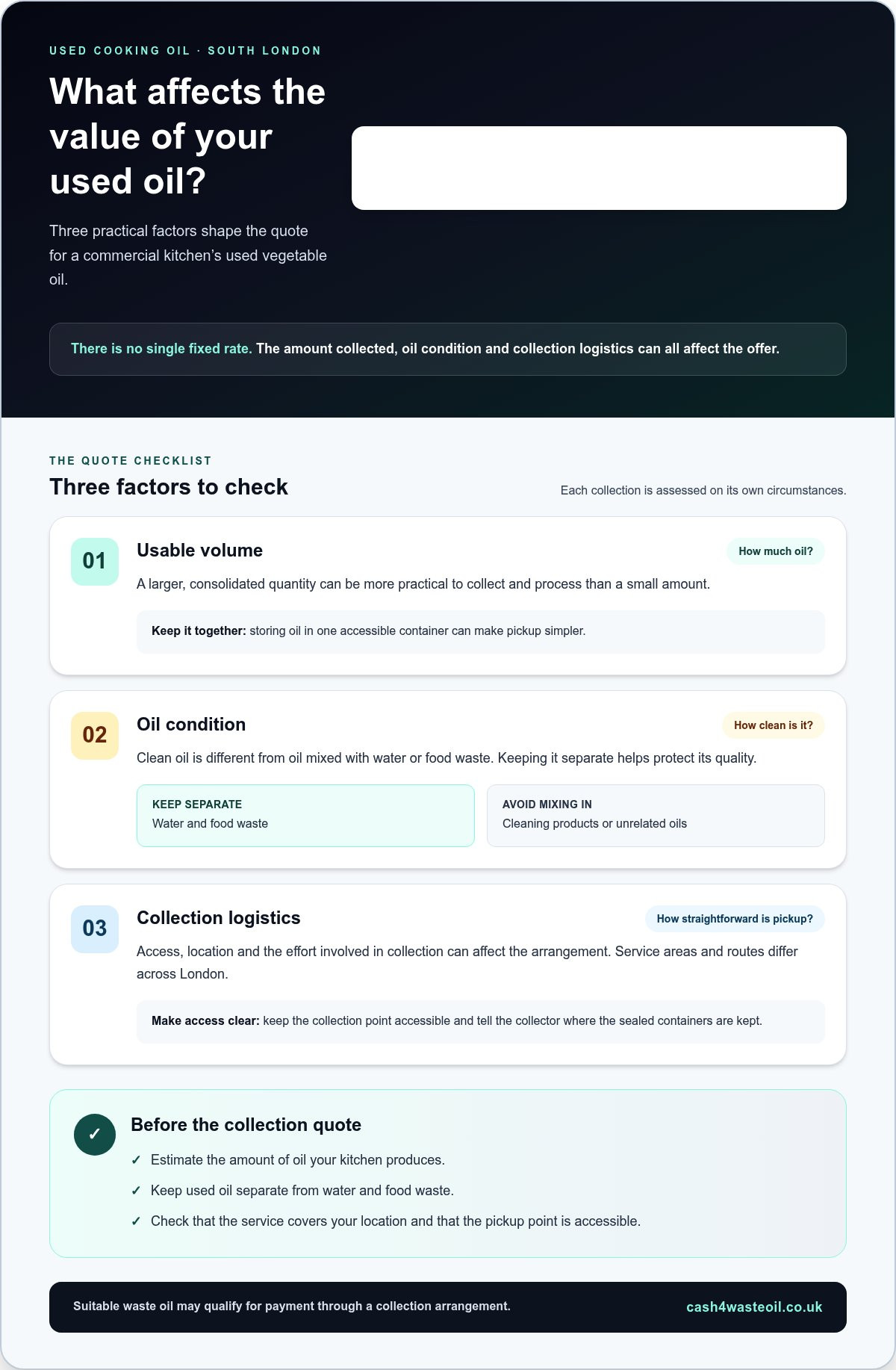
Used cooking oil doesn’t have one fixed value across South London. The amount collected, its condition and the effort involved in collection all matter. The price depends on the case and is given after a quote request; key factors include usable volume, oil condition, collection access and pickup logistics. Understanding these points helps a kitchen see why separate collections can produce different offers.
Volume is a central factor. A larger, consolidated quantity can be more practical to collect and process than a small amount. For example, a restaurant that stores oil in one accessible container may present a simpler pickup than a kitchen with small amounts spread across several containers. The quantity available at collection also matters, not simply how much oil the business produces over time. Keep containers together and avoid arranging a pickup before there is a useful quantity ready.
Oil condition affects its usability. Clean, separated cooking oil is easier to handle than oil mixed with water, food scraps or cleaning products. Contamination can reduce the amount of usable oil in a load and complicate processing. Strain out food particles where practical, and keep waste streams separate. A container holding only used cooking oil gives a clearer picture of the recoverable material than a mixed-waste container.
Collection logistics also shape the assessment. South London premises may have different access arrangements, storage locations and vehicle access. A container near a clear collection point is easier to reach than one behind equipment or other stored goods. Describe the collection location accurately and keep the route clear. These details help establish the work involved without changing the oil’s actual quantity or quality.
Consistent storage makes collection planning more straightforward. Gather used oil in a dedicated container and note how quickly it fills. Changes in trading, menus or frying activity may affect the amount available. Share relevant changes in volume, storage or access when arranging collection to help the company assess the pickup.
Before requesting a collection, organise the details that affect the quote:
- Estimate how much usable oil is ready for collection.
- Keep water, food waste and other liquids out of the oil.
- Consolidate containers where safe and practical.
- Describe the storage position and vehicle access clearly.
- Explain any changes to the kitchen’s usual oil output.
These steps don’t create a guaranteed price, but they make the relevant factors clearer. For instance, a clean, consolidated load with straightforward access gives a more accurate picture than scattered containers with mixed contents. South London kitchens can use that information to compare their own collection patterns over time. Focus first on keeping the oil separate and ready, then provide a clear account of volume and access when arranging collection. That helps explain what drives the value without relying on a universal rate.
Used cooking oil recycling into biodiesel
Used cooking oil can become biodiesel instead of remaining a disposal problem. This process gives restaurant and pub oil another use as a fuel feedstock. Recycling used vegetable oil in South London can therefore connect commercial kitchens with fuel production, provided collected oil is suitable for processing.
The route from fryer to fuel involves several practical stages. First, collectors gather the used oil and transport it for processing. Processors remove food particles and water, then prepare the oil for conversion. A chemical process changes the oil into biodiesel and separates unwanted residues. The finished fuel is then prepared for use as a transport fuel. Each stage depends on keeping the incoming material manageable and separated from contaminants.
Oil quality matters before processing begins. Water, food scraps and cleaning products can complicate treatment or reduce the usable feedstock. A kitchen that stores oil separately gives processors cleaner material to work with. For example, keeping fryer oil out of wash-up waste avoids mixing it with detergent and food debris. Clear separation at the kitchen helps protect the usefulness of the material further down the recycling chain.
The climate benefit can be substantial in a documented case. Harry’s Kitchens recycled 500 litres of cooking oil per month, saving approximately 2.8 tonnes of CO2 annually. This example shows how a steady stream of used oil can support resource recovery and reduce waste. It is a case-study result, not a guaranteed outcome for every kitchen or volume.
Biodiesel also has lower emissions than conventional diesel. The stated comparison is 85% fewer emissions than conventional diesel. That figure describes the fuel comparison, not a specific reduction for each South London kitchen. The result for a business depends on how much oil it supplies and how the resulting fuel is produced and used.
Commercial kitchens can support this recycling pathway through a few straightforward habits:
- Collect used cooking oil separately from other kitchen waste.
- Keep water, food scraps and cleaning products out of storage containers.
- Use a secure, suitable container that can be handled safely.
- Arrange collection before stored oil creates an overflow problem.
- Keep collection records alongside the business’s waste paperwork.
These steps make the material easier to collect and assess. They also help maintain a clear record of its movement from kitchen to processor. Biodiesel production turns a waste stream into a useful feedstock, but the recycling chain starts with careful handling at the point of use. For South London kitchens, separating oil consistently is a practical contribution to that circular process.
Where can households recycle used cooking oil in South London?
For small amounts, use your household food waste bin if your London address has a food waste recycling service. Keep the oil separate from general recycling, and follow your borough council’s instructions for accepted materials. For larger quantities, some recycling centres accept cooking oil. Check your local council’s waste guidance to find the right centre and disposal route for your address.
South London includes several boroughs, so household collection arrangements can differ between neighbouring streets. Start with the council responsible for your home, then check its current food waste instructions. Look for guidance on cooking oil specifically, rather than assuming every food waste service accepts it in the same way. A neighbour’s bin instructions may not apply to your property.
For a small amount, let the oil cool before handling it. If your borough’s instructions permit it, put the oil in a suitable sealed container and place it in the food waste bin as directed. Don’t pour loose oil into the bin. A sealed container helps prevent spills during collection. Keep it separate from glass, paper and other dry recycling.
If you have a large amount, use a recycling centre that accepts cooking oil. Acceptance can vary by site, so check the instructions for your chosen centre before travelling. Keep the oil in a secure, leak-resistant container and transport it upright. Avoid filling a container so heavily that it becomes difficult to carry safely. At the centre, follow staff directions and use the designated collection point.
If your home has no food waste recycling service, or you have a large quantity and can’t reach a recycling centre, seal the oil in a container and put it in the rubbish bin. Don’t put the container in a food waste or dry recycling bin unless local instructions say that route is accepted. This keeps the oil contained and out of household drains.
Use this simple decision path:
- Small amount and food waste service available: follow the council’s instructions for that bin.
- Large amount: find a recycling centre that accepts cooking oil.
- No food waste service or accessible centre: seal the oil and put it in the rubbish bin.
Never pour cooking oil down a sink, toilet or outside drain. It can block pipes and contribute to fatbergs in sewers. If a container leaks, wipe up the spill promptly and keep the oil away from drains. A sealed bottle, the correct borough disposal route and a quick check of local instructions make household disposal simpler and safer.
Cash 4 Waste Oil: Used Cooking Oil Collection
Cash 4 Waste Oil collects used cooking oil from restaurants, pubs, hotels and other commercial kitchens. Its collection service is free, with cash paid on the spot for waste oil. Collections cover London, Kent and Surrey, making it a practical option for South London kitchens that need a regular route for used oil.
Each collection includes a Waste Transfer Note, giving your business a record of the waste transfer. The company is fully licensed and Environment Agency registered. Keep the oil separate and ready for collection to support straightforward handling and recycling.
For commercial used cooking oil collection, contact Cash 4 Waste Oil or visit its website to discuss your kitchen’s needs.
Build a collection routine that works for your kitchen
Make used oil management part of your kitchen’s regular close-down routine. Decide who keeps the collection area organised, and make sure staff know where containers belong. When menus, equipment or trading patterns change, review how those changes affect oil storage. A consistent routine helps prevent used oil from becoming an afterthought during busy service.
For businesses recycling used vegetable oil in South London, the next step is putting a reliable collection arrangement in place. Cash 4 Waste Oil can support commercial kitchens with the collection process and its related paperwork. Set out your kitchen’s needs and the practical details of its collection point, then choose an approach that fits your working routine.
Arrange the next step for your kitchen with Cash 4 Waste Oil. A clear routine makes responsible oil handling easier to maintain, service after service.
Frequently Asked Questions
How is the price of used cooking oil determined?
For commercial waste oil, the payment depends on the quantity collected and its condition. A clean, separate batch is easier to assess than oil mixed with water or food waste. Collection access and the practical pickup arrangements can also affect the assessment. The rate is provided after a quote request, rather than set as one figure for every kitchen. Give a clear estimate of the oil ready for collection.
Which South London council recycling centres accept used vegetable oil?
Some London recycling centres accept cooking oil, but acceptance can differ between sites. Use the waste and recycling information from the council responsible for your South London address to identify a suitable centre. Check its instructions before travelling, particularly if you have a larger quantity. Keep the oil sealed and upright during transport, and follow the centre’s directions for placing it in the designated collection point.
How should used cooking oil be stored and transported for recycling?
Let the oil cool, then store it in a clean, secure container with a tightly fitted lid. Keep the container upright and separate from water, food scraps and cleaning products. Before transporting it, check that the lid is secure and the outside is clean. Place it upright in the vehicle so it cannot tip over or leak, and avoid carrying a container that’s too heavy to handle safely.
Do South London restaurants or businesses have used cooking oil collection services?
Yes. South London restaurants and other commercial kitchens can arrange used cooking oil collection. Cash 4 Waste Oil serves commercial food businesses in London, including restaurants, pubs, hotels and other kitchens. This route is for commercial premises, not household cooking oil. For a kitchen, keeping an estimate of the oil produced and its storage location ready helps make collection arrangements more straightforward.
Is used cooking oil recycling free, and what collection charges apply?
Cash 4 Waste Oil’s commercial collection service is free, and it pays businesses cash for collected waste oil. The payment depends on the quantity and condition of the oil, so it isn’t a fixed rate for every load. A quote request gives the business the relevant rate. Keep the oil separate and describe the amount available to help establish a clear assessment.
What happens to recycled vegetable oil, and is it turned into biodiesel?
Yes. Collected cooking oil is processed into biodiesel through transesterification. This gives suitable waste oil a further use as a fuel feedstock instead of sending it for disposal. Keeping the oil free from water and unrelated waste supports its recovery. For a commercial kitchen, separating used fryer oil from other waste is a practical first step in helping it enter the recycling chain.