Waste oil collection for UK businesses: Can you get paid
Yes, UK businesses can be paid for recyclable used cooking oil. Payment depends on the oil and collection arrangement. If you’re researching complaints about waste oil collectors in the UK, look beyond the cash offer: clear collection records and duty-of-care paperwork matter too.
It’s reasonable to expect a collector to arrive as agreed, handle the oil safely and provide the right records. Missed collections, incomplete paperwork or uncertainty about where waste goes can create practical and compliance concerns for a busy commercial kitchen.
This guide explains what affects payment for waste oil and how to check a carrier’s registration, understand the records to keep and identify the paperwork that should accompany a collection. Assess a service on its value, reliability and documentation, not just the promise of cash.
Key Takeaways
- Businesses can receive payment for recyclable used cooking oil; the oil and collection arrangement affect the value.
- Keep used oil separate from other waste and store it securely in a suitable, leak-proof container.
- Record each transfer and retain the waste paperwork so you can show how the oil left your premises.
- Check that the carrier is registered to transport waste, and keep collection records to support your compliance checks.
- Assess a collection service on its reliability, handling and documentation as well as any payment offered.
Licensed waste oil collection and recycling
When dealing with complaints about waste oil collectors in the UK, distinguish poor service from suspected illegal disposal. For a missed collection or missing Waste Transfer Note, write to the collector and explain the issue. Report suspected pollution or unlawful handling to the environmental regulator responsible for the nation where it occurred.
How do I report a waste oil collector in England, Scotland, Wales or Northern Ireland? Record the collection date, site address, vehicle details, correspondence and any Waste Transfer Note. Report suspected illegal handling to the relevant national environmental regulator. For a service dispute, explain the problem and the remedy you want in writing to the collector.
Which regulator handles complaints about waste oil collection in each UK nation? In England, contact the Environment Agency; in Scotland, the Scottish Environment Protection Agency; in Wales, Natural Resources Wales; and in Northern Ireland, the Northern Ireland Environment Agency. These are the relevant environmental contacts for reports of suspected waste offences or pollution.
Licensed handling matters because cooking oil can contaminate drains and waterways if spilled or dumped. Waste oil containing harmful substances is hazardous and needs secure storage in leak-proof containers. Keep it separate from other waste, use a labelled container, and arrange recycling rather than pouring oil into a drain. In England, many business oil containers with a capacity of 201 litres or more are covered by specific storage rules, subject to exceptions, according to the Environment Agency.
Recycling can give used cooking oil another purpose. It can be processed into biodiesel, reducing reliance on fossil carbon compared with disposing of it as general waste. Re-refining also allows suitable waste oils to be processed into usable materials. The route depends on the type and condition of the oil, so keep cooking oil separate from engine oil, solvents and other waste. Mixing materials can make recovery harder and may affect how the load is classified.
What are the risks of illegal waste oil disposal or using an unlicensed collector? Oil can pollute soil and water, block drains, and create clean-up costs; waste oil disposal offences can result in fines of up to £50,000 and criminal prosecution. A business may also struggle to show where its waste went if the carrier provides no reliable collection record.
Before collection, check that the container is closed, sound and stored away from drains. At handover, record the quantity and keep the Waste Transfer Note with the collection date and carrier details. These records help trace the transfer and clarify what happened to the oil.
Duty-of-care paperwork and consignment notes
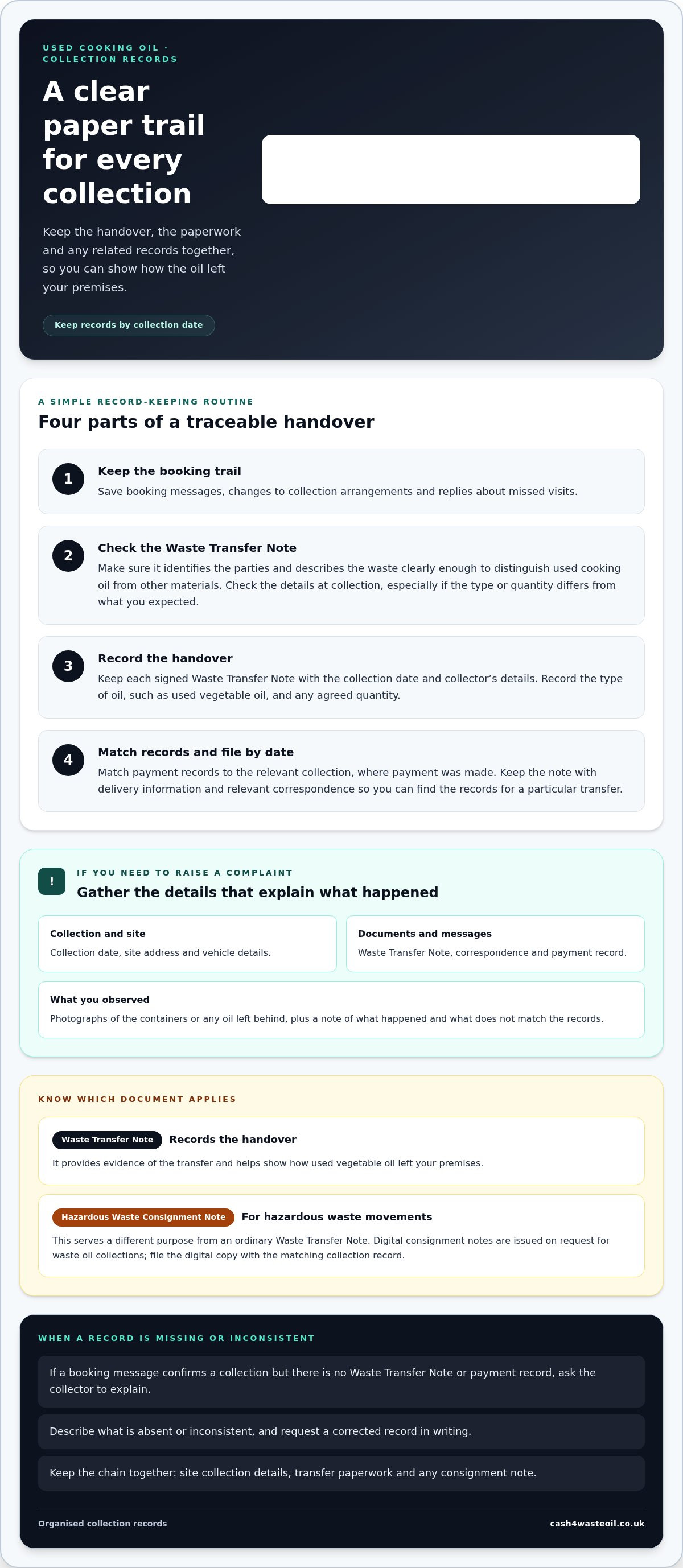
A Waste Transfer Note records the handover of waste from your business to a collector. It provides evidence of the transfer and helps show how used vegetable oil left your premises. Keep the note with collection records, delivery information and relevant correspondence, rather than relying on verbal confirmation.
The Duty of Care Regulations apply to UK businesses managing waste oil. Document each transfer so the waste description and movement can be traced. The note should identify the parties and describe the waste clearly enough to distinguish used cooking oil from other materials. Check the details at collection, particularly if the recorded waste type or quantity differs from what you expected.
What evidence should I collect when complaining about a waste oil collector? Keep the Waste Transfer Note, collection date, site address, correspondence, payment record and photographs of the containers or any oil left behind. Note the vehicle details and what happened, then describe the discrepancy clearly in your complaint.
Use a simple record-keeping routine:
- Save each signed waste transfer note with the collection date and collector’s details.
- Record the type of oil, such as used vegetable oil, and any agreed quantity.
- Keep booking messages, changes to collection arrangements and replies about missed visits.
- Match payment records to the relevant collection, where a payment was made.
Organised records make gaps easier to spot. For example, if a booking message confirms a collection but there is no Waste Transfer Note or payment record, ask the collector to explain. File records by date so you can quickly find the documents for a particular transfer.
Hazardous waste oil movements require a Hazardous Waste Consignment Note, according to the guidance summarised for this article. This document serves a different purpose from an ordinary Waste Transfer Note. Use the consignment record for the hazardous movement and retain the transfer paperwork relevant to the collection. Digital consignment notes are issued on request for waste oil collections, so file the digital copy with the matching collection record.
Good paperwork supports responsible handling, but it does not replace a licensed collector or a suitable destination. Keep the chain of records together: your site’s collection details, the transfer document and any consignment note. If the paperwork is missing or inconsistent, describe exactly what is absent and request a corrected record in writing. For businesses arranging used cooking oil collections with transfer notes, matching the paperwork to each handover helps keep the audit trail clear.
Waste carrier licensing and collection records
Check a carrier’s status before collection, then keep a record linking each handover to your business and the waste. This can help identify gaps if the load’s destination or collection details are disputed.
What are the rules for storing, transporting and collecting waste oil in the UK? Store it securely in a leak-proof container, separate it from other waste, and use a registered waste carrier for transport. Keep a record of each collection and its destination.
Checking a collector's licence
Search the relevant environmental regulator’s public register using the collector’s business name or registration details. Compare the result with the name on booking messages, vehicle paperwork and collection records. A trading name may differ from the registered legal name, so check that the details relate to the business taking the oil. Record the registration details alongside the collection date.
Registration alone does not show whether a particular collection has been documented properly. Check that the carrier’s paperwork describes the waste accurately and identifies who accepted it. If the details do not match, pause the handover until the discrepancy is resolved. This can prevent confusion between the carrier and another business involved in transport or recovery.
Registered waste carrier status
In the UK, the Environmental Protection Act 1990 classifies waste oil as controlled waste and requires disposal through a registered waste carrier, according to UK Legislation. This applies to waste oil from commercial kitchens as well as other business premises. Use a registered carrier to move the oil to a licensed disposal or recycling facility.
Waste oil carriers must hold an environmental permit under the Environmental Permitting Regulations 2016. Registration and permitting relate to lawful waste management, while collection records show what happened to a particular load. Keep both checks distinct: confirming a carrier’s status does not replace recording the date, waste description and handover.
For each collection, record the site, waste type, carrier details and receiving facility, where noted. Match these details against the Waste Transfer Note and any related consignment paperwork. If a collector takes used cooking oil but the record describes engine oil, request a corrected document. Accurate descriptions support recycling and help trace the material.
Keep oil in a closed, leak-proof container until collection. Do not pour it into drains or mix it with other waste, as contamination can complicate treatment and recovery. If a collection is missed, record the date and follow-up messages. If oil is removed without a clear record, preserve any available vehicle details and correspondence. These facts make a complaint specific and easier to assess.
Commercial waste oil collection services
A commercial collection service should suit how your kitchen produces and stores used cooking oil. Compare the collection arrangement, container capacity, payment terms and paperwork together. A high cash offer is not enough if collections are missed or documentation is incomplete.
Start with the volume and access at your premises. A site producing lower volumes may use a 20-litre drum; regular volumes may suit a 205-litre barrel. A high-output kitchen may need a 1,000-litre tank, provided there is safe storage space and clear collection access. These are examples, not a substitute for matching the container to the site.
Ask what happens from booking through to collection. A clear process explains how to request a collection, what access the driver needs and what record you receive after handover. One-off collections can suit a temporary surplus or a change in kitchen operations. Regular collections can help a restaurant or hotel manage its storage as used oil accumulates.
Useful service details to compare include:
- Collection arrangements: whether the service is one-off or regular, and how a missed visit is handled.
- Container fit: whether the drum, barrel or tank suits the site’s output and safe access.
- Documentation: whether a waste transfer note records the handover and waste description.
- Payment terms: how the oil’s condition and collection arrangement affect any payment.
- Handling: whether the collector can remove the oil without spills or disruption to kitchen operations.
Documentation makes a collection a traceable transfer. Keep the booking, collection record and Waste Transfer Note together. For example, if a pub’s records show a collection but the note is missing, the business can identify the handover and raise the issue in writing. Records also help compare scheduled visits with completed collections.
Safe handling matters at busy premises. Keep the container closed, avoid overfilling and leave a clear route for collection. Obstructed access can delay a visit, while a leaking container can cause a spill near the kitchen or drains. Include storage and access in the collection plan rather than addressing them only when the driver arrives.
Judge an oil collection service on its overall performance. Repeated missed visits, unclear payment records, unsafe handling or missing paperwork are specific issues to document. Note the date, what was agreed and what happened, then request a practical remedy. Specific evidence makes a complaint more useful than a general claim that the service was poor.
A poor waste cooking oil disposal service may involve missed collections, incomplete documentation, unsafe handling, poor customer support, compliance concerns or suspected illegal disposal. Store waste oil in a suitable, secure container, and schedule collections to keep the storage area manageable.
Ask the collector how it handles missed visits or concerns about handling. If its records or disposal practices are unclear, document the concern and request a clear response before relying on the service. Choose a collection plan that keeps the container secure and the storage area accessible.
How can I check whether a UK waste oil collector is licensed and registered?
Check the carrier’s registration before arranging a collection, then compare its details with the paperwork and vehicle. A business name on a quote alone does not establish whether the business transporting your waste is registered.
Use the relevant environmental regulator’s waste carrier register. Search by the business name or registration details supplied by the collector. Compare the result with the legal name on its collection documents, not just a trading name. If several similar names appear, compare addresses and other identifying details to find the record that belongs to the carrier.
Follow a consistent check:
- Ask for the carrier’s registered business name and registration details before collection.
- Search those details in the relevant regulator’s register and read the entry carefully.
- Compare the registered name with the booking, waste transfer note and collection record.
- Keep a copy of the result with the date of your check and the collection paperwork.
Keep a record of what you checked. If the name on the Waste Transfer Note differs from the register entry, ask for an explanation and corrected details before the oil leaves your site. File the reply with the other documents so you can show how the discrepancy was resolved.
Registration and permits are related but distinct checks. Waste oil carriers must hold an environmental permit under the Environmental Permitting Regulations 2016, according to the research for this article. Check the carrier’s status and the paperwork for the particular transfer. A registration search does not itself show where a load went or whether its collection was recorded accurately.
Check that the records are consistent. The carrier’s identity should match the business named in your booking and transfer paperwork. The waste description should identify used cooking oil, not a different waste stream. Record the collection date and receiving facility details where applicable. Keep the original messages if the driver or office provides different information.
If a collector refuses to provide registration details, uses paperwork under an unrelated name, or removes oil without a collection record, preserve the evidence. Note the date, vehicle description, messages and any documents received. Report suspected unlawful waste handling to the environmental regulator responsible for the nation where it occurred. For a documented handover, arrange a used cooking oil collection with its transfer paperwork.
Cash 4 Waste Oil: Used Cooking Oil Collection
Cash 4 Waste Oil provides used cooking oil collection for restaurants, pubs, hotels and other commercial kitchens in London, Kent and Surrey. Turn to the service when your business needs a documented collection and a clear record of the oil leaving your premises.
Collections include a Waste Transfer Note, giving your business paperwork for the handover. Cash 4 Waste Oil also offers cash payments for waste oil, paid on the spot at collection. Keep the note with your site’s collection records so the transaction and waste transfer are easy to trace.
If you operate a commercial kitchen in the service area, contact Cash 4 Waste Oil to discuss used cooking oil collection, or visit cash4wasteoil.co.uk.
Make your next collection easier to track
Make these checks part of every collection. Record the agreed arrangements, note what happens on the day and file the paperwork where the right person can find it. If a problem arises, a clear timeline helps you explain the issue and decide what action to take. It also gives your team a consistent process when staff responsibilities change.
For businesses still weighing up complaints about waste oil collectors in the UK, focus on what a dependable working relationship needs: a clear handover, traceable records and straightforward communication. Cash 4 Waste Oil offers commercial used cooking oil collection, Waste Transfer Notes and cash payments for waste oil. These give businesses a practical route for arranging collection and documenting the transfer.
Ready to discuss used cooking oil collection for your business? Contact Cash 4 Waste Oil and take the next step towards a clearer collection routine.
Frequently Asked Questions
Can you get paid for waste oil?
Yes, businesses can receive payment for recyclable used cooking oil. The amount depends on factors such as the oil’s condition and the volume collected, so keep cooking oil separate from water and other waste. Cash 4 Waste Oil offers cash payments for waste oil from commercial kitchens. The payment arrangement should be clear before collection, so your records can match the handover and amount received.
Do I receive compliance documentation for my waste oil?
Yes, a commercial collection should be recorded with a waste transfer note. Cash 4 Waste Oil provides one after every collection. File it with your own collection log and payment record, using the date and site name to find it later. For example, if a colleague queries a collection during a stock or compliance review, those matching records make the transaction easier to identify.
What are the most common complaints about waste oil collectors in the UK?
Common complaints about waste oil collectors in the UK include missed collections, incomplete paperwork, unsafe handling, poor communication and concerns about where the oil goes. Distinguish a service issue from a suspected environmental offence. Record what happened, when it happened and how it affected your business. For example, note whether a missed visit left your storage container full or the handover document had incorrect details.
How can I compare UK waste oil collection companies and customer reviews?
Compare the practical details behind the reviews, not just the overall rating. Look for specific accounts of missed visits, payment discrepancies, paperwork and how a complaint was handled. Check whether reviews concern commercial kitchens and whether the business response addresses the stated problem. For kitchens in London, Greater London, Kent, Surrey, Birmingham, Coventry, Leicester, Wolverhampton, Leicestershire, Derbyshire, Staffordshire, Warwickshire, Northamptonshire, Oxfordshire or Worcestershire, also compare the stated collection coverage.