Waste Oil Collection Islington: The 2026 Commercial Kitchen Guide
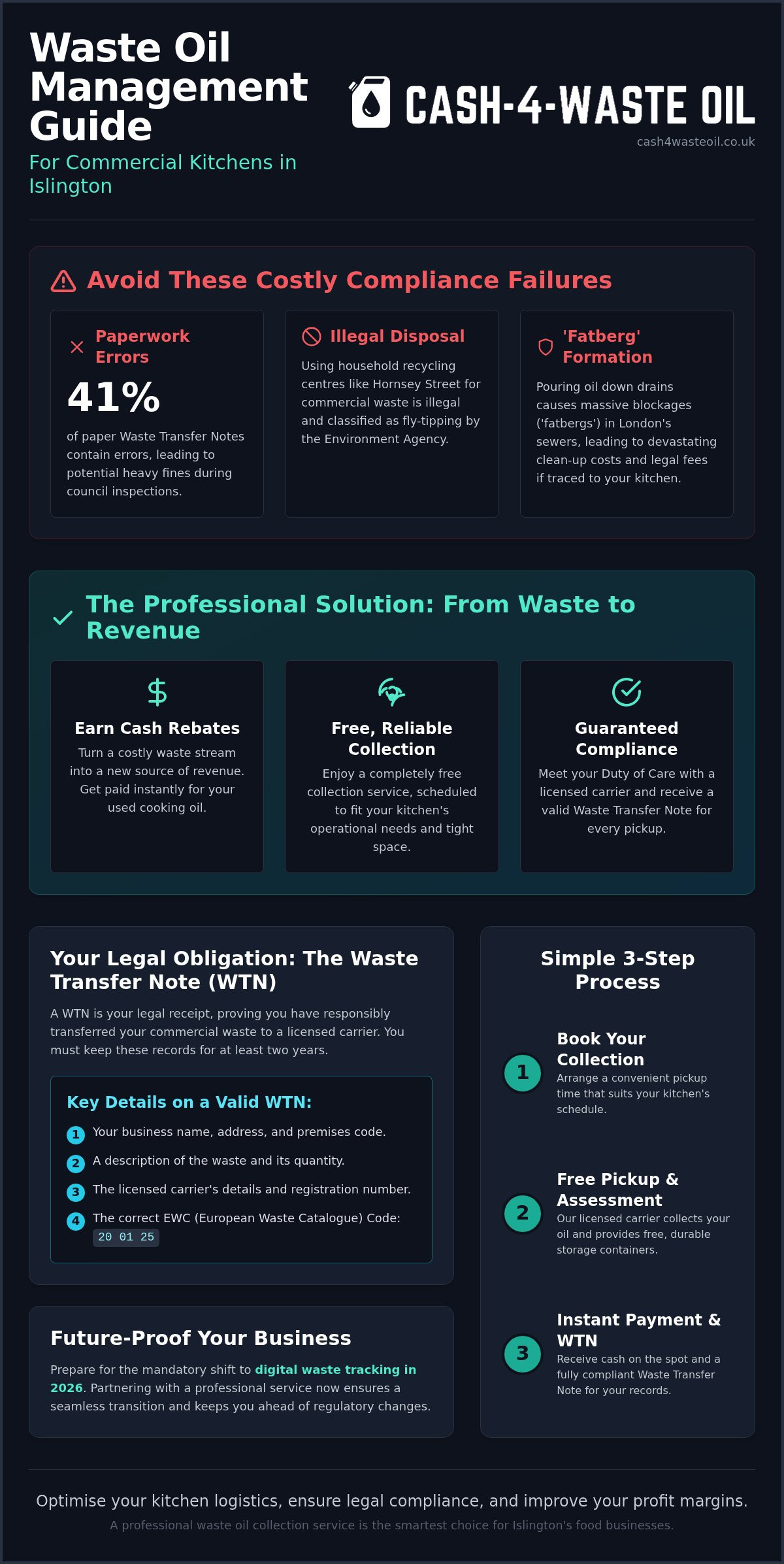
Did you know that 41% of paper Waste Transfer Notes contain errors that could lead to a heavy fine during your next council inspection? Running a busy commercial kitchen in Islington, from the bustling restaurants on Upper Street to the cafes near the Angel, is demanding enough without the added stress of messy oil storage and complex environmental regulations. You likely already feel that improper disposal isn't just a logistical headache; it's a financial liability that drains your margins through high trade waste fees and potential non-compliance charges.
This guide ensures you never fall foul of the law. You'll discover how to secure free, licensed waste oil collection Islington services whilst earning instant cash rebates to boost your bottom line. We'll show you how to move away from the confusion of council household rules and meet your commercial Duty of Care with total confidence. We'll preview the upcoming 2026 digital waste tracking mandates, explain how to obtain valid Waste Transfer Notes for every collection, and provide a clear roadmap to a cleaner, more profitable kitchen operation.
Key Takeaways
- Understand why Islington businesses cannot use household recycling centres and must use a licensed carrier to meet strict Duty of Care requirements.
- Learn how to turn a waste stream into a revenue source by securing a free waste oil collection Islington service that pays cash on the spot.
- Ensure your kitchen remains legally compliant by obtaining valid Waste Transfer Notes and preparing for the 2026 shift to digital waste tracking.
- Discover best practices for storing used cooking oil in compact commercial spaces to prevent spills, pests, and safety hazards.
- Follow a simple, three-step booking process to streamline your kitchen logistics while improving your overall profit margins.
Waste Oil Collection in Islington: Commercial vs Household Disposal
Managing a busy kitchen in N1 or N7 means dealing with high volumes of used fats and oils daily. A professional waste oil collection Islington service is a specialised solution tailored for the hospitality sector, treating your used oil as a valuable commodity rather than a burden. To understand the underlying value of this material, it's helpful to research what is waste cooking oil and how it serves as a critical feedstock for the biodiesel industry. Unlike your general waste or recycling bins, where you pay for every collection and lift, used cooking oil follows a different financial model. It's one of the few waste streams where you can actually get paid to recycle.
The Hornsey Street Limitation for Islington Businesses
Many new business owners or small cafe operators mistakenly believe they can drop off their used oil at the Hornsey Street Reuse and Recycling Centre. This is a mistake that often leads to heavy penalties. Local Authority sites are strictly for domestic residents. These centres have strict restrictions on van sizes and often ban commercial vehicles entirely to prevent trade waste from entering the system. More importantly, cooking oil produced in a restaurant, pub, or takeaway is legally classified as industrial waste, not domestic. Attempting to dispose of trade waste at household sites is viewed as fly-tipping by the Environment Agency. The resulting fines far outweigh any perceived savings from avoiding a professional service.
Why Professional Collection is Essential for N1 and N7 Kitchens
The sheer density of hospitality businesses along Upper Street and around the Angel creates significant logistical pressure. Kitchen space in Islington is notoriously compact and expensive. You simply don't have the room to let messy drums of old oil accumulate in your prep areas. Pouring oil down the drains is never a viable alternative. London’s Victorian sewer system is particularly vulnerable to fatbergs, which are massive blockages caused by congealed fats. Thames Water and the Environment Agency actively investigate these blockages. If the source is traced back to your kitchen, the cleanup costs and legal fees are devastating.
A dedicated waste oil collection Islington partner provides a reliable, scheduled pickup that keeps your operation seamless. Using a licensed carrier ensures you meet your Duty of Care obligations under the Environmental Protection Act 1990. Instead of worrying about council inspections or blocked pipes, you can focus on your service, knowing your waste is handled legally and profitably. This transition from a pay-to-dispose model to a revenue-generating partnership is a smart move for any Islington kitchen's margins.
Meeting Legal Obligations: Waste Transfer Notes and Compliance
Compliance isn't just a box-ticking exercise; it's your primary defence against regulatory action. Under the Environmental Protection Act 1990, every business in Islington has a "Duty of Care" for the waste it generates. This means you are legally responsible for your used cooking oil until it reaches a licensed disposal site. To prove you've met this obligation, you must obtain and keep a Waste Transfer Note (WTN) for every single collection. These documents act as a legal receipt, confirming you've handed your waste to a legitimate, Environment Agency registered carrier.
Islington Council inspectors frequently visit commercial premises to audit these records. If you cannot produce valid documentation for the last two years, you face significant risks. The Environment Agency recently implemented a £118 hourly charge for regulatory work related to non-compliance. Relying on a professional waste oil collection Islington service ensures you always have the right paperwork in hand before the inspector knocks on your door. Using an unlicensed collector is a gamble that rarely pays off, as the producer of the waste remains liable for its final destination.
The EWC Code for Used Cooking Oil Explained
Every WTN must include specific details to be legally valid. This includes the European Waste Catalogue (EWC) code, which for edible oil and fat is 20 01 25. This six-digit code acts as a universal identifier within the recycling chain. It tells the processing facility exactly what they are receiving, which is essential for transforming your kitchen waste into sustainable biodiesel. A properly completed WTN protects your business from liability if waste is later fly-tipped by a third party.
Preparing for a Council Health and Safety Inspection
Organising your waste documentation for quick retrieval is vital for a stress-free audit. A 2026 report noted that 41% of paper Waste Transfer Notes contain errors, which can lead to prosecution. To avoid this, many kitchens are moving toward digital records ahead of the mandatory UK digital waste tracking service arriving in October 2026. Ensuring your paperwork is accurate is the best way to handle a professional waste oil collection Islington audit.
For a full regulatory breakdown, consult our Commercial Kitchen Oil Disposal: The 2026 Essential Compliance Checklist. This resource helps you align with Meeting Legal Obligations as outlined by GOV.UK. Cash 4 Waste Oil provides these mandatory notes free of charge at the point of collection, ensuring your kitchen remains compliant without the administrative headache.
The Financial Advantage: Why Islington Kitchens Choose Cash Rebates
Most business waste is a constant drain on your bank balance. General waste contractors charge per bin lift and per tonne for landfill tax, which is set at £130.75 per tonne for the 2026/27 period. Used cooking oil is different. It is a valuable industrial commodity, not a scrap material. Choosing a professional waste oil collection Islington service transforms an expense into a consistent revenue stream. Instead of paying for disposal, you receive cash on the spot for every litre collected.
Why is this material so valuable? It serves as the primary feedstock for the renewable energy sector. The Financial Advantage of recycling oil is driven by its critical role in biodiesel production. This model provides an immediate cash injection for your business. For a busy restaurant in the Angel or Upper Street, these rebates help offset rising business rates and ingredient costs. It improves your kitchen margins without requiring any extra labour or complex equipment. You simply cook, store, and get paid.
Maximising Your Oil Rebate in 2026
The amount you receive depends on the quality and volume of your oil. Keeping your used oil clean and free from food debris or water contamination increases its market value significantly. Processors pay more for "clean" yellow grease because it requires less intensive refining. Scheduled, regular collections also ensure you aren't storing large volumes that could leak or attract pests. For the latest pricing and market trends, read our guide on how to Get Paid for Used Cooking Oil in London: The 2026 Commercial Guide.
From Fryer to Fuel: Supporting the Circular Economy
Recycling your oil does more than just balance the books. It fuels the circular economy. Your old vegetable oil is refined into sustainable biodiesel, which has a significantly lower carbon footprint than traditional fossil fuels. By choosing a licensed recycler, Islington businesses contribute to a sustainable waste oil disposal ecosystem. This aligns your kitchen with local Net Zero goals whilst ensuring your waste never ends up in a landfill. It is a pragmatic business decision that benefits both your wallet and the planet simultaneously.
Optimising Your Kitchen Logistics: Storage and Efficiency
Space in Islington kitchens is often a luxury. Whether you’re operating a compact bistro on Upper Street or a busy takeaway near Highbury & Islington station, every square inch matters. Poorly managed oil storage doesn’t just waste space; it creates a slip hazard and attracts vermin. Effective waste oil collection Islington logistics start with a smart storage strategy that integrates seamlessly with your daily workflow.
Choose a container size that matches your weekly output. Storing too much oil in a small kitchen leads to an "overflow crisis", especially during peak periods like the Islington Festival. Conversely, using oversized drums in a tiny prep area hampers staff movement. A professional collection partner helps you find the right balance, ensuring your storage solution is fit for purpose and prevents the risk of leaks in cramped conditions.
Safe Storage Practices for Commercial Fryer Oil
Safety is your priority. Always allow your used cooking oil to cool completely before transferring it into storage drums. Pouring hot oil is a leading cause of kitchen burns and can compromise the integrity of plastic collection containers. Once transferred, secure your drums with airtight lids. This simple step is vital to prevent foul odours from escaping and to ensure that pests cannot access the oil. Contaminated oil is harder to recycle and may reduce the rebate you receive.
Position your storage area away from high-traffic zones. Keeping drums in a dedicated, low-traffic corner or a secure external area minimises the risk of accidental spills and trips. If a spill does occur, use absorbent materials immediately to prevent it from reaching the drains. Proper placement ensures your kitchen remains a safe environment for your staff while keeping your waste oil secure until pickup.
Scheduling Collections Around Islington Traffic
Logistics in N1 and N7 require local expertise. Islington’s narrow streets and constant congestion make timing critical. To ensure a hassle-free waste oil collection Islington experience, schedule your pickups during off-peak windows. Mid-morning or late afternoon collections usually avoid the worst of the local traffic and ensure the collection vehicle doesn't block your deliveries or customer access during peak service hours.
A regular collection schedule is almost always superior to an "on-call" model for busy kitchens. It removes the administrative burden of remembering to book a pickup and prevents your storage from reaching capacity during a sudden rush. If you need to clear space and improve your kitchen safety today, book your free waste oil collection and get paid on the spot.
How to Arrange Your Free Waste Oil Collection in Islington Today
Securing a professional waste oil collection Islington service shouldn't be a complex administrative task. For many kitchens in N1 and N7, used cooking oil is often lumped in with general trade waste, leading to unnecessary costs and missed revenue opportunities. By switching from expensive general waste contracts to a specialised oil partner, you remove a significant financial burden. You stop paying for disposal and start receiving immediate cash payments that improve your monthly margins. This transition is the most pragmatic move an Islington business owner can make to streamline their back-of-house operations whilst ensuring total legal compliance.
Our service is built on transparency and speed. We understand that a busy service on Upper Street or near the Angel doesn't stop for waste collections. That's why our process is designed to be as non-intrusive as possible. You don't need to worry about hidden fees, transport charges, or delayed bank transfers. We provide a straightforward, professional B2B experience that respects your time and your kitchen's hygiene standards.
Step-by-Step: From Call to Cash
- Step 1: Contact the team. Reach out via our online form or phone to provide your Islington location and an estimate of your current oil volume. We'll help you determine the best collection frequency for your specific needs.
- Step 2: Professional collection. A licensed, Environment Agency registered vehicle arrives at your premises. Our drivers are trained to handle collections quickly and without mess, ensuring your kitchen environment remains pristine.
- Step 3: Instant payment and compliance. We pay your cash rebate on the spot. Simultaneously, we provide a signed Waste Transfer Note. This document is your legal proof of correct disposal, which you must retain for your records to satisfy council inspectors.
Why Choose Cash 4 Waste Oil for Your Islington Business?
We bring years of local expertise to every kitchen we serve across London, Kent, and Surrey. Unlike general waste companies that treat oil as an afterthought, we focus exclusively on the commercial sector. This means we understand the specific regulatory pressures and logistical hurdles faced by Islington hospitality businesses. Our service is strictly for commercial kitchens; we don't handle residential or engine oil, ensuring our equipment and processes are always tailored to food-grade standards.
Choosing a dedicated partner means you're never left with overflowing drums or missing paperwork. We take the burden of compliance off your shoulders, allowing you to focus on delivering great food to your customers. If you're ready to turn your waste into a reliable revenue stream and secure your legal standing, Book your free Islington waste oil collection today.
Secure Your Kitchen's Regulatory and Financial Future
Managing a commercial kitchen in N1 or N7 doesn't have to involve high trade waste fees or the risk of council fines. You've seen how a professional waste oil collection Islington service transforms your used cooking oil into a valuable asset. By prioritising clean storage and regular pickups, you ensure your kitchen remains safe, efficient, and fully compliant with the upcoming 2026 digital waste tracking mandates.
Choosing a licensed Environment Agency waste carrier like Cash 4 Waste Oil provides the peace of mind that your business is protected. We offer instant cash rebates paid per litre and provide full legal compliance with mandatory Waste Transfer Notes for every collection. Don't let your used oil take up valuable space or drain your margins any longer. Get a Free Quote and Book Your Islington Oil Collection today to start improving your kitchen's bottom line. It's a simple, smart decision that benefits your business and the environment simultaneously.
Frequently Asked Questions
Is waste oil collection in Islington really free for businesses?
Yes, waste oil collection Islington services are free for commercial kitchens. Unlike general waste collectors who charge for bin lifts and landfill taxes, specialised oil partners provide collection at no cost. This is because used cooking oil is a valuable commodity for the biofuel industry. By choosing a free service, you eliminate a significant expense from your kitchen's operating budget whilst ensuring your waste is handled by a licensed carrier.
How much cash can I get for my used cooking oil in 2026?
Cash rebates depend on the volume and quality of the oil you provide. While market rates fluctuate, cleaner oil that is free from food debris and water contamination typically commands a higher value. We pay cash on the spot per litre at the point of collection. This provides an immediate boost to your kitchen's cash flow, turning a messy waste product into a predictable revenue stream for your business.
What happens if I don’t have a Waste Transfer Note for my restaurant?
Lack of a valid Waste Transfer Note (WTN) leaves you liable for prosecution during a council inspection. Without this document, you cannot prove you've met your legal "Duty of Care." The Environment Agency can apply hourly charges of £118 for regulatory work related to non-compliance. We provide a legal WTN for every collection, ensuring your records are audit-ready and protecting you from heavy fines or legal action.
Can I take my commercial cooking oil to the Hornsey Street recycling centre?
No, you cannot take commercial waste to the Hornsey Street recycling centre. These facilities are strictly for domestic residents and often have vehicle height or weight restrictions to prevent trade waste entry. Attempting to dispose of restaurant oil at a household site is a breach of the Environmental Protection Act 1990. It can result in prosecution for fly-tipping, making a professional collection service the only legal and safe option.
Do you collect waste oil from small takeaways and cafes in Angel?
Yes, we provide waste oil collection Islington services to businesses of all sizes across the Angel. Whether you run a small independent takeaway or a busy cafe on the high street, we can manage your used oil. Our drivers are experienced in navigating the narrow streets of N1, providing a reliable and professional service that fits into the fast-paced nature of the local hospitality sector.
How often should I schedule a waste oil collection for my pub?
Most pubs find that a fortnightly or monthly schedule works best, depending on their fryer usage. If you have high-volume fryers or limited storage space, weekly collections prevent the risk of overflow and safety hazards. We help you assess your output to create a tailored schedule. Regular pickups ensure you never have large volumes of old oil sitting on-site, which keeps your kitchen clean and pest-free.
What types of oil do you collect from Islington commercial kitchens?
We collect all standard types of used vegetable and seed oils, including rapeseed, sunflower, and corn oil. These are the primary feedstocks needed for high-quality biodiesel production. Please note that our service is strictly for edible cooking oils from commercial kitchens. We do not collect engine oil, automotive fluids, or domestic household waste, as these require different processing methods and licensing to handle correctly.
Is the biodiesel produced from my waste oil used locally in London?
Much of the biodiesel produced from London's waste oil helps fuel the city's transport infrastructure. By recycling your oil, you contribute to a circular economy that reduces the capital's carbon footprint. The oil is processed in dedicated refineries and converted into sustainable fuel. This process ensures that your kitchen waste supports cleaner air and renewable energy initiatives right here in London, rather than ending up in a distant landfill.