Waste Oil from Cloud Kitchens in London: How the Price Is Set
A larger volume alone doesn’t determine what used cooking oil is worth. The value of waste oil from cloud kitchens in London depends on the quantity collected, its condition and collection logistics. Rates are volume- and condition-dependent, with a competitive, transparent price provided through a free quote.
It’s reasonable to want a clear return and a collection arrangement that fits a busy kitchen. This article explains what affects an oil valuation, how London kitchens can arrange collection and how to store used oil before it’s removed.
Paperwork matters too: according to UK Legislation, a business must keep a waste transfer note for each collection for two years. You’ll also learn how transfer documentation supports a clear record of where the oil goes, alongside the rules on responsible disposal.
Key Takeaways
- Oil value depends on the amount collected, its condition and the practicalities of collection, so kitchen output alone doesn’t set the price.
- Keeping used oil separate from water, food scraps and general waste can help preserve its value.
- Under section 111 of the Water Industry Act 1991, discharging material likely to damage or obstruct a public sewer is an offence, according to UK Legislation.
- Keep a waste transfer note for each collection and retain it for two years.
- Cloud kitchens can plan storage and collection around how quickly oil builds up, helping prevent overflow and keep disposal records in order.
London restaurant and commercial kitchen waste oil
London’s food businesses generate used cooking oil through frying and food preparation. Separate collection keeps it out of drains and provides a clear route for responsible disposal.
Waste oil from food businesses
Waste cooking oil is oil left after frying or other food preparation in restaurants and commercial kitchens. For businesses that fry food, it builds up during routine work, so storage and collection need to fit the pace of service.
London has over 20,000 restaurants and commercial kitchens. Menus and cooking methods shape how much oil a site produces: a chicken shop using fryers has a different pattern from a café frying only some dishes. Keep used oil separate from drains and other waste to manage it as a distinct material.
Commercial kitchen service coverage
Commercial kitchen waste oil comes from restaurants, pubs, hotels, cafés, chicken shops, major chains and cloud kitchens. These businesses cook at different scales, but each needs a practical way to store used oil before collection.
For a multi-kitchen business, each site’s frying activity affects how quickly its container fills. A hotel kitchen and a high-volume takeaway may need different collection schedules. Cloud kitchens should also consider available storage and the amount of oil generated by each menu.
Drain blockages are a practical reason to keep used cooking oil out of sinks. Fats, oils and grease cause more than 20,000 sewer blockages each year across Thames Water’s network, accounting for 28% of blockages. Oil entering a drain can combine with other fats and debris, creating obstructions in sewer infrastructure.
Thames Water has become more proactive about identifying and fining London businesses linked to repeat blockages. That makes oil handling an operational responsibility for kitchens, not an afterthought. Staff need a clear routine that works during busy services and quieter closing periods.
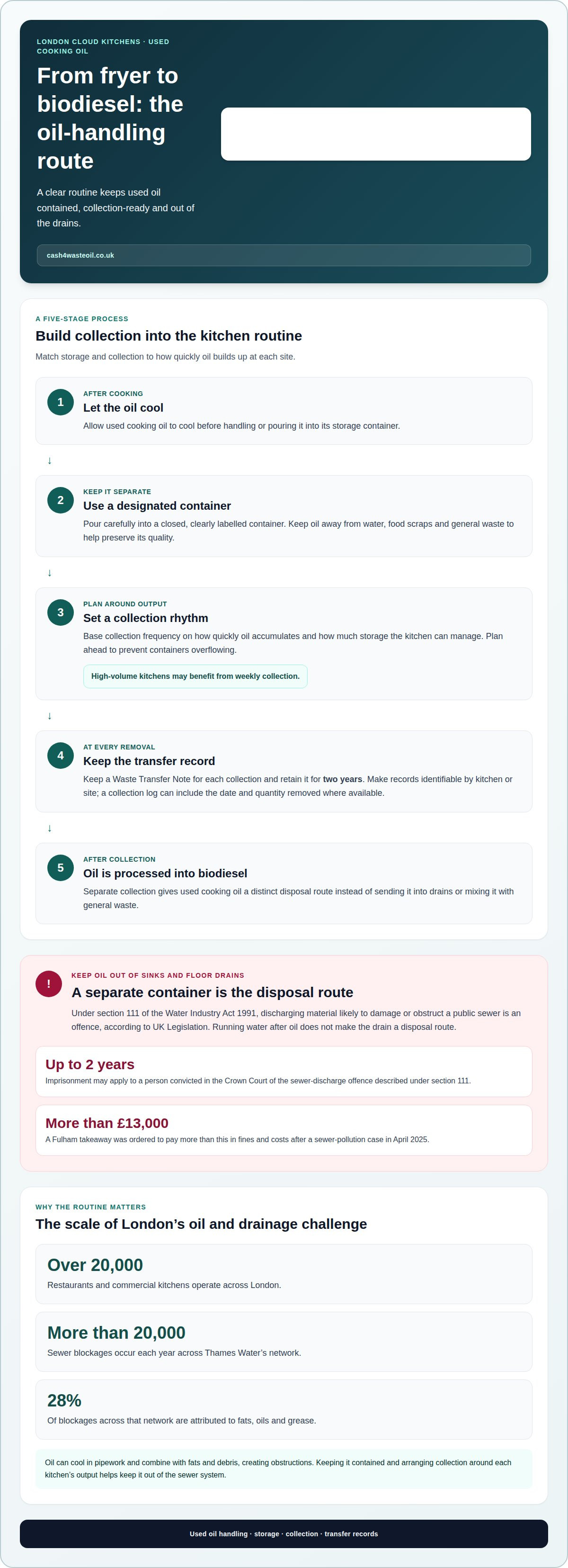
For waste oil from cloud kitchens in London, collection should match the site’s output. Let used oil cool before pouring it into a designated container. Keep it separate from water, food scraps and general waste, which can affect the quality of collected oil.
Set collection frequency according to how quickly oil accumulates and how much storage the kitchen can manage. Plan collections to prevent containers overflowing. High-volume kitchens may benefit from weekly collection. A regular routine also helps staff handle oil consistently across shifts.
Collected used cooking oil is processed into biodiesel. Keeping it separate gives commercial kitchens a distinct disposal route instead of sending it into drains or mixing it with general waste. A licensed collection arrangement, suitable storage and a schedule based on kitchen output help make oil handling part of everyday operations.
Legal restrictions on disposing of oil to sewers
For a London commercial kitchen, pouring used cooking oil into a sink is not a disposal method. Oil can cool inside pipework and combine with fats, food debris or other material, creating an obstruction. A busy cloud kitchen may produce oil across several service periods, so staff need a separate container and a clear handling routine. Keep oil out of sinks and floor drains, even when the amount seems small.
The legal rule is specific: under section 111 of the Water Industry Act 1991, discharging material likely to damage or obstruct a public sewer is an offence, according to UK Legislation. The test concerns the material’s likely effect on the sewer. A kitchen does not avoid that issue by using a sink intended for washing equipment, or by running water after the oil. Keep the disposal route separate from the drainage system.
The consequences can be serious. According to UK Legislation, a person convicted in the Crown Court of the sewer-discharge offence described under section 111 may face up to two years’ imprisonment. In April 2025, a Fulham takeaway was ordered to pay more than £13,000 in fines and costs after a sewer-pollution case.
Make the kitchen routine clear to every shift. First, let used oil cool. Then pour it carefully into a designated container, not a sink or drain. Keep the container closed and away from water, food scraps and general waste. Label it clearly and show new starters where it is kept. A simple procedure helps prevent rushed decisions during busy service and keeps oil contained until collection.
Separate collection also gives used oil a route to be processed into products such as biodiesel, rather than entering sewer infrastructure. That makes oil disposal a practical part of a more sustainable kitchen operation. Keep a collection routine that matches how quickly oil builds up, and retain the relevant transfer paperwork with the business’s waste records. For kitchens organising a separate route, a used oil collection arrangement can help keep cooking oil out of drains.
Waste transfer documentation and compliance
A Waste Transfer Note records a commercial kitchen’s used oil collection and its onward movement. For a London cloud kitchen, it provides a clear record of where the oil went if a council or water company asks. It also gives the business a reliable reference for its waste records, rather than relying on staff memories after a busy service.
Keep the Waste Transfer Note for each collection and retain it for two years, according to UK legislation. This applies to every removal, not just a general annual file. If oil is collected from separate kitchen sites, keep each site’s paperwork identifiable. A clear filing system helps staff retrieve the right record when questions arise.
Use the note alongside a straightforward collection log. Record the collection date, kitchen or site, and quantity removed where available. These details help you compare collections with the site’s oil storage and see how quickly used oil accumulates. They are practical record-keeping steps, not a substitute for the Waste Transfer Note.
Cloud kitchens may have several food brands operating from one premises, or kitchens across different locations. Make the source of each collection clear in your internal log. For example, distinguish oil from a shared frying area from oil held at a separate site. This makes it easier to match the container emptied with the kitchen records.
Paperwork also helps trace the oil beyond collection. A clear record shows where the used oil went, so the business can follow its journey from the kitchen to processing and recycling. This documents what happened to the waste instead of leaving its destination unclear.
Keep the Waste Transfer Note and collection paperwork together in a consistent place, such as a digital folder organised by site and collection date. Give the staff member responsible for waste records a simple routine: file the note after each collection, check that the site is correctly identified and retain it for the required period. A missing note can leave a gap in the records even when the oil was removed properly.
For multi-site operators, one named person can oversee filing while each kitchen records its own collections. This helps managers spot missing paperwork and compare collection patterns. Waste handling involves both physical removal and evidence of the oil’s onward route. Good documentation makes that chain easier to follow and supports responsible collection, recycling and environmental management.
How much used oil do London's cloud kitchens produce?
There is no single output figure for every London cloud kitchen. Harry’s Kick Ass Kitchens produced over 300 litres of used cooking oil each week. That example shows how substantial output can become when a kitchen handles high volumes of fried food. It should not be treated as a standard figure for every site. Menus, trading patterns and fryer use all shape the amount collected.
The main influence is what each kitchen cooks. A menu built around fried chicken, chips or other fried dishes puts fryers to heavy use. A kitchen preparing fewer fried items will usually have a different collection pattern. The number of active fryers and how often staff refresh the oil also affect how quickly used oil accumulates.
Cloud kitchens can prepare food for several delivery brands from one site. For example, a shared kitchen may run a burger menu and a fried chicken menu. Their combined fryer use affects the site’s total output. If several brands share equipment, measure and record oil from the shared area together. Where they use separate fryers, keep the volumes distinct.
A practical estimate starts with recorded collections, not a guess based on another business. At each collection, note the date and quantity removed. Compare those records across trading weeks, including busier and quieter periods. This gives managers a clearer picture of the site’s usual accumulation and helps identify changes after a menu or operating schedule changes.
Storage capacity matters as much as volume. A kitchen with limited space may need collections arranged around its container capacity. Staff can check the level during routine closing tasks and note when the container approaches its safe working limit. This helps prevent overflow and gives the kitchen useful information for planning the next collection.
Use the figures to understand your kitchen, rather than assuming every London site produces the same amount. A high-volume menu may generate more oil than a kitchen that fries occasionally, even if both operate from similar premises. Record output by site if the business has multiple kitchens. Separate records make differences in menus, equipment and trading patterns easier to see.
Oil condition is another factor when assessing collected material. Keep used cooking oil separate from water, food scraps and general waste. Contamination can affect its suitability for processing and its value. A consistent handling routine also makes collection quantities more meaningful, because the recorded volume reflects used oil rather than mixed waste.
For a cloud kitchen, the useful measure is its own pattern: how much oil accumulates between collections and how much storage space is available. Use collection records and container checks to establish this. Review the pattern when the menu, fryer use or trading schedule changes, so collection keeps pace with the kitchen’s actual output.
What UK laws and London rules apply to storing and disposing of commercial waste cooking oil?
London kitchens must manage used cooking oil as commercial waste, keeping it contained and out of drains. A practical routine matters: staff need to know where cooled oil goes, how it stays separate from other waste and how its removal is recorded. Limited storage can make this harder, particularly in cloud kitchens handling several menus from one site.
Used cooking oil is classified as non-hazardous waste under code 20 01 25 for edible oil and fat. Keep it apart from water, food scraps and general rubbish. For example, a kitchen that pours fryer oil into a dedicated container avoids mixing it with sink waste or discarded ingredients. Clear labels and consistent staff instructions help maintain that separation.
Storage should suit the kitchen’s layout and collection pattern. Choose a stable, suitable container and keep it in a designated area that won’t obstruct food preparation or access routes. Let hot oil cool before transferring it, and pour carefully to reduce spills. Check the container during routine closing tasks, especially when several shifts use the same kitchen.
Responsible disposal also means documenting each collection. According to UK legislation, a business disposing of waste cooking oil must keep a Waste Transfer Note for every collection for two years. File the note by collection date and kitchen site so staff can retrieve it if asked. For cloud kitchens sharing premises, identify which operation generated the oil.
The Environmental Protection Act 1990 is associated with fines of up to £20,000 for businesses that fail to dispose of waste oil responsibly. Proper containment, separate storage and collection records help support responsible handling. They also give managers a clearer view of whether each site follows the same routine, rather than relying on informal instructions between shifts.
Keep the process simple for kitchen teams: cool the oil, transfer it into the designated container, prevent contamination and file the collection record. A manager can include these actions in shift handovers, alongside checks of container condition and storage levels. If a container leaks or becomes difficult to handle, staff should isolate the issue and keep oil away from drains.
Arrange a collection routine that fits your kitchen’s output and available storage, and keep the waste transfer note with the site’s records. For support with the practical next step, arrange used cooking oil collection for your commercial kitchen.
Cash 4 Waste Oil: Used Cooking Oil Collection
Cash 4 Waste Oil provides used cooking oil collection for commercial kitchens in London. Turn to the service when fryer oil is building up and you need a separate collection route, supported by waste transfer paperwork.
Cash 4 Waste Oil provides a Waste Transfer Note for collections and pays cash for waste oil on the spot. These give your kitchen a record of the collection and payment for the oil collected. Keep the note with your site’s waste records.
For a cloud kitchen, share details of your oil output and collection needs when arranging the service. This helps connect the collection with your kitchen’s operating pattern and storage arrangements.
Contact Cash 4 Waste Oil to discuss used cooking oil collection for your kitchen.
Build oil collection into your kitchen’s next review
Menu changes, new delivery brands and altered fryer use can change how a kitchen manages used oil. Include oil handling in operational reviews so arrangements keep pace with the way the site works. For waste oil from cloud kitchens in London, this makes collection planning part of running the kitchen, rather than a last-minute response when storage becomes difficult.
Use a review to clarify responsibilities across the team. Decide who monitors collection arrangements, who keeps the records and who explains the routine to new starters. Clear ownership helps maintain consistency when staff or kitchen operations change. It also makes it easier to adjust the process before a small issue affects a busy service.
Cash 4 Waste Oil can help commercial kitchens arrange used cooking oil collection. Take the next step when you’re ready to discuss your kitchen’s requirements.
Contact Cash 4 Waste Oil to arrange collection and put a clear plan in place for your kitchen.
Frequently Asked Questions
How is the price of used cooking oil determined?
The amount offered depends chiefly on the oil’s volume and condition. A kitchen that stores oil separately from water and food waste can give a clearer picture of what it has available for collection. For example, keep records of the volume collected at each visit and note any changes in oil handling. Cash 4 Waste Oil provides a free quote, with the rate based on the oil presented.
Need Cooking Oil Collected from Your Kitchen?
Yes. Cash 4 Waste Oil collects used cooking oil from commercial kitchens, restaurants, pubs and hotels. If your London kitchen runs several delivery menus, explain how oil is handled across the site when arranging collection. That helps distinguish shared fryer oil from oil kept at separate workstations. The service is for commercial food businesses, not household cooking oil.
Why is responsible oil disposal essential for your business?
Responsible disposal helps protect your kitchen’s drainage system and gives staff a defined way to handle used oil. It also supports traceability: your records can show that oil left the premises through a proper collection route. Include oil handling in shift procedures, for example, so staff know what to do during closing. This connects daily kitchen practice with environmental responsibility.
Which London companies collect waste cooking oil from commercial kitchens?
Cash 4 Waste Oil collects used cooking oil from commercial kitchens in London and Greater London, Kent and Surrey. Its coverage also includes Birmingham, Coventry, Leicester, Wolverhampton, Leicestershire, Derbyshire, Staffordshire, Warwickshire, Northamptonshire, Oxfordshire and Worcestershire. This can be useful for food businesses operating multiple sites across those areas. The collection service is intended for commercial kitchens and other food-service premises.
Do London waste oil collectors pay businesses for used cooking oil, and how much?
Cash 4 Waste Oil pays businesses cash on collection. The amount depends on the volume and condition of the used oil, so the same rate doesn’t apply to every kitchen. Keep your oil separate and provide an approximate volume when requesting a quote. Cash 4 Waste Oil offers a free quote, giving your business a way to understand the payment for its own collected oil.
What are the collection costs and minimum volumes for waste cooking oil in London?
Cash 4 Waste Oil’s collection service is free, and it works with businesses of different sizes without a set minimum volume. A small café and a high-output kitchen can both discuss collection. Keep an approximate record of the oil your site produces, so the collection arrangement can reflect your kitchen’s output. Payment for the oil depends on its volume and condition.
How can London cloud kitchens compare waste oil collection providers and verify their credentials?
Choose a licensed collection arrangement and keep paperwork showing where the oil goes. The article also says waste oil should be processed by licensed carriers.
What collection frequency and container sizes do London providers offer?
Schedule collections often enough to prevent containers from overflowing; high-volume kitchens may need weekly collections. The collection frequency should match how quickly oil accumulates and the storage available.