Waste Oil Removal in Margate: Acceptance and Access
Margate Household Waste Recycling Centre does not accept commercial waste, and visitors must book a slot before visiting. For businesses seeking waste oil removal in Margate, the right collection route depends on the oil type. Used cooking oil from a commercial kitchen is different from waste fuel or engine oil.
Not all unwanted oil can follow the same disposal route. Keep different waste streams separate and describe them accurately to establish whether collection is suitable and what arrangements are needed.
This guide explains which oils are suitable for commercial collection, what information helps arrange a collection, and how storage, paperwork and vehicle access affect the process. It also explains why household recycling-centre rules do not provide a drop-off option for business waste.
Key Takeaways
- Keep different waste streams separate. The oil’s type, contamination and storage conditions affect how it’s classified.
- Prepare clear collection details, including the waste type, approximate quantity, photographs and collection location.
- Check how site access could affect a collection, including vehicle height and whether the collection point is reachable.
- Find out when paperwork may be needed before mineral oil can be moved from your premises.
- For used cooking oil from a commercial kitchen, Cash 4 Waste Oil offers collection, Waste Transfer Notes and cash payments for waste oil.
Why Choose Us For Waste Oil Collection In Margate?
For waste oil removal in Margate, first identify the oil and how it has been stored. The product, any contamination and storage conditions affect how the oil is classified and collected.
Packaging and collection arrangements
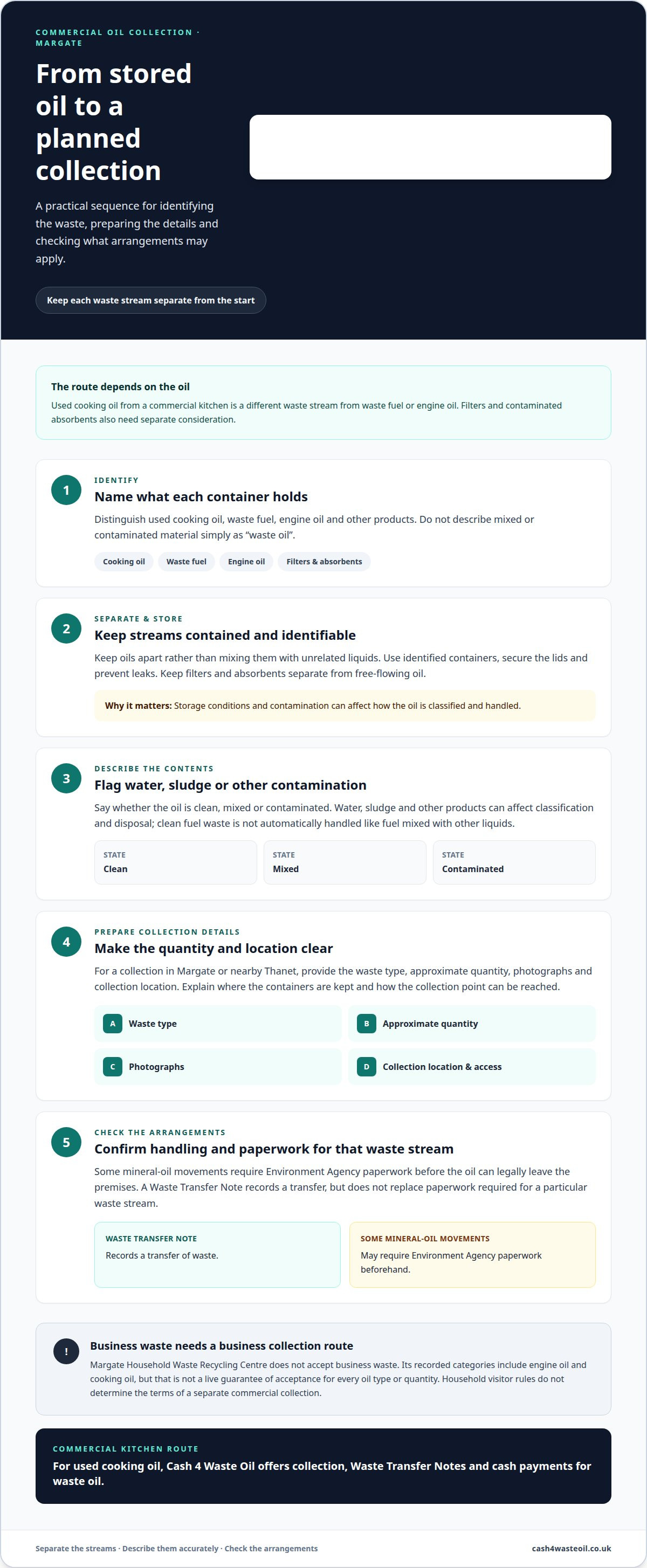
Keep each oil stream separate and contained rather than mixing it with unrelated liquids. Identify what each container holds, such as used cooking oil or another waste product. This makes it easier to establish what the material is and how it has been handled.
For a collection in Margate or nearby Thanet, provide the collection location, photographs, waste type and approximate quantity. These details help plan access and assess the collection, whether the containers are inside a kitchen or at a separate service area.
Bulk collection and disposal
Describe larger quantities clearly too. Give an approximate amount and say whether the oil is clean, mixed or contaminated. Water, sludge or other products can affect classification, so do not assume a bulk container has the same disposal route as uncontaminated oil.
Give the collection point in Margate and explain how the container can be reached. This helps plan bulk waste oil collection. The waste classification and storage history also inform how the oil can be handled and sent for appropriate recycling or disposal.
Hazardous waste documentation
Documentation depends on the waste stream. Some mineral-oil movements require Environment Agency paperwork before the oil can legally leave a premises. The oil’s identity, contamination and storage conditions help determine its classification and the arrangements that apply.
For a commercial collection, prepare the waste type, approximate quantity, photographs and collection location. Describe the oil accurately: calling mixed or contaminated material simply “waste oil” can leave important details unclear. A Waste Transfer Note records a transfer, but does not replace paperwork required for a particular waste stream.
Options for small amounts
Margate residents with only a litre or two of old fuel are advised to check with their local council for household disposal options. Margate Household Waste Recycling Centre is at Manston Road, Margate, CT9 4LX. Its recorded material categories include engine oil and cooking oil, but that record isn’t a live acceptance guarantee.
The centre is open Monday to Saturday, 8am to 4:30pm, and on bank holidays, 9am to 4pm. Business waste cannot be brought there, so commercial oil needs a business collection route. Don’t assume that household drop-off arrangements accept every oil type or apply to business quantities.
Acceptance confirmation and disposal restrictions
Acceptance depends on what a container holds, not simply on whether its contents look like oil. Waste fuel, engine oil and used cooking oil are different waste streams. Filters and contaminated absorbents also need separate consideration.
Describe the product and any contamination before arranging transport. Water, sludge or mixed products can affect classification and disposal. Clean fuel waste is not automatically handled like fuel mixed with water or other liquids. Keep separate waste streams apart and do not transfer them into unlabelled containers.
Margate Household Waste Recycling Centre’s recorded material categories include engine oil and cooking oil. This is not a live guarantee that every oil type or quantity will be accepted. Business waste cannot be brought to the centre, and most councils in England do not accept fuel at local recycling centres.
For residents, the distinction between household and business waste matters. A household’s small amount of old fuel and a commercial kitchen’s routine oil waste are different disposal cases. Margate residents with only a small amount of old fuel should check household disposal options with their local council.
What are the risks and penalties for pouring waste oil down drains or putting it in household bins? Oil spilled or managed improperly may contaminate the surrounding environment, as Slicker Recycling warns. Don’t pour it into a drain or put it in a bin; the consequences of improper disposal depend on the circumstances, so use a route suited to the waste.
Storage affects safe collection and transport. Keep oil contained, secure the lid and prevent leaks. Keep filters and absorbents separate from free-flowing oil, and identify them when describing the waste. Filters, tyres and contaminated absorbents may contain hydrocarbons, metals or other contaminants, so they need appropriate handling rather than treatment as ordinary rubbish.
For commercial mineral oil, paperwork may be required before it can legally leave the premises. A Waste Transfer Note records a transfer, while some mineral-oil movements require Environment Agency paperwork beforehand. The waste type and circumstances determine which documents apply, so do not assume one note covers every waste stream.
Before arranging removal, give the collector the oil type, approximate quantity, contamination details and collection location. For used cooking oil from a commercial kitchen, commercial oil collection arrangements provide a route focused on that specific waste stream.
Vehicle access and possible charges
Access rules at Margate Household Waste Recycling Centre apply to visitors bringing household waste, not to business collections. Business waste cannot be brought to the centre, so a garage or commercial kitchen needs a collection route suited to its waste stream. The centre’s visitor charges and height barrier do not determine the charges or vehicle limits for a separate collection service.
Height and vehicle access
The Margate centre’s height barrier is 2 metres (6 foot 6 inches). A vehicle taller than that cannot pass through the barrier, so check its height before planning a household visit. Visitors also cannot carry waste into the centre on foot. That rules out arriving on foot with a container, even if it is small.
For a commercial collection, access information helps the collection team plan the vehicle’s approach. Describe the entrance, available turning space and oil storage location. Oil kept behind a building, for example, may require a different approach from containers beside a roadside loading area. These details help identify practical obstacles before collection.
Charges for household-centre visits
Visitors who don’t pay Council Tax to a Kent council must pay £10 to visit Margate Household Waste Recycling Centre. This is a charge for visiting the centre, not a price for waste oil collection. Business waste is excluded from the site, regardless of whether a visitor pays Council Tax in Kent.
Keep the distinction clear when comparing disposal routes. The centre’s visitor charge relates to household-site access. It doesn’t establish the cost of a commercial collection, which depends on the collection arrangement and waste involved. No household-centre fee changes the rule that business waste cannot be taken there.
Waste from vehicle maintenance
Oil from an engine service is a different waste stream from used cooking oil. Keep engine oil separate from cooking oil, fuel, water and other liquids. Identify filters and contaminated absorbents separately too, as they may contain hydrocarbons, metals or other contaminants. Waste type and contamination affect classification and handling.
Before arranging removal, say whether the waste comes from vehicle maintenance and explain what else is mixed with it. A garage with engine oil, used filters and absorbents should describe each stream clearly. The centre’s recorded engine-oil category does not guarantee acceptance or mean commercial quantities can be dropped off there.
For a household visit, book a slot before travelling to Margate Household Waste Recycling Centre; entry without a booking isn’t permitted. Check that the vehicle fits the 2-metre barrier and that waste will be carried in a vehicle, not on foot. Those steps address the centre’s stated access rules without confusing them with commercial collection arrangements.
Booking requirements
Margate Household Waste Recycling Centre requires visitors to book a slot before travelling. Entry without a booking is not permitted. This rule applies to visits to the centre, not commercial collections. Business waste cannot be brought to Margate’s centre, so booking a household slot does not provide a disposal route for a business’s oil.
For household waste, book before setting off and plan the visit around your slot. A booking does not mean every waste type will be accepted. The centre’s recorded categories include engine oil and cooking oil, but this is not a live acceptance guarantee. Keep household arrangements separate from commercial waste collection from the outset.
For commercial waste oil, arrange collection by providing practical details. Start with the waste type and approximate quantity, then give the premises location and explain where the containers are stored. Photographs can show the storage point and access route. A container behind a locked gate, for example, needs different driver instructions from one beside a clear loading area.
Prepare the collection point before the agreed visit. Keep the oil contained and accessible, and make sure the person meeting the driver knows which containers are included. If the premises has a controlled entrance, provide directions. These steps help distinguish the oil set aside for collection from other stored liquids or materials.
Keep separate waste streams identifiable. A garage arranging collection of engine oil, filters and contaminated absorbents should describe each material rather than grouping everything under one label. Electrical waste and fluorescent tubes need their own appropriate recycling or disposal routes. Do not add them to general commercial waste or present them as part of an oil collection.
Use a simple booking checklist to organise the details:
- Identify whether the waste is household or commercial.
- Name the oil or other waste stream and estimate its quantity.
- Give the Margate premises location and clear access instructions.
- Describe any separate materials, such as filters or electrical waste.
- For a household-centre visit, book before travelling and follow the centre’s entry conditions.
These distinctions help avoid a wasted journey. A Margate resident books a centre slot for household waste, while a business arranges collection from its premises. Keep the details consistent with the waste presented, including its type, storage point and any separate materials. This avoids treating a household booking as permission to bring business waste.
Waste oil services for garages, farms and industry
Garages, farms and industrial sites can produce several distinct waste streams. The type of business alone does not determine whether oil belongs in a cooking-oil collection. Classification depends on the product, contamination and storage conditions. Separate kitchen oil from oil that comes from machinery, vehicles or equipment.
A garage may have a staff kitchen alongside its workshop. Used cooking oil from the kitchen is different from engine oil drained during vehicle maintenance. A farm might also have cooking oil from a canteen and separate oils from machinery. Keep each stream distinct and describe its source accurately when arranging collection.
For workplaces with commercial kitchens, start with the cooking oil itself. Store it apart from engine oil, fuel, water and cleaning liquids. Mixing materials can affect classification and handling. A container of used fryer oil, for example, is not equivalent to one holding workshop liquids.
Match the collection to the waste stream
Before arranging collection, identify where the oil came from and what it contains. Note whether it is used cooking oil and whether anything has been added or spilled into it. If a site produces cooking oil and maintenance waste, describe them separately instead of grouping them under one general label.
This distinction matters for farms and industrial premises with multiple work areas. Oil from a canteen can be collected as used cooking oil, while machinery oils need their own appropriate waste-management route. The material’s identity, contamination and storage history help determine its classification and handling.
Give the collection team useful site details alongside the waste description. State the premises location, where the oil is stored and how the collection vehicle can reach it. Explain whether the container is inside a kitchen, near a loading area or behind a controlled entrance. Clear directions help distinguish the collection point from workshop or plant areas.
Keep containers accessible and easy to identify. If a site has separate kitchen and maintenance stores, label the cooking-oil container clearly and keep it away from other liquids. This separation helps prevent the wrong material being presented for collection and makes consistent handling easier between collections.
Where a garage, farm or industrial site has a commercial kitchen, arrange collection for its used cooking oil as a separate stream. Arrange used cooking oil collection for kitchen oil, and keep vehicle or machinery waste outside that description. The key takeaway is straightforward: identify the source first, then match each waste stream to its suitable collection and disposal route.
Cash 4 Waste Oil
Cash 4 Waste Oil helps commercial kitchens arrange used cooking oil collection in Margate. The service includes a Waste Transfer Note for the transfer record and cash payment for collected waste oil. This gives restaurants, pubs and hotels a clear next step when their stored kitchen oil is ready for collection.
Keep the oil separate from engine oil, fuel and other liquids. When arranging collection, provide its approximate quantity and location. These details help distinguish kitchen oil from other waste streams and plan collection at your premises.
If your business has used cooking oil to collect, contact Cash 4 Waste Oil to discuss the collection.
Make waste handling part of your routine
Build oil handling into your team’s kitchen closing routine or stock-management process. A named staff member can keep the collection area organised and ensure new containers stay separate from unrelated liquids. This helps prevent confusion when responsibilities change between shifts.
For a business arranging waste oil removal in Margate, decide who will coordinate the collection and share the relevant site details. Make that information accessible to everyone who handles the oil, not just the person who places the booking. Clear ownership makes the process easier to repeat as your operation changes.
Cash 4 Waste Oil can help commercial kitchens with their used cooking oil collection. Contact the team to discuss arranging collection for your business.
Contact Cash 4 Waste Oil to arrange collection and take the next practical step for your kitchen.
Frequently Asked Questions
Can old oil be recycled or reused?
Some old oils can be recycled or reused, but the route depends on the oil type and contamination. Used cooking oil from commercial kitchens can be processed into biodiesel. Waste fuel may undergo refining to separate water, sludge and mixed products and recover hydrocarbons. Keep cooking oil, engine oil and fuel separate. Mixing them can change the waste classification and affect the suitable recovery or disposal route.
Is waste oil collection environmentally safe?
Responsible waste management means containing oil, transporting it appropriately and sending it for suitable recovery or disposal. Leaks and spills can contaminate the surrounding environment. Keep containers secure, prevent leaks and never pour oil down drains or into household bins. If a container leaks, separate it from other stored materials and address the spill promptly. The waste type and contamination affect how it should be handled after collection.
What are the benefits of removing old fuels and oils from storage tanks?
Removing unwanted contents can free tank capacity and reduce the amount of old material kept on site. It also allows the waste to be assessed for an appropriate recovery or disposal route instead of remaining unused in storage. For industrial facilities reviewing on-site containment and bulk storage infrastructure, specialist providers such as Liquimech offer practical liquid management solutions. Stored fuel mixed with water or sludge, for example, needs a different assessment from cleaner material. The tank contents and contamination determine the suitable next step. Removal alone does not mean the tank has been cleaned or repaired.
What happens after the oil is removed?
After collection, the oil is directed towards a recovery or disposal route suited to its type and condition. Waste fuel processing can separate contaminants such as water and sludge, then reclaim hydrocarbons. Recovered fuels may be reused in industrial heating or power generation, or blended into new lubricants. Commercial used cooking oil collected by Cash 4 Waste Oil is processed into biodiesel. Keeping waste streams separate helps ensure the material is handled appropriately.
Which companies collect waste oil in Margate, Kent?
Cash 4 Waste Oil collects used cooking oil from commercial kitchens, including restaurants, pubs and hotels. Its collection is for food-service oil, not engine oil, industrial lubricants or household oil. A garage with cooking oil from a staff kitchen should distinguish it from workshop waste. That distinction matters: the service is relevant to the kitchen’s used cooking oil, not the oil drained from vehicles or machinery.
How much does waste oil removal cost in Margate?
For commercial used cooking oil, payment depends on the oil’s volume and condition, rather than a fixed published rate. Cash 4 Waste Oil provides a quote on request, so share the expected quantity and describe the oil clearly. Collection arrangements concern commercial kitchen oil, not domestic oil or engine oil. A quote gives the business a basis for understanding the arrangement before setting up collection.
How do I arrange a waste oil collection in Margate, and how soon can it be collected?
For commercial kitchen oil, start by giving the location and approximate monthly volume. The collection can then be arranged on a flexible weekly, fortnightly or monthly schedule, based on how quickly the business generates oil. The process is: contact the company; arrange a suitable schedule; receive payment and a Waste Transfer Note at collection; then the oil is processed into biodiesel. Timing follows the agreed schedule.
What UK rules apply to storing and disposing of waste oil?
Keep oil contained, store it securely and prevent leaks or mixing with unrelated liquids. Classification depends on the product, contamination and storage conditions. Businesses in Margate should use an appropriate commercial collection and disposal route, as Margate Household Waste Recycling Centre does not accept business waste. Some mineral-oil movements also require Environment Agency paperwork before the oil can legally leave a premises.