What Happens to Recycled Cooking Oil? Collection to Reuse
What if yesterday’s cooking oil could become fuel rather than simply being thrown away? For commercial kitchens, knowing what happens to recycled cooking oil after collection matters. You want to know where it goes, how it’s processed and whether it has a useful second life.
Collection is only the first step, and processing routes can vary. Keeping suitable oil separate can help it remain recoverable. Clear paperwork and information about its destination also help you understand what happens after handover.
This article follows used cooking oil from collection through processing to potential end uses, including biodiesel. It also explains what commercial kitchens can ask a collector about handling, documentation and the oil’s destination. Cash 4 Waste Oil collects used cooking oil from commercial kitchens and processes it into sustainable biodiesel. Understanding the route helps you make a more informed choice about your kitchen’s used oil.
Key Takeaways
- Follow what happens to recycled cooking oil from collection through preparation and processing to a potential new use, such as biodiesel.
- Learn what “feedstock” means and why processing details can differ. Check claims about specific methods with reliable information.
- Understand how oil recovery can keep a usable resource in circulation, while recognising that environmental benefits depend on evidence about the full process.
- Help suitable used oil stay recoverable by keeping it separate, storing it as instructed and retaining collection documentation.
- Cash 4 Waste Oil’s commercial collection service includes a Waste Transfer Note, and collected oil is processed into biodiesel.
What happens to recycled cooking oil after collection?
Collected used cooking oil can be processed into a usable resource, including biodiesel. The route depends on the oil’s condition, the processor and the intended end use. Recycled cooking oil is used oil recovered and processed for another productive use.
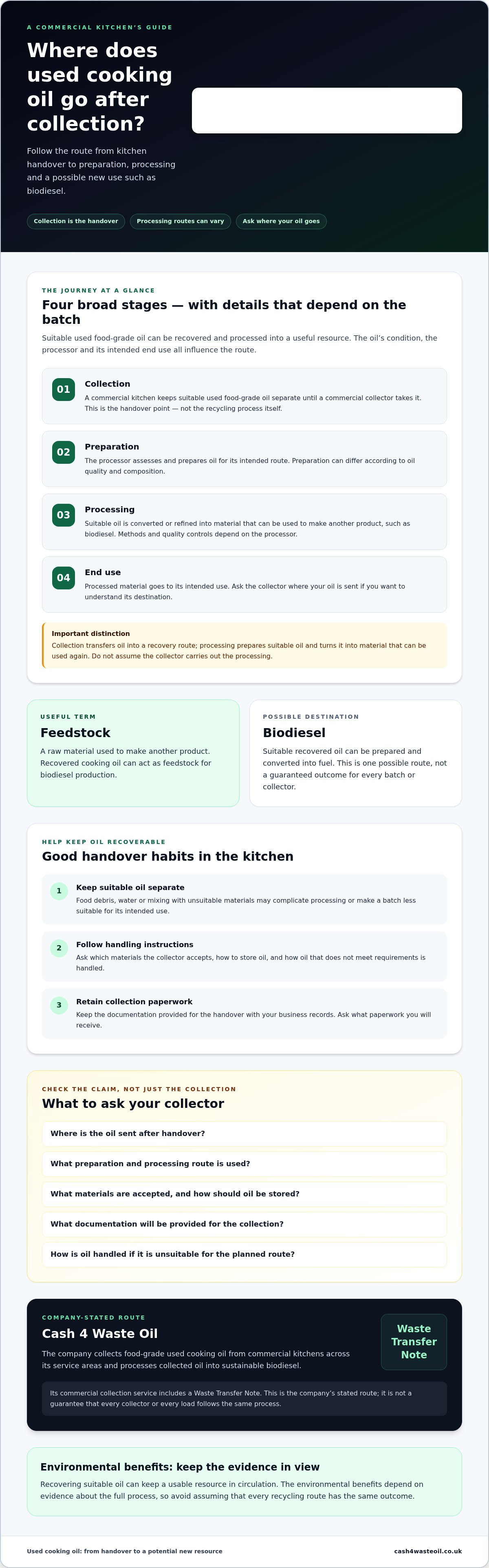
In practice, the journey usually has four broad stages, although the specific preparation and processing methods can vary:
- Collection: A commercial kitchen keeps suitable used food-grade oil separate until collection.
- Preparation: The processor assesses and prepares the oil for its intended route. The steps depend on its quality and composition.
- Processing: Suitable oil is converted or refined into material that can be used to make another product, such as biodiesel.
- End use: The processed material goes on to its intended use. Ask the collector where the oil is sent if you want to understand its destination.
From a commercial kitchen to a collection vehicle
For a business, collection is the handover point, not the recycling process itself. Staff keep used food-grade cooking oil separate from other waste and arrange collection through a suitable commercial collector. The collector may provide documentation for the handover, so retain it with your business records. This applies to commercial kitchens, not domestic household disposal.
What happens before the oil is processed?
Collected oil may need preparation before conversion, but not every processor uses the same steps. The Yellow grease entry describes used cooking oil and outlines rendering, including separation from impurities. Treat this as general background, not confirmation of a particular collector’s method or the route taken by every load.
Oil quality can affect its suitability for recovery. Food debris, water or mixing with unsuitable materials may complicate processing or make a batch less suitable for its intended use. Keep cooking oil separate, follow your collector’s handling instructions and ask which materials they accept. It’s also worth asking how oil that doesn’t meet their requirements is handled.
Cash 4 Waste Oil collects food-grade used cooking oil from commercial kitchens across its service areas and processes collected oil into sustainable biodiesel. The company provides a Waste Transfer Note for commercial collections. This is its stated route, not a guarantee that all collected cooking oil follows the same process. Ask your collector what documentation you’ll receive and where the oil goes after handover.
How is used cooking oil processed into a new resource?
Collection and conversion are separate steps. Collection gathers used cooking oil and transfers it to a recovery route; processing prepares suitable oil and turns it into material that can be used again. Recovered oil acts as a feedstock, meaning a raw material used to make another product.
The processing route depends on the oil’s condition, the facility and the intended end use. Processors may need to prepare oil before converting it, but the exact steps aren’t universal. Don’t assume every batch is treated in the same way or that the collector carries out the processing itself. Ask about the route for your collected oil if you need to understand its destination.
How can used oil become biodiesel?
Recovered cooking oil can serve as an input for biodiesel production. At a high level, a processor prepares suitable oil and converts it into fuel. The specific method and quality controls depend on the processor, so a general description shouldn’t be taken as confirmation of what happens to every load.
A municipal programme offers one documented example of collected cooking oil being converted into biofuel for use in refuse lorries. It illustrates one possible destination, not a standard outcome for all recycled cooking oil or a claim about every UK collection scheme.
Cash 4 Waste Oil collects food-grade used cooking oil from commercial kitchens and processes it into sustainable biodiesel. This is the company’s stated downstream route. It doesn’t describe every recycler or confirm the technical method used for each batch.
Does all recycled cooking oil become biodiesel?
No single route applies to every batch. The oil’s suitability, the processor’s capabilities and the planned destination all matter. Some accepted oil may be directed to biodiesel production, but don’t assume this is true of all collectors or all material. Nor should alternative uses be attributed to a particular company without evidence.
To understand what happens to recycled cooking oil after collection, ask your collector two direct questions: where is accepted oil sent, and what is its intended use? Also check what collection documentation you’ll receive and keep it with your business records. Clear answers explain the route beyond handover, while documentation gives your kitchen a record of the collection.
Commercial kitchens looking into used cooking oil collection can find out more about commercial oil collection from Cash 4 Waste Oil.
What environmental benefits can cooking-oil recycling deliver?
Recovering used cooking oil can keep a material in productive use instead of treating it only as waste. If suitable oil is processed into a product such as biodiesel, it becomes an input for another purpose. That is a resource-recovery benefit, but it doesn’t by itself prove a specific reduction in emissions or overall environmental impact.
The environmental benefit depends on how the oil is collected and processed, and which product its end use displaces. Transport, processing requirements and the alternative being compared all affect the assessment. Claims about carbon savings need more than a statement that oil was recycled.
How does reuse fit into a circular economy?
A circular economy aims to keep usable materials in productive use for longer rather than discarding them after one use. For a commercial kitchen, collecting used cooking oil for processing can form one link in that cycle: the business separates a by-product, and a processor may recover it as a resource. For more on practical handling, see Sustainable Waste Oil Disposal: A 2026 Guide for UK Commercial Kitchens.
Which environmental claims need careful checking?
Look for the basis behind any comparison. A credible carbon-saving or lifecycle claim should identify its source, explain which stages it covers and state what the recycled product is being compared with. Without that context, a headline figure may not reflect the journey from collection to end use.
Be cautious of broad claims that biodiesel is carbon-neutral or emission-free. Those descriptions require strong, relevant evidence and should account for the full lifecycle, not just the fact that the fuel comes from recovered oil. Knowing what happens to recycled cooking oil helps explain the route, but the route alone cannot establish its net environmental effect.
Recovery also doesn’t replace waste prevention. Kitchens can review purchasing, storage and cooking practices to avoid using more oil than needed, then arrange responsible recovery for oil that is no longer suitable for cooking. Keeping oil separate and following the collector’s handling guidance can support recovery, though it can’t guarantee a particular environmental outcome.
For a fair assessment, ask where the collected oil goes and what evidence supports any environmental claims about its processing or end use. Clear answers help distinguish a documented benefit from a general sustainability promise.
How can commercial kitchens help used cooking oil get recycled?
A clear routine helps keep suitable used cooking oil separate and makes the collection handover easier to track. Use this sequence:
- Separate suitable oil: Keep food-grade used cooking oil apart from engine oil and unrelated waste streams. Check which cooking oils your collector accepts.
- Store it as instructed: Follow the collector’s guidance and relevant workplace or safety advice. Check before assuming a particular container or storage set-up is suitable.
- Arrange collection: Agree the collection arrangements with a collector that handles commercial cooking oil.
- Keep the records: Retain the collection documentation, such as a Waste Transfer Note, with your business records.
These steps can support recovery, but they don’t guarantee that every batch will be suitable for processing. Ask for clear instructions before setting up a routine for your kitchen.
What should a kitchen do before collection?
Keep cooking oil separate from engine oil, industrial mineral oils and other waste. Mixing materials can make the oil less suitable for its intended recovery route. Use the collector’s instructions for storage and handover, and check safe-storage advice against relevant guidance for your premises. Avoid relying on generic container specifications: requirements can depend on the collection arrangements and workplace.
What can businesses ask their oil collector?
Ask practical questions before agreeing a collection arrangement. For example: What types of used cooking oil do you accept? What collection record will we receive? How is the oil handled after handover, and what recovery route is intended? You can also ask whether the collector has the relevant registration for the work and how to check its details.
Knowing what happens to recycled cooking oil means looking beyond collection. A Waste Transfer Note records the handover, while a clear answer about destination explains what the collector says happens next. Cash 4 Waste Oil provides a Waste Transfer Note for commercial collections and is fully licensed and Environment Agency registered. Keep the documentation you receive accessible with your business records.
For more on wider compliance considerations, consult Commercial Kitchen Oil Disposal: The 2026 Essential Compliance Checklist. Hospitality businesses can also review their collection procedures alongside relevant site-specific requirements.
If your commercial kitchen is arranging used cooking oil collection, ask Cash 4 Waste Oil about collection and documentation.
What happens next when a business recycles oil with Cash 4 Waste Oil?
For a commercial kitchen using Cash 4 Waste Oil, the route starts with collection of suitable food-grade used cooking oil. The company provides a Waste Transfer Note for commercial collections, and collected oil is processed into sustainable biodiesel. This is the company’s stated route, not a description of every oil collector or processor.
The service is for commercial kitchens, not households. Cash 4 Waste Oil offers free collection and pays cash on the spot for waste oil. Its collection service is available on a scheduled or on-call basis. Confirm the arrangements for your premises and check that your oil type and location are accepted before booking.
What does the collection service include?
A commercial collection is the handover stage. Keep the Waste Transfer Note provided for the collection with your business records, so you can refer back to the handover details. Cash 4 Waste Oil’s collections are fully licensed and Environment Agency registered. Businesses can ask how to check registration details and what information the collection record contains.
Cash 4 Waste Oil processes collected oil into sustainable biodiesel. If understanding what happens to recycled cooking oil is part of your supplier checks, ask about the intended destination and the downstream route. Don’t assume that one company’s stated process applies to all collected oil.
How can a business take the next step?
Before arranging a collection, check three practical points:
- Eligibility: Confirm that your business is within the collector’s service area and that the food-grade cooking oil you produce is accepted.
- Collection arrangements: Ask how to organise the handover for your premises and whether scheduled or on-call collection suits your needs.
- Records and destination: Confirm what documentation you’ll receive, including the Waste Transfer Note, and ask where accepted oil is intended to go after collection.
These checks help set clear expectations before collection and give your team a straightforward record of the handover. They also distinguish the collection service from the separate processing stage that follows.
Commercial kitchens looking into collection can find out about commercial used cooking oil collection and confirm accepted oil types, service-area coverage and documentation with Cash 4 Waste Oil.
Make your kitchen’s oil recovery route clear
Used cooking oil can become a resource when it’s collected, prepared and sent for suitable processing. The exact route depends on the oil and its destination, so don’t treat collection alone as proof of its final use. Ask where your oil goes and keep the handover documentation with your business records.
Understanding what happens to recycled cooking oil also means checking the evidence behind environmental claims. Recovery can keep usable material in circulation, but its overall benefit depends on the processing involved and what the resulting product replaces. Preventing avoidable oil waste remains part of responsible kitchen practice.
Cash 4 Waste Oil provides a Waste Transfer Note for commercial collections, and its collections are fully licensed and Environment Agency registered. The company also processes collected oil into sustainable biodiesel. These details give businesses a starting point for checking the collection and destination of their oil.
If your commercial kitchen is considering collection, find out about commercial used cooking oil collection and confirm accepted oil types and arrangements. Clear records and a known recovery route can help your team manage used oil with confidence.
Frequently Asked Questions
What happens to used cooking oil after it is collected?
After collection, a collector transfers suitable used cooking oil to a processor. Processing, not collection itself, is where the oil may be assessed, prepared and converted into a useful product such as biodiesel. The exact route can vary with the oil’s condition and the processor’s arrangements. To understand what happens to recycled cooking oil, commercial kitchens should ask where accepted oil is sent and what recovery route is intended.
Can recycled cooking oil be turned into biodiesel?
Yes, suitable used cooking oil can be used as feedstock for biodiesel production. Feedstock means material used to make another product. Not every batch follows the same route, as suitability and processor arrangements can differ. Cash 4 Waste Oil processes oil collected through its commercial service into sustainable biodiesel. This company-specific route doesn’t establish the destination or processing method used by other collectors.
Is recycled cooking oil used for anything besides biodiesel?
Potential end uses depend on the collector, processor, oil quality and local market. Don’t assume every load has the same destination or name alternative products without reliable evidence for that particular recovery route. If your commercial kitchen wants to know where its oil goes, ask the collector directly about its intended use after handover. You can also ask how the recovery route is documented and what records you’ll receive.
How is used cooking oil prepared for recycling?
Processors may assess and prepare collected oil before further processing, but the exact steps depend on the material and the facility. Don’t assume every processor uses the same filtering, settling or treatment method. Contamination or unsuitable materials can affect whether oil is suitable for recovery. Keep food-grade cooking oil separate and follow your collector’s instructions on accepted oil types, storage and collection arrangements.
Does recycling cooking oil reduce environmental impact?
Recovering used oil for productive use can support more efficient use of resources. The precise environmental benefit depends on how the oil is collected and processed, and what the recovered product replaces. Claims about carbon savings or lifecycle impact need a clear basis and relevant evidence. Avoid treating biodiesel as automatically carbon-neutral or emission-free. Recycling is one part of responsible waste management, alongside preventing contamination and avoiding unnecessary waste.
Can restaurants recycle used cooking oil?
Yes, restaurants and other commercial kitchens can arrange collection for suitable used cooking oil through a commercial collector. Confirm which oil types are accepted, how collection is arranged and what documentation is provided. Cash 4 Waste Oil serves commercial kitchens in London, Greater London, Kent, Surrey, Birmingham, Coventry, Leicester, Wolverhampton, Leicestershire, Derbyshire, Staffordshire, Warwickshire, Northamptonshire, Oxfordshire and Worcestershire. Its service isn’t for households.
How can a business check what happens to its collected cooking oil?
Ask the collector about its registration, collection arrangements, documentation and intended recovery route. Cash 4 Waste Oil is fully licensed and Environment Agency registered, and provides a Waste Transfer Note for commercial collections. The note records a waste transfer, but shouldn’t be treated as proof of a particular final product unless that is confirmed separately. Keep relevant records and check current guidance where needed.