Fines for Improper Cooking Oil Disposal UK: A 2026 Compliance Guide
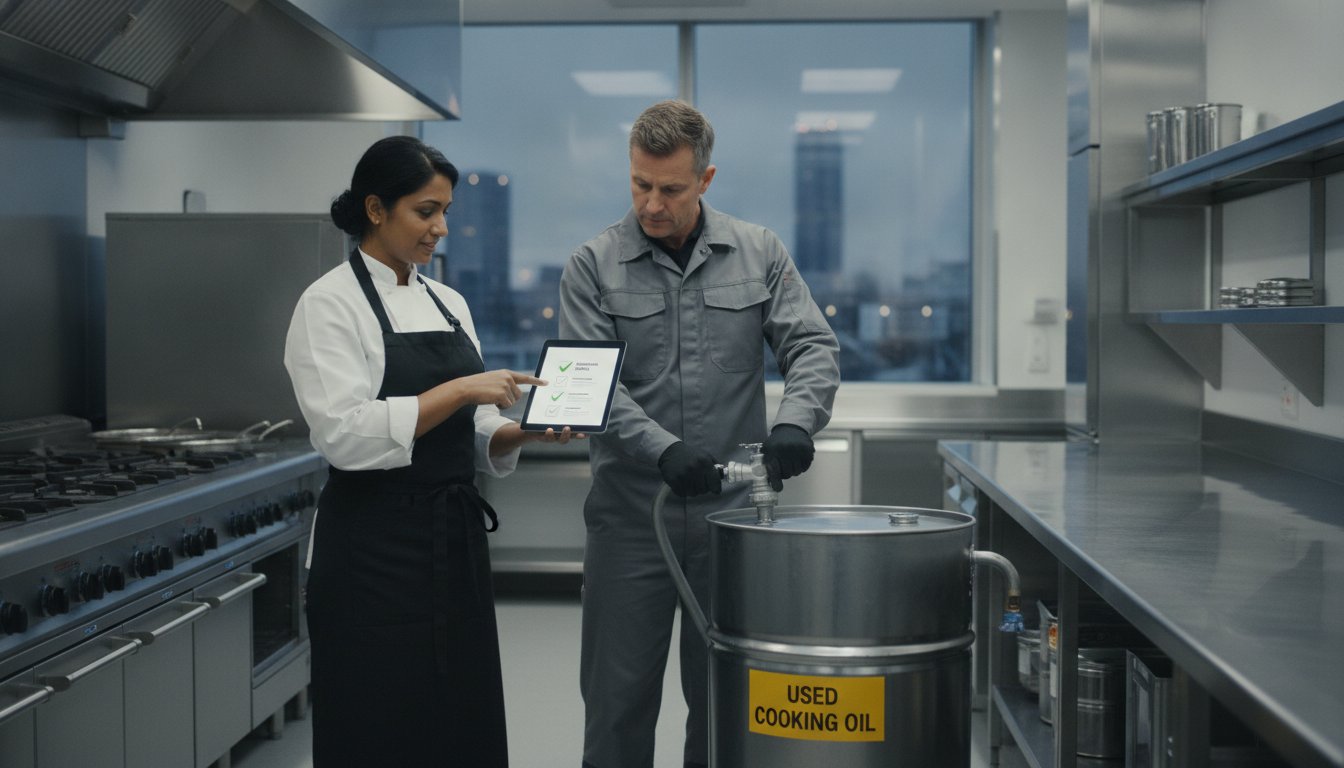
In 2026, the Environment Agency doesn't just issue warnings. They issue unlimited fines that can cripple a commercial kitchen overnight. If you're still treating used oil as a nuisance rather than a regulated asset, you're risking heavy fines for improper cooking oil disposal UK. It's understandable to feel overwhelmed by the shifting landscape of environmental law and the "Duty of Care" principle. You want a clean kitchen and a simple way to stay legal without the paperwork headache.
This guide explains how to achieve total compliance while streamlining your waste management. You'll learn how to navigate the latest 2026 regulations, why the Waste Transfer Note is your primary defence, and how to turn waste oil into a reliable source of income. We'll show you how to secure your business with a system that's both legally compliant and financially rewarding. Following these steps ensures your kitchen remains efficient, your records stay up to date, and your waste starts paying for itself.
Key Takeaways
- Understand why 2026 regulations now allow the Environment Agency to issue unlimited penalties for liquid waste offences.
- Learn the two-step routine for safe oil storage that prevents kitchen accidents and maintains site hygiene.
- Protect your business from fines for improper cooking oil disposal UK by ensuring every collection includes a valid Waste Transfer Note.
- Discover how water companies trace "fatberg" blockages to specific premises and how to avoid these sewerage penalties.
- Maximise your profits by switching to a free collection service that provides immediate cash payments for your used oil.
Need a collection?
We collect used cooking oil across London, Kent, Surrey and the Midlands — and pay you cash.
Get a Free Quote